Home2019December (Page 2)

Bangla Bond has the potential to be a groundbreaking event in our history in terms of alluring foreign funds for investment in building essential infrastructures and play a crucial role to help us achieve our Sustainable Development Goal Targets. 

Some remarkable achievements have marked the past few years for Bangladesh; the country has become one of Asia’s most incredible and unexpected success stories. Aided by robust growth in the manufacturing sector and incremental rise in in-bound remittances, Bangladesh has become the second-fastest-growing nation in South Asia. According to the World Bank, Bangladesh’s GDP is projected to grow at 7.2 per cent this fiscal year and 7.3 per cent, the year following. Most importantly, Bangladesh has met United Nations criteria to graduate from “least developed country” status by 2024. Despite the accomplishments, there are several aspects of the economy which are concerning. There are a few worrying indicators which have prompted the stakeholders of our economy worried about the sustainability of the rapid growth. One of the biggest concerns for the future of our economy is the poor state of private sector investment. Despite the gradual rise in the investment-GDP ratio over the past three decades, in recent years, the share of private investment in GDP has remained static. The Private investment-GDP ratio has remained stuck at 23 per cent for the past few years, which has raised uncertainty about robust future growth. Private investment is essential to generate growth and employment for the growing workforce. In order to achieve an 8 per cent growth by 2020, the Private Investment-GDP ratio requires to be at least 30 per cent. The Government of Bangladesh has recently issued Bangla Bond to solve the stagnant private investment scenario.

Taka bonds are a more sustainable form of foreign borrowing compared to dollar denominated debts for Bangladeshi entities that only have earnings in local currency. Such issuances allow the Bangladeshi entities to avoid the exposure to currency risk while providing access to international investors who seek exposure to the Bangladeshi Taka and the corresponding higher yield. It also raises the profile of Taka in international markets, improve the country’s image and help attract FDIs. Effective use of the instrument can, therefore, boost up investments in the private sectors of the country. Going forward, it would be worth exploring whether such bonds can be issued for tenors longer than the three years tenor of the “Bangla Bond” issued by IFC recently – that will be even more effective since the private sectors in Bangladesh severely lack access to long term funds currently.”

Arif Khan
CEO and Managing Director
IDLC Finance Limited

A Game Changer
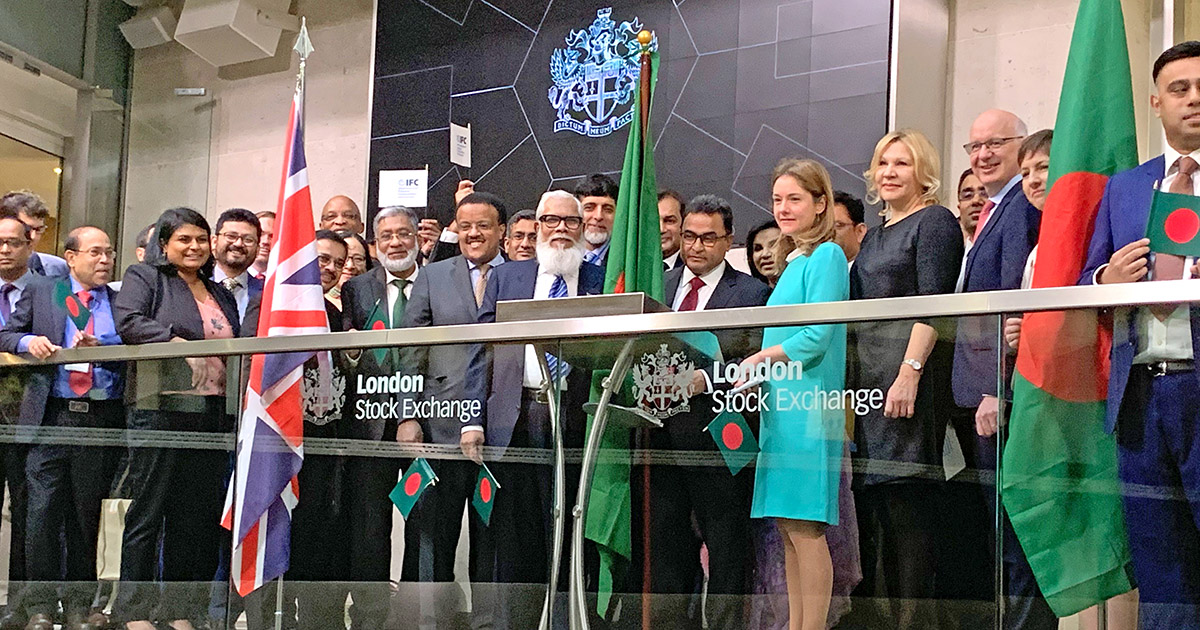
Bangla Bond debuted as a taka- denominated debt instrument, on the London Stock Exchange on November 11. Issued by the World Bank Group’s private sector lending arm International Finance Corporation (IFC), the bonds are worth $9.5 million, and the proceeds will be used for investment in private infrastructure projects, as well as public-private partnership initiatives. All bond payments (including the initial subscription amount and any subsequent coupon and principal payments) will be settled in dollars, in an amount determined based on the applicable dollar-taka exchange rate, with the investors taking on the exchange rate risk. On coupon payment dates and upon maturity after three years, IFC will take the taka earnings from its investments in Bangladesh and convert the amounts back into dollars to pay the offshore investors in the taka bonds.

Leverage of Local Currency
International investors are often interested in local currency-based bonds because they do not carry the risks of interest rate fluctuations. Concurrently, foreign investors often face significant hurdles while trying to invest in Bangladesh; they range from logistical to infrastructural impediments. Bangla Bond will make the process easier and hassle-free. The local currency bond issuance can bypass the risks of borrowing in foreign currency, which can be subject to fluctuating exchange rates; so it makes sense that local investors would prefer to borrow in local currency.

An Instant Hit!
An initiative of the International Finance Corporation, Bangla Bond has brought onboard a new set of foreign investors, it also an acid test for the sustainability of Bangladesh’s growth. The interest from investors has been remarkable, leading to a 30 per cent oversubscription of the first tranche. The proceeds of the first tranche were converted to taka and lent out to Pran-RFL Group, which was about Tk 80 crore, at 11-11.5 per cent interest. IFC plans to issue multiple tranches amounting to $300 million over the next couple of years, with the next round taking place early next year.

Looking Ahead
The listing of Bangla Bond is a silver lining among the dark clouds of uncertainty in Bangladeshi private sector. Although the size of the initial offering is meagre compared to the demands of our economy, it has the potential to be a groundbreaking event in our history in terms of alluring foreign funds for investment in building essential infrastructures and play a crucial role to help us achieve our Sustainable Development Goal Targets. 


Moody, downgraded the Macro Profile for the banks of Bangladesh from, ‘Weak’ to ‘Weak-‘, adding a negative one-notch adjustment to Credit Conditions. The credit rating agency was a party pooper for an otherwise terrific year for the Bangladeshi economy. Growth spurted to nearly 8 percent of GDP, the RMG sector continued to dominate the world market and political stability remained as stable as one could hope for. Yet the thorn at the side seems to be the ailing banking sector whose soundness and safety remains uncertain due to poor lending practices, a lack of corporate governance and the government’s interference. 

Default loans at banks went up by a hefty 26.38 percent or Tk 19,608 crore last year, the highest rise in seven years, exposing the precarious condition of the banking sector. The amount of non-performing loan (NPL) stood at Tk 93,911 crore at the end of 2018, up from Tk 74,303 crore a year ago, according to data from the central bank. The NPLs now accounted for 10.30 percent of the banking sector’s total loans, up from 9.31 percent in 2017. 

But before we delve further lets understand what are NPLs and why they are bad for the economy. 

INTRODUCTION TO NPL: 101
Non-performing loan, also known as an NPL, is a loan where the borrower has stopped paying the installments on the principal (original amount) and interest – it is effectively in default or very close.
Most loans become non-performing if payments are more than 90 days overdue – this will depend on the terms of the contract. As soon as a loan is non-performing, the likelihood of it being repaid in full are considered to be significantly lower.
A performing loan will provide a bank with the interest income it needs to make a profit and extend new loans. When customers do not meet their agreed repayment arrangements for 90 days or more, the bank must set aside more capital on the assumption that the loan will not be paid back. This reduces its capacity to provide new loans. To be successful in the long run, banks need to keep the level of bad loans at a minimum so they can still earn a profit from extending new loans to customers.
If a bank has too many bad loans on its balance sheet, its profitability will suffer because it will no longer earn enough money from its credit business. In addition, it will need to put money aside as a safety net in case it needs to write off the full amount of the loan at some point in time.
Provisioning against defaulted loans will also jeopardize the financial health of many institutions. Banks have to keep provisions against their NPLs as per the central bank’s guidelines. The provision amounts are kept aside from the banks’ profits. When provisioning amounts become higher than the profits of a bank, it has to provision amounts from its capital, which can result in capital shortfalls. Capital shortfalls, in turn, hamper trade activities with overseas banks.

BACK TO REALITY
The banking sector faced a combined provisioning shortfall of Tk12,897crore at the end of June this year, exposing their faltering financial health. Thirteen public and private sector banks are on the list, according to the Bangladesh Bank’s latest data. Of the 13 banks, four are state-owned, while the remaining nine are private commercial banks.
The thirteen banks are Sonali Bank, Agrani Bank, Rupali Bank, BASIC Bank, AB Bank, Bangladesh Commerce Bank, Dhaka Bank, Mutual Trust Bank, National Bank, Standard Bank, Shahjalal Islami Bank, Social Islami Bank, and Trust Bank. Some of the banks faced provisioning shortfall because they lent a large number of funds in violation of banking regulations, it was alleged.
Our new Finance Minister, AHM Mustafa Kamal vowed to eradicate NPLs by saying, “Now NPL becomes a matter of grave concern, but it is still in a manageable position. From today, NPL will not increase and Bangladesh Association of Banks (BAB) will take necessary initiatives to cut the existing classified loans.”

HOW ABOUT A RAIN CHECK?
In reality, however, the NPLs have galloped forward, for which we have the finance minister to thank. His latest idea has been received with raised eyebrows and concerns at home and abroad. I am talking about the brilliant loan rescheduling program.
Loans are commonly rescheduled to accommodate a borrower in financial difficulty and, thus, to avoid a default. On May 16 this year, Bangladesh Bank offered a special loan rescheduling facility for loan defaulters with a 2 percent down payment and a long 10-year repayment facility with a one-year grace period and one-time exit provision with maximum interest waiver. Moreover, there will be no new credit facility for the defaulted borrowers, who are the beneficiaries of the bailout scheme.
And if that were not bad enough, loan write-offs are being considered a policy tool to discourage bad loans. Loan write-offs almost quadrupled in the first quarter of the year on the back of the central bank’s easing of rules, which is yet again a sobering reminder of the banking sector’s deteriorating financial health. A loan writes off occurs when the lender decides that a loan is not collectible and removes it from their balance sheet.
Banks prefer to never have to write off bad debt since their loan portfolios are their primary assets and source of future revenue. However, bad loans reflect very poorly on a bank’s financial statements and can divert resources from more productive activity. Banks use write-offs, to remove loans from their balance sheets and reduce their overall tax liability.
Between January and March of 2019, Tk 557.30 crore was written-off, in contrast to Tk 141.26 crore a year earlier, according to data from Bangladesh Bank. Earlier in February 2019, the central bank revised its policy to allow banks to write-off default loans that have been languishing in the bad category for three years, down from five years previously. Furthermore, lenders do not have to file any case with the money loan court to write off delinquent loans worth Tk 2 lakh, up from Tk 50,000 previously.
However Moody (yes, those pesks again) have reported that granting loan rescheduling and writing off bad loans is more like sweeping the problem under the rug than dealing with the problem itself. And to add insult to injury, they marked down 8 local banks with a negative rating.
The Capital, Asset, Management, Earnings, Liquidity and Sensitivity to the market risk (CAMELS) rating of different commercial banks of Bangladesh, seemed to follow a similar trajectory and listed all the state-owned banks as Marginal or ‘D-Class’ banks and only ICB Islamic Bank to Unsatisfactory or ‘E-Class’.

HOW DID WE GET HERE?
But what has caused this massive upheaval of the banking sector? There are many reasons for the rise of non-performing loans in the banking sector. Political influence is one of the big reasons why defaulted loans are soaring. Political parties have used their influence to secure loans for the desired candidates. Over the years, many high officials have been appointed in the state-owned banks with political influence, who has put the banking sector in jeopardy by unethically giving loans to devious customers. A number of new banks were established on political grounds. Consequently, some third-generation banks were involved in massive loan scams which have resulted in significant damage to the financial health of the banking sector.
Issuing loans to bad borrowers is another reason behind the rise of NPLs. Bank officials lack knowledge about the potential customers, and they wrongly select bad borrowers who later turn into willful defaulters.
Lack of good governance in the banking sector is another important factor behind the rise of NPLs. Big loan defaulters are getting various facilities to reschedule their payment of borrowed amounts. Due to a lack of good governance, this problem is increasing. Enforcement of good governance—accountability, transparency, and rule of law—can bring the banking sector on the right track.

FINAL FEW WORDS
In a scathing article, The Economist has labeled the banks of Bangladesh to be ‘crony ridden banks’, urging all political influence to be stopped when allocating loans and requesting hard action against those borrowers who have made a living off people’s misery. Loan defaulters should be brought to book and their businesses should be curtailed. Bangladesh Bank officials should be able to exercise their power without fear and favor against loan defaulters.
By no means, is the above-listed problems the only issues plaguing the banking sector, and listing and explaining them all is a herculean task, not fit for this writer. As such the recommendations have also been shortened. However, if one is interested, in a very detailed presentation, Centre for Policy Dialogue, a local think tank, has identified the problems and listed the recommendations starting from recognizing the problem for what it is, scraping the exit plans for state-owned banks and upholding the independence of Bangladesh Bank.
One can only hope that the government recognizes the peril the banking sector is in and does more than what the sector requires.

Public relations are increasingly becoming important in the world of business. It is an important element in supporting the power and value of an organization’s brand for all stakeholders. All the elements of the corporate brand, from the tone and personality, messaging and content, functional and emotional benefits, to its reputation; if fully leveraged with internal and external audiences can help raise corporate credibility. Enhancing the awareness of understanding and commitment to a brand through public relations is usually an essential part of any overall strategy of any sustainable brand.

Marketing gurus Al and Laura Ries said that public relations should not be secondary to advertising when it comes to building brands, because advertising creates awareness and PR builds Brands. In terms of authenticity, PR is the most effective and credible way to communicate. Public relations is more relevant now than ever. Unlike advertising, PR can give brand depth and personality. PR helps brands to tell their stories, where the brand is the story and PR is the storytelling. PR helps brands bring their stories to life in an authentic and genuine way. 

Social media and the digital space opened a new horizon of online-based PR. PR establishes thought leadership. In that case, content is king because it demonstrates thought leadership in the market. PR builds authentic relationships. By communicating a genuine story, a brand can build trustworthy and authentic relationships with their community, stakeholders, and the mass media.

That is why SMART PR goals need to be strategized which are specific, measurable, achievable, realistic and timed. In a saturated market, creativity still goes a long way. Then craft an interesting story and communicate them to stay in the market.

There are two areas that are key to the success of any business. One is Brand and another one is Communication; PR is also about image management, both by spreading the right information and managing any potential issues that could affect your business’s reputation.

To get the most from PR efforts, branding must be a part of PR strategy. People’s perception is perhaps the most significant factor in whether they do business with any company or not. Branding should communicate the company’s values which help people to start a relationship with a business due to shared values, which is possible through the right strategic PR.

A good first impression is crucial to building the brand-customer relationship. There is a view that proper branding mixed with good PR can result in both higher sales and customer loyalty for a product or service. That is why branding and public relations go hand in hand. 

*The writer is a marketing professional. He can be reached at [email protected]

Marjiya Baktyer Ahmed talks to Mohammed Ibrahim on upholding industry best practices and how Super Star Group is setting the benchmark for standard. 

What was the vision with which you embarked on establishing SSG? How has that vision shaped the company and its operations over the years?
SSG (Super Star Group) started its journey in 1994. Although its inception came up to fulfill the then family needs but my vision was to establish that homegrown business to be one of the esteemed corporate organization which will be able to contribute both in the national and global arena.
As a continuity we are now an ISO Certified Company and have successfully established nine projects with well-equipped R&D facilities including the iconic revolutionary trendsetter modern hi-tech SSG Electrical Accessories factory with 70,000Sqft working area, the largest of its kind in Bangladesh, which was established considering the gap to transform the then 100% import based local market, unavailability of infrastructure, skilled people in this sector and lack of quality source and product in Bangladesh. This was later recognized and awarded the 1st Prize by the honorable President, Govt. of Bangladesh. Our SSG Industrial Park, an ongoing dream project, consisting of five factories including our fan factory which received the LEED PLATINUM certification, first of its kind in Bangladesh, by the U.S. Green Building Council (USGBC). Moreover, we have built the country’s largest trade (retail) sales and distribution network in the lighting & electrical accessories industry with more than 100,000 outlets. And to add to that we have created job opportunities for over 4500 employees so now from a small family we are a family of more than 4500 families.

Since the start, SSG has burgeoned into one of the biggest brands of the country. What do you believe are the aspects of SSG that helped it to grow so prominently?
Since its inception, SSG believes in upholding the highest standards for the wide range of products and services it provides through its B2C, B2B & B2G sales channel, and there is no distinction between “big and small” clients or customers when it comes to the quality of service offered. Our commitment to professionalism and best practice is embraced by every member employee regardless of their position. I believe these are the prime aspects of SSG that helped it to grow so prominently.

What is your leadership style? How has that helped to overcome the challenges you faced over the years?
My leadership style is aggression with effective teamwork along with the implementation of my visionary ideas and plans. And that has helped me overcome the challenges I faced over the years.

Who are the people that shaped the person you are now?
In this regard, I feel it’s been my family and the team I work with.

As a leader, what are the characteristics that you look for in a potential employee?
I want to see the BRIGHT attitude and values in a potential employee. And by that, I mean bold, responsive, innovative, think globally, be humane, tech-savvy, bright and a hard worker

A company like SSG needs a large skilled employee base, are you satisfied with the skill level of our current workforce? How can we increase the skill level of our current and future workforce?
At present, SSG has more than 4500 employees. I am satisfied with the skill level of my present team as they are part of my family and we follow a very professional style when it comes to onboarding members in our team. But I feel there is always room for improvement and to ensure that we maintain the best practice, we invest moderately in employee training and have plans to enhance it more in the future.

How crucial is it for Super Star Group to continually innovate to keep up with the technological changes? Can you please share some information about the R&D of SSG?
SSG’s core business products are based on technology. And in this present generation, technological changes are a very common phenomenon. So, to keep up with that we always believe and welcome innovation through continuous up-gradation of our existing products and in-fact that is also been incorporated in our organizational values.
We put a lot of emphasis on our R&D. We have the largest R&D facility in Bangladesh for the Lighting and the Electrical Accessories industry. We maintain the highest necessary international standards in our lab. Some of the labs are also undergoing an accreditation process.

What is your vision of SSG for the future?
As a Bangladeshi company, I want SSG to be an example of a sustainable organization, an asset for the future generation of our country, an organization that not only is successful locally but also has business operations across borders. This is my vision in the near future.

Maimun Mustafa talks to Sanjoy Datta on understanding the paradigm shift in technologies for tomorrow’s best business practices. 

You have worked with Bangladesh for 5 years representing Deloitte. What was the biggest motivation for Deloitte to come to Bangladesh and as such, be a partner of the Bangladesh Fintech Summit?
Deloitte is the world’s largest professional services firm. We are present in the subcontinent and have remained fairly interested in Bangladesh for a very long time. We have worked with many leading organizations, not only in financial services and in areas involving business strategy, innovation, pure operational improvement, customer insights, leadership development, and cultural change. Technology and digital are new words to those who have been in the workforce for some time but not for those who have just entered the workforce. Deloitte works with organizations to leverage both technology and experience, and leverage the combined power for organizational growth.

Under the 4th Industrial Revolution shift there will be mass losses of jobs in some traditional sectors but areas of opportunity in new sources of employment. How do you think traditional financial and non-bank financial institutions can offer new career paths under the evolving Fintech paradigm in this context?
We keep worrying about the job losses but have organizations in developing countries experienced the quantum of losses that have been projected. There is a reason for that. The complexity of transactions, volumes, and types of transactions has increased. As such, we have to provide personalized experiences across to customers so we need to marry the old (brick and mortar businesses) and new (technology-based) companies. This is a transitional phase, where we are trying to understand what customers want, what will they want and cater to these wants.
There are many things that the younger generation bring, chief amongst which is a ‘can-do’ and ‘will-do’ attitude. They embrace technology and leverage it to the maximum to achieve set goals. The older, more experienced generation brings in deep domain knowledge and practical experience and the marriage of the two takes full advantage of the market situation.

What are the new skills we will need in the Age of Fintech?
There are 3 key skills. First, is a deep understanding of customer requirements and experiences, as well as being able to adapt quickly to changing customer tastes and preferences. Second, from an operational perspective, how to gear operations to cater to the first issue of changing customer needs and requirements. Additionally how to remain efficient and how can we bring products to market that customers will want. Finally, all companies work in a regulatory framework so we must ask ourselves how we can conform to changing regulatory frameworks and still remain competitive. Youths can focus on these areas because these are issues that will remain relevant for some time.

You have worked with globally renowned banks like Standard Chartered and Deutsche Bank. Do you think that Fintech firms challenge, compliment or work under traditional banking in the age of continuous change?
For fintechs and traditional financial institutes to co-exist, an environment can be built where both grow and thrive. A fintech has no legacy or baggage but it also has very little customers or infrastructure. So they require substantial capital, experience, customers to build a scalable, sustainable business model and also require to stay relevant before another fintech comes along and provides a better solution. The operating model of traditional institutions is similarly not geared for this rapid pace of change in customer requirements and increasing competition in a crowded marketplace. Collaboration/partnership/alliance between traditional financial services companies and fintechs would enable financial institutions to continue to grow together with their partner fintechs and serve their customers effectively.

How do banks, fintechs and other companies thrive in an environment where all service providers are vying for that 10 Taka BDT?
There is no one answer to that problem. However, I will go back to keeping it simple. Electronic coupons and payment systems where cash is not required but instead use the mobile phone to effect payments. Using marketing budgets (in coupons) for targeted sales is another great option. However, the real question is, can we shorten the time between impulse (decision) and gratification (making customers happy)? Incentives for digital payments and disincentives for cash can lower inventory and optimize the supply chain (through e-commerce).

How can we accelerate online or digital transactions as opposed to cash or ‘under the mattress’ transactions?
People keep cash under the mattress, not because of security, but (according to them) this is their most secure way of keeping their money. There is usually no alternative to keeping money securely as also having easy access when one requires it. Solve the problem of not paying in cash by a formal mechanism (a digital wallet or a bank account), and ensure that this process is acceptable to all members of the eco-system. For example, why can’t people who do not have access to banks in their neighborhood deposit cash at a pre-designated shop and get a receipt instantly from the bank, say on their phone?

What technologies are feasible as ‘here-and-now’ ones for Bangladesh?
The great thing about Bangladesh is its telecommunications connectivity. What never ceases to amaze me is that whenever I arrive in your country everyone’s phone starts ringing and everyone is talking. Even the Immigration officer asks me for my Bangladesh mobile number? Imagine if that is the prevalence of connectivity and smartphones are becoming readily available, barriers to the adaptability of new technologies are also lessening with a greater proportion of the population willing to adopt new technologies/apps to simplify their lives. If we focus on reducing the cost of ownership, i.e. increase affordability combined with ease of use of operations I do not think you require a technological revolution to sort out any problems for the country going forward. People adapt well if we keep things simple. Nevertheless, if I were to be specific for technology, cybersecurity should be a top priority at the moment. 

Prize of Perseverance

Asif Tarafadar sits down with the managing director of Top Ten Group, Md. Syed Hossain who shares his odyssey from absolute obscurity to heights of success. 

At a time when custom tailoring is receding, Top Ten is expanding against the wave. What aspects of your company do you believe have made that possible?
I started my journey with fabrics and tailoring; my business policy was to make limited profits. At the time, customers in the market were getting ripped off as they had to haggle with the retailer. To ensure fairness and make shopping more enjoyable, I commenced a fixed pricing policy at Top Ten which became an instant hit. My initial strategy was to make sizeable sales by offering competitive prices.
Concurrently, my counterparts at the sector frequently missed their deadlines which I believe is a poor business practice. On the other hand, my team at Top Ten has always ensured that we are ahead of the delivery date. There have been cases where we delivered a suit within six hours and a shirt in two hours for clients who needed them urgently. I believe, because of the service I have been able to provide to my clients, Almighty has blessed me with much success.

What encouraged you to become an entrepreneur?
Since childhood, I have always dreamt of becoming an entrepreneur and lead people in achieving something remarkable. Almighty Allah allows everyone the opportunity to become successful; you have to utilize that with honesty and hard work. I enjoyed hard work and being productive. There are no shortcuts in life, if you want to be successful in life, there is no alternative to hard work. Most importantly, I never misbehaved with anyone; I have always maintained wonderful relationships with my clients. Simultaneously, I have always tried to carter to the current demands of the consumers. It is imperative in our sector to keep up with the latest fashion trends. My current goal is to expand Top Ten in every Thana across Bangladesh and also enter the international market.

There have been many discussions on the general skill level of our workforce, especially at the low-wage segment. Through your experience, do you believe there is a significant skill gap?
I don’t believe there is a vast skill gap. Most of our employees are from rural areas of Bangladesh, and they start at the entry-level. After going through some basic training, their performance has been outstanding. Every senior-level employee at my company started their career at entry-level and gradually been promoted. The reason stated perception exists because there is a lack of opportunity for them to participate in formal employment. The most pertinent proof of that is our (Top Ten) workforce. Within a year of commencing employment, they become incredibly productive and efficient at work.

Can you please share about the challenges you face as the managing director of Top Ten?
In any business, there are many challenges. You can never be a successful businessman without taking risks; there will be obstacles and challenges, and you have to face them with patience. Over the years, I have taken significant financial risks, my team and I have overcome those challenges through consistent hard work.

Do you have plans for scaling up to export?
Yes! Bangladesh has endless possibilities in RMG exports because of the availability of competitive labour. Our economy is heavily reliant on outbound migrant workers and RMG. The strong labour force has facilitated immense possibilities for our country to become a manufacturing hub.

You are also involved in numerous social welfare programs, can you please share some information about them with us?
By the grace of Almighty Allah, I have initiated several programs to support the vulnerable segment of our country. I have never taken any financial assistance to run these programs, nor I have any intentions. They are run on a portion of Top Ten’s revenue. Besides school, madrasah and orphanage, I have plans to establish an old home very soon.

Asus’s stunning new ZenBook Pro Duo takes multitasking to new dimensions

Anyone who has ever used a laptop for productivity purposes on the go – be it for something as prosaic as crunching figures in Microsoft Excel, or as complex as trying to work on a CAD model, or as delicate as editing a video – has inevitably run into the frustrating lack of visual real estate on the device. While high-resolution laptop screens, going as high as 4K, are quite prevalent nowadays, more often than not, they are limited by the size of the device, which prevents their high resolutions from being fully utilized. Because of the immense flexibility offered by desktop computers, it should come as no surprise that many power users still prefer using them, often equipped with multiple monitors, as their primary workstations, resorting to laptops only when forced to do so.

There have been numerous attempts at creating laptops with more than one display, with none too encouraging results. Swapping out the keyboard and touchpad with another full-sized display was the most obvious path, but any users who braved to pay the premium prices for such devices realized far too late that their lack of ‘serious’ input options made them less suited for work. As a result, these laptops never really made it to the mainstream. However, with their new ZenBook Pro Duo, Taiwanese technology titan Asus manages to successfully create a portable computer that opens up new horizons of input options and productivity without cutting back on the essentials.

While the idea of a second screen on a laptop may not seem particularly original, Asus’s implementation of it certainly is. Instead of going with a gimmicky and nearly useless mini-screen like the Touch Bar of post-2016 MacBook Pros, or replacing the entire lower deck of the laptop with a full-sized screen, Asus wisely moved the touchpad to the right of the keyboard, and used the freed-up space in front of the keyboard to place a secondary display – called the ScreenPad Plus – of the same width as that of the laptop’s main display, but having approximately half the height. While the usefulness of such a screen may seem dubious, the difference it makes in terms of productivity is nothing short of astounding, even more so because it did not come at the expense of the keyboard or the touchpad.

For starters, the ZenBook Pro Duo’s 15.6” main display is already stunning. Framed by thin bezels, not only does it have a staggering resolution of 4K, but it is also one of the few rare laptop displays to utilize OLED technology, something mostly seen only on certain mobile phones, typically higher-end ones. For non-techie users, this means that this display is capable of displaying the most vibrant colours and the purest of blacks while managing to showcase an astonishing range of contrast in the process. Any professional, particularly ones working in the fields of graphic design, motion graphics or video editing, would be blown away by the sheer fidelity of this display – to say nothing about enjoying 4K movies in glorious HDR colours. The ScreenPad Plus works seamlessly with the primary display, and it can be used both as a dedicated display or as a vertical extension of the primary one.

It must be mentioned here that both the displays support touch input, but it is the ScreenPad Plus on which this feature shines the most. Asus has worked closely with Microsoft to create a user experience that is truly unique. The ScreenPad Plus’s custom software allows for the quick pinning and tiling of groups of up to three preset program windows to it as per the user’s preferences, and even allows for quick switching of tiled app groups between the primary and secondary displays at the touch of a key when the app windows on the ScreenPad Plus require greater attention. Even mundanely prosaic tasks, such as moving between a word processor, spreadsheet and presentation windows when compiling reports, become immensely enjoyable activities by eliminating the need to switch between the programs constantly.

Asus has successfully walked the fine line between ease of use and customizability when designing the ScreenPad Plus and its associated software, and the amount of research that has gone into it is clearly evident from the results. The ScreenPad plus can be used in a variety of ways for different programs. For example, it can be used to display the virtual mixing console of an audio engineer while the main display shows the audio tracks, allowing the user to manipulate the knobs and sliders directly by touch, or it can be used to display colour panels and tool panels while running Photoshop. It can even be used as a dedicated panel of buttons that can playback recorded keyboard commands for individual programs.

What makes this device even more suitable for creative purposes is both its displays natively support pressure-sensitive stylus input using the bundled Asus Pen. Keeping user ergonomics in mind, Asus has thoughtfully taken care to include a separate palm rest for the ZenBook Pro Duo, since the laptop lacks a built-in one, making the keyboard much more comfortable for natural use. It is interesting to note that the touchpad also doubles as a numeric keypad for the keyboard, with the numbers coming alive in the illuminated form in a very science fiction-like fashion. The Harman Kardon speakers are outstanding, even more so when considering their minuscule size. The 71Whr battery, while formidable, is one of the less exciting aspects of the device, offering rather average battery life – however, given the ridiculous number of pixels which the device has to push every second, it’s quite a wonder that it holds out as well as it does.

While the screens of the ZenBook Pro Duo end up stealing most of the spotlight, the rest of it is nothing to sneeze at. Its beautiful space-age design pulses with the combined might of an almost obscenely powerful 9th-generation Intel Core i9 eight-core processor, a staggering 32GB of RAM, a blisteringly fast 1TB PCIe SSD and a powerful ray-tracing-capable GeForce RTX 2060 GPU, this laptop is ready to handle pretty much any challenge thrown at it, be it heavy-duty video editing or running the latest AAA game titles. It is also one of the first laptops to come with Wi-Fi 6, the latest generation of the connectivity standard. It even supports Thunderbolt 3 out of the box for providing 4K video output to external monitors or for connecting high-end peripherals that require the highest data transfer rates.

All in all, it is safe to say that while the ZenBook Pro Duo’s design may not become mainstream anytime soon, it offers an exciting glimpse into the future of laptop design as well as that of productivity on the go, proving once again that breakthroughs can often emerge in the most unexpected of forms in the world of technology.

Painting a Bright Future 

Asian Paints Bangladesh prides itself on being customer-centric and consistently innovative. 

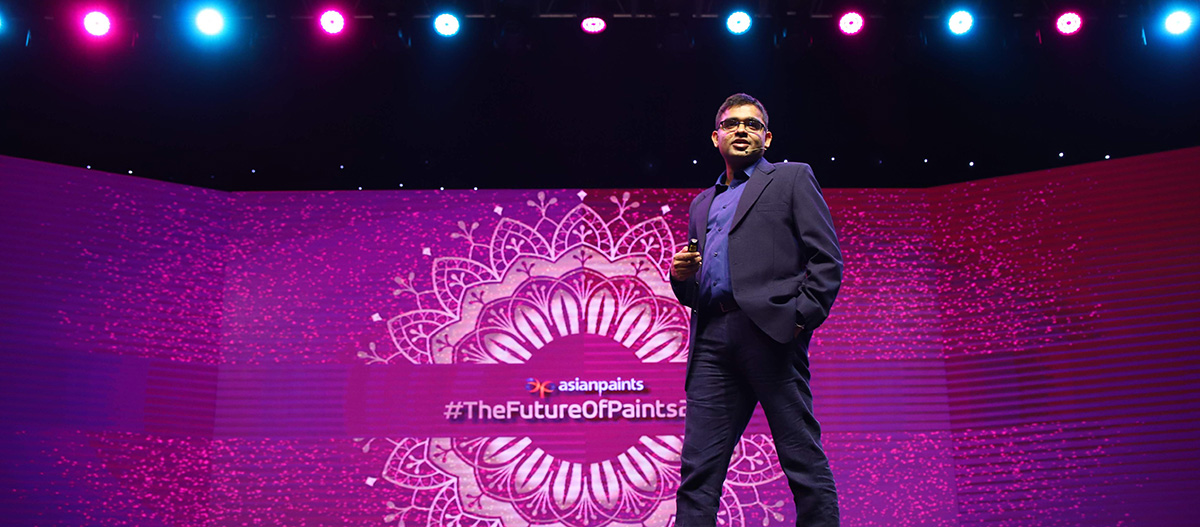
You have been involved with Asian Paints since 2006 starting as Manager in Marketing. Now in your role as CEO, how have the responsibilities evolved? Can you tell us what you have observed about the growth of the company in the 13 years you have been with it?
It has been an incredible journey with Asian Paints and continues to be. Stints in India, the Caribbean, and Bangladesh, have provided opportunities to work across different demographics, paint markets and customer segments and has been an enriching experience.
Over these years, Asian Paints has been through phenomenal growth and forayed successfully into segments like Waterproofing and Home Improvement. Our brands have stood the test of time and have a strong connection with our customers. Apart from a wide range of decorative paints, there are a number of industrial products which have strengthened their presence in the market.
We have also expanded our global footprint with operations in South Asia, South Pacific, Middle East, and Africa. As a multinational company with a host of products, we continue to grow from strength to strength.

Asian Paints has been operating for 75 years, and has grown from a humble partnership into one of the biggest paint companies in the region, what has been the secret behind the company establishing itself as a market leader?
We believe that people are our strongest assets, for a company can only go as high as its people aim. It is people who innovate and engineer the efficiencies that make a business succeed. At Asian Paints, we believe in an open and collaborative work culture which has become a hallmark of the company. This reflects in the creativity and innovation of our products and services.
We have also stayed close to our customers and take pride in being customer-centric. Every product is designed after extensive consumer interactions and identifying their needs. We strive to create value for our dealer and painter network as well and have developed a trusted relationship over the years. Growing together with our stakeholders has been our biggest strength.

Asian Paints Bangladesh was established in 2002 and has since become the go-to spot for all things paint. How does Asian Paints Bangladesh differentiate itself from its competitors? How is the market in Bangladesh different from the markets in other regions Asian Paints operates in?
Bangladesh has been through an impeccable growth and is a forerunner in the global economy. This combined with the rise of consumption class presents a huge opportunity and differentiates it from the rest.
Asian Paints Bangladesh believes in making the best products suited to these market demands. We have always challenged the status quo with a slew of innovations.
We have been industry-first in offering a warranty on paints which is a testimony of our quality. We have also been the first in modern paint retailing formats with Colour Ideas and Ezycolour stores. They provide a friendly environment for our customers to know about paints, explore our products, visualize their shade selection and even get it executed in their home through Ezypainting services that we offer from these stores.
These initiatives have generated a good response from our customers, and we look forward to more exciting times ahead.

Asian Paints Bangladesh offers segments (products) like Royale Play, Royale Luxury Silk Emulsion, Apex Ultima and Apcolite premium emulsion and Decora. Can you talk us through which consumer demography each segment targets?
We have created an exciting range of products for each segment of our customers. With Royale emulsions range we cater to the evolved customers who want the best in interiors. Our new offerings like Royale Luxury Shyne and Royale Luxury Silk have garnered amazing response and we couldn’t be more delighted. Royale Play is an interesting “One wall” makeover concept for our customers who love to experiment and always on the lookout for something new.
In exteriors, we have performance products like Apex Ultima Protek and Apex Ultima which can withstand climate changes and protect against dirt. Apex Ultima Protek is the gold standard in exterior emulsions and offers waterproofing with warranty. We have bolstered our exteriors range with our new product SmartCare Damp Proof Silicon ceramic which has excellent waterproofing capabilities and doesn’t require an undercoat. It is truly a unique product and groundbreaking in Bangladesh’s market.
Apcolite Premium Emulsion has been our champion product and ideal for customers who want trusted products at the best value. For our mass-market, we have introduced Utshob Super Saver Emulsion, a new category of plastic paint at the price of Distemper. We also care for our customers who face common problems like dampness, cracks, efflorescence etc. though our SmartCare waterproofing range to ensure that they get all solutions under one roof.

Asian Paints Bangladesh has an elaborately set up R&D facility with 200 scientists helming it. What is the role of R&D to remain relevant in the global market? Describe some aspects of Asian Paints Bangladesh’s R&D institute?
Strong products require strong research and development and our R&D has been at the heart of all our innovations. Our state-of-the-art laboratories are spread across multiple locations around the world and have the biggest R&D set up in Asia based out of Mumbai. Being a global MNC, we leverage our learnings from all over to deliver the best of our innovation.
In Bangladesh R&D, we endeavor to develop products relevant for the market and incorporating the unique needs here. We undertake rigorous analysis, tests, and experiments to ensure our products meet all requirements and set the benchmark in the industry.

Climate consciousness is in the forefront of global concerns right now. How does Asian Paints factor in climate conservation aspects while coming up with various types of paints?
Our approach to sustainable development is incorporated into our business strategy. An integral part of that sustainable journey is our continuous efforts to conserve water and optimize its use.
We continue to focus on reducing our energy consumption and make investments in renewable energy footprint. This has contributed to the reduction of the carbon footprint at the manufacturing facilities. We are constantly involved in waste reduction initiatives through effluent treatment and responsible disposal of waste.
We are also moving towards more water-based products, lead-free and low-VOC paints under our green initiatives and comply with ISO 9001: 2015 and ISO 14001:2015 certifications.

Can you talk us through the kind of CSR activities Asian Paints Bangladesh is involved in? Where do you envision the company and yourself to be in the coming five years?
For CSR activities, we are focusing to empower our painters. We are conducting regular health check-up programs and providing them with health insurance. To ensure safety and avoid accidents along with increasing their skills we arrange “Painter Training Programs” with the partnership of the Government so that they receive government certification.
These are promising times and we look forward to more in the future. The customers are ever-evolving and becoming more aware of the trends. They are well-traveled and discerning. At Asian Paints, we are geared to lead this change and set benchmarks in home décor.
We continue to attract the best talents and scaling up our capabilities to leverage the opportunities. As always, I and the company will keep pushing the envelope!

Stepping Ahead

In a conversation with Asif Tarafdar, the CEO of Apex Footwear Limited, Rajan Pillai explicates on the importance of innovation in business, the importance of a strong female workforce and what it takes to excel in the retail industry. 

From your experience, what are the aspects of the retail industry that you find appealing?
I’ve been in this industry for quite a while now. It has been almost 25 years after starting as a salesman. Over the years, I have worked at every stage of the ladder to reach here. Retail is a uniquely dynamic industry. It might not be apparent to many, but the sector is very glamorous, extremely dependant on the aesthetics. The customer makes their purchase decisions depending on the face value. The phenomenon is analogous to the film industry where a lot depends on the impression you make.

It is also continuously evolving. A couple of decades back, people used to get acquainted with brands through a visit and media. Now social media and word of mouth have become the primary for communication with consumers, nothing stays hidden from the eyes of the consumers.

So, when I look at retail perceptually, it is how you ensure that the customers are given the comfort of buying at the best possible environment. Retail is not just about selling a product, it’s also about selling an experience. Therefore, if you’re not able to sell an experience, nobody’s going to buy your product. Customers will always have alternative choices, you have to differentiate yourself by providing a unique retail experience. When a consumer walks into a store, you must ensure that the atmosphere is welcoming, the displayed products are clean and the staff are accommodating of customers every inquiry.

What qualities do you believe are necessary to be successful in this sector?
I believe some basic qualities are necessary to be successful in life irrespective of the sector. It begins with choosing the industry that interests you. If you don’t have passion for something, most likely you will fail to make an impression there. Consequently, for example, when we came out of college, retail was the future. So, pursuing this field has brought me a lot of success, it might not be the same for someone else. Therefore, success depends on the goal you have set for yourself. Some people come to retail for temporary financial benefits but if you want a career here, you have to be very focused. So, if you choose a path, you have to give 110% effort to become successful. Like I always say, there is no short-cut in life!

How was your experience of working for Being Human?
I worked with being human for two years. I started the brand in India. Initially, Salman Khan had a brand name called “Being Human”, it did not have a story or concept. It is a charity where all the proceeds go for humanitarian work. Concurrently, we were approached by an Indian diversified textile and apparel manufacturing company, Mandhana Industries who offered to avail the license to produce apparel for the brand.

Being purely an operations guy, I was part of the team and we set up the business for them. For two years, I worked very closely with Salman (Khan) and we opened about 30-32 stores. It is a very successful brand and can be more successful if done properly. Just like I said, you can’t have a half-pie, to be successful you have to do something wholeheartedly.

Can you please share the challenges you face as the CEO?
I don’t believe there is any person on the planet who is without challenges. Without it, life is depressing. Here, we deal with hundreds of challenges every hour. Retail is a sector which is continually evolving and there is no room to get complacent. The moment you start believing that you are the best, you commence your own demise. For example, successful European brands like JCPenney and Marks & Spencer are at the edge of extinction because they failed to evolve. Conversely, nobody knew China a few decades ago but they have managed to establish themselves as the powerhouse because they have been able to evolve according to the demand.

For example, if a consumer wants a specific feature on a mobile phone, as a phone company, you will not be able to survive without providing that feature. One of the reasons companies like GM and Ford have been bankrupt because they thought themselves as the best until they suffered heavy defeat at the hands of Japanese carmakers.

You should always consider yourself a student which will help you to grow. You have to set your sights for the next stage and grow accordingly. The moment you begin to think that you are at the top, it’s easy to fall. So, I always tell my team that we are at the bottom of the pyramid and there is a lot to be achieved.

Did you have to make any changes to your leadership strategy for Bangladesh?
Yes! a lot actually (laugh). I have previously worked in places like the Middle East and India where retail is very dynamic. Dubai is primarily thriving in the service industry, therefore, their service is strong. On the other hand, Bangladesh is primarily a manufacturing and agricultural country. The service industry is at a very primary stage right now. I am sure it will develop just as its international counterparts but it will take some time. When I joined here in Bangladesh, I had numerous ideas but could not implement them because the owners of the company had other priorities. I realised that I have to take things slowly and revise the basics. Our first Programme was “Back to Basics”. So, I started with the basics and by the grace of Almighty, we have seen robust growth for the last six years.

Bangladesh is set to emerge as the next manufacturing hub for the global footwear industry. Besides low-cost labour, what are the aspects of the industry we should focus, to ensure robust growth?
Bangladesh’s economy is sprinting. The primary reason behind the keen interest from investors is the availability of competitive labour force and women workers. At our factories, almost 70% of workers are female. More female workers contribute higher productivity of a country. China has managed to retain as one of the strongest economic powers in the world because of the availability of a largely female workforce.

Secondly, besides ensuring competitive labour, we can increase our productivity. China’s labour force is much more productive and capable of delivering output a time higher ultimately compensating for the higher wages. Therefore, we (Bangladesh) are lacking in productivity but the workers are not to be blamed for that. We have to change the system which promotes low productivity. As more and more foreign companies come to Bangladesh, they are bringing new techniques to increase productivity. This will have a positive effect on the overall productivity of Bangladesh, concurrently it will become more competitive. I am confident that in the next five years, the footwear industry of Bangladesh will become very strong. Honourable Prime Minister has set a target of 5$ billion export but I believe it will surpass that.

There are some hurdles that are required to be passed before that, logistics is one of them. It takes a lot of time to process our exports through the port. Often, shipments are delayed by weeks due to logistical complications, but clients are going to penalise us nonetheless. I really hope the government can solve this issue.

Apex Footwear has now decided to invest Tk100 crore more for building a new factory to carter to the local market. What has prompted you to focus on the local market?
Our local business is very strong, and it will keep expanding, that’s why we have invested in new facilities. We have just put a 6-floor building. Our Chairman Syed Manzur Elahi and Managing Director Syed Nasim Manzur are very focused on their goals in Bangladesh. My chairman is adamant about ensuring the 12,000 workers in both our factories are being looked after properly. He makes sure that they are fed properly and paid on time. Not only the workers but their families are dependant on us, Apex is well aware of that responsibility.

What is your vision as CEO of Apex Footwear?
We haven’t even started yet! (laugh). There is a long way to go, as I stated, it is not the people rather the process that will make the organization successful. So, people will come and go, but if there is a proper process in place, the business will continue to grow successfully.

We currently have about 250 stores, 222 franchises and 189 distributors. It is a remarkable achievement which has been made possible by the hard work done by our chairman. With his vision, I am sure we will do much better in the future.

Scaling the Summit

Summit Communications Ltd continues to reimagine the telecommunications industry of Bangladesh while empowering the country along the way. 

You have studied in Singapore, the U.S. and in the U.K. If you wanted you could have pursued a career anywhere in the world. How did the journey into Summit begin?
Summit Group has been around for over 33 years, and I am 31 years old. Being a family run business, my life was always centered on the company. We cousins grew up watching our fathers submitting tenders, opening LCs, and this became our playtime activities.

Our family grew up very close to each other and Summit has been the thread that tethers us together. We have grown up into our own individual and independent selves, but at our core we carry Summit and this knowledge allows us to resolve and adapt to issues as they arise. It allows us to always set aside a singular need and work collectively to find a solution. We have always grown up so closely, not as cousins, but as siblings. It was really lovely that we still get to hold that connection and continuously adapt to each other. My uncle, the Chairman of Summit always tells us, “You can create things together, like five fingers make a fist”. That is something which is close to our hearts, we always realize the importance of being together, and thus multiplying the togetherness to hard work. In our core, there is always Summit.

I studied genetic engineering, and I wanted to become a geneticist and instead, I moved back to Dhaka after completing my undergraduate studies, the enormous growth potential and opportunities in Bangladesh was a definite driving force. I joined Summit as an officer which gave me a broad overview of how the different aspects of the company run.

When Summit Communications began its journey in 2010, I devoted all my time to learn that business. In studying genetics, I learned that your DNA which you cannot see with the naked eye constitutes you and similarly with the internet, you cannot see the fiber optic transmission but it connects the world. This intrigued me!

Your interests lie in nano and hi-tech industries, and you have been actively working towards the vision of implementing Bangladesh’s first hi-tech park. What sort of features, amenities, and facilities can we look forward to?
Dhaka is very crowded now, there are a lot of startups coming up, however with high rental rates and absence of incentives they are unable to truly flourish. The hi-tech park model has worked really well in neighboring emerging countries where townships coupled with incentives were developed; it allowed them to break the barriers of urbanism and thus create a very strong skilled human resource pool as well. The hi-tech park is in Gazipur 40 km away from Dhaka. Eventually, this will introduce the concept of suburban work-life relationships. The government’s immense support towards the high tech industry, and promoting ICT has allowed us to envision the hi-tech park. There is a railway station already in place and commuter trains will soon be introduced along with the fact that the incentives are great and the surety of best quality electricity and fiber optic connectively, we remain excited.

Currently, almost 40% of the space has already been allocated. There is a biotech company being set up, the first of its kind in Bangladesh, which will truly change the landscape of ICT and high tech infrastructure. Along with that mobile assembly is going on, there is also manufacturing of e-cheque books, ATM machines, fiber optics to name a few. We also look forward to opening a training center to harness the flourishing young population in our country and provide them with new opportunities. There’s a tier four data center as well and we are considering building a disaster recovery center for Summit Communications there. That’s the high tech park.

Tentatively when are you expecting to complete the hotels and other auxiliary service buildings of Hazrat Shahjalal International Airport? Also, can you elaborate on the new venture Summit Tower?
Recently I have gotten involved with our hotel project, which is a multi-tenanted, and multiuse complex. It has retail space, banquet hall, office space and a five star and four-star hotels. The retail space is already complete and we have started allocating space, but the hotels definitely by the end of 2020. It will be an Intercontinental and a Crowne Plaza connected with a retail space of one million square feet, movie theatre and lots of children entertainment. We are excited to develop this landscape to accommodate and offer such facilities to the changing lifestyles of Bangladeshis as their purchasing powers increase and lifestyle choices evolve. It’s also the first airport hotel which will also enhance ease of conducting business in Bangladesh.

Summit Towers is more of an obvious kind of entry for Summit communications. We have the NTTN license, the IIG & ICX license, and the ITC. It was a natural progression for us to kind of complete the value chain. With the data boom that is expected in the country, we really need these towers to be able to accommodate that data growth, partly because most of the towers are connected now by a microwave, and a microwave cannot handle the upcoming capacity. You have to connect them through fiber. Fiber has limitless capacity; it just depends on the end to end devices. They eventually have to connect with fiber. It will change the landscape of the way the tower businesses operate. Currently each telco kind of holds its own towers, so they are not utilized most efficiently. When a third party takes them on, you can increase the tenancy ratio and one tower can be utilized by many. It makes it more efficient because you are sharing the cost of power and rental as well.

To tell you a little bit more about Summit Communications, we maintain and operate about 44,000 km of fiber optic. It is the largest in the country and currently, we are also providing 33% of the country’s internet bandwidth. Also with ITC, which is International Terrestrial Cable, basically most of the internet comes through the submarine cable – they have to go through routine maintenance, the ITC also provides redundancy to the submarine cable along with secure international private circuits. So that is where we come in, last time when there was submarine cable maintenance, there was zero disruption.

Something that we have recently done, that is very interesting as well as connecting the Bangabandhu Satellite to Earth station with our fiber. What happens with that is, there are about 35 TV stations that we have connected with fiber to the earth station. This way all the TV stations now use the Bangabandhu satellite. Previously they were using the satellites of other countries. Now you are dependent on your own country.

What kind of strategy is SCL devising to expand their outreach to rural communities? What sort of policy support could the industry benefit from to encourage them further?
Nowadays the internet is not a luxury anymore, rather it has become a necessity. I tell everyone that I sit here and I do my grocery shopping, I get my flowers delivered, really internet is not a luxury. How the country is coming forward with encouraging the rural communities, and kind of lifting them up, I truly and really believe that the internet will play and is playing the biggest role. Because our infrastructure is still not very good, in the sense that road infrastructure, or transport wise. So this is it, this is your key to being the overcome the physical barriers. I feel like my sister who is in Singapore, Ayesha, she is the CEO of Summit Power International; I feel closest to her, even though she is in Singapore, because of the internet.

Internet connectivity - this is our key to growing. We have really taken it on and the government has given us immense support. We have now done two projects with the government; InfoSarkar 2 was to connect 3650 government offices in 110 Upazila and 14 districts. We completed that project a month in advance. Then we did InfoSarkar 3 where we connected about 1227 unions in 485 Upazilas in 64 districts. The government themselves has given about $260million. We have invested about $21 million.

Also, we are the only company that has connected the Chittagong hill tracts. A lot of people, do not want to do it because of the terrain and such. Empowering Bangladesh is our goal, connecting the country to the world is our aim. A location shouldn’t be deprived because of the terrain. So we really took the challenge on.

It was an uphill battle. We are so lucky to have go-getters in our team. Their enthusiasm and unbound energy to tolerate bad weather and even then our team worked through the pouring rain and flood. The core is strong that is why we are able to do what we do.

Tell us about your charity with Moyeen Foundation?
Moyeen Foundation is actually founded by my parents in law – Asif and Sadia Moyeen I have been married for over 8 years and they founded this foundation a couple of years ago. Through that foundation, they have done some extraordinary things and I am so happy to be able to help and extend myself in that foundation. They provided the first online school with Jaago in Sylhet, which was started with 40 kids and now it has 200 kids in just one year. Now we are working on expanding the building and space. It’s in Hobiganj. Then there is Operation Cleft, where we work with a Rotary Club of Melbourne and perform cleft lip surgeries for free. To date, about 1500 surgeries have been performed. The third and most exciting of them, which I personally devote a lot of my time to is the Jaipur Foot Camp. We have done this since 2015 and to date, we have fitted 2000 limbs. We do this in collaboration with the Bangladesh Orthopedic Society and NITOR. The Jaipur foot initiative is the ones who came up with the technology of making these low-cost limbs - it costs about 10000tk per limb. We do it for a month. This time our hope is to fit 750 limbs. It is really exciting that I can collaborate with my in-laws and that we do this work together. They are both extremely kind and generous to lend their hands. They also support Thrive, which is another NGO, they provide healthy lunch to 1800 of kids every day.

How has Summit Communication become the success story it is today?
There are a couple of reasons. Normally, for a digital infrastructure company, you invest upfront, then you secure your clients. We went the other direction, we secured our clients and then we; invested. That is unheard of. How do you sell a product that does not exist? We did it. We took in orders first, then we built/leased it. That was number one. We are very proud to provide all our customers with the highest service levels through our 24/7 365 days NOC.
Number two, we were profitable since year 2 operations. That is unthinkable in telcos. Telcos normally go through a slump first, you call it hockey stick growth. But this was different, we are really proud and channel that excitement to get bigger and better every day.

What is the one advice you have for working women to achieve work-life balance?
I started working when I was unmarried, then I got married, now I am a mother. I felt like each step in my life kind of prepared me for the next. A part of it is definitely seeing my father and my uncle. And an even bigger part of this is seeing my chachi and my mother.

Our fathers worked hard for us and that is ingrained within all of us. When we were kids, I remember my father traveling to various places for business, but it was always about the quality of time spent with us rather than quantity. He says, “ I am constantly available without presence.” Our mothers are our safe space, who have literally dedicated their lives to us. We all grew up in cantonment, one would drop us in the morning, and another would pick us up from school. You see you have to have that tag team – that proxy parent. Chachi is also my mom, who is also our chairman’s wife. I have seen the 4 of them as a team, and one of them is always there for us even now and that’s the exact same strategy we replicate. Now my son has my sisters and their children as proxy mothers and siblings! Also, I am very very lucky to have an incredible partner, we share every responsibility equally! Hence, the balance is always there.

My profession is demanding, so devising a balance is key. Being able to adapt to a situation quickly and setting ground rules will bring you a step closer to achieving balance.
My colleagues deserve to see the best version of me. I have an open-door policy, and my number is given to them. So at any point, if they want to discuss, or they need some encouragement I am always there. Our ratio of male is to women is 9:1, to 9 male there is one female. Almost all the teams have women in it.

Another thing I do is to make sure my employees have coffee with me. We will go on rotation, two people from two different teams will come and we’ll have a chat. It does not have to be work-related. We catch up over coffee. Sometimes we will talk about life, sometimes about good things, sometimes about tough things. It’s for me to know them really well. We also have a zero-tolerance policy on sexual harassment which we implement stringently.

The position I occupy demands that I be assertive with a gentle guiding hand. My uncle and father do the same to us and I have learned from them. If you are always in your comfort zone you won’t excel. You have to be out of the zone to discover happiness. It is a bit of an ironic statement, I know. I also set aside time at night where I watch tv shows and read. My son goes to bed at 9.30, then my husband and I hang out. We talk, discuss our day, the coming week, upcoming travels, and that is so important, to have that catch-up period.

I also love to read scientific journals, it’s reminiscent of my earlier days. I like to read about rare genetic disorders and the progression towards its cure around the world. The bottom line is you have to want to learn. Knowledge is power. My uncle repeatedly reminds us to study, even if it is something random. My love of reading scientific journals does not have any implication in the corporate world however it teaches me to understand something new, think of it, reengineer it in my head, ask questions. It makes you inquisitive. You have to yearn to learn, find happiness and love what you do and to adapt to change.

My uncle always tells us not to follow fools or arrogant people. There’s nothing to learn from an arrogant person. Learn to love everyone. Be inclusive, including society and everyone. Those are the foundations of Summit. What we do and how we are doing things and how we are planning to grow, is all tied to the empowerment of Bangladesh and the world. I am a part of Summit as much as Summit is a part of me.