Home2019December (Page 3)

By Maimun Mustafa

Remote sensing, the internet of things (IoT) and artificial intelligence (AI) are some buzzwords that we are being bombarded with everyday. Interestingly the building, construction, and complementary industries are being dramatically disrupted by these 4th Industrial Revolution (4IR) technologies. Rather as a consequence in the age of continuous change, the different players in affiliated sectors of construction need to evolve by seamless intra-industry integration. This is the era that is being catalyzed by the smart building system with IoT at the forefront.

FOUNDATIONS FIRST
The Internet of Things (IoT), relevant to the building industry, is the network of interconnected devices, mechanical and digital machines, home appliances and other objects embedded with sensors, software, switches and connectivity which enable these objects to connect to a network that collects and exchange data. Remote sensing refers to the use of wireless sensors and actuators which can be remotely controlled, monitored and optimized by the user for automation and collectively give input to the IoT. AI software takes in the data generated via remote sensors and processes it to make automated decisions through machine learning so that human input eventually reduces over time.

IoT making life simpler in homes & offices

MODUS OPERANDI
The connectivity of IoT devices allows joining various hardware by creating network and comprehensive intelligence systems. The dynamic nature of IoT devices tells the state of the device on/off status as well as data information from its neighboring environment. The crux of technology is diverse due to the utilization of distinct platforms and networks. Imagine a universal remote control with the need for a handheld remote. Currently, the systems are consolidating information from home exercises, neighborhood climate frameworks and then some. The end goal is to acclimate to the optimal way of life and help for better deals at home and at the workplace. Even better, interfaces can communicate with one another to shape a firm unit to enable the house to work cycle.

A DAY IN THE LIFE OF IOT
Imagine a day, wherefrom the moment you wake up, sensors can pick up body temperature, record your preferences over time and use algorithms to adjust the mattress warmth and regulate the air conditioner. After you step out of the shower, (which itself has allocated water and water pressure efficiently as part of the integrated system) lights turn on and off, as you move room to room with no physical interaction. The stove is heated for breakfast while the TV automatically turns on CNN for your morning news brief. As you leave the house, energy efficiency can be utilized and non-essential items are switched off. The doors remain secure as biometrics sensors will only allow you and your family to enter and thus, make keys a relic of the past. Entering the office, you can clock in and the AI will be able to adjust music and ambience to boost collective mood and enhance productivity. That is only a snapshot of the potential in a day of the IoT enabled building ecosystem. In simple terms, IoT plays a momentous role to reduce human exertions and reap economic benefits. It just makes business sense to capitalize early. IoT and smart buildings are here-and-now opportunities that Bangladesh needs to capitalize on.

Pine Solutions Limited is one of the leading software development companies in our country and it is winning over the Bangladeshi ICT sector with remarkable innovations. 

Information technology and business are becoming inseparably interwoven. It derives the path to innovation which is the path to success in business. Subsequently, Bangladeshi companies are increasingly leaning towards ICT companies to bring innovation and efficiency in their operations. Among the existing Bangladeshi ICT companies, Pine Solutions Limited has been making headlines across the world with their service and innovation.

In just five years of existence, Pine Solutions Limited has become one of the leading software development companies of our country. The quality and reliability of their developments have been winning over corporate Bangladesh and helped them to snap up some of the biggest clients from diverse sectors. The company’s incredible success is owed to the tenacity of providing excellence through the adaptation of the latest technology and insights on respective industries. Pine Solutions Limited has set the bar high for their counterparts by winning several national and international recognition through its flagship products WeeReach and Poshapets. Pine Solutions was awarded the Champion at the BASIS (Bangladesh Association of Software and Information Services) National Award in research and development.

Early Years
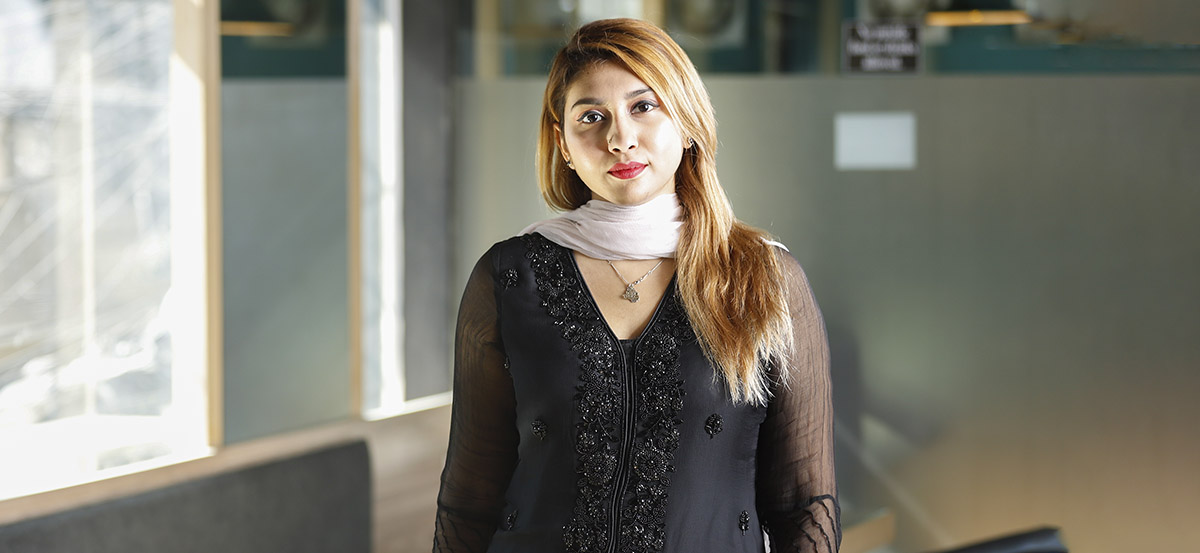
Pine Solutions Limited was initially founded in 2014 by Sanjida Farhana while she was still studying in Europe. Sanjida Farhana was completing her masters from IE Business School in Spain. The company was officially launched in 2016; it has been making waves in the Bangladeshi ICT sector ever since. Besides leading Pine Solutions, Sanjida Farhana is also an educator. She was a faculty at Bangladesh University of Professionals (BUP) before joining North South University as a part-time faculty. She is also the winner of the CMO Asia Leadership Award this year.

Pine Solutions has also been celebrated as one of the winners at the 2019 Messaging and SMS Global Awards. The company took home the Award for Best SMS/A2P Provider – APAC, the only Bangladeshi company to be acknowledged with this recognition.

WeeReach
Developed by Pine Solutions, WeeReach allows business entities to engage with their customers through SMS, Voice, Push, Bot, Email, and Social Media Apps. It can be extremely challenging for companies to engage with their customers as they continuously move across various platforms. Conversely, there is an immense amount of data in the digital space, which are inutile if not analysed. It leads to poor customer service as businesses fail to respond to customer demand in real-time. WeeReach is an omnichannel platform that allows companies to engage with customers across various platforms. With the help of advanced analytics, it also creates rich profiles of each customer to deliver the ultimate personalised experience in a single conversation that threads together multiple communication channels. The platform has helped numerous Bangladeshi companies to maximise utilisation of customer engagement through Voice, SMS, and Viber services. Impressively, WeeReach provides messaging solutions to several Bangladeshi banks. The banking sector of our country relies heavily on this service, as it is the most preferred medium of communication by clients. A large proportion of our population do not use smartphones and have limited access to the internet; they solely rely on automated messages to receive their banking information. Therefore, it is playing a crucial role in ensuring access to information. Pine Solutions has also been celebrated as one of the winners at the 2019 Messaging and SMS Global Awards. The company took home the Award for Best SMS/A2P Provider – APAC, the only Bangladeshi company to be acknowledged with this recognition. 

The Pine Solutions Team

PoshaPets
Co-founded by Sajida Farhana (CEO), Tasneem Islam Arna (COO) and Nafizul Islam (CTO), PoshaPets is a complete pet based solution delivered at your doorstep. Once considered a taboo, owning pets in Bangladesh has become very popular. However, pet owners across the country have to suffer the brittle support system. Concurrently, most of them find it very difficult to find verified home-call vets and pet food home delivery. Some owners also look for grooming services for their pets; all of the services were very limited or non-existent in the country until now. PoshaPets is a one-stop solution platform that brings hassle-free premium services for your pets. Owners can sign-up and create a profile for them and their pets and enlist the required services. The services range from making an appointment with an enlisted vet to ordering food or grooming services. The blockchain and IoT based mobile application can be used to find a nearby veterinary, pet food shop and service. It also saves aggregate medical history data of the pet for future reference. PoshaPet is also facilitating real-time pet tracking, allowing the owner access to the history of complete physical activity of the pet. It has been hailed as one of the most promising startups in the world by various national and international bodies. It got selected in GP Accelerator, the largest acceleration program in Bangladesh powered by Seedstars and has been shortlisted for the final conference at Startup Jalsa to be held at Dharamshala, India.

Besides leading Pine Solutions, Sanjida Farhana is also an educator. She was a faculty at Bangladesh University of Professionals (BUP) before joining North South University as a part-time faculty. She is also the winner of the CMO Asia Leadership Award this year.

Looking Forward
In a few years, Pine Solutions Limited has become one of the fastest-growing software development companies in Bangladesh. They have set a benchmark for quality and reliability for customer engagement solutions in Bangladesh. Their flagship products WeeReach and PoshaPets have received multiple international acclamations and investors are already lining up to fund the company. The Government of Bangladesh is envisioning a prosperous Bangladesh through the digital revolution. Pine Solutions Limited is a lustrous example of that vision properly executed through innovation and diligence.

Was there any defining moment while you grow up when you decided to become an entrepreneur?
When you are born in a family where virtually everyone is a business person, you are well aware of your destiny. The knowledge of the business was embedded in our upbringing; my siblings and I were involved with work back when we were in class six. Our father did not want us to join our company as bosses right after graduation, rather he wanted us to become colleagues of our employees. Experienced executives of respective departments mentored us. Consequently, by the time we graduated, we had been mentored by a General A manager who had been an executive and that augmented our acceptability. Besides, we were allowed to work in sectors which we were interested in. As I had a knack for cars from a very young age, I was given the responsibility to put oil in the car and calculate the mileage when I was in class six. I was also given the responsibility of maintaining the roster of commercial vehicles.
After that, I joined the head office at stationary purchase before moving to raw material procurement. By the time I graduated, I had more than ten years of experience of working in our company, so I never faced any cultural shock. Additionally, throughout my higher studies in abroad, I worked in different organizations as my father had the policy that you must have three years of prior work experience before joining the company. So, instead of wasting time, I earned my stipulated work experience while I was doing my higher studies.
He also wanted us to experience management styles of different cultures and assimilate them into our company. The combination of academic learning and practical experience gives the actions a lot more value.

Do you believe you would have been a different person, had there been no family legacy?
I never thought of it that way; maybe it would have been different; I might not have been blessed with so many opportunities otherwise. I executed the opportunities and scopes I was given to be the man I am today. Everybody has potential, but to turn that into something meaningful, someone has to provide that opportunity, and that’s true for everyone.
You seem to be hugely influenced by your father’s philosophy and vision. Are there any differences between his and your leadership styles?
Every human being has a leadership figure whom he follows throughout his life. From a religious perspective, our Prophet Hazrat Muhammad Sallallahu Alihiwasallam is the greatest leader this world has ever seen. We are following teachings that he left for us 1400 years ago. From a religious and family perspective, I am heavily influenced by my father, and so is the case for the rest of my family members. More than a leader, he has been an incredible family member. The way he nurtured us had immense
implications on our lives. None of us in the family can match his leadership capacity and foresightedness.

Has it ever occurred that he is in a way eclipsing you to bloom?
My father’s management style was very different. The day we stepped in, he left the company. Unless we reached out to him, he never interfered in our work. My father was a self-educated person, the kind of corporate foresightedness and compatibility that he possessed with so limited educational background is almost unimaginable.
He has given us the complete opportunity to execute what we wanted to as long as our Board of Directors were convinced. It is a common practice within the organization that any business proposal must get the consent of the Board of Directors to go ahead with. If unanimously there is a disagreement, that means I have failed to present my case.

How would you define your leadership style?
I prefer to be the person who reaches out, instead of dictating, I prioritize on becoming part of the journey — training them to achieve goals that the company desires from them. Instead of micromanaging, I prefer to establish a set of goals that we want them to achieve. We also expect them to learn about the culture and vision that we ourselves have acquired from our company. Until an employee empathizes with the core values of the organization, genuine respect for the values will not develop. Irrespective of individual performance, everyone needs to grasp the real purpose of this organization. A company cannot sustain solely on financial aspirations. I read somewhere that “Profit is the only logical thing to follow in business”, it is also crucial to understand why we need to make that profit. It enables them to explore more avenues and perform more efficiently. We practice the culture of enabling each other and grow.
Additionally, it’s extremely important for us to create a sense of belonging among the employees, and make sure they treat this entity like their own family. Even when people part ways with Anwar Group, they always feel part of the family. Most importantly, we have a very open culture at our offices; everyone is encouraged to share their ideas. I know about 80% of my employees by their names which is still less than my father as he knew every employee personally.

Can you share with us a challenging moment in your career?
I am actually going through one right now. Our economy is currently going through a lot of transformations; it is a challenge to assimilate to so many changes. I am also finding it difficult to maintain a work-life balance. Consequently, I have been trying to unlearn and relearn; unlearn some obsolete ideas and re-learn what I should have learned in a different way, in terms of execution and management styles.
With time, customer perception and habits have changed and we are trying to understand the transformation and get ahead of the curve.

What do you believe is the catalyst for this change in customer motivation?
If I talk about the jute industry in particular, unfortunately, there hasn’t been enough developments. The biggest reason behind this is the lack of R&D. In terms of policy perspective, we have actually failed to protect this industry. To some extent, we have politicized this sector and as a result, this sector has remained neglected. It is extremely regrettable because this is the only product whose entire process, from raw jute to finished product is generated in Bangladesh. That means we have the opportunity to make a 100% value addition in this sector. Unfortunately, until now, we are stuck in its rudimentary uses in the micro and cottage industry scale.
I have been very excited about “Sonali Bag” and I have personally talked to Dr. Mubarak Ahmad Khan about its commercial availability. As of now, the product is not ready for commercial production but even if he manages to make it available, I am skeptical whether we will be able to utilize the benefits.

How eager do you believe is the government to share the knowledge with the private sector of the breakthroughs made in the jute industry?
Our Prime Minister has already stated informally to share them (the knowledge) with the private sector. But often, that is not possible due to bureaucratic complications. There are also questions about intellectual property rights, which solely belongs to the government. But I believe the inventor should be rewarded through financial benefits from the rights even though he was working under the government when he made the breakthrough. It will encourage more innovations and some of the most innovative countries practice that.
The government could have benefited a lot more by licensing out the rights to use the technology in the private sector. That’s how the most developed countries have gone so far ahead in innovation, they are encouraging it (innovation) by allowing to share the proceeds of the usage rights among stakeholders in the innovation process.
It also encourages the entities in the private sector to invest in innovative programs as the money is going to the different research institutions and universities. Unfortunately, initiatives like these are non-existent in our country.

Where do you believe the reluctance to innovate or share knowledge amongst us stem from?
It stems from a mix of several negative mindsets that exist in our society in general. Ignorance, arrogance, general lack of knowledge on how to capitalize on such things and bureaucratic mindset have deterred us from the path of innovation.

Now coming back to Bangladesh’s economy. What do you believe is the biggest challenge for Bangladesh’s economy right now?
One of our biggest assets that we keep talking about is our demographic dividend. More than 65% of our population is 25 or younger, a significant number of them are already in the workforce. We have to ask ourselves whether we are creating enough high-skilled jobs for them.
We have to prepare our workforce for the fourth industrial revolution and develop the necessary skill set to keep up with the changing world. A few days back, at Hamad International Airport in Qatar, I noticed, most employees were Nepalese. From lounge to security, everywhere you look, there was an overwhelming number of Nepali nationals employed there. It was also very surprising to see so many Nepalese women employed in blue-collar jobs there, whereas, women migrant workers from Bangladesh generally work as a house help. Conversely, the workforce we are producing at the moment will not be interested in low skilled labor such as house help or night guard, therefore, they might find it difficult to land blue-collar jobs in the future if those are already occupied by other nationals. Therefore, managing our greatest asset is our biggest concern.

Do you believe the industry-academia gap is responsible for the lack of skill set development?
Absolutely! Our educational institutions are preparing the youth for the present rather than the future. We are not paying any attention to future needs and that’s true even in the private sector. I cannot find Bangladeshi CTOs (Chief Technology Officer) who can guide me to modernize our office and industry for future compatibility. They are good for the current perspective but do lack the vision for the future.

How can we solve this problem?
Unfortunately, we have to import skilled workforce in our country, who can train and educate our local employees. But if we bring in somebody who will take up his role and not train others, that will be detrimental. Currently, the transfer of knowledge is missing, we are bringing in people but not allowing them to grow into their shoes. Until we do that, bringing people is not going to provide us an advantage.
At Anwar Group, we have a few foreign employees who have contractual obligations to groom a particular number of local managers within a certain period of time. Foreign employees are more driven than the locals because they have certain sets of targets to achieve to earn contract renewal.

How do we change this mindset amongst ourselves of taking things for granted at work?
I believe, it has a lot to do with our own managerial skill-set. Often, we fail to establish accountability in our institutions. We also fail to empathize with the importance of carrying out a task responsibly in our institutions. It is extremely important to make employees feel that they are part of the institution and that’s the responsibility of managers. You must have very good managers because, at the end of the day, everybody has differing potential and capacity; we have to help them to grow to their full potential.

One of the concerns we have about unemployment problem is lack of investment and developing new enterprises. Do you believe we have favorable climate for foreign investment?
Absolutely not! Over the five decades since independence, the private sector has been the major driver of our economy. If the private sector is not comfortable with the current environment, how can you expect foreign companies to invest in our country? We have a long way to go in ensuring a standard business environment. Our development will not be sustainable if we fail to improve our business environment at a pace faster than the rate of our development. Our growth rate of 8% did not happen overnight: it is the result of a lot of hard work. We now have the opportunity to grow exponentially if we can remove the barriers to doing business. Bangladesh is far behind in Cost of Doing Business and Ease of Doing Business index. This year we have progressed eight steps on the Ease of Doing Business Index on the other hand Pakistan has improved 28 steps. In the cost of doing business, we are only making our processes more complicated-according to proposed regulations companies will now have to file tax returns of their employees. How can they expect me to file tax returns of 14,000 of my employees? Instead of making things easier, they (bureaucrats) are walking backward.

What is your take on the startup scene of our country? Are we doing enough to develop entrepreneurs?
Alhamdulillah! I believe we have done quite well. The initiatives started from the private sector and now the government is, well, on board. Bangladesh Investment Development Authority (BIDA) and ICT division have undertaken some commendable programs which were not there when we were coming up as entrepreneurs. At that time, there were very few opportunities to formally fund your business through investors. Over the years’ numerous organizations have invested heavily in developing student entrepreneurs. I am thrilled to see so many initiatory steps are taken to develop them (entrepreneurs). However, we have to simplify the processes of business licensing, registration and taxation to see a robust improvement in the start-up scene.

What is your take on the future of fintech in Bangladesh?
As a company, we are also keeping a close eye on the sector, as we also have a number of financial institutions. I believe, we are a little behind, not only as a company but also as a country. The financial institutions are trying to jump on that bandwagon, there have been discussions on bringing block-chain and also how companies like us can implement them in our operations. However, as I have stated previously, I am yet to find a CTO who can guide me through the implementation process.

How can we reduce overall corruption in our country?
Digitization is definitely the most important tool against corruption. By reducing the number of human interactions. We can ensure there are fewer chances of corruption. More and more bureaucratic complications will end up making the business processes more vulnerable to corruption and eventually to failure. Most importantly, the citizens need to be aware of their rights.

You travel a lot, has that changed you as a business person?
I try to learn from each and every trip that I make, whether its international or within the boundaries of our country. I try to bring something back from every travel.

Can you please share one such learning moment?
It is difficult to point out one particular moment. For example, I just mentioned about something that I witnessed in Doha Airport, I usually share this information with my counterparts who are involved in the sector and ask them about why we (Bangladesh) are missing out on these jobs. From a company perspective, we joined a learning session where they discussed how a CEO can actually become a bottleneck in terms of the company’s growth and what needs to be done to avoid this scenario. After coming back, I implemented that knowledge in our company.

Can you simplify in a few lines about how a CEO becomes a bottleneck in a company?
Everybody has a set of knowledge and a certain bandwidth, if you have a challenge that is bigger than you, to solve that problem, you actually have to move up towards it. Until and unless you have that knowledge, you won’t be able to reach there and solve it, the same thing happens in a company. To resolve the bottleneck, you have to surpass yourself by evolving through learning and adaptation.


In a conversation with Asif Tarafdar, the CEO of Grameenphone Ltd, Michael Foley divulges on what it takes to stay ahead in the ever-evolving telecom industry, the delights of working in Bangladesh and the things that keep him awake at night. 

The Telecom industry is a dynamic and rapidly evolving sector, what challenges does this pose? What are the strategies that help you to ensure the ship is guided in the right direction?
That’s a wonderful question and a great topic to start the conversation because our industry and the world is becoming much more complicated. In the past, in telecom, the only real evolution was in technology, and you could predict the path of progression. Now, the transformation has become multidimensional; every other aspect of the sector is evolving, including the regulatory environment and international competition. Concurrently, new players are entering the market like OTTs (Over The TOP), cross-platform messaging and VoIP platforms like WhatsApp and Viber. Most importantly, consumer behaviour and preferences are constantly evolving.
Consequently, the future is no longer predictable; therefore, we have to allow ourselves to perceive/predict and react, which is not easy for big companies. To make that happen, we have had to change the culture of not just Grameenphone fundamentally, but the entire Telenor Group over the last four years to become much more supple. It allowed us to adapt quickly and look for opportunities where otherwise we would not have searched before. The process stipulates making the organization leaner. It also involves removing layers of management, automating and replacing outdated systems. Instead of using massive system developments and releases once every half year, or every year, we now have a customer-facing tool, MyGP, which we do releases every two weeks. Therefore, we moved to a completely different operation from where we were before.
So, the answer to dealing with an uncertain future is to give yourself the tools to be much more flexible. And we call that “Agile”; we have to react quickly. But we also have to predict and move fast while being in touch with the market by using tools like Big Data and AI.

How has GrameenPhone incorporated the use of Big data and AI in its operations?
We use Big Data, Machine learning, and some AI to design promotions. They help us to understand the consumers by Upazilas, or even smaller groups and design promotions accordingly. Grameenphone can modify the offers that consumers get, based on their usage almost in real-time.
We are also using more and more of these tools for management of networks because they are becoming very complex. Modern networking technologies require incredibly sophisticated tools; we augment human intelligence and effort with these advanced technologies.

Your consumer base is incredibly large and diverse, does that make predicting even more challenging?
We have roughly 76 million customers right now, and that scale allows us to do very significant analysis. For example, GP serves up 400 million minutes of voice services per day. In every one of those calls, there are multiple interactions. These interactions allow us to create models of how our customers and the economy behaves, which eventually enables us to start crafting services and products that meet the needs of clients. And that the ability of computing power today to crunch this amount of is such that the scale of it gives us an advantage rather than a deficit. 

I usually tend to be very deeply hands-on, involved in every aspect of the business. From working on promotions to setting up towers in various districts, I prefer to be engaged in every operation.

You have previously worked as CEO of Telenor Pakistan and Bulgaria, are there any specific challenges that you had to overcome in Bangladesh?
I’ve previously worked in markets similar to Bangladesh, including Nigeria, Kenya and Tanzania. Like any other market, Bangladesh has some specific challenges. For us (Telenor Group), Bangladesh has been one of the most successful ventures, and we’ve been here for more than two decades. It is the cornerstone of our activities in Asia.
For Bangladesh, some obstacles are very distinctive, for example, I’ve been here for 36 months, and we have already had three cyclones. These are obstacles that you don’t have in other parts of the world. But we have become good at dealing with these things. So eventually, we get good at dealing with the challenges that exist in specific markets.

Do you have to make any adjustments to your style of leadership depending on the country you are working?
Yes! I usually tend to be very deeply hands-on, involved in every aspect of the business. From working on promotions to setting up towers in various districts, I prefer to be engaged in every operation. However, this business has become so massive and complex that it doesn’t allow me to do that anymore. Likewise, our corporate strategy of “Red way of work” and “Agile” makes the leader play a different role. So the leader plays two particular roles now; it includes setting clear objectives and managing the results closely.
And in the middle, you let people within broad guidelines find their way. My job as a leader is to set those very clear objectives and to manage the results at the end, and then facilitate the way they do things, but let people find their way.
George Patton, the American general in the Second World War, said to let people do their job the way they want to, they might surprise you with the results. And this is what happens in GP, we have a fantastic team of people, the best in Bangladesh work for us, and they do amazing things.
My leadership team and I do not need to tell them how to do something. We only explicate our expectations in the end.
There are some exercises where I’m on the team but not leading. My office doesn’t have a big wall around it and has a desk like everybody else, and anyone can walk up to me. I am also part of some business teams only to provide guidance rather than being the final decision-maker.

Are you satisfied with the rate of 4G adaptation among Bangladeshi consumers?
Yes! The adaptation rate is admirable. There are challenges, and most of them have to do with handset availability. Smartphones are expensive in Bangladesh, but there’s a reasonable good reason for that.
Right now, we cover 71% of the population with 4G. And by the end of next year, we will have all our sites under 4G coverage which amounts to approximately 95% of the population.
We have 30-40 million people in our country who still use 2G handsets, for them migrating is more difficult as 4G smartphones are expensive.
4G handsets are costly because the government has put taxes on its import. In my opinion, its (taxes) pretty reasonable and it appears to be a successful policy for the government actually to encourage manufacturers to build manufacturing facilities here in Bangladesh. And the government of Bangladesh has put in the right pair of barriers at the border. If you’re bringing in parts, the tariffs are more, if you’re bringing in components, they are lower. So the more you get into field manufacturing, the less expensive it is to build a headset here.
And while it may have caused a bit of a challenge for people to adopt, in the long term, this is an excellent decision. As the handset prices come down, people will eventually migrate 4G handsets.

Bangladesh Telecommunication Regulatory Commission (BTRC) is targeting to commence 5G mobile network by 2023? Do you believe we are on track to achieve that target?
Well, the good news is the equipment that we’re installing right now is essentially the last generation of 4g equipment. And it’s all designed to be somewhat compatible with 5g. So when 5g happens, we will be able to launch in pockets 5g where it’s needed. But 5g will not bring a revolution of new equipment. There might be some new antennas, spectrum and baseboards in our equipment, but it will not be a massive revolution.
There are three primary services for 5g. One is ultra-high-speed mobile services; the second thing is this massive machine type communication. So, MMPC, this requires very, very small bandwidth. Many devices around the world, for example, metering, electrical grid monitoring, water grid monitoring use this technology, this can be done partly on 4g as well.
And then there’s very fast, very highly reliable low latency, 5g services for gaming or autonomous vehicles or telerobotics. So, a doctor or a surgeon doing surgery remotely over a wireless network, those things are further down in the future for us in Bangladesh, although some of it might come, some specific applications might come early like robotics, manufacturing controls or so on. Although, the business cases are further out at this moment. Eventually, every application will happen in Bangladesh as well, and it will happen pretty quick. 

Right now, we cover 71% of the population with 4G. And by the end of next year, we will have all our sites under 4G coverage which amounts to approximately 95% of the population.

How do you deal with cyber security concerns?
There are a few things that keep me awake, and I spend a lot of time worrying about, cybersecurity is one of them. The devices that we have in our hands today are the supercomputers of a decade ago. We now operate on IP networks, just like computers do. So the risks are not only from handsets but for from other entities as well. Criminals might want to get in and play games with the networks for industrial espionage or for hacking information about customers. We have a fundamental responsibility to ensure the safety of our networks for national security reasons. So it’s something we spent a lot of time on.

Grameenphone has committed to the UN SDG #10 – (Reduced Inequalities) in Bangladesh, what are the aspects of inequality does GP want to address? What are the activities you have undertaken to serve this objective?
I want to open this by saying one thing, over the last decade, the growth of the Bangladeshi economy has been about 6.5% on average. In 2018, the growth was 7.3%, and hopefully, we will surpass that rate this year (2019). It is the result of policy, vision and execution of the government and people of Bangladesh. This incredible economic growth has raised millions of people every year from poverty towards the middle class, playing a significant role in reducing inequalities. Three key technologies facilitate in reducing inequalities are medical services, electrification, and mobile telecommunications.
When you put in mobile services into a community, you end up with people having access to trade, commerce and education and security. You also ensure access to essential services like medical care, information and connectivity with your friends. And it is in itself a form it is a form of socio-economic development.
So the very nature of what we do in the industry, not just myself but my colleagues in the telecom sector, contributes to reducing inequalities from the technological aspect.
We are also moving to get more women into management, it makes the company more productive. The decisions are more robust, and you represent the client base that you serve because 40- 50% of our client base are women. We’re also developing female managers for every one of the leadership teams in the company.
Thirdly, by the end of this year, we will have trained about 300,000 adults, and a million children face to face on how to use the internet safely. We are teaching them the importance of having strong passwords, dangers of sharing real-time location and securing private information from strangers — Simultaneously, guiding them on how to use the internet responsibly.

When you put in mobile services into a community, you end up with people having access to trade, commerce and education and security.

You have been in Bangladesh for three years now.Are you having fun?
So, does it look like I’m having fun? (laugh) . I’m very passionate about being here. It has been a humbling privilege to lead a company like this that does so much good. Grameenphone pays more corporate tax than about five next companies combined. We are fully aware that 70% of daily traffic goes through our networks. In places like Sylhet and Rajshahi, if our network goes down for 10 mins (it doesn’t), the economy stops because we have 80-85 market share. So this is a privilege.

How do you like to spend your free time?
Free time!what’s that? (laugh), we have a hectic schedule but my free time is mostly spent with my family. I have two daughters in Canada who are in university, so much of my time is spent sending them money (laugh). I have remarried, my wife is a Kenyan national, she’s from Nairobi. We have a four-year-old daughter, and they share their time between Nairobi and here (Dhaka). When they are in town, that’s 100% of my time.When they are away, I spend most of my free time reading. Most of the books that I pick up now have to do with international economics or internet or international politics. I usually use the reading List of Fareed Zakaria, host of GPS on CNN. I don’t miss this program, and I like watching what he does. And so I usually pick books out of his reading list. For fiction, I’m a huge Star Trek and Star Wars fan. I’ve read 400 Star Trek novels in my life. So I know everything about Star Trek you want to know about.

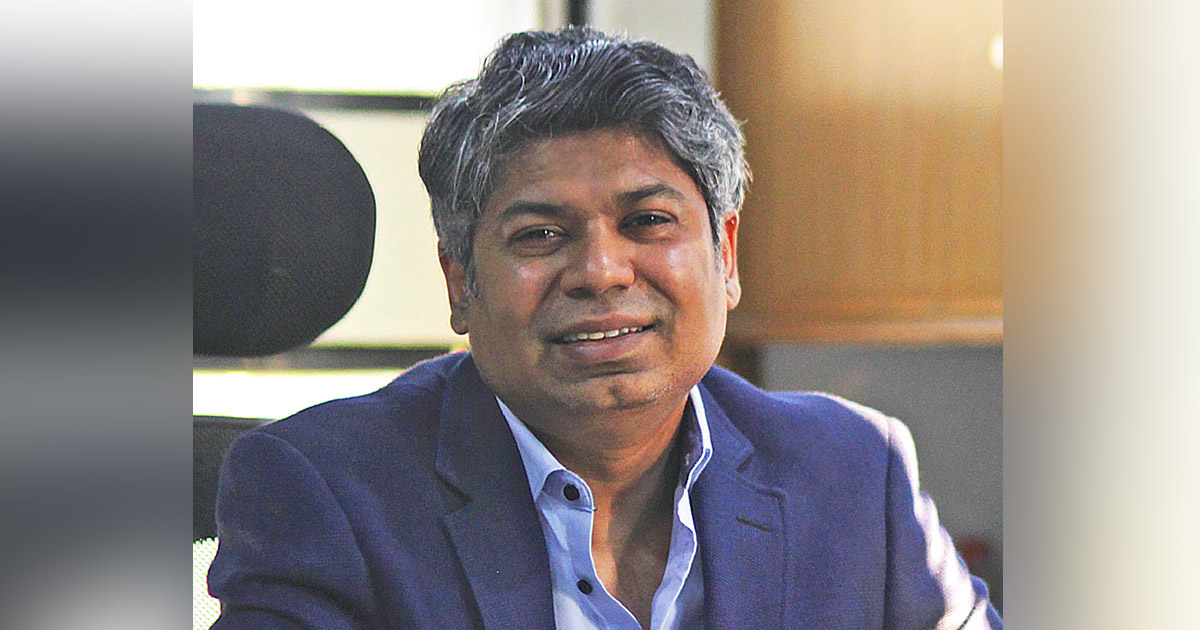
After two decades of spearheading innovation and devising successful strategies, Mahin Bin Mazher divulges how he envisions carrying X Index Companies forward. 

You have been spearheading X Index as the managing director for 20 years now. Can you talk us through the evolution of the company from its inception and to the current state in our digitized world?
In 1977 under the leadership of our Chairman, Architect Mazherul Quader, the journey began with the inception of Index Architects Ltd. There are approximately 400+ projects under its name to date. We set up operations of Index Argo Industries Ltd. in 2000, where we produce poultry, fish-feed and day-old chicks. Starting its journey as a trend setter, XCG is one of the largest porcelain and ceramics tiles manufacturing companies in Bangladesh. We incorporated Index Holdings Ltd. in 2009 which deals in trading and the hospitality sector. The company’s main objective is investments in different concerns of the group, including Hotel X. Currently X Index Energy Ltd. is setting up 3 HFO based power plants. Driven by ideology, we focus on technology and technical businesses which are sustainable for long term. We are also an active advocate of green technology, support zero-emission and also promote wastage reduction through recycling.

The five core values – integrity, ethics, excellence, unity and responsibility are cited as the reasons for the success of X Index. Apart from the core values, what other factors have contributed to make X Index the industry leader it is?
Apart from the core values, one important factor must be mentioned is the ‘trustworthiness’. Our companies have a solid reputation among the business community. Also, the invaluable contribution of our employees from all sectors play a crucial role. Without their hard work and dedication, the company wouldn’t have flourished the way it has over the last four decades.

As the managing director, do you have a strategy to make sure all the companies under X Index are running smoothly and efficiently? Can you talk us through your process?
One of the difficulties the organization faces is a decent layer of mid-level administration to make life simpler. Our top administration always fill in as coaches to increase the expertise of skills. The organization likewise acquired specialists from various countries. It requires some investment and exertion to streamline forms, oversee individuals, and ensure the details are accounted for. Learning doesn’t occur in detachment. It is best served when empowering the free progression of thoughts. I generally urge my senior administration to share their thoughts and perspectives to push ahead.

Apart from the core values, one important factor must be mentioned is the ‘trustworthiness’. Our companies have a solid reputation among the business community. Also, the invaluable contribution of our employees from all sectors play a crucial role. Without their hard work and dedication, the company wouldn’t have flourished the way it has over the last four decades.

Can you talk us through the power projects, how will they contribute to the power sector of the country and how is X Index looking to empower the community?
In Bangladesh, the per capita availability of power is comparatively low when contrasted with our neighboring nations and the world standard. Owing to this low availability, we have observed a massive gap in demand. In this manner we decided to contribute years’ worth of our experience into the power sector to alleviate the situation. We are executing these capital-intensive tasks right now in collaboration with the government. Highly skilled professionals are employed, along with electrical and mechanical engineers. This leads to industrialization and will automatically empower the community.

What has been some of your most memorable accomplishment?
We have been recognized with the Business Asia Award under the category of ‘Best Ceramics Industry’ in 2012. Adding another feather to our cap, we were awarded in the ‘Successful Company Leader’ category in the highly acclaimed Bizz Awards. We received this in 2018 for maintaining consistent business excellence. We were featured on ‘Asia Agribiz’. Also our many achievements have been covered in many foreign magazines. Perhaps the accomplishment we take the most pride in is that most of our companies are ISO certified.

Can you tell us the kind of CSR activity X Index is passionate about?
Through a not for profit organization called KKF, we are carrying out different projects. The Kamrunnesa Khatun Foundation (KKF) is an independent nonprofit charity, committed to bettering lives for the disadvantaged people in Bangladesh. Our vision is that of a country of vibrant, inclusive communities where social enterprises thrive to ensure sustainable and equitable development through capacity building and promoting entrepreneurship and transforming the lives of the disadvantaged population. We aim to assist the underprivileged people to engage in self-development and facilitate their socioeconomic mobility, reduce poverty, inequality and vulnerability. Some of the projects we have undertaken are:
Khamarir Hashi: It is a project which thrives to ameliorate the lives of farmers. This program focuses on able but unsuccessful farmers so that they turn their lives around and emerge as successful entrepreneurs. KKF provides both financial and technical help to the beneficiaries.
Shelter House: KKF works with the underprivileged children from all over Bangladesh. KKF has a shelter house for the street children, accommodating around 100 of them. These children were practically abandoned by all the other charity organizations. We stood by them. This house offers its children both formal and non-formal education, proper nutrition, medical and entertainment facilities.
Targeting the ultra-poor: Through this program, KKF identifies the needs of the households that are too poor to access the traditional development interventions. This is a tailor-made program based on the needs and capacity of the individual households.
Human Rights and Legal Aid Services: Access to justice is defined as the ability of people to seek and obtain a remedy through formal or informal institutions of justice, in compliance with universal human rights standards. KKF upholds that in order to facilitate smooth access to justice pathways, it is necessary to ensure the quality of justice particularly through legal aid and awareness.

In Bangladesh, the per capita availability of power is comparatively low when contrasted with our neighboring nations and the world standard. Owing to this low availability, we have observed a massive gap in demand. In this manner we decided to contribute years’ worth of our experience into the power sector to alleviate the situation. We are executing these capital-intensive tasks right now in collaboration with the government.

What has been the inspiration that has shaped you becoming a person you are today?
I value intellectual thought process above everything else. Growing up in a family of highly educated individuals, the passion for carrying on the legacy was instilled in me. I am thankful to have grown up in a culture which values education. This inspired me to pursue higher studies in the U.S. and also motivated me to gain professional expertise. It was being raised in a culture of learning that has nurtured my appetite for knowledge, and this has been the driving factor in the person I am today.

Marjiya Baktyer Ahmed catches up with Safwan Sobhan on how through extensive research and development, Bashundhara Group is at the forefront of making Bangladesh an import independent nation. 

What are the qualities do you believe that a successful leader must have?
To be a successful leader, I think a person must possess a blend of absolute integrity, honesty, decisiveness and must be a team player. Having these qualities also grows the capability to empower others to work efficiently. Leaders have to be able to rest their faith on their team and fully understand how to properly delegate.

As the Managing Director of Bashundhara Paper Mills Ltd. and Vice Chairman of Bashundhara Group, you have to oversee numerous operations. Do you have a strategy/ routine to ensure the efficiency of the processes?
Yes, I do follow a strategy and I believe it is an integral part of being a leader. We have weekly meetings where we prepare ourselves for every upcoming week. I need to ensure my Head of Departments and Head of Plants report back to me on a regular basis. Being the Managing Director I always have to have a bird’s eye view of the entire organization in real-time. Our integrated ERP system generates resourceful reports that enable us to build the necessary tools to forecast the challenges. We have deadlines and timelines for every piece of work, and from project to project basis. We set our KPIs and monitor them meticulously. Before we go live with a machine at production, we run it through an extensive troubleshooting process, following that it goes back to the R&D department. This is a daily routine we maintain to stay on top of any problems that may arise.

Can you please share with us about a challenge that you faced as a leader and how you pushed through?
Recently we have set up a new tissue machine from Austria, which has the capacity to churn out 100 MT tissues per day. We took the challenge to erect the machine in 18 months. It is located in our Unit 1 which is in Narayanganj. The machine is so highly technically configured that it was quite difficult for people here to figure out how to operate regularly. We did not have Bangladeshi expertise on this. The regular paper machines require about 80-100 people to run but this new one can be run by engaging just only 3 people.
So, to tackle this head on, we decided to go for extensive scheduled training. We sent our people to Austria and China to get trained on how to operate such a machine. Then we devised a plan on how to get the machine to Bangladesh, do the construction on time, and get it up and running. Finally, once it began running, it is not only supplying in Bangladesh, but products are also being exported in volumes.
Through this challenge we achieved specific knowledge of how to do team building, proper planning in tough times, then we did it a test scenario case and then we implemented it.

More potential for growth in the industry is in tissue, thermal paper and packaging paper. Thermal paper is what you use on a credit card machine, POS machines etc. It is an import substitute. Generally, Bashundhara Group enters in any industry with aims to take the place of the import substitute.

Who are the people that have shaped the person you are now?
My idol is always my father. I sincerely look at him, and thereby he has shaped me as the person I am today. Other than that, I would say the next person is my headmaster from my boarding school back in the U.K. His guidance has been invaluable to me.
From my boyhood, I was always fascinated by machinery and equipment. I am also fond of cars, so I was always into fixing and engineering things. I was keen on pursuing engineering, but eventually I opted for studying business administration, technology always fascinated me. This is how I ventured into the paper mill industry. They say, when you are born, you are given a piece of paper, and when you die, you are also given another. Many people say it’s a dying industry, but it has been maintaining a worldwide growth rate of over 6%. In the modern age, there is a movement to go paperless, but despite the digitization and this shift to an online dominion, the tangibility of paper is irreplaceable.

‘Bashundhara Paper’ has been the biggest paper exporter from Bangladesh for the past few years. What are the factors that helped “Bashundhara Paper” to reach this position? What are the future goals?
We have been adding capacity every year to match the demand of the market. We have recently listed ourselves on the Dhaka & Chittagong stock market being the biggest paper mill as well as the exporter. In terms of quality, India- our neighboring country - has a bunch of paper mills all over, however very few of these could compete with the quality paper that we manufacture. That is why our export market has grown substantially in India right now. India has a gap of 300,000 tons of paper per annum. We are basically filling that gap in, partially which is why export of our quality paper & tissue products have gone up.
Our future goals are to practice cost minimization and run the business more efficiently. At present, out of 14 machines, we have made 10 of our machines as closed loop machines, which means that the water discharge is almost zero. Before, we had to use 20 tons of water to make 1 ton of paper. We have reduced that down to 7 tons of water. We have made substantial reduction on electricity, steam consumption, as well as chemical consumption. We have switched to chemicals that are bio eco-friendly. So, all these aspects we are doing day in and day out, and cutting our costs, while also becoming more environmentally conscience.

Which segment would you say there is more potential for growth?
More potential for growth in the industry is in tissue, thermal paper and packaging paper. Thermal paper is what you use on a credit card machine, POS machines etc. It is an import substitute. Generally, Bashundhara Group enters in any industry with aims to take the place of the import substitute. The products that were once imported, now we can produce it locally and export it as well.

You have recently received FSC-CoC (Recycled Paper) certificate from the regulatory authority Control Union. How crucial do you think it is for consumers to use responsibly sourced paper products?
It is surely a responsible recognition, but for Bangladesh market we have not seen much of a big impact yet about FSC, mostly due to knowledge gap. But for the export market, it has been giving us a competitive edge for marketing and exporting. When we export to Europe, that is a must. When we export to the U.S. and the U.K, these certificates are also must to give documents.
The full form of FSC is “Forest Stewardship Council”. Basically, when pulp is produced from trees, it could be an Acacia tree or it could be a Rainwood, or Eucalyptus tree. To produce pulp, trees are uprooted and because of this, for every one tree taken out, ten trees have to be replanted. These pulp producers provide relevant certificates and necessary endorsement before giving us pulp products. The chemicals which we are using to recycle the paper, de-ink the papers, those chemicals has to be certified by FSC-COC, which implies they are not harmful to the environment.

How crucial is the role of R&D to remain competitive in the global market?
Our R&D department has been quite productive and inventive from the beginning, I personally look after its regular operation. Every time, based on market data/ feedback, we decide for the development of new SKUs or product range, it all starts from my endorsement and goes into trial to the market with my concurrence also. It is always critical to keep track what new facility can bring about and ultimately this is the only approach we take to be competitive in domestic as well as in the global arena.

How is Bashundhara Group constantly innovating themselves?
Bashundhara Group believes in opportunity-creation for the nation; hence innovation is the key to make it happen. The Group as a whole try to remodel itself every now and then to stay updated with the trend, as well as to remain competitive in the business arena.
Whenever we think of a new investment, we always look for import-substitute. We look into the industry, and in our R&D department we are always working on products that will be an import-substitute, even the ones in the pipeline right now. They all will be substituting import-goods for Bangladesh and will be saving foreign currency.
During early 2020, our new Bitumin plant will be in production. As Bangladesh is embarking upon building huge infrastructure, for roads and bridges, Bitumin is a product which has been imported a lot, from all over the world. We will have the capacity to cater to the national demand, as well as export. Our Bitumin will be guaranteed for 10 years, once it is put on the road.

How does meeting innovation requirements affect the rate of employment?
Bashundhara paper mill is not just an ordinary paper mill, we do not produce only simple writing paper rather we produce paper materials across the board. Paper mills in Bangladesh would only produce writing and printing paper, which you see as normal A4 paper or paper for newsprint. Instead, we have taken ourselves away from the conventional market, geared up ourselves for the next market, which is a specialty grade. Your everyday use for thermal paper which is used on every POS machine, NCR paper, duplex board, packaging paper – these are the growth markets we are looking at. So we are segmenting more in different specialty grades. There’s a growth and sustainability over there, as well as positively impacting employments. 

Our R&D department has been quite productive and inventive from the beginning, I personally look after its regular operation. Every time, based on market data/ feedback, we decide for the development of new SKUs or product range.

Bashundhara Group’s core value is ‘For the People, For the Country’. How has this value shaped the company and its operations over the years?
As a company when we say For the People, For the Country; we mean it. All the concerns are built in for the people, for the country. They are adding value to the country, and it is a value addition for the employees as well. Take our real estate business for example, when we started back in 1987, we sold 3 lac Taka per katha, which in turn of time over 3 crore at present. So, we single- handedly as a company, made 50,000 multi-millionaires in the country. We handed over 50,000 plots. Other than that in all our products, we never compromise on quality and we always do extensive R&D, training for our employees so that they are well fitted and well educate, in every sphere of their lives.

Apart from running such a massive company, Bashundhara Group also engages in CSR activities. Can you elaborate please?
I believe great success comes with great responsibilities. Although Bashundhara Group has always been very much submissive about all of its philanthropic initiatives, it is of no doubt a big range of its CSR initiatives are running across many fields around us. Somewhere free eye clinic is giving supports to the poor and needy, somewhere Bashundhara Ad-din Medical College Hospital in Keraniganj is providing the cheapest medical care in its 500-bed hospital, yet Friday Clinics in Manikganj and Comilla awaits with best doctors of the Country. A Special Children Foundation for the autistic, for underprivileged children, having a capacity of 250 students, is a perfect institution of its kind. We have an orphanage of 1000 children, which is located in Bashundhara also. We always try to remain beside the needy in crisis time e.g. during the winter season, we always extend our supports all the Country with warm clothing, relief supports to the flood or, cyclone-affected coastal people.

What would you like to say to the new entrants in to the business sector?
I started 10 year ago, back in 2009. I would say where I am today, obviously I have been given the position to be where I am, but I have taken things furthermore up. But remember to dedicate yourself to your work as your passion. Whatever work you do, you should enjoy it. Do not think of it as a burden. When I do my work, I really enjoy doing it, I take it as a passion. I am a passionate golfer and passionate businessman also.

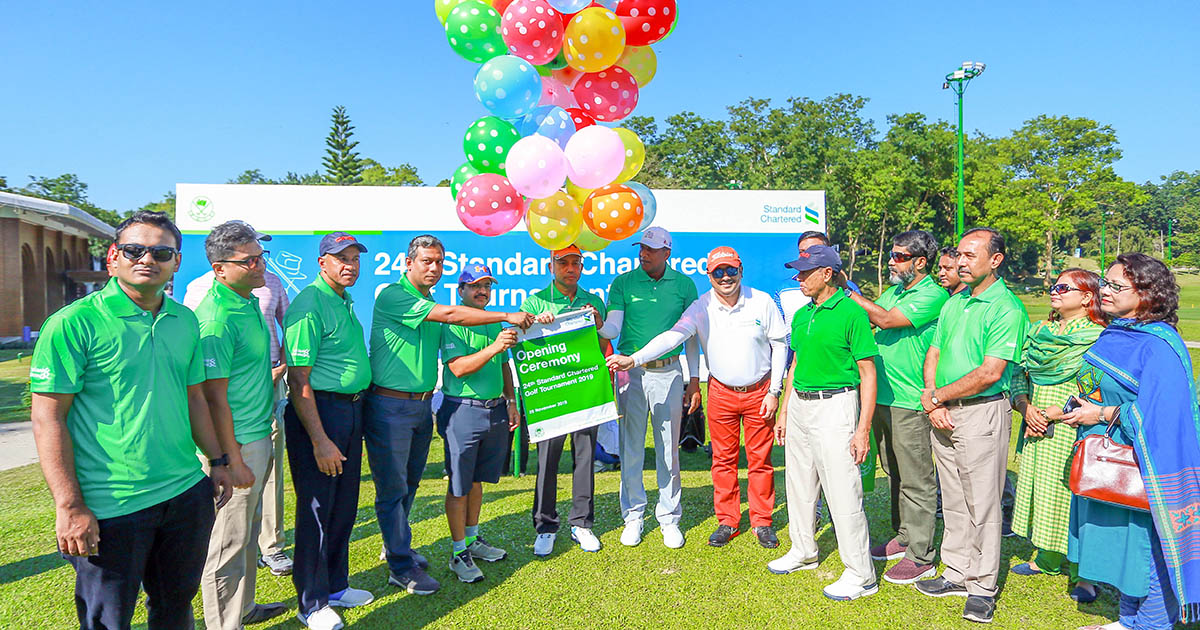
Hossain Md Shoaib has won the 24th Standard Chartered Bank Golf Tournament, the signature sports event for the Bank, held recently, at Bhatiary Golf and Country Club (BGCC) in Chittagong.

Aside from the regular 18-hole event, the tournament also featured Junior, Senior, Lady, and 9-hole Golfers segments. Maj Gen S M Matiur Rahman, president of Bhatiary Golf and Country Club, inaugurated the tournament and also distributed prizes among the winners as the chief guest. Also, present on the occasion was Alamgir Morshed, Managing Director and Head of Global Banking, Standard Chartered Bangladesh, along with a host of senior officials from Standard Chartered Bank and BGCC.

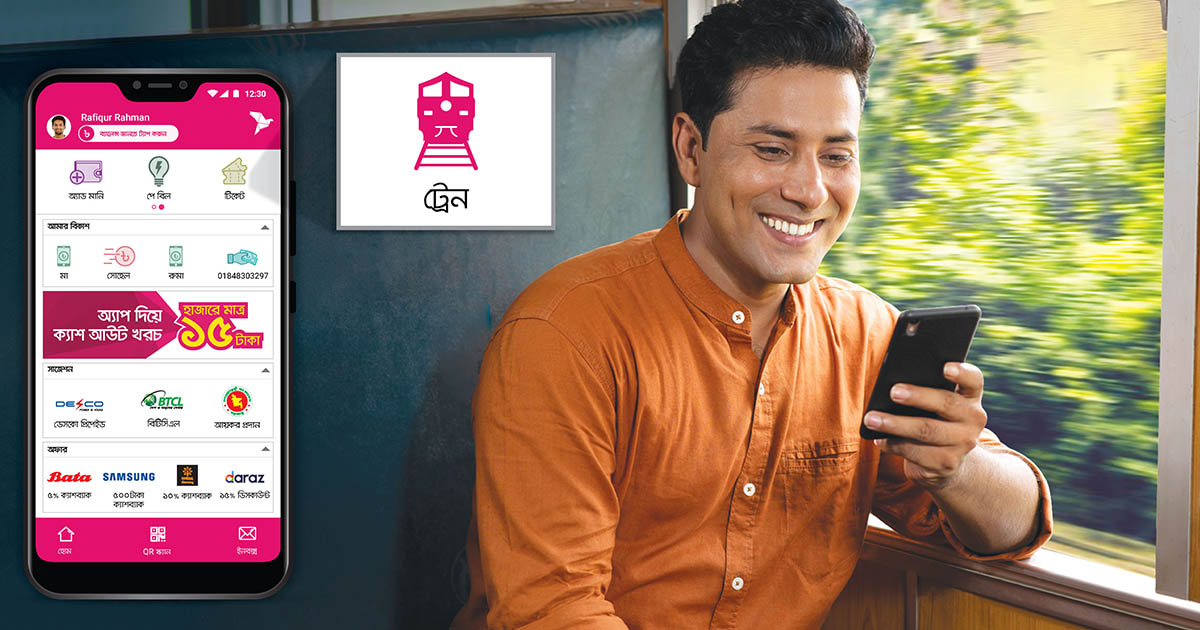
From now on, customers can buy train tickets directly from their bKash app 24/7 from anywhere. Recently, bKash has integrated the payment and processing of e-ticketing for the train in its app.

Besides Pay Bill, Add Money, Mobile Recharge and other services, buying a train ticket is another addition to the bKash app. Customers don’t need to use any other app to buy a train ticket. Bangladesh Railway’s e-ticketing service is now connected to the bKash app with a micro-site making it possible for customers to carry out the whole ticketing process in the bKash app.

To buy train tickets, customers need to follow some simple steps. On top of the bKash app’s user interface, there is a “Tickets” icon where “Train” and “Bangladesh Railway” option should be selected subsequently. Then, customers will land on the E-ticketing Service screen of Bangladesh Railway. From here, they need to select Route, Date, Class and Passenger number to check available train and seat numbers.

If any train seat is available, registered customer needs to tap on “Purchase” and insert user ID and password of Bangladesh Railway e-ticketing service. Then a bKash payment gateway pops up. By inserting bKash account number, OTP and PIN, customers can finish the process of buying a train ticket.

Launched in 2011, bKash, a joint venture of BRAC Bank, US-based Money in Motion, International Finance Corporation, Bill and Melinda Gates Foundation, and Ant Financial, operates as a payment service provider offering a broad range of digital financial services under the regulation of Bangladesh Bank. 

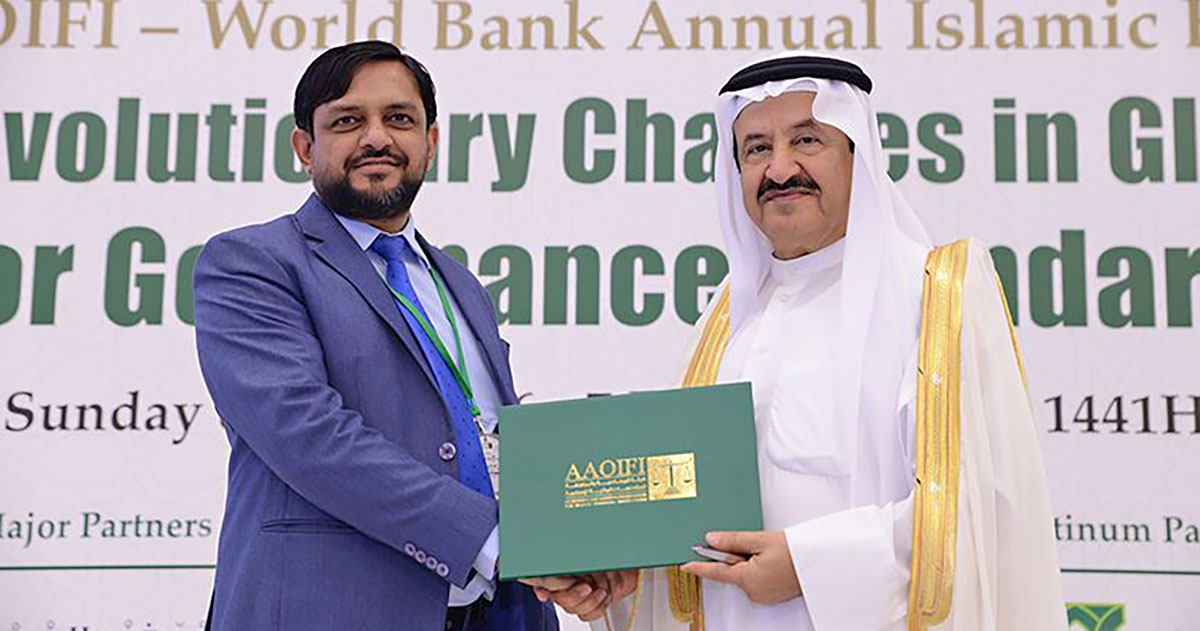
City Bank has joined the global platform of Islamic financial organizations – AAOIFI, the primary responsibility for the development and issuance of standards for the global Islamic Industry. Bahrain-based AAOIFI or Accounting and Auditing Organization for Islamic Financial Institution is recognized as an Islamic banking standard issuer globally.

Chief Economist and Country Business Manager (CE &CBM) of City Bank, Mr. Md. Ashanur Rahman received the membership award and certificate from AAOIFI Trustee Board Chairman Shaikh Ebrahim Bin Khalifa Al Khalifa at an event in the capital city Manama recently. Mr. Arup Haider, Head of Retail Banking and Mr. Abdullah Sharif, Muraqib of City Bank were also present in the ceremony.

Became a member of AAOIFI, City Bank is now moving ahead of offering Islami banking solutions for its clients taking into consideration the international standards and practices which comply with Islamic Shari’ah rules.