INCOME INDUSTRIES: LOOKING BEYOND THE GARMENT SECTOR
Tell us briefly about yourself and your company.
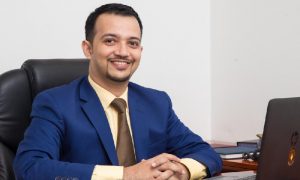
I’m serving as the country manager of TÜV Rheinland Bangladesh, a German-based multinational service company. Our headquarters is based in Cologne and we are currently working in 73 countries around the world, specializing in six business streams. My career in the Testing Inspection Certification industry began in 2006. I started in a Swiss-based multinational company and worked there for three years. Then worked in a German-based similar company for another three years. I joined TÜV Rheinland in 2012; the company is providing services to ensure the quality and safety of the product, and apart from that, we have other services such as Academy and Life Care, Mobility, Industrial services, ICT service and others. In Bangladesh, we’re mainly providing testing and inspection services on products like garments, leather and footwear, soft toys, and wastewater. In addition to those, other important services are sustainability and corporate responsibilities services, social compliance audit services.
Certification is a relatively new and emerging sector. What are the challenges to its growth? Why is it necessary for Bangladesh in a global context?
Nearly 5,000 manufacturers are working in the RMG industry. In these times, certification is a good manufacturing practice, which ensures the safety and quality, which are often demanded by buyers. If you compare the sector today to what it was five years ago, I don’t think you’d find any challenges now. Most of the manufacturers are shifting their manufacture units from the city. They are also maintaining various social, legal and safety requirements such as fire safety, building safety and electrical safety.
One of the major challenges in Bangladesh is infrastructure. Our customers provide samples to us from various areas like outside Dhaka or from surrounding cities. As a result, it takes a long time, to arrive due to traffic congestion. Where testing is concerned, there are certain processes that we cannot avoid, as we have to adhere to international standards. Transportation is another issue that comes as an obstacle as sometimes, customers may miss their ship. We also face difficulties in managing Certified Reference Materials (CRM). We are importing all these chemicals from overseas, but after several terrorist attacks, the government is very serious about imported chemicals. Some chemicals are banned from the country such as cyanide, but we do need to run tests using those chemicals for wastewater tests. And due to the restrictions that are imposed on a national level, we are unable to exchange samples with India or Hong Kong. The government should conduct a survey to monitor who is using such chemicals, what their intentions are so that certain organizations can continue safe testing for the greater good of the economy.
After China our main competitor is Vietnam. China will be difficult for the customer because their labor costs are going up. All these textile products will be shifted to other countries, and Vietnam is a primary interest of customers because their manufacturing units have a good record of compliance and certification. However, they are already occupied. In Bangladesh, we have 5,000 manufacturers but among them, only half are model manufacturers who are maintaining all these certifications. A report from McKinsey showed that Bangladesh will become the largest garment sourcing country within the next 5 years, as Vietnam isn’t taking many orders since they are booked. That’s why we need at least another 5,000 good manufacturing units in this country immediately so that customers can shift their orders from China to Bangladesh.
TUV provides a number of notable certifications that include ISO 45001, ISO 9001, ISO 14001. Could you detail the criteria for each of these certificates? How do you believe they foster quality in the national workspace?
These certifications are for the occupational health and safety, quality management system and environmental management system. 45001 is a health and safety related certification system. Health and safety is a big issue because the big brands and consumers will not accept the products if anything compromises the safety of the workers in the sourcing factories. It is actually not just for fulfilling the customer requirement, but also as a manufacturer we have some responsibilities for our workers. ISO 9001 is a management system; these standards have some particulars with regards to managing an organization. It is not related to products, it is a kind of a documentation process. If a company and its management system adhere to the principles of ISO 9001 standard, then they will get a positive certificate. The last one is 14001, it is an environmental certification system. This certification includes chemical management, environment management and the waste chemicals we are disposing of in the environment and to ensure that none of it is unsafe. Moreover, it is to ensure that air or water bodies aren’t being polluted. These certifications are necessary for all manufacturers to keep the business sustainable and not to allow other countries to decide whether or not it will be shifted from China to South Asia or the Asia Pacific.
Your company runs a number of tests for textiles which include formaldehyde and carcinogenic testing and others. Could you detail the criteria for such a test and how they can help individual manufacturers and the national industry overall?
Formaldehyde can be easily compared with formalin, we know that it is mainly used in food for preservation, but it is also used in textile products for various purposes to maintain the stability or finishing of the textile products. Carcinogenic dyes although used for colored fashion purposes, also has several harmful properties. It’s known for causing cancers in the human body; hence a very low limit can be accepted as per customer guideline and some customers provide very strict requirement that there shouldn’t be any to begin with. Same applies for formaldehyde. They can affect the human body internally and externally in the form of diseases and skin allergies. Hence it’s essential to measure formaldehyde too before using. In fact, there is a certain defined limit of using formaldehyde as per the international regulation.
What types of testing do you mainly have for textile or garments products?
We run more than a hundred types of tests in our laboratory, most of which are chemical or analytical testing. The primary reason for this is to meet the legal requirement of the countries where the products will be exported. If the products contain harmful chemicals, the customs authority of those countries would not accept the goods. We do a lot of tests apart from formaldehyde or carcinogenic; there’s heavy metal, allergenic dyes, phthalates contaminants which are very harmful to children.
We also have a performance test as well as wash related tests to determine the appearance of the product post-washing. And we have safety test like flammability. We are doing all the maximum required test in this country from the customers. There are also legal prerequisites for the customers to import the goods in their country which need to be maintained firmly. These tests and certificate must be provided; additionally, they must monitor internal quality in order to maintain their consumer’s satisfaction. This is not a legal policy but their own quality policy and they designed some category of testing and some minimum requirement must be made for all these products.
The textile industry is one of the largest in the nation with an export worth of $28.15 billion last year. How can the industry improve quality to reach its goal of $50 billion by 2021? Why is fabric testing essential in this context?
The RMG industry is the backbone of Bangladesh’s economy from where we are achieving more than $28.15 billion and our aim is to reach $50 billion by 2021. Although our target is 2021, ideally, we may be able to reach that goal by 2024 or 2025. The fabric testing and inspection certification business, also known as TIC in short, is also a very successful service sector if we want to earn more than $50 billion. During the next five years, there will be a lot of additional quality and legal requirements on these products. We are using new chemicals and technologies to reduce our operational cost and improve our productivity. Besides for technology water, our dyeing process is also important as it is mainly water dependent. That’s why as well as textile testing water, testing for other standards is also an emerging certification sector.
In Bangladesh, your company provides inspection and customized certification services. What types of products are available under your inspection service?
Inspection services are mainly applicable in finished garments; we call it the final random inspection. There are a few other types of inspections like; During Production Inspection, Inline Inspection, Loading Supervision etc. The customers demand is high for these kinds of inspections, which ensures the customer what the commitment from the manufacturer or the supplier to deliver is the quality, quantity, packing requirements, criteria, as well as maintenance on the part of manufacturers. After getting all these inspections we are providing inspection reports, based on our findings to the customers with pictures, which determines the acceptance or refusal of their goods.
Apart from textile, we do a lot of special inspections on ceramic items which we are exporting. There is a lot of good ceramic manufacturers increasing every day. New products like tents go through inspection; even items like a cane, although natural, needs to maintain a certain level of quality. Shrimp is another product that needs to be processed and packed in a hygienic way. Similarly, we conduct the inspection of shoes as well.
Your company is currently working on treatment plants for water waste management. What are the future projects that you have in the pipeline?
We are not directly supervising the treatment plant, it is actually mandatory for the customers. The aim of the treatment plant is to treat the water, remove the harmful substances and chemicals then let it go to the natural sources and other areas. The environment is directly related with the Energy Transfer Partners (ETP) plant. This is another slogan “Zero Discharge Hazardous Chemical (ZDHC)” foreign NGO’s are pushing all the big brands to be a member of the ZDHC platform initiated by ZDHC Foundation. We are also globally signatory committed brands of ZDHC program from the very beginning. Our goal is to eliminate the use of priority hazardous chemicals by focusing on the following areas: Manufacturing Restricted Substances List (MRSL) & Conformity Guidance, Wastewater Quality, Audit Protocol, Research, Data and Disclosure, and Training.
Where future projects are concerned, we will have a specialized laboratory for leather and footwear, mainly with both chemical and psychical testing facilities in Dhaka, which is another thriving industry in Bangladesh after textile. We have leather raw materials, all we need is the footwear accessory investors in this country on board. I think after five years, it’ll be a successful business for us. Moreover, Chittagong is another city that holds a lot of opportunities for large US retailers or online-based retailers and a lot of economic zones are opening there. We shall have laboratory facilities in Chittagong by next year. Our support will be always for customers’ success with certainty.