
The Korea International Cooperation Agency (KOICA) has endeavoured to bring vulnerable female adolescents under its development program that focuses on creating employment.
The Korea International Cooperation Agency (KOICA) started its operations in 1991. The South Korean government funded agency was primarily established to fund aid programmes in developing countries and support their poverty alleviation initiatives and sustainable socio-economic growth objectives. The organisation continues to do so since, and through this endeavour, it seeks to form strong alliances with the developing nations. It started its journey in Bangladesh in 1993, two years after its formation, with the noble motive of helping the country on its socio-economic front. Till date, the KOICA Bangladesh Office implements development projects in collaboration with the Bangladesh Government, UN agencies and non-profit-organisations and assists in building capacity by arranging invitational training programmes for the government officials of Bangladesh. It deploys the Korean government’s overseas volunteer group World Friends Korea for fast-tracking local development and has done so in Bangladesh since 1993.
KOICA has thus far contributed a sum of USD 164 million, out of which, 30% of the total budget was utilised by the health sector, followed by education at 29%, governance at 17% and science, technology and innovation at 11%.
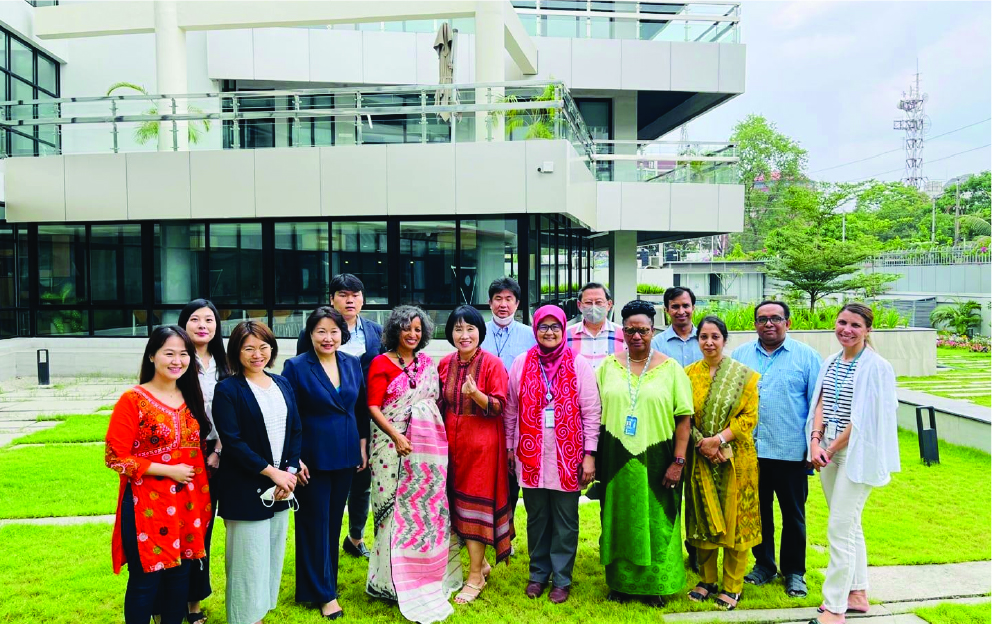
Currently, the organisation is implementing more than 20 different developmental projects under its country plan (CP), in the areas of ICT (innovation), Public Health, Education (TVET) and transportation and wishes to fund approximately USD 20 million grants per annum to that effect. The country plan focuses on 3 specific programmes: enhancing the efficiency of public service by establishing a digital public system, enhancing public health by providing quality of health and medical services and developing skilful human resources for sustainable development of the country. KOICA celebrated 30 years in Bangladesh in 2021 where it pledged to assist the government to achieve its 8th Five Year Plan (2021-2025), meet Sustainable Development Goals and transition smoothly to a developed nation by 2041. It further promised to prioritise three main themes i.e., Green New Deal – which highlights the transition to a low carbon economy, digitalisation – which emphasises resolving the digital divide between regions having disparity in their access to technology, and lastly, Integrated Official Assistance – which aims to solve important problems of the country together instead of individually. Considering Bangladesh to be a high priority country for development cooperation, KOICA has helped aid its growth with soft loans, grants, technical cooperation, etc wherever possible.
KOICA celebrated 30 years in Bangladesh in 2021 where it pledged to assist the government to achieve its 8th Five Year Plan (2021-2025), meet Sustainable Development Goals and transition smoothly to a developed nation by 2041.
In its most recent endeavour to help Bangladesh, KOICA has decided to bring under its development umbrella, female adolescents who are not in school, as well as young women of the country. The young women will be empowered with occupational skills that are highly regarded in the market and transferable through jobs. The organisation will also attempt to settle them in workplaces supported by the Korean government. The initiative will be undertaken jointly with UNICEF, Bangladesh and an implementation study for the purpose of this initiative has already been completed by Korean experts. A grant aid of USD 6 million will be provided to UNICEF Bangladesh and the project will be implemented between 2022 and 2025 in 7 districts of the country, namely Barisal, Bhola, Mymensingh, Gazipur, Dhaka, Narayanganj and Chattogram.
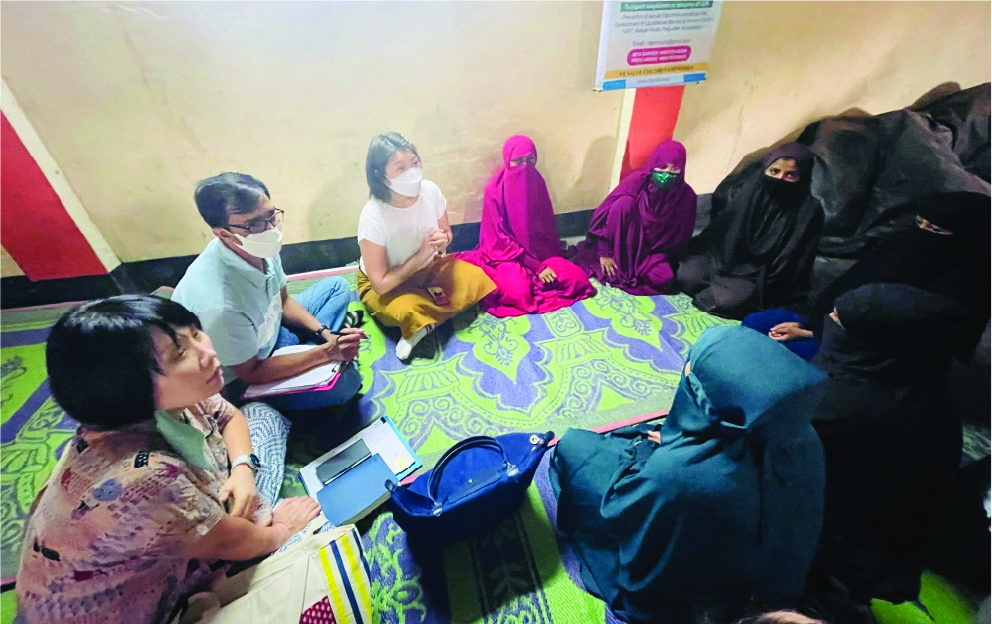
The project was designed by an Implementation-Survey Mission from South Korea which visited Bangladesh between April 3-11 and is intended to provide a source of income to this group of marginalised women who would otherwise not be part of the country’s labour force. The initiative has come by after much deliberation on topics such as the impact of Covid-19 on individual households as well as the economy of the country, gaps in the service provision scenario of Bangladesh and the need to build skilled capacity in this regard, exploiting strategic opportunities to scale up sustainable interventions in the country and adding to its economic prowess, creating opportunities for the young population of the country and finally, helping Bangladesh meet its human development objectives.
Three existing modalities, which are informal apprenticeship, entrepreneurship training and centre-based occupational training, are under consideration as of now, helping to train learners, cater to the demands of the job market, and to be able to help multiple groups of people. The project is expected to create linkages between these groups of people and the Korean corporations in Bangladesh, resulting in apprenticeships and job placements.
The KOICA Bangladesh team took part in the wrap-up meeting of the implementation-survey mission with the UNICEF team, led by Veera Mendonca, in her capacity as Officer-in-Charge of UNICEF Bangladesh. In the meeting, the expert team shared the results of the survey mission after which both parties unanimously agreed on the suggested modalities and outcomes of the project. The expert team of KOICA held a series of discussions with all stakeholders associated with the project such as Bureau of Non-Formal Education, Bangladesh Technical Education Board, BRAC and a2i, VSO Bangladesh and visited places like Keraniganj, Jamalpur and Mymensingh to take a look at existing UNICEF collaboration projects that are underway in those parts of the country.
The young women will be empowered with occupational skills that are highly regarded in the market and transferable through jobs. The organisation will also attempt to settle them in workplaces supported by the Korean government.
Veera Mendonca has high hopes that this project will further strengthen ties between KOICA and UNICEF and pave the way for the young girls of Bangladesh to become empowered and transition into better jobs. Similarly, Young-Ah Doh, Country Director, KOICA Bangladesh Office expects the project to reinforce the skills and employment support system which will accelerate the process of tying the out-of-school girls and young women population of this country with proper skills and livelihoods.
A study by the South Asian Network on Economic Modelling (Sanem) revealed that only a nominal increase of 1% in female employment can bring about an economic growth of 0.31% in Bangladesh. As girls and young women who have dropped out of schools remain unemployed and tied up with unpaid work like caregiving and domestic work, the country loses out on adding as much as USD 11.3 billion to the economy. Keeping true to its objective of aiding in the economic development of Bangladesh, this newest vocational skill training initiative by KOICA aims to help the country prosper in many different ways, catalysing employment and propelling growth.