
The challenges and solutions to creating equality in the workplace
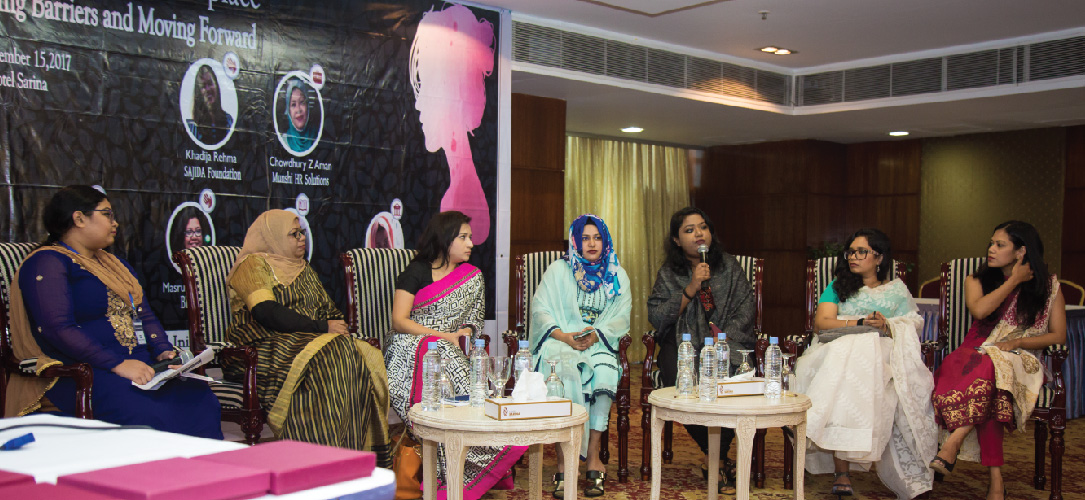
During the interactive session, ‘Women in the workplace: Breaking barriers and moving forward,’ the speakers emphasized identifying the challenges in the workplace and taking measures to prevent it. The session organized by Career Solutions, an emerging company in the human resource arena, took place on 15 December 2017 in the country’s capital and addressed the day to day obstacles faced by women in their respective workplaces.
The event was divided into three segments, where the panelists first exchanged views with the journalists; attendees included representatives from different corporate organizations, human resources consultants, and students from various public and private universities.
The event commenced with its first meet-and-greet session. The segment was then followed by a panel discussion which stressed on the need for changing mindset among people to break barriers for women in the workplace.
Bottlenecks: Identifying the Source of Inequality
“It is often that women are exposed to societal and workplace practices that do not encourage growth through flexibility and the lack of podiums to share experiences as such prevents women to know how to deal with them,” postulates Afreen Zaman Khan, Lecturer at Independent University of Bangladesh (IUB).
The conversation took an exciting phase as Zarin Chowdhury, Head of Business; Munshi HR Solutions pointed out a root level cause for women having a self-made barrier inside when it comes to working head-to-head with male individuals. She further mentions, “The culture in our country promotes gender discrimination when it comes to the idea of freedom. This instills a societal barrier inside the women from a very early age preventing them from performing their best in the best possible scenarios.”
Sexism and biases in the workplace while assigning roles also hamper the performance of a woman if not addressed adequately mentioned others in the discussion.
Breakthroughs: The Way Towards Workforce Equality
As the event moved onto its next session on delivering solutions to the general problems Khadija Rehma, General Manager (Communication) of Sajida Foundation mentioned,“It is important to unlearn the preexposed culture and be more open to changes.”
With regards to that, other solutions also talked about the importance of having a liberal organizational culture that would encourage more women to work consistently. Gulsetyne Ahmed drew from her work experience in both a male and female-oriented profession as a Co-Pilot of Regent Airways and a news presenter of Bangladesh Television, “It is difficult to encourage women to come out of the conventional system and go for doing new things. A woman needs to be the best version of herself to fight against all the odds.”
The discussion not only touched the societal and cultural aspects but also brought to light the importance of women coming forward and taking the lead. Faria Ahmed, the Founder of Career Solutions also added, “We can prevent barriers through long-term strategies like vouching for government-imposed guidelines on in-house daycare facilities and flexible hours for larger organizations, just as we have done for maternity leave.” Other speakers like Samiha Chowdhury from Standard Chartered Bangladesh and Mansura Oishi of BRAC also enlightened the event with their presence. The program closed with a crest giving ceremony through which Career Solutions appreciated the presence of all their panelists, sponsors and the audience at the event.