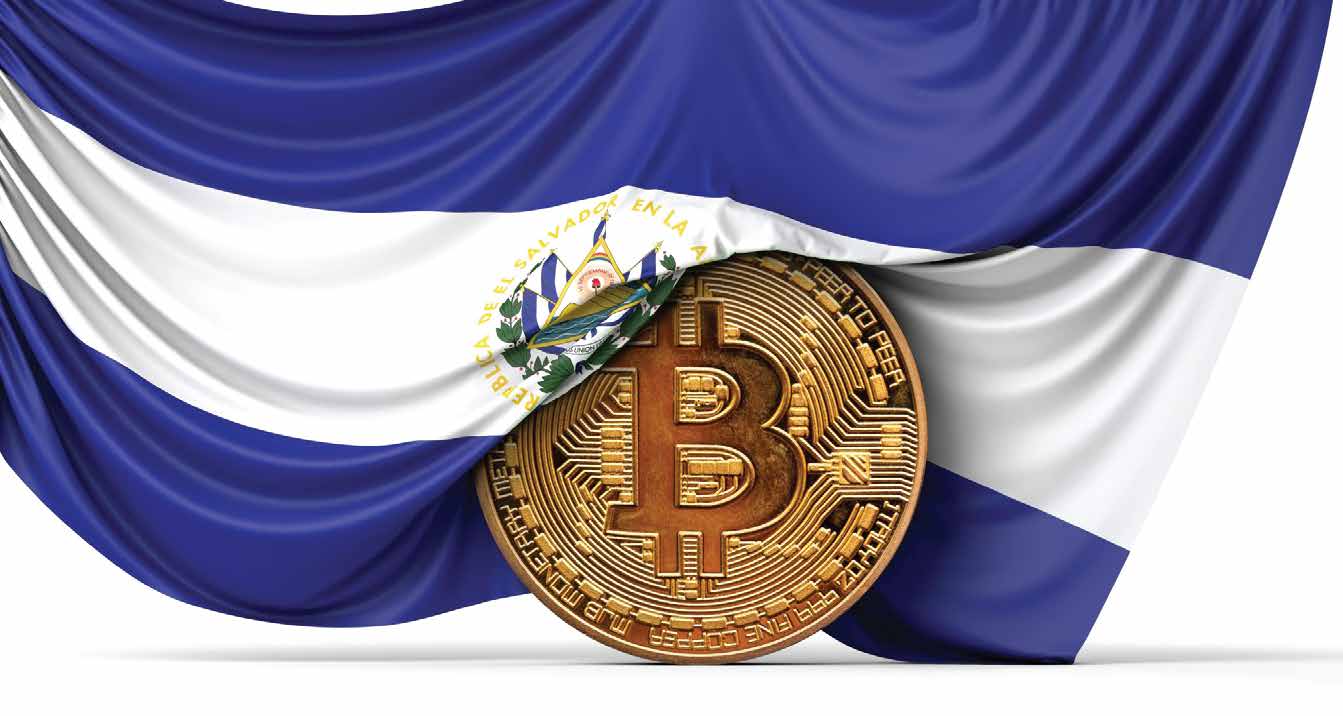

El Salvador became the first country in the world to recognize bitcoin as legal tender
Around 9,500 years ago, in the Mesopotamian region of Sumer, tokens made of baked clays were used to keep accounts of crops and livestock. The tokens might not have much in common with currency today, but the roots of payments lie in the humble shapes. It is safe to state that the human race functioned before the invention of money too. Still, the advancement we see today has been possible only because money made it easier to buy and sell goods, pay wages, facilitate trade, and establish connectivity. Over the centuries, money, however, took different forms and functions. Money today functions as a medium of exchange, the unit of account and store of value.
However, in the 21st century, money has taken another step ahead by foraying into the virtual world. In this regard, bitcoin has received widespread popularity due to its high market capitalization and technological infrastructure. Bitcoin is a decentralized digital currency that allows exchange without the intermediation of any well-established institution. In 2009 an unknown person or group using the alias Satoshi Nakamoto publicized Bitcoin from an anarcho-libertarian point of view. Every transaction made using the currency exists on a public ledger accessible to everyone. The main attraction of Bitcoin is the rate at which its price has quadrupled over the last year. But what goes up also comes down. It is very risky to transact with such extraordinarily volatile currency, especially for low-income people.
That being said, history was made on September 7, 2021, when El Salvador, a small country in Central America, became the first country to adopt bitcoins as a legal tender alongside the US dollar. According to the President of El Salvador, Nayib Bukele, legalizing bitcoin will spur investment, lower transaction cost for remittances and promote financial inclusion. Annually, Salvadorans spend around $400 million in commissions for remittances, and the provision of bitcoin is hoped to mitigate the problem.
However, the residents of the country are torn between accepting the decision and protesting it. To calm them, the President promised $30 in Bitcoin to every citizen if they signed up for the government’s digital wallet called ‘Chivo’. The government has also installed ATMs to allow bitcoin conversion into dollars and withdrawal without commission. The international community is still dubious about the matter considering that El Salvador is still a developing economy. The US Embassy in El Salvador refers to the decision as undermining democracy.
But the President is determined to break the paradigms of the past. Ahead of the launch, El Salvador bought 400 bitcoins to mitigate the inflationary pressure on the US dollar after the recent US government stimulus package. As the currency’s value wobbled, the government purchased an additional 150 bitcoins worth around $7 million. But why are people so sceptical about the decision? Before we discuss the reasons behind it, we must get acquainted with the Salvadoran economy.
Between the 1970s to early 1990s, El Salvador received global attention owing to its civil war and internal conflicts. The turmoil ended when the military was removed from political affairs in 1992, but postwar reconstruction was slow. Factors like oil price hikes, disasters and decline in maquiladoras (plants that assemble imported components for export) shook the economy now and then. In 2001, El Salvador gave up its monetary independence by adopting the US dollar as legal tender to stabilize the liquidity scenario.
The most vital source of income for Salvadorans is remittance from abroad, mainly from the United States. Last year, total remittance amounted to a whopping $6 billion. The sum is equivalent to some 23% of the country’s gross domestic product. According to a calculation by the current administration, the commission paid on the remittance value is still very high, but data from the World Bank data says otherwise.
The implementation got off to a bumpy start as the digital wallet was unavailable on download platforms like Apple, Google, and Huawei. Huawei has later made the app available. Moody’s credit ratings agency has also downgraded El Salvador’s debt following the decision to launch bitcoins. The decision can also derail the country’s push for a billion dollars in International Monetary Fund. Experts fear that the adoption of cryptocurrency can facilitate illicit transactions in the country.
Moreover, as many as 11,000 currencies are functioning in the market right now. It is challenging to keep track of the creditworthiness of dozens of issuers. If everyone starts using a cryptocurrency of their choice, the transaction cost will be higher in the global market – something that will negate El Salvador’s primary objective. The international market can not house 11 currencies, let alone 11,000.
Although Bukele hopes bitcoin will extend financial services to the masses in the country, half of the population still have no access to the technology needed to make bitcoin work. Internet penetration in El Salvador is the second-lowest in Latin America and the Caribbean, and digital literacy is still far from the desired level. Even with full knowledge, people still run the risk of forgetting their passwords and losing all bitcoins.
With prices varying by hundred dollars in a day, insurance companies holding bitcoins in their balance sheet for prolonged periods might have run asset risks with credit negative bitcoins. The fact of the increased foreign exchange rate may exacerbate the problem. Still, it has proven a popular means of payment for those holding bitcoin in El Zonte, a beach town that was one of the springboards for the cryptocurrency in El Salvador. Provided there are no snags with convertibility; it could be an important foreign exchange earner.
Another concern the World Bank has voiced regarding the mining of cryptocurrencies such as bitcoin is the harmful impact on the environment. Extracting digital currency from cyberspace relies on blockchain technology to verify transactions. The process has emitted as much as 60 million tons of C02 in the environment, equal to the exhaust from about 9 million cars. In response, the President presented a case of using renewable energy from the country’s volcanoes for mining bitcoins. He has instructed a state-owned geothermal electric firm, LeGeo to develop the plan. It is now a matter of time to see how history unfolds.