Looking back at Google+, the social media platform that never was.
Founded by Larry Page and Sergey Brin, Google started out as a search engine with a mission to organise the world’s information and make it universally accessible and useful. Over the decades, it has given the world a lot, starting from Gmail, to Chrome, YouTube, Maps, Google Play Store and Android. However, failure spares no one and the popular search engine did in fact delve into several projects that started out with pomp and flair but unceremoniously tanked soon after. One such relic from Google’s chest of brilliant failures is Google+.
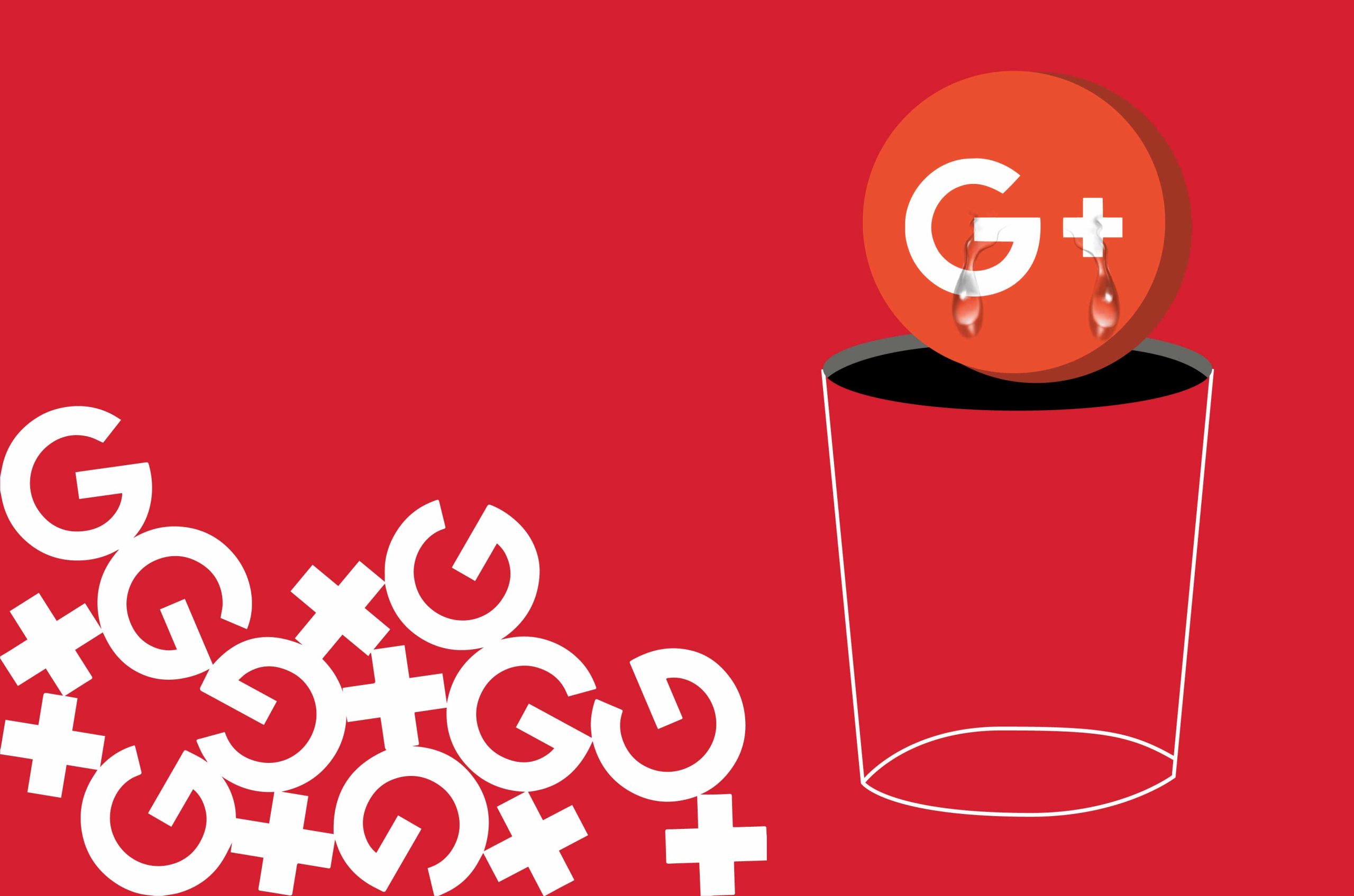
Notably, Google+ was not Google’s first foray into social media. Previous attempts had them launch Orkut in 2004, which shut down in 2014, Google Friend Connect in 2008, which retired in 2012, and Google Buzz, which launched in 2010, but shut down just a year later, in 2011. Perhaps, the most hopeful launch out of all was that of Google+, which was opened to the public in 2011. After a long and arduous period of eight years, when it tried to ‘fix’ social media’s sharing game, Google decided to pull the plug on the app in 2019.
During its life, Google+ set out with an intent to change the way people shared on social media, by offering people different circles to join. Users could then share relevant content with these circles, instead of one common share with all friends. In retrospect, the feature seems to have been a unique and functional one, as even now, Facebook privacy settings are tedious to put up and difficult to remember. Google cleverly designed a user interface that made organising contacts into circles simple, and even fun. This interface was much better than the one Facebook was offering at the time, and yes, it took off.
Another feature on Google+ called Sparks, helped users find materials that were relevant to their interests. This helped Google to figure out what to suggest to people without randomly offering topical pages for people to like or follow. This also created a base for a different type of search- rather than offering users a list of blue links to click on, searching on Google+ could now offer people similar profiles, and pages with comparable interests.
Google+ used a chat option known as Hangouts which allowed users to chat with up to 10 people in their circles at a time. It was impressive for the time period, how the software was able to focus on the speaker and how all those in the chat could share content with each other.
At first, the growth trajectory for Google+ looked very promising. Ten million users had signed up within a fortnight and the numbers kept ballooning. By the end of the year, the figure had grown to a whopping 90 million. Even if counting only sign-up numbers, it seemed far ahead on the curve from Facebook.
The success, however, was skin-deep, and short-lived. As Facebook CEO Mark Zuckerberg rightly pointed out, any social media platform wishing to become a strong contender in the industry must look beyond sign-up numbers to monitor its user engagement rate and figure out how many of those that signed up were actually using the medium. This meant creating a social graph which Facebook was already doing by that time. These were the first alarm bells to sound for Google+ because even if they were getting the sign-ups, not too many users were ever actually on the medium.
Google+ also had another problem which played a big part in its downfall – an uncontrollable spamming issue on the network. Even if Google rolled out blocking mechanisms within months after its launch, users complained of spam even as late as 2017.
Trumping all that was the fact that Google+ had enforced a ‘real names’ policy on its medium which miffed a lot of users. Plenty of people on Google+ wanted to use nicknames or pseudonyms but Google+ seemed adamant on its stance and started to delete user accounts for non-compliance. This was a problem because losing a Google account meant much more than simply losing a social media platform – it meant losing Gmail, Documents, Calendar and access to other Google products. Around the same time, the company had also made a mess of the way it handled its brand pages, banning all business profiles randomly, without informing them. These problems were not fixed for years, and the company later admitted that these were irredeemable mistakes and that things should have been handled more professionally.
In 2012, a year after its inception, Google began to somewhat force-feed its social media network to other users. For instance, it was mandatory to have Google+ if you wanted to sign up for Gmail. This decision was not user-friendly by any means, and largely unfair to users who did not wish for a social media account in the first place. Much to the chagrin of its users, it was also not the last forced integration to come from Google.
Plenty of people on Google+ wanted to use nicknames or pseudonyms but Google+ seemed adamant on its stance and started to delete user accounts for non-compliance. This was a problem because losing a Google account meant much more than simply losing a social media platform – it meant losing Gmail, Documents, Calendar and access to other Google products.
Around the same time, Google saw a recurring issue come back to haunt them – spam. This time, it was ‘event spam’ that was the thorn in the users’ sides. Other people could ‘invite’ them to events which would then show up on their Google Calendars without the users ever confirming to attend. This was irksome and many users began to reconsider their decision to sign-up for Google+ in the first place.
In the midst of all this negativity, it was refreshing to see Hangouts do well. Its popularity was soaring and while Google had originally intended for it to be used to chat with friends and family, more and more corporations were adopting it for corporate meetings and brands were using it to connect to fans. It was not difficult to see that Hangouts was going to have a much better growth trajectory than Google+.
As the company realised that it was not going to mint much money as Facebook’s competitor, it decided to market itself as a ‘social layer’ across the other Google products. By this time Google had already integrated itself with Gmail and Google Contacts. It now wanted to offer its users a way to follow their favourite brands on Gmail. A series of collaborations and tweaks followed, all of which were becoming too overwhelming and diluted. The final unwarranted collaboration that probably threw users off Google+ for good was when the company decided to tie YouTube commenting to Google+. Users needed an account on the social medium to be able to comment on their favourite videos and this did not sit well with YouTube regulars or YouTubers.
The house of cards finally came crashing down in the form of Vic Gundrotra’s departure from Google. Vic was the creator of Google+ and his exodus was the first blow to the social network’s already fragile brick wall. One by one, crucial elements that made up Google+ began to break free. Hangouts went first. It had become too big and too important to continue to be tied down to an essentially dying company. Google+ found itself apologising and retracting its ‘real names’ policy. Google Photos broke free, and Google pulled out from YouTube, Android Gaming Services and Play Store. Despite a fancy makeover in 2015 and considerable load lightening, Google+ was unable to regain user enthusiasm.
The final nail in the coffin came when a security bug in 2017 allowed third-party developers to access user information since 2015. The company came to know about it in March of the same year but did not inform the users of the breach. Once the information was publicly outed, Google finally decided to shut down the consumers’ version of the site for good.
A series of seemingly unforgivable mistakes led to the demise of what could have been the biggest social media platform in the world. Coupled with the advent and popularity of newer, more flexible and much more user-friendly social networks such as Facebook and Instagram, Google+ was simply unable to detangle itself from the layers of messes it had gotten itself into in the quest for more shares. Its biggest mistake, perhaps, was forgetting that users were the ultimate bosses who ran the show and leaving them dissatisfied would never, ever bode well for them.