Equality is an on-going battle that I will continue to advocate. It is one of the most prominent instruments through which our country will reach its real potential.
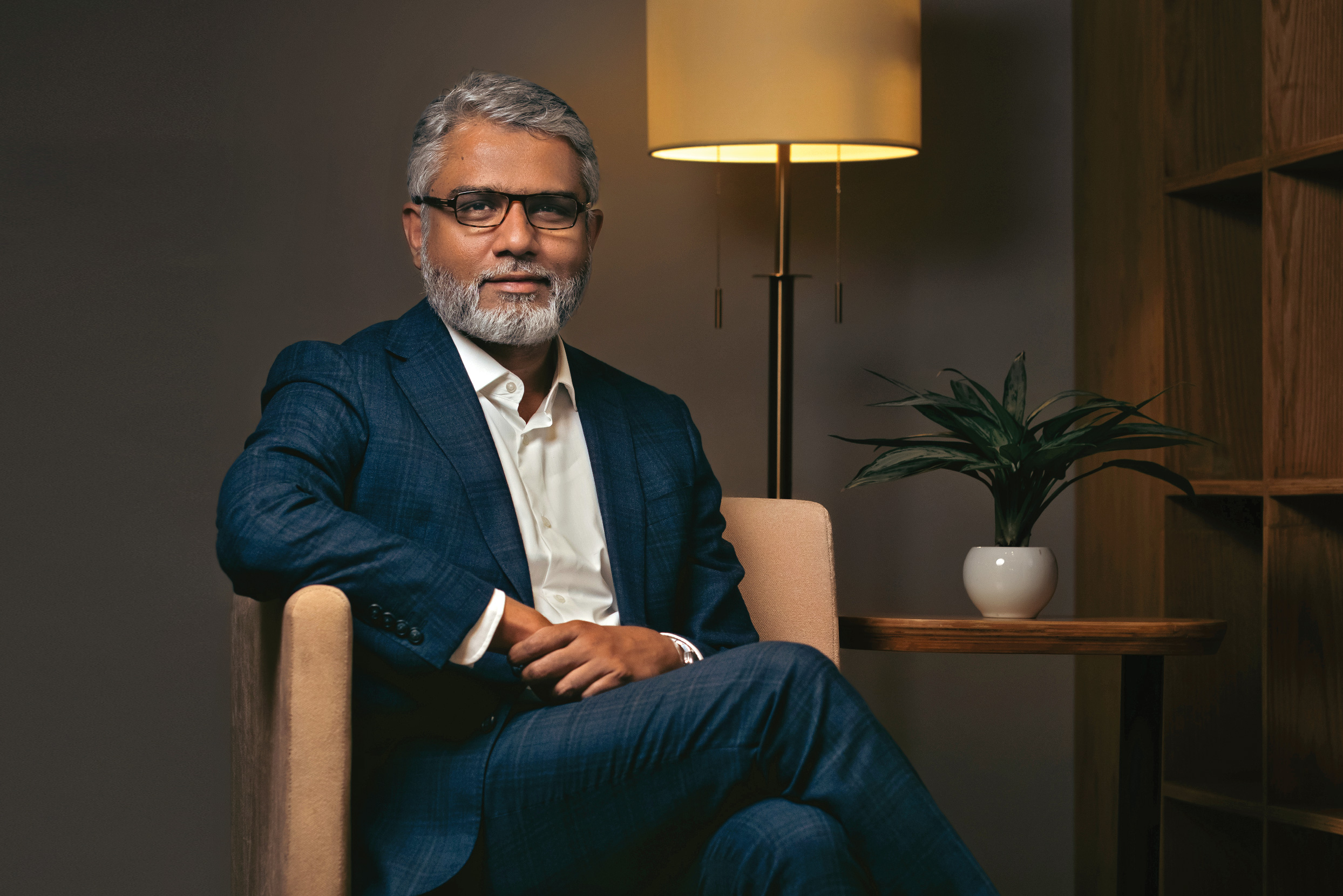
Ambassador Salma Khan is a women’s rights activist at home and human rights practitioner on an international level. She is the founder chairperson of the NGO Coalition on Beijing Process (NCBP). She was the Asian woman to be elected as a Chairperson of the UN Committee on the Elimination of All Forms of Discrimination against Women (CEDAW), in which she served for three terms, starting in 1992. She is accredited with the initiation of Women’s Wing of the National Planning Commission and the Five Year Development Plans of Bangladesh. She has served as the Division Chief of the Macro Economics Division and Planning Commission, Director General of the Bangladesh Institute of Management, and as an Economics Professor in Chittagong University. She is the recipient of numerous accolades including the Gold Medal of the Asiatic Society, the Ananya Top Ten Award and the Rotary International Jean Harris Award. The Ambassador’s professional work and publications have focused on economics as well as women, children, labor, and non-governmental organizations. In 2006, she became her country’s Ambassador to Indonesia.
During my youth, I used to cycle down through Topkhana road oblivious to what a great privilege it was at the time. I lost my father when I was three years old, as the youngest of seven children. My mother raised us in a household with an open environment which meant I was unaware of the inferior portrayal of women in our societies at the time. A strong emphasis was put on education by my mother during my upbringing. After obtaining a degree in Economics from Dhaka University in 1961, I had traveled to the U.S.A. for my Masters. Upon my return in 1967, I was appointed as the Chairman of the Economics Department at Chittagong University in 1971.
After joining the workforce, the stark realities of being a woman were brought to my attention. As I was teaching my classes about poverty and the necessity for agricultural development, it had come to my attention that women were not even considered when the matter of economics and developmental issues were being discussed. It had come to my attention that no one had addressed the conditions of our public finance and development economy with regards to the contribution of women. In 1975, I moved to Dhaka because my husband’s work required him to be stationed there. I had reached a point in my career where it would be necessary to choose a path for my future. I realized that continuing with my teaching profession would not lead to the changes I wanted to see in regards to women’s development. Before leaving for Dhaka, Dr. Yunus came to Bangladesh and was working in the Jobra village near Chittagong University. I handed over my Chairmanship to him but being introduced to him and hearing about his ideas inspired me to take an initiative for the change that I wanted to see. I wanted a role which would allow me to help in the decision-making processes which would help with the development of women in our country. Once settled in Dhaka, I joined the Planning Commission upon Dr. M.N. Huda’s request. There we prepared the Second Five Year Plan. Simultaneously, there were two defining moments for women; the Women’s Ministry was created in 1978, and Dr. Amina Rahman was the Minister.
Initially, I had joined the Planning Commission as the Deputy Chief of the Social Welfare. Many women including myself felt the need for a separate entity that would focus solely on women’s issues. My dream had come true when a separate cell was created for women which I was to be in charge of. At this time, I had the tools and data to write a book, however, this seemed rather implausible due to the circumstances then and would not become a reality until much later.
The first world conference on the status of women was convened in Mexico City in 1975. It was called by the United Nations General Assembly to focus international attention on the need to develop effective strategies and plans of action for the advancement of women. In 1979, the UN General Assembly (UNGA) adopted Convention on the Elimination of all Forms of Discrimination Against Women (CEDAW) which was often described as an international bill of rights for women. Following this, UNICEF invited the Planning Commission to the UN debate on Women’s Empowerment in Copenhagen. The Planning Commission wanted me to write a paper regarding this matter in the context of our country; this was quite an exciting opportunity because it was what I had wanted to advocate. I had accompanied the Minister to this conference, and this is where I came to know of CEDAW. It became a major platform and motivation for me to vigorously continue my endeavor to write a book on women and their contribution to the overall economic development of a nation. My book ‘The Fifty Percent: Women in Development and Policy in Bangladesh” was published in 1987 although I had finished writing it a lot earlier. When it was published, there had been no other texts regarding this matter, and it remains one of the most significant hallmarks of my life. With each year of the Five-Year Plans that have been set into motion after I have joined, there has been a significant degree of progress recognizing women for their participation in development.
Women have made distinguishable progress in the last few decades, especially in the 1990s. I recall the CEDAW and Millennium Development Goal conference in 1995, where Bangladesh was one of the only nations in which NGOs, such as BRAC and Grameen were collaborating with the public sector to alleviate poverty, create health immunization prospects and provide micro-credit loans. Women are currently employed in every sector, but they do not have equal access to productive, economic or land resources. Today, 70% of women do not own land and the implementation of the inheritance laws further detriments their economic status. It is alarming to learn that a large portion of the female population is still subjected to violence from their relatives. We need to create a curriculum that teaches parents to value girls having the same capabilities as boys for a real sense of progress to occur. There is a significant amount of women that are subjected to unpaid labor, leaving their contributions discredited. Equality is an on-going battle that I will continue to advocate. It is one of the most prominent instruments through which our country will reach its real potential.