
Prudency to Propel the Banking Sector
An insight into the success of Commerzbank in Bangladesh
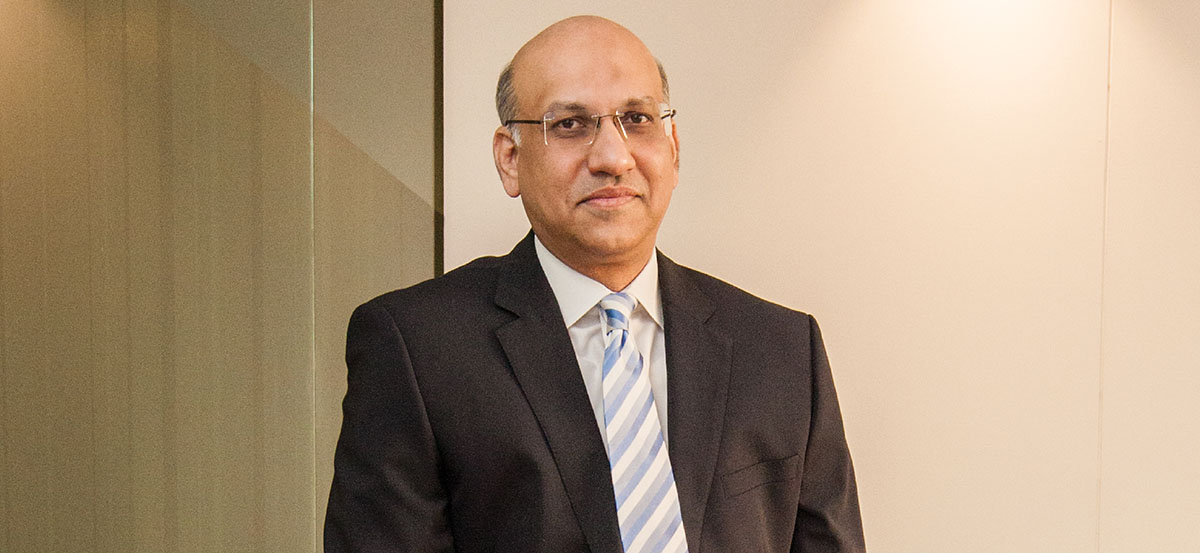
Please tell us something about yourself
I started my schooling in Chittagong at St Mary’s and then moved on to St Placid’s High School. After that I moved to Dhaka, where I completed my SSC from Mohammadpur Government High School. For HSC I went to Dhaka College, and finally to University of Dhaka to pursue a degree in Business Administration and obtained my Masters in Business Administration from IBA. Right after MBA, I joined a Korean company called Youngone for which I was sent to Seoul for a 10 month on-the-job training. After coming back, I took up the position of merchandiser and continued for 6 months. Then I shifted my career from textile to banking and joined ANZ Grindlays Bank and stayed until 2000. Standard Chartered bank acquired the Grindleys part of the bank from ANZ group. By the virtue of that action, I became a part of Standard Chartered Bank until mid-2006. Soon after, I joined Citi N.A., one of the largest banks in the world, as Head of Financial Institutions and continued until 2011.
Can you please explain your journey during your tenure with Commerzbank AG?
I left Citi, N.A. in 2011. Different companies, including mobile operators and local banks, started getting in touch with me asking to join them. Since I was open to new ideas, I decided to explore if they had something interesting to offer me. During this time, I also got a phone call from Germany – one of the colleagues from Germany said that they have been awarded a license in Bangladesh to operate as a Representative Office and asked whether I would be interested in talking to them. I was at the point where I was discussing the perks, salaries and benefits which would come along with my responsibilities. Commerzbank was one of the fastest recruiters to come up with a concrete offer which appealed to me. Since I joined them I have had a rewarding journey.
Being the second largest German bank and one of the largest banks in Europe, entering Bangladesh and allowing me to raise the flag here has been very rewarding and satisfying. Right now, there are 5 of us, which in Commerzbank representative model structure is a large set up. There are Rep offices within the Commerzbank network and are manned by only 2 individuals. From that perspective we have a large set up here. Since setting up, our activities and business volume have increased significantly. I can put my hand on my heart and say that the last few years have been very rewarding and the outlook is very positive.
There have been concerns about the ballooning Non Performing Loans (NPL) in the banking sector in Bangladesh. What are your thoughts on this matter?
There are many theories behind the rise of NPL. One of the reasons could be the effect of diversions of funds into non-productive sectors. Sometimes borrowers are offered more liquidity than what they actually require. These borrowers may have invested the funds in somewhat unproductive sectors by diverting the funds from the productive sectors, which does not give the right kind of return on investment and the fund gets stuck. The good news is that the central bank is more vigilant in combating these kinds of activities. We need to come up with a more rigorous action plan to stop the ballooning effect and ensure that this trend does not continue in the future.
In your opinion, what steps can be taken to help the struggling banking industry?
Firstly, the corporate governance, transparency and accountability has to be well established. The current legal system may need to be revised and updated to address the disposal of long pending cases filed by the banks to recover non-performing loans, especially after getting the verdict from the court. In a lot of instances, we see that a huge amount of NPLs are stuck for many years in the banking system without any recovery and positive outcome. We also need to bring in more skilled bankers who can identify the risks that is inherent to any particular industry, and also how the risks can be mitigated. More offsite and onsite monitoring needs to be implemented so that banks’ assets are properly and rightfully utilized, and not diverted into the unproductive sectors.
You have been elected as the President of Bangladesh German Chamber of Commerce & Industry, as well as the President of a Rotary Club. How do you manage to juggle all these roles at the same time?
It was certainly challenging to juggle all the roles but I enjoyed it because as a business graduate, we were taught how to perform under pressure. There were hurdles while I was heading and managing the business of Commerzbank in Bangladesh. I also encountered a lot of challenges as the President of BGCCI and Rotary Club of Metropolitan Dhaka, but I was very lucky because I had very cooperative board members. The Embassy was also extending all sorts of moral support to the board of BGCCI. I would particularly like to mention Mr Nooruddin Chowdhury, who was the Country Head and Managing Director for DHL Global Forwarding Bangladesh and has really been a comrade in fighting out all the issues we’ve faced. There were other directors who were cooperative and offered assistance. It was efficient team work. The success of Commerzbank is also a result of team efforts between the colleagues in Bangladesh, Germany and colleagues across the globe. It was all possible because of team work and allocation of duties and responsibilities. It’s like an orchestra conductor making sure that each instrument is playing at a well synchronized manner.
Commerzbank AG started their operations in Bangladesh in 2012. What kind of impact would you say, the bank had on the banking sector?
Commerzbank has been facilitating cross-border trade finance business in Bangladesh since 1972, but their physical footprint started in 2012 when I was recruited. As soon as I joined them, my first task was to get the word out about Commerzbank’s presence in Bangladesh and that the bank would like to facilitate cross-border activities across the globe. As far as the banking industry and cross-border trade finance are concerned, I think everybody is well aware that we are one of the major dominant players in this particular sector. We’ve facilitated hundreds of millions of euros and dollars’ worth of business. In the last 6 years we’ve handled between 2 to 3 billion dollars, worth of business in terms of import into Bangladesh. We are also now operating as a bank which supports long term financing for entrepreneurs and business houses in Bangladesh who require long term funding in foreign currency. The entire purpose of this loan is to reduce financing cost and provide a long term repayment period because we are talking about large infrastructure projects like power plants, medical facilities, dredgers, etc. These plants and machineries require a repayment period beyond 5 years or 10 years. We are one of the banks who offer an extraordinary facility that helps bring the cost of funding down as opposed to local currency borrowing, as well as the long term repayment period allowing them to have less pressure on their cash flow.
Where do you see Commerzbank AG in the next five years? Where do you see the banking industry of Bangladesh in the next five years?
I think we will try to remain a representative office and try to offer as many products to our client base here in Bangladesh as possible. Products like LC confirmation, discounting, long term financing through ECAs and of course treasury products. Commerzbank does not have a very aggressive plan to set up branch businesses around the globe. We want to offer the best possible products and service to our clients while being an efficient institution. At this point in time we do not foresee the existing circumstances evolving in such a way which will necessitate opening a branch in Bangladesh. We need to be very careful as far as risk weighted assets are concerned. At the end of the day, we are accountable to our stakeholders and we want to offer value proposition to all our stakeholders.
I am a very positive and optimistic person and want to believe that a lot of negative issues will be addressed and there will be positive developments in the banking sector. Owing to this, the ballooning NPL will be addressed and brought under a sustainable and sensible limit. More prudent decisions will be taken in extending credit facilities to new and existing ventures. We will not shy away from taking new exposures, but we will also try to ensure that depositors, stakeholders, the sponsors money is not wasted.
We all want Bangladesh to grow and prosper while ensuring governance and accountability in every sector. The target for Bangladesh is to become a middle income country by 2021 is challenging and very much possible. My hope is that the disparity between the haves and have-nots can decrease while Bangladesh excels and prospers in every positive way.