Poor families in developing countries like Bangladesh are being denied access to basic technology and services by financial systems which fail to bring them modern energy, a new report launched here on Monday revealed.
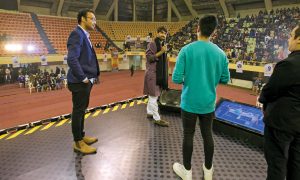
The report “Poor People’s Energy Outlook (PPEO) 2017” was released by global development charity Practical Action in the capital city, which stressed on the need of national financing on energy sector. Bir Bikram Dr. Tawfiq-e-Elahi Chowdhury, Honourable Advisor to the Prime Minister of Bangladesh on Energy, Power, and Mineral Resources, graced the launching event as Chief Guest.
The report comes at a time when:
Global Scenario
- One billion people are still without access to modern energy, preventing them from reaching their full potential and emerging from poverty.
- Globally, more than 3 billion people continue to cook on a basic open fire.
- Currently, 4.3 million people every year – mainly poor women and children – die as a result of breathing in smoke from cooking indoors.
Bangladesh Scenario
Access to electricity
- The seventh national five-year plan aims for electricity for all by 2021: the 50th anniversary of independence. Government figures estimate that, till March 2017, 20% people lack electricity access though installed generation capacity has increased from 13.5 GW in 2015 to 15.3 GW in 2017. However, these numbers may not be enough to cater for the demand from new customers.
- 38% Households are not connected with national grid which leaves 7.2 million households without electricity at all or underelectrified.
- Amongst these 7.2 million households, about 4 million households which can most economically be electrified via the national grid. Grid expansion for the remaining 4.8 million is uneconomical and they will be best served with distributed solutions. 4.4 million households among these will be best served through stand-alone solutions and 5% through mini-grids.
- There are 4.1 million Solar Home Systems. Among this, around 35% reach Tier 2 in terms of their capacity and 10% are non-functional.
Clean Cooking
- 9% of households are using LPG (Liquefied Petroleum Gas) as a primary fuel
- More than 90% of Bangladeshis use solid fuels for cooking, meaning that household air pollution affects the health of more than 137 million people and has led directly to an estimated 78,000 deaths annually.
This 2017 edition of PPEO report considers how to best finance national integrated energy access plans for with a special focus on Bangladesh, based on analysis of these markets and consultations with energy-poor communities. The report makes recommendations on sustainable solutions to make energy more accessible and affordable to the world’s poorest and most vulnerable people.
Bangladesh is a pioneering model in its efforts to improve energy access, and other countries have been keen to learn from, and indeed replicate, the success. However, universal grid electrification plans are neither realistic nor economic for millions of people in remote areas, and furthermore will overstretch already heavily burdened generation capacity. Bangladesh’s laudable goal of achieving meaningful universal access by the 50th anniversary of its independence is possible. But it will require a mix of technologies and approaches with decentralized renewable energy which is the most economical and fastest way to reach many households even in the context of an extensive national grid. A renewed national discussion and vision for the off-grid electrification sector is needed, clarifying the regulatory framework for mini-grids and integrating more closely with the agricultural sector and the needs of small rural industries. Radical increases in government, donor, and impact investor support is required to activate the enormous clean cooking market potential in Bangladesh which, if successful, will also unlock tens of millions of hours of women’s time to undertake further potentially economically productive activities.
Building on the in-depth analysis of Bangladeshi communities’ energy access priorities in the PPEO 2016, the 2017 edition explores the role of public and private finance, financing mechanisms, and policies in enabling investment in energy access in Bangladesh. The report looks at the mix of technologies and funding required to achieve national and global energy access goals; and the roles of civil society and the private and public sectors making this a reality.
The report has also analysed the gap in finance between an expressed willingness to pay and our estimated costs of provision. Closing the finance gap needs public finance (grants, government investment) especially where markets are thin. We first need national planning to champion the poor; and then, public finance to incentivise the national banking sector; build skills and expertise; provide sector support to women as entrepreneurs and consumers; and link with budgets and investments in agriculture, health, education and co-operatives. A wider programme of market activation is also needed to build collaboration between stakeholders, creating an atmosphere of trust and positive peer pressure; public awareness kick-starting consumer demand; and associations of decentralised renewable energy companies for co-ordination and collaboration.
In his speech, Dr. Tawfiq-e-Elahi Chowdhury emphasised saving energy for a cleaner and better environment, “Whenever I visit conferences in the country abroad, I always ask them to minimize the usage of energy”, he also added. Dr. Chowdhury has highlighted on the Government’s initiatives on making sustainable and renewable energy more accessible and affordable.
Government high officials, recognised private sector and civil society stakeholders from the energy sector have also participated in the launch, bringing their diverse experiences and perspectives to the conversation. Hasin Jahan, Country Director of Practical Action Bangladesh will preside over the program.
Recommendations
Key recommendations include:
- Based on communities’ preferences for clean cooking fuels and technologies, an escalation in investment is needed in decentralised electricity and clean cooking solutions
- National financing strategies need to address energy for productive and community uses as urgently as household needs. This can account for a substantial part of the costs of provision.
- Financing systems can and should actively promote gender equity in energy access, which is critical for more sustained, appropriate and equitable solutions;
Additional Info:
First launched in 2010, the PPEO series shines a light on energy access issues from the perspectives of poor people, and has been hugely influential in re-framing the narrative around energy access. As a result of the series’ success, Practical Action co-designed the SEforAll Global Tracking Framework which has now become the global standard for measuring levels of energy access.
The PPEO 2017 is the second in a suite of three new PPEOs; it is preceded by the PPEO 2016, which explores energy access planning from the bottom up, and will be followed by the PPEO 2018 which will look at how to achieve integrated energy access at scale.
With this set of three reports we are building the pillars and principles of how we can begin to deliver energy access at scale.
Practical Action’s Energy Access Advocate and co-author of the PPEO 2017 talked about the major concerns about the Energy sector and the ways to overcome these,
“Access to the correct types of finance for energy access will help us overcome the scourge of poverty, by driving progress towards achieving universal access to electricity and clean cooking. Yet energy access finance is often not directed in the right way. Currently, the focus remains on investing in grid extension and generation capacity in too few countries – rather than looking at the requirements of the vast majority who live in energy poverty, many of whom are far from the central grid.” They also emphasized the need to provide women with support, “Women in particular, who often live in rural areas without meaningful energy access, can drive development when they become part of the energy system - by becoming entrepreneurs, educators, decision-makers and by empowering their communities in turn. Decentralised systems can be particularly beneficial for women as both consumers and entrepreneurs and have, in recent times, attracted new funding from a range of sources; but this is not enough. At this rate, we are still set to fail in reaching the goal of achieving universal, sustainable and modern energy access by 2030.”
Practical Action strives for enabling poor communities to build on their skills and knowledge to produce sustainable and practical solutions. Practical Action, through its programmes in Bangladesh, works primarily by developing, upgrading, demonstrating, and putting appropriate technology into practice within communities using participatory approaches. It also provides skills training and extends capacity building support to NGO/GO staff, share knowledge and disseminating information to the right audience and promotes advocacy and influencing for policy change.
| For further details, please contact to: | |
| Primary Contact | Secondary Contact |
| Nusrat Anwar
Public Relations & Communications Officer +8801701207737 |
Plaban Ganguly
Marketing and Communications Coordinator +8801711788548 plaban.ganguly@ practicalaction.org.bd |