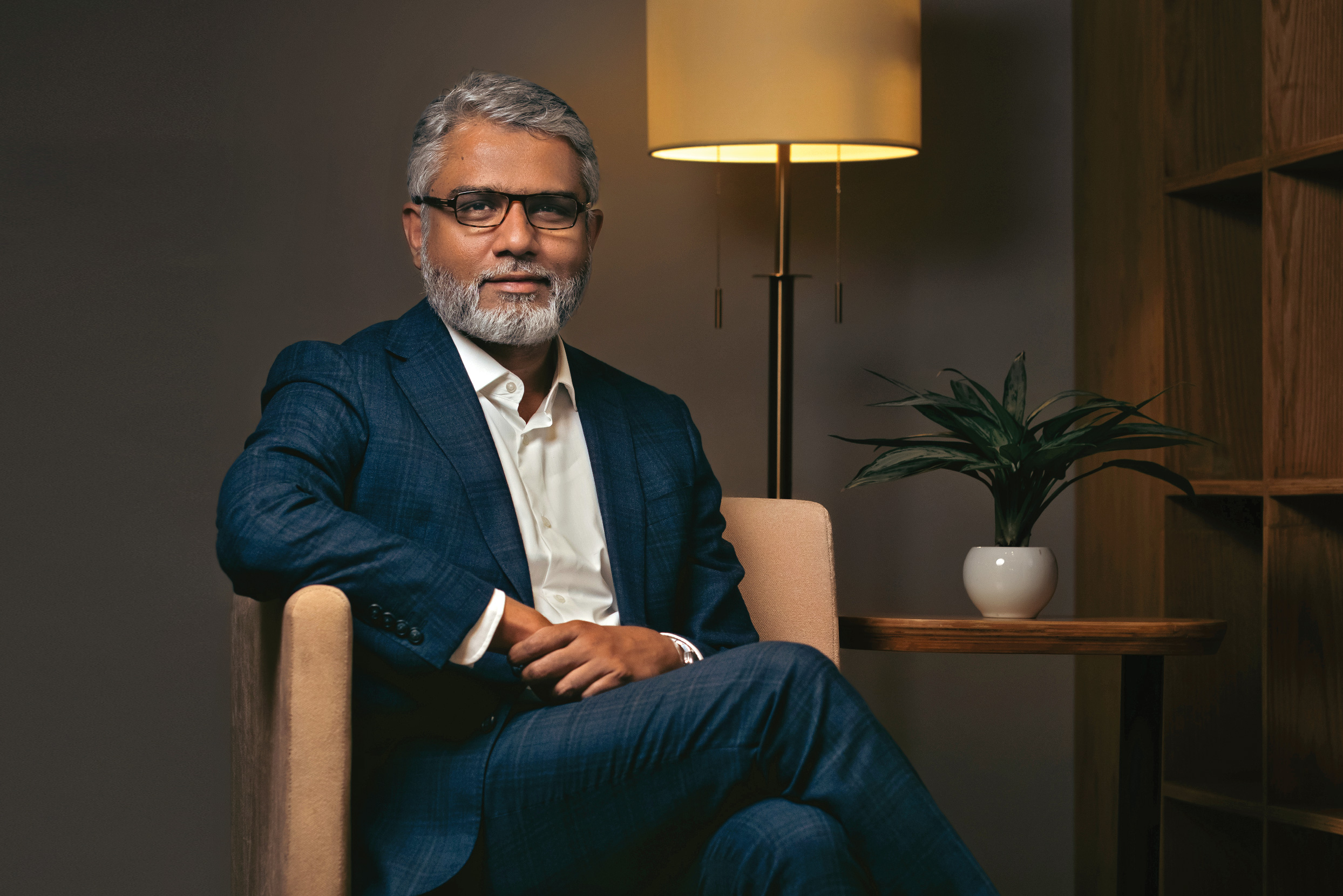
Born in January 1965, Ma Mingqiang is the Ambassador of the People’s Republic of China in Bangladesh. During his diplomatic career he has also worked as the Secretary-General of the ASEAN-China Centre (2011 to 2015) and Counsellor & Deputy Director General of the Department of Asian Affairs in the Ministry of Foreign Affairs of China (2008 to 2011).
It is considered by many that we are now in Asian age of development? What is your comment on Bangladesh and China?
By looking back into history we can find that Asia is in the cradle of three ancient civilizations. The Ganges River valley in India, the Yangtze River valley in China and Euphrates river valley in Iraq nourished these civilizations. Thus, we have all the reason to believe that time will come for our region. I have read the unfinished memoir of Bangabandhu Sheikh Mujibur Rahman who visited China twice in 1952 and 1957. His autobiography contained a few pages where he described China and made detailed and interesting observations about our society, culture and the behavior of the Chinese people. These observations were very precise and specific and you could tell that the visit left a deep impression on Bangabandhu who was a firm believer in socialism. The Honorable Prime Minister Sheikh Hasina told me that Bangabandhu believed during his time that one day China would become a greater developed country. Bangladesh is now also on the fast track of economic development. By the year 2021, Bangladesh will become a middle-income country and China will become a moderately prosperous society. I firmly believe our dreams will be realized and we will have a better tomorrow.
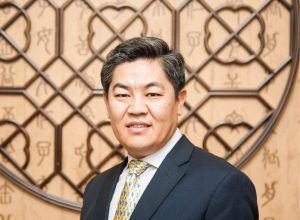
Ambassador
People’s Republic of China in Bangladesh
In business terms, there is a huge gap between Bangladesh’s export and import with China. How can this gap be minimized?
The bilateral trade figures are very encouraging. China stands as the largest trading partner for Bangladesh and Bangladesh is the third largest trading partner of China in South Asia after India and Pakistan. It is quite a phenomenon where in the wake of global slowing down, China’s trade with other parts of the world is slowing down but its trade with Bangladesh is going up. The last year witnessed a growth of 18% which is very encouraging. China has a huge deficit in its trade with some countries and also surplus with some other countries. It is a part of a global supply chain, as is Bangladesh. Bangladesh imports more from China now, as there is a need for the local enterprises to import and the Chinese products are competitive. Of course, a balance is always preferable. The Chinese Embassy is trying very hard to introduce more products from Bangladesh to China and more Chinese investment to Bangladesh. The Chinese economy is now in a transition period from being export-driven to becoming domestic consumption and export driven. China will import $10 trillion worth of goods from abroad in the next few years. With cheap labor and further investment, Bangladesh will become a regional or global manufacturing hub and China’s importance as an export destination for Bangladesh will grow. Currently, RMG export to China from Bangladesh is increasing 30% over a year-on-year basis.
“We see the growth of Bangladesh not as a challenge but as an opportunity. We want to see a developed Bangladesh and we want to be a part of your efforts.”
Where do you see Bangladesh in this global supply chain?
In my view, both China and Bangladesh are in the middle of the supply chain. China is a little bit ahead of Bangladesh but the potential for Bangladesh is there. I once said at a seminar that China might eventually become the biggest export market for Bangladesh. At the moment the trade imbalance cannot be addressed simply by trading. This is where greater Chinese investment can make an impact. Our President, H.E. Xi Jinping, made a landmark state visit to Bangladesh recently and during his visit, a number of cooperation documents were signed. This gives me all the reason to believe that there will be more FDI from China. A few days ago I receive a 67-member Chinese delegation, comprised of many big textile companies who came to look for investment opportunities. Now there are three daily flights from China to Bangladesh, one from Beijing, one from Guangdong and another from Hong Kong.
Bangladesh is lagging behind in terms of preparedness. How can we overcome this problem?
The first time I came to Bangladesh was six years ago. That was in June 2010 and I stayed for 2 days. I found Bangladesh, at first sight, very similar to how my hometown was some 30 years ago. At that time we were short of capital for investment, lacking the right technology and expertise, with poor management. China was closed to the outside world for many years and severely lagging behind. In 1978, when China initiated its reform, the per capita GDP was only $224. Mr. Deng Xiaoping started the process of reform and opened up the country for foreign investment. These reforms unfolded through rural areas with land and ownership reforms. They gradually spread to the cities in a very systematic way. We tried to provide the best incentive packages to attract foreign investment. However, we also had to overcome our bottlenecks which included poor infrastructure and transportation. The fast increasing foreign investment brought in new technology and created jobs. This plan helped China grow but it might not be suitable for Bangladesh. It can still offer a good reference point as a lot can be learned from how we overcame our difficulties.
“At the moment the trade imbalance cannot be addressed simply by trading. This is where greater Chinese investment
can make an impact.”
There are many similarities among our nations. What are your comments on this?
As Chinese Ambassador, I am glad to know that Bangladesh’s affinity towards China is a national consensus. All of the people look forward to this relationship in a positive way. This affinity between our two nations started thousands of years back. FA-HIEN (399-414), a Chinese Buddhist monk and pilgrim traveler came here to learn Buddhism. Also, Atish Dipankar Srijnan, (980-1053) a Buddhist scholar, religious preceptor, and philosopher from Bangladesh was invited to China to deliver lectures on Buddhism. There was also an old trade route. We see the growth of Bangladesh not as a challenge but as an opportunity. We want to see a developed Bangladesh and we want to be a part of your efforts.
Is it altogether a strategic partnership with Bangladesh?
One of the most important outcomes of the historic visit to Bangladesh by the Chinese President H.E. Xi Jinping is the elevation of bilateral relations from comprehensive cooperation partnership to a strategic partnership. The word “strategic” has nothing to do with alliance or coalition. In my view, it is more of a mentality, a way of thinking or doing. It means that we are now not just focusing on individual issues but all the issues, which include long-term issues from a regional and global perspective. It means the focus will be on not just security and development for one but the common security and development, not just cooperation but win-win cooperation.