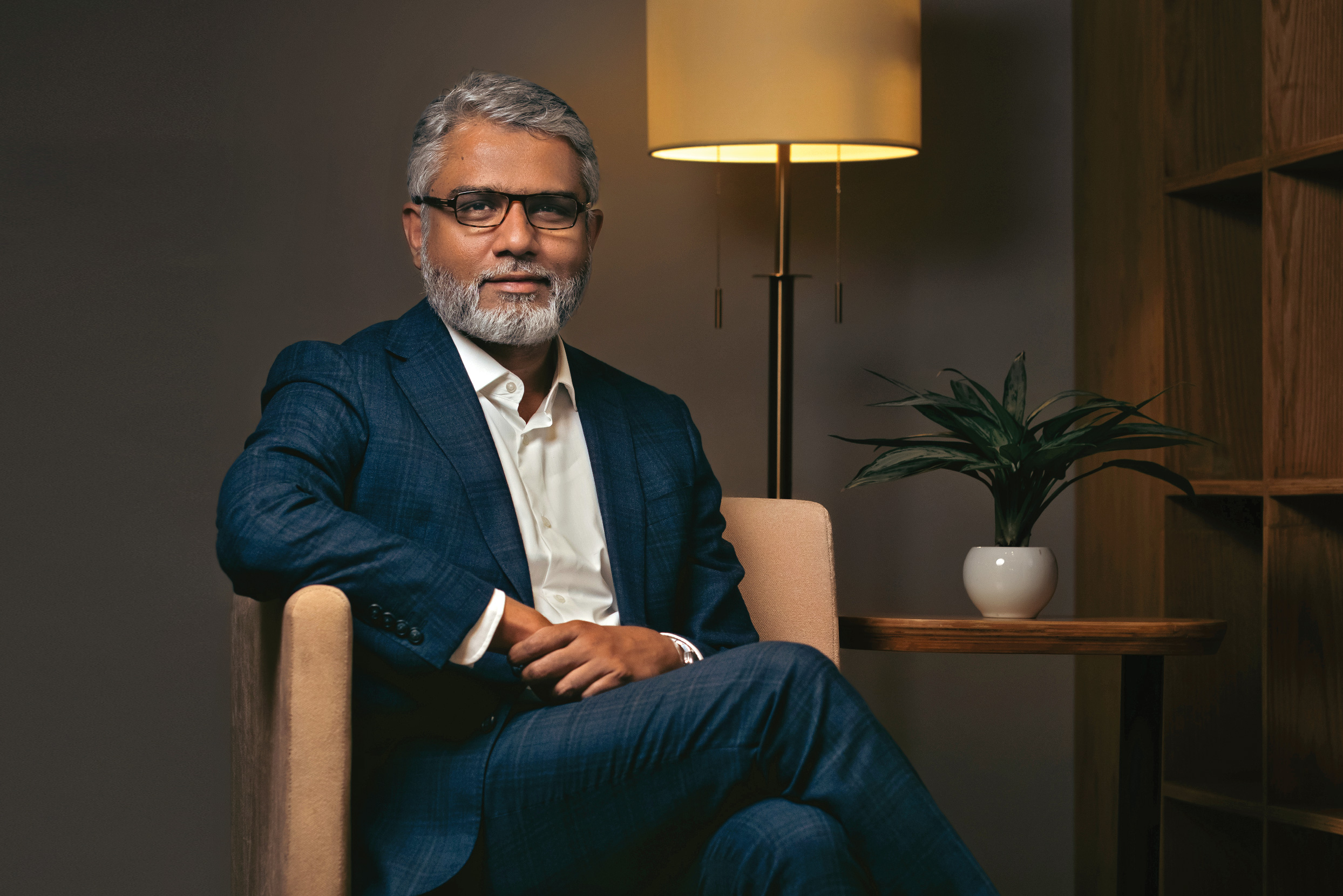

Sadiq Ahmed
Vice Chairman, Policy Research Institute of Bangladesh
What is your evaluation of the BBIN initiative?
Globally, South Asia is one of the least integrated regions. Research shows that more and better regional cooperation can unlock the Region’s substantial growth potential and help reduce poverty at a faster pace. A range of initiatives has been taken to boost regional cooperation. Unfortunately, turbulent history, long-standing unresolved conflicts, political distrust and suspicious attitude all combine to halt sustained and lasting progress with regional cooperation.
An initiative that has shown better prospects for sustained progress is the Bangladesh-Bhutan-India-Nepal (BBIN) cooperation. This is a sub-regional agreement to pursue cooperation in areas relating to trade, power, transport, and water. The reason why this is more promising than the broader South Asia cooperation framework, known as South Asian Agreement for Regional Cooperation (SAARC), is because the political baggage that SAARC carries is much less binding for BBIN. Countries located in the eastern part of the South Asian Region share a common border, substantial cultural background and are relatively less conflict prone than SAARC, where the India-Pakistan conflict shadows and offsets all positive developments. Notably, the two lead countries of BBIN, Bangladesh, and India, have made considerable efforts to resolve their political differences and have now established excellent political and diplomatic relationship. Significant progress has also been made on a number of bilateral economic cooperation front including trade, power, and transport. This positive experience gives a solid platform for pushing ahead with the BBIN initiative.
Could you elaborate upon the new programs of the BBIN program?
There is a new BBIN program involving all 4 countries with the purpose of improving transit connectivity. The BBIN motor vehicle agreement (MVA) was signed on June 15, 2015. It enables vehicles to enter any of the four countries without the need for trans-shipment of goods from one country’s truck to another’s at the border. Under the agreement, cargo vehicles will be tracked electronically, permits will be issued online, and sent electronically to all land ports. Vehicles will be fitted with an electronic seal that alerts regulators every time the container door is opened. The DHL Global Forwarding was appointed by the Indian government to carry out a pilot run under the agreement. The first cargo truck under the new MVA started from Kolkata on the 1st of November 2015. The truck traveled 640 km, instead of 1,550 km as they had previously driven, to reach Agartala via Dhaka. This as a very good example of the time and cost savings that the MVA under the BBIN would bring.
What are the bottlenecks in this regard? How can we overcome them?
The long-term sustainability of BBIN is a major challenge. For successful cooperation agreements, the political connectivity of the agreeing countries is essential, and the ability to demonstrate visible benefits for all participating nations is also critical. The presence of a large country, such as India, will always create a perception of dominance and unequal partnership. Even the well-meaning MVA is looked at suspiciously in some quarters in Bangladesh as catering to India’s needs rather than benefitting Bangladesh. To address these concerns forcefully and objectively, the BBIN cooperation must be broad-based on a multi-front that have clear and demonstrable benefits for all parties. Progress with energy trade and water cooperation will be seen as significant achievements for the smaller countries. Similarly, the removal of all trade barriers including non-trade barriers by India will have a hugely positive impact on exports from the three neighbors and demonstrate India’s goodwill and serious interest in promoting development in the smaller countries. Another positive action will be to simplify visa regulations for Bangladesh by extending it visa on arrival facility as given to a large number of countries. In the case of transit, it is important that India is willing to pay for full cost recovery of infrastructure used by India from neighbors. This is already a thorny issue in Bangladesh and must be swiftly addressed to ensure the full and proper implementation of the MVA.
Learning from a history of cooperation, the only sustainable way of keeping cooperation agreements intact is the ability to carry the citizens forward with cooperation. Personal relations between the heads of governments and associated political parties are major enablers. They are necessary but not sufficient.
What are the major business trends that you have observed recently? What are our prospects in this regard?
Given the fragility of the present cooperation practices, the BBIN needs to move pragmatically and in a sensitive manner to avoid any misperceptions. The initial focus should be on win-win low hanging fruits. My research shows that the easy gains relate to trade flows, trade logistics, energy trade and transport connectivity; a subject matter that I have extensively researched and published books about. Water cooperation is trickier although essential, but it needs a longer planning horizon.
The easiest and fastest way to show gains from cooperation is through much stronger trade cooperation and trade integration. Trade between countries of South Asia is very limited. For BBIN countries, the record is better. Even so, India dominates trade and it looks like a one-way street to ordinary citizens that often creates the wrong perception that India regards the BBIN partners as its markets. This is indeed not correct because a large part of the reason that exports from BBIN partners to India are so small compared to their imports from India is their domestic supply constraints; these matters must be addressed speedily and with determination. Simultaneously, India also has to act swiftly to dismantle all its non-trade barriers that hurt export efforts from BBIN partners. India should be lauded for granting BBIN partners duty-free entry. This is necessary but not sufficient to facilitate entry into Indian markets. A careful review of all the non-tariff barriers should be undertaken immediately and removed to facilitate exports from India’s BBIN partners.
How can trade among the region be improved? Are there any initiatives or programs that are currently working to alleviate these problems?
Trade will also grow with better trade facilitation practices, especially at the land ports that require substantial upgrading and automation. The World Bank and the ADB are both keen to support this initiative. BBIN could develop these regional projects to improve trade flows.
Nepal and Bhutan have tremendous hydro-power projects. If these projects are fully exploited, BBIN energy shortages can be addressed in a way that also helps the climate change agenda by substituting fossil-fuel energy with clean hydro-power. India has already set some good examples for supporting the hydro-power development of Bhutan. India’s positive role in promoting power trade with Bangladesh is another positive development. It can now scale up this effort to include Nepal in hydro-power development, and then help Bangladesh benefit through proper power trade agreements that include participation by Bhutan and Nepal. In all these endeavors the transactions should be done on a commercial basis involving the private sector and proper pricing and return to investment policies so that there is no perception of arm-twisting and political deal-making in favor of India. Since India has the financial resources, technical know, and institutional capabilities, their leadership role is important. However, the efforts must involve all the other three countries as equal partners in setting up the business proposals and underlying partnership agreements.
Building on progress with these programs, the next round could focus on building the transport infrastructure and water cooperation agreements. All initiatives, especially relating to water, must be seen as mutually beneficial and not as zero sum game. In the case of water, international experience suggests that adopting a River Basin approach with multiple benefits have the best prospects for success.
It is imperative that we improve our infrastructural condition if we are to improve our connectivity with our neighboring countries. What are your thoughts regarding this matter?
Infrastructural conditions are a challenge for BBIN countries, although India is more advanced than the other three countries. The transport infrastructure requires huge investments to serve both the needs of individual countries and to facilitate transit trade and connectivity requirements. Development of infrastructure will help improve trade competitiveness and boost BBIN exports. This is a huge challenge given resource and technical capabilities constraints. This requires a combination of BBIN cooperation and resort to international cooperation. Countries like China, Japan and Korea have huge resources and exceptional construction capacities. BBIN could effectively leverage these resources to develop the infrastructure; support can also be sought from the World Bank and the ADB. A vision, a roadmap, and agreement are necessary to remove all political and border-level hurdles. Project contracts must be based on competition and best offer from suppliers who meet quality standards. Cooperation must not imply insider deals and inefficient investments.
What opportunities are we missing out on due to the bottlenecks that we have yet to remove?
The main problem is the very slow progress with implementation of agreements. As a result, we are missing out on important progress with trade growth, expansion of power supply and development of infrastructure. Time is of the essence. The political climate for BBIN cooperation is excellent and countries must seize on this opportunity. Bangladesh can play a particularly important role to facilitate the cooperation agenda by serving as the bridge between the giant neighbor India and the small nations of Nepal and Bhutan. It can also play the gate-keeper role by pushing the dialogue and overseeing transactions to assure the smaller neighbors that their interest is being protected. The main bottleneck is the difficult and often very slow bureaucracy. Special skills might be needed to facilitate transactions. This can be done by involving private sector professionals and business representatives in all negotiations. The agreements must be fully disclosed to the public to maintain full transparency. Ideas and feedback on proposals should be elicited from national think tanks to develop good projects and to ensure that the selected projects meet sound economic and financial criteria.