“In ten to twenty years time there will be no more fiat money and we will only be using virtual money”
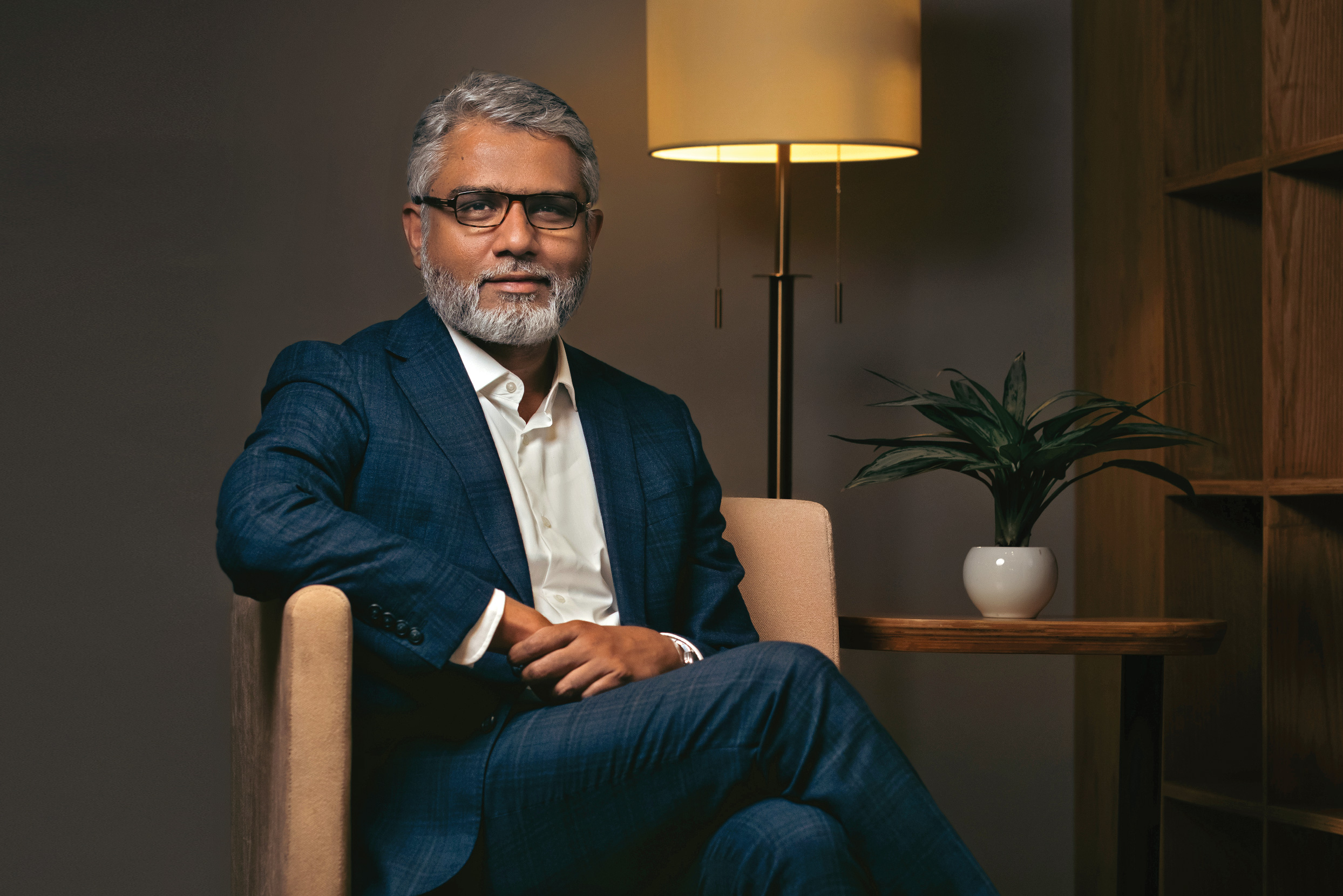
SHITANGSHU KUMAR SUR CHOWDHURY has been a career central banker for over three decades and four years. Son of Haripada Sur Chowdhury, S. K. Sur also has a Masters in English. Popularly known as SK Sur Chowdhury, he later on deserted literature and took an MBA, majoring in Finance and Accounting. Over the years, he acquired enviable excellence in financial sector regulation, supervision, crisis prevention & management and financial sector stability in home and abroad.
At present he is an Alternate Director of ACU (Asian Clearing Union) while simultaneously, Chairman of APRACA (Asian Pacific Rural and Agricultural Credit Association), Supervisory Forum of SEANZA (South East Asia, New Zealand & Australia), Bangladesh Steering Committee of UNGCLN (United Nations Global Compact Network), Sovereign Bond Transection Execution Committee, Ministry of Finance, Govt. of Bangladesh and a member of Governing Board BIBM ( Bangladesh Institute of Bank Management) at length. Here are the excerpts of his recent interview with IBT where he discussed critical banking issues which will change the face of the industry in the future.
In the Banking arena currency money is becoming outdated because of the rise of plastic money and other financial instruments. As a Central Banker what is your take on this?
With the massive transformation of payment and settlement system through digitization and technological innovation, the transition from fiat money to virtual money has been in place for more than last three decades all around the world. The concept of e-wallet even e-currency has been evolved. Fund transfer from one country to another even can be done in home while having a cup of coffee. Bangladesh is moving with the same tide and transforming the national payment and settlement process. Payments cards like Visa, Master and Q-Cash are now highly popular in country. ATMs are interoperable within all banks which means you make transaction from any ATM booth of Bangladesh with your plastic card. Introduction of electronic transfer has really set the payment at a new height. E-commerce and M-commerce are no more buzzwords nowadays. So, end-user’s intensity on virtual money and virtual payment is increasing rapidly. That has opened the door of potential with the door of risk and vulnerability. Cyber-security is the most burning concern in this regard. As the internet-forgery and cyber-fraudulence are increasing day by day, we are very much cautious in Bangladesh Bank as the regulator of national payment system. Besides, the introduction of Crypto Currency like Bitcoin has made the functions of regulator more challenging. Bangladesh will definitely be in fully automated and digitized payment platform yet we will be vigilant on the security issues.
During your stint in the Central Banker you have always favored the notion of CSR and its adaptability in Banking. What is your take in this regard?
We have been pursuing for mainstreaming Corporate Social Responsibility (CSR) in financial sector since 2008. Because, CSR has the true potential to contribute in the sustainable development of the country. CSR can contribute to that segment of the society which is difficult to be reached by the government development initiative. As we want to make our financial system sustainable, we have strived to make our banks and FIs responsible and sensitive to society and environment. CSR through financial sector embraces the sustainability on one side, broadens and deepens the inclusivity on the other. Banks can directly contribute to poverty reduction and improvement of living standard of underprivileged ones through CSR. CSR is not just philanthropy or benevolence, it’s the responsibility. Moreover, it not only benefits the receiver, but also helps the banks to improve the rapport building the potential clientele base, augments the brand value, reduces reputation risk.
You are very serious about money laundering and our foreign currency regime is quite conservative. Are there any plans on upgrading them?
Foreign Exchange Regulation Act and Money Laundering Prevention Act have been amended in 2015. We have liberalized the foreign regime to meet the demand of concurrent time and national economy; yet, the amendment has strengthened supervisory authority and broadened the regulatory jurisdiction in foreign exchange. But, we have to keep in mind about our balance of trade. We are now in a very strong position regarding our foreign exchange reserve which is more than $27 billion equivalent to at least 7 months import payments. Our balance of payment is favorable than earlier, but, we are very cautious. On the other hand, amendment of money laundering prevention act has made our Financial Intelligence Unit stronger and tougher. Guidelines on Money Laundering & Terrorist Financing Risk Management Guidelines for Banks have been revised this year. We have been in a sound position in mutual evaluation conducted by Asia-Pacific Group on Money Laundering. Our compliance to the standards of Financial Action Task Force has highly been appreciated by Egmont Group, the international network of FIUs. Our vision is to facilitate the business and economic activities to function more smoothly but in a secured environment.
What is your take on the rise of mobile financial services and agent banking? What are the next innovations in banking that we can look forward to?
Everyday around Tk435 crore worth of transactions are taking place through mobile financial services in our country. 80% of the amount is being transferred from the urban areas to the rural areas. In the past we had observed money moving from the rural areas to the urban areas but now this flow has changed its direction. This phenomenon is helping to upgrade the standard of living of rural people. Moreover, efficiency of national resource allocation has been increased which indicates the efficacy of monetary policy implementation. Even, we have introduced agent banking in collaboration with the Government for the people who can’t afford having a mobile phone even in the remotest corner of the country. Thus, access to formal financial services has been broadened in diversified manner. We are liberal but cautious in providing the licenses to banks for mobile banking and agent banking as financial inclusion is in our heart. Over time these services will improve, then more and more people will be using financial services which will improve their livelihood.
We have just introduced Real Time Gross Settlement followed National Payment Switches, Automated Clearing Houses which have been remarkable for digital financial inclusion. Now within moments you can make transactions through RTGS. We are now planning to make these smoother and easier so that the service can reach to the every corner of the country.
What is your take on skill development or human resources development for facing future challenges?
Human resource is the key to the success of any organization especially for the knowledge based entity like central bank. So, we have been very keen and assiduous in building up our human resources. We have tie up with local and international universities for providing professional masters in economics, finance and bank management to our employees. We have our own training academy in its own installation. We arrange training of trainers regularly to build our own training stuffs. We have set up HR Development Fund to support the continuous skill development. We support our employees in pursuing advanced masters or PhD. We focus on developing their quantitative and communication skill. We have also introduced e-learning modules from domestic and international sources like FSI Connect on banking supervision, payment system, money laundering prevention. The construction of our own world class HR Development Centre in Chittagong is underway. We recognize the innovation and hard work of our staffs by giving award to best employees of the year. We send our officials to abroad for international seminars, workshops and knowledge sharing programs which upgrade their outlooks. We are not only concentrated to the skill development of central bankers, but also to the commercial bankers by offering training to them in our academy and Bangladesh Institute of Bank Management. Because, we know sincere, honest and skilled human resources make the superiors’ task easier.