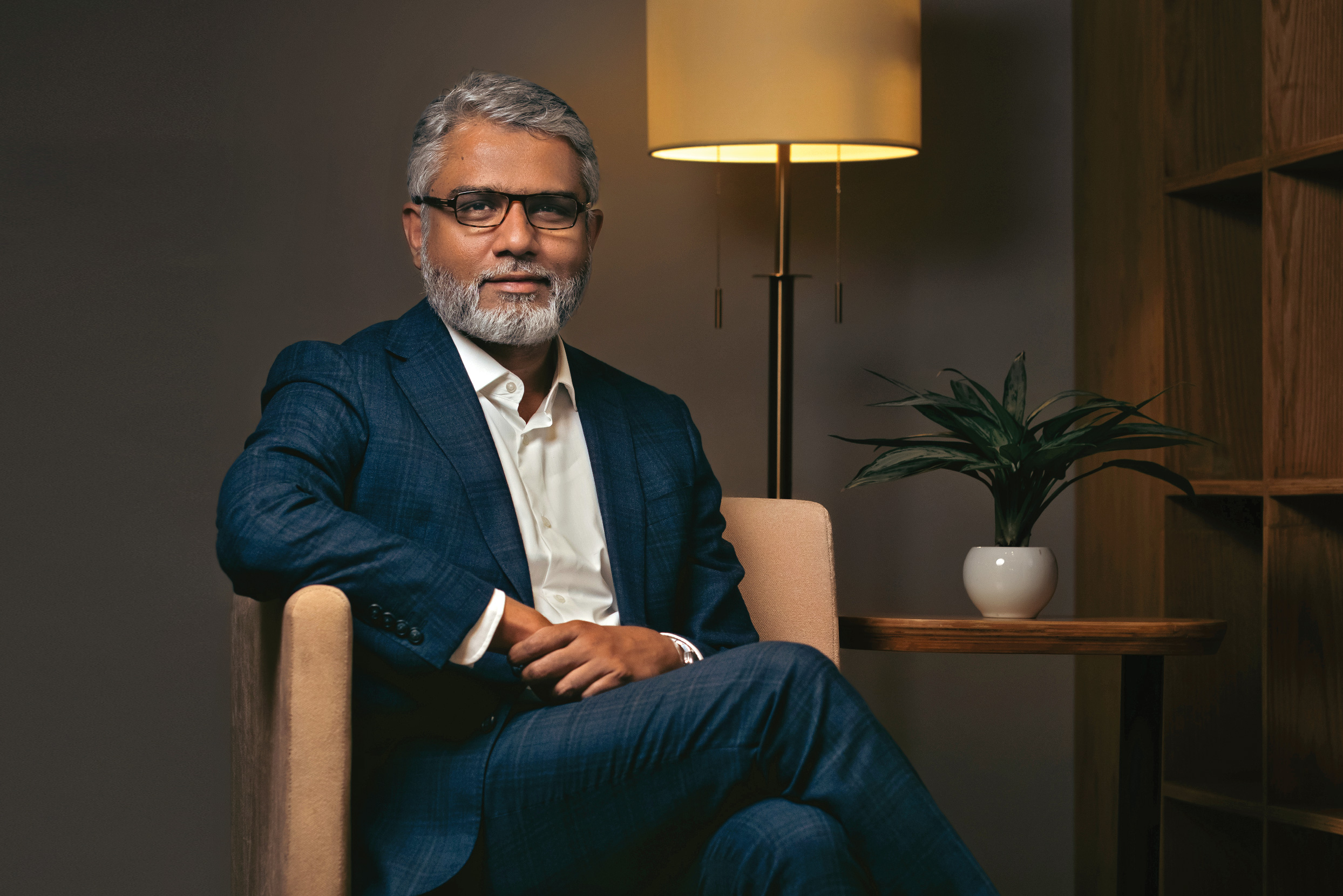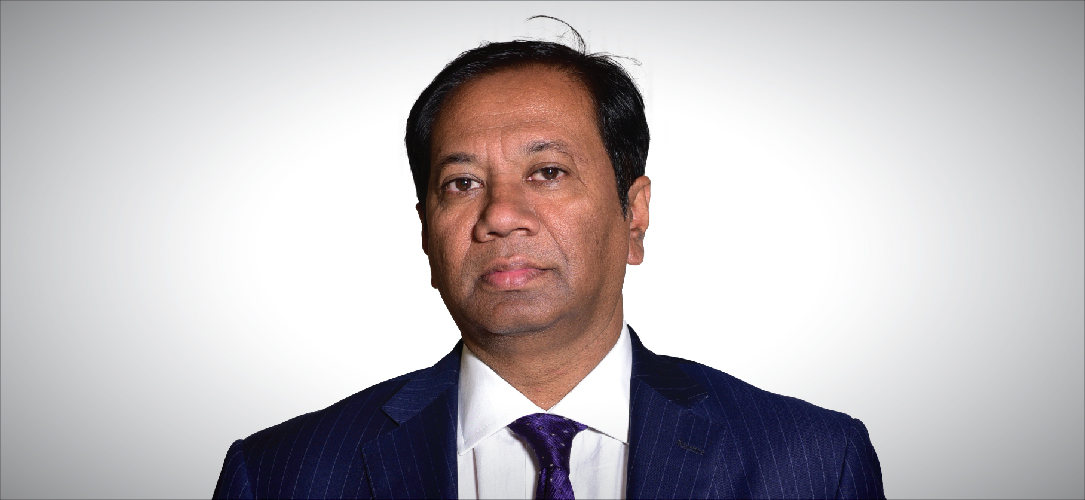

Dewan Nurul Islam is the President of The Institute of Chartered Accountants Bangladesh (ICAB) for 2018. He completed his Masters of Business Administration from University of Sydney, Australia (UTS) and completed Chartered Accountancy from ICAB in 1990. He then worked as a Country Finance Manager for DHL from the year 1990-1992. He joined Beximco Textile Division, Bangladesh as a Finance Director in 1992 and worked there for 13 years. After his excellent tenure in Bangladesh, Dewan went on to work with Development Capital Corporation in Sydney as a Senior Consultant from June 2006 until April 2008. On his return to Bangladesh, Dewan took the lead as the Managing Director of Grand Thorton Bangladesh in October 2013 and continued as an active member of ICAB. At the end of 2017, he was elected as the President of ICAB by the decision of the council members.
Do you think the Accounting education in Bangladesh is on par with that of international standards? If not, where do we lack behind?
An individual has to surpass two steps to qualify for chartered accountancy in Bangladesh. Initially, he or she needs to be enrolled in public accounting or audit firm and finish the course, the duration of which varies based on their previous academic backgrounds. As the second step, the person has to pass the exam from the Institute of Chartered Accountants Bangladesh (ICAB). We at ICAB consist of a pool of teachers coming from various teaching and industrial backgrounds and provide schedules for the evening as well as afternoon classes to prepare the students for the exams. The exams are dissected into three segments called the Knowledge, Application and Advance level. These levels consist of twelve papers as a whole, which focus on educating the students about accounting, taxation, business law, financial management, information technology (IT), and business strategy. The syllabus we follow at ICAB is at par with that of the international education standards. All our marking criteria, exam syllabus, and teaching materials are revised by the Institute of Chartered Accountants England and Wales (ICAEW). Therefore, the members here at ICAB have the privilege to be directly taken in as members by the global institute without having to pass any other exam except the ones at ICAB. Since we got this recognition from 2017 onwards, we can now say that the accounting education here is at par with that in abroad. However, we have to customize the syllabus in certain areas like business taxation, commercial company law, and auditing based on our company’s taxation act and audit-related requirements.
How large is the current Chartered Accountant community in Bangladesh and how impactful are they in the overall business landscape?
The Chartered Accountant (CA) community in Bangladesh currently consists of 1,800 members but needs to grow further. Out of the total number of CAs produced in Bangladesh, 200 members are now working at various developed nations. Moreover, another 400 to 500 members are involved in public practice like auditing, and the rest, which is about 75% of the total who are currently working with the industries as Chief Financial Officers, Finance Directors, Finance Managers, and Finance Controllers with large multinationals, local corporates, and donor agencies like World Bank and Asian Development Bank.
Considering the business landscape, chartered accountants are vastly contributing to the fiscal system of the government. The tax collection from the corporates depends on the profit they declare in their financial statements. A set of chartered accountants help the businesses to make and verify the financial statements and therefore act as an agent for the government during tax revenue collection. Another area where CAs are significant is regarding foreign relations. Any multinational company, before investing in a country, reaches out to a CA in that country to know about the rules and regulations regarding company formation, taxation policy, remittance transfer and the foreign exchange policy of that particular country. Similarly, in terms of investment in the local companies, the CAs play a great role in winning the investors’ confidence. They are the only ones authorized to audit the accounts, and the reliability of the financial statements depend on their certification. They also play the role of strategic partners while working with any regulatory body like commerce, finance, law ministries, registrar joint stock companies, central banks, and the national board of revenue during the formation of the law policies and guidelines. Thus, the CAs are not only regulating the accounting profession but also actively working with the stakeholders to help the country reach its goals.
The Chartered Accountant(CA) community in Bangladesh currently consists of 1,800 members but needs to grow further. Out of the total number of CAs produced in Bangladesh, 200 members are now working at various developed nations.
Do you think professionals are shifting towards other acclamations such as CFA, CIMA, and ACCA more over the traditional CA and ICMA? What are the pros and cons of such alternatives?
Although a lot of competing certifications exist in the common ground, we need to understand that the focus of each of these acclamations is different from one another. For instance, the main focus of a CFA is to analyze the financial statement, whereas, in case of CIMA, the accountants mainly work with managerial accounting and focus on the cost incurred during a production process. However, the work of CAs, in this case, includes both practical and academic demonstrations. When a CA is groomed up at a practicing firm, that individual has been exposed to hundreds of financial statements, may it be a production firm, multinational agency, or donor agencies like World Bank. This grows an ability within the CAs to critically analyze any statement they come across which makes them more competitive compared to others in the field with different acclamations. On the other hand, we at ICAB ensure that our students are exposed to the highest level of complex problems during the examinations. Therefore, it can be seen that in most cases CAs join an organization in the managerial positions compared to people with other certification who are only offered executive positions initially.
How is the current acceptance rate by big businesses operating in Bangladesh for local Auditing firms, when it comes to their year-end financial audits? Are Bangladeshi Accounting firms as good as those operating with international affiliations?
As per requirements, Bangladeshi companies must verify their financial statements via a local auditing firm as foreign firms are not allowed to work with the companies directly. Therefore, as the business environment is becoming more complex, the acceptance rate by big businesses for the local auditing firms is increasing drastically. Many of the audit firms in Bangladesh are affiliated with international ones like Klynveld Peat Marwick Goerdeler (KPMG), Grand Thorton and many others to take the standard of auditing to the international level. The local firms bring expertise and resources from the affiliated firms to provide their employees with global standards of training, which ensures that the local firms share values and culture similar to that of foreign auditing or consultancy ones. However, there is still a dire need for more affiliations like such in the country to enhance the capabilities of our firms as per international standards.
Given how the startup ecosystem is developing in Bangladesh, startup valuation is a major problem being faced by investors; do you think the CA community has a role to play in helping businesses estimate their startup valuations?
In case of the startups, the CAs are mainly involved with financial valuations whereas other firms are often hired to manage other areas depending on the company type. A list of 20 to 30 auditing firms is selected to evaluate the financial performances of local firms. In case of Bangladesh, the local market is not an efficient one, so the start-ups need to be valued carefully based on the knowledge of the investors and market acceptability. We cannot aggressively value the Bangladeshi market compared to the international one. However, the CAs are continuing to be strategic partners in valuations alongside other experts.
Venture Capital has a huge potential in the Bangladeshi market, especially when it comes to the Small Medium Enterprises (SMEs) as they do not have the sufficient access to finance. The SMEs often face problems in hiring senior CAs or bringing in resources due to the financial constraints.
How well developed do you think the Venture Capital market in Bangladesh is right now? Where do the scopes lie for growth in this market?
Venture Capital has a huge potential in the Bangladeshi market, especially when it comes to the Small Medium Enterprises (SMEs) as they do not have the sufficient access to finance. The SMEs often face problems in hiring senior CAs or bringing in resources due to the financial constraints. Venture Capital can play a great role in helping these firms have access to the available expertise and come up with better financial statements to attract further investments. The venture capital market in Bangladesh still has a long way to go. For now, the banks are the sole entities behind financing venture capitalists and capital markets in Bangladesh whereas in an ideal economy the seed fund for venture capital comes from a high network of individuals. Our country has a lack of such individuals who would willingly take risks to invest in a new creative venture. Thus, banks are involved in the process to provide the financial support. However, banks in our country are not catered to finance the venture capitalists much rather give access to loans. Therefore, to tap into the future potential of the industry Bangladesh needs to have more venture capital firms and enough financial support from the banks. The government can also play a huge role by giving tax rebates to industries and ensuring a one-time fixed taxation policy that will reduce the costs for entrepreneurs to a great extent and enable them to invest their profit as venture capital. Although the government needs to ease out the regulations for businesses to flourish, it must keep in mind that too much of something may encourage new businesses to come and exploit the available resources.
As President of the ICAB, what are your plans for the institution and the overall accounting community?
The main challenge we have right now is to cope with the demands of the future. The work of an accountant and auditor depends on the ways a business functions. Since the business environment is undergoing a constant change; our work is bound to change alongside. We need to prepare ourselves to work with artificial intelligence and automated systems. As a President of ICAB, my goal is to guide the existing pool of Chartered Accountants and prepare them for the newer changes that the accounting community is about to face.