
Strategising on regional connectivity may be one of major growth drivers
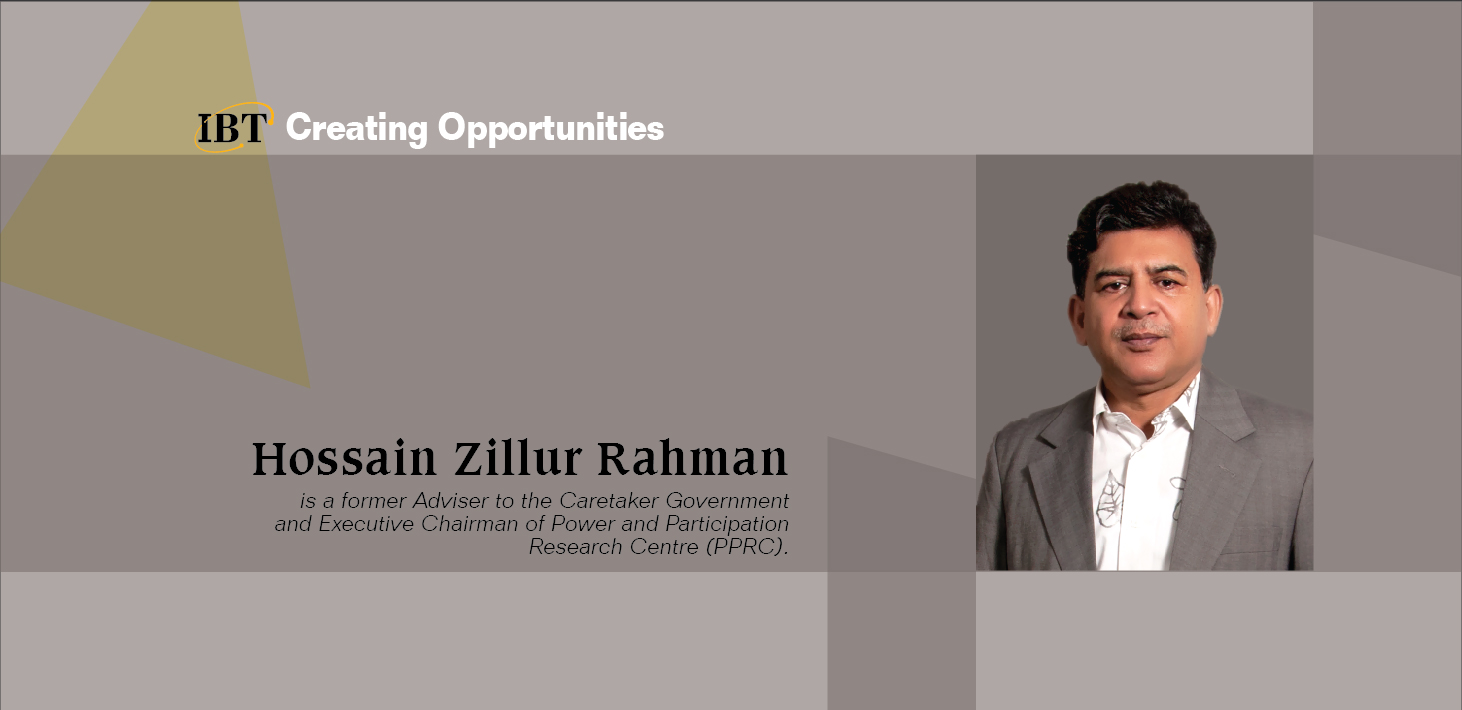
Hossain Zillur Rahman
How connectivity could be utilised as a key factor to attain higher economic growth with maximum welfare gains for Bangladesh remains a critical question to be dealt with, by all stakeholders. The blue economy is the latest development jargon for us, which needs to be translated into reality if we are really serious to use regional connectivity as a tool for development.
Already, the country enjoys a strategic geographical advantage of being in the neighbourhood of three dynamic growth centres of the global economy – India, China and ASEAN. Exploiting this advantage can be a critical contributor to the desired growth acceleration of the Bangladesh economy.
The opportunities in this area, as we have shown in an earlier study, are twofold: (a) Bangladesh may emerge as a connectivity hub for these three growth centres, and (b) the three growth centres may become major export destinations for Bangladeshi products.
Besides, opportunities in the form of marine fisheries, exploration of hydrocarbon, increasing external trade and bridge between major economic powers are available for Bangladesh, provided required policies and initiatives are undertaken to exploit them.
We have also listed a number of strategic challenges such as Chittagong port governance, initiating steps on the long-term agenda of a deep-sea port, facilitating expanded use of Mongla port, Padma Bridge, Dhaka-Chittagong growth corridor, Integrated Multi-Modal Transport Policy, mass rapid transit for Dhaka and Chittagong, and upgrading investment in railway and road maintenance funds.
Bangladesh is pursuing the goal of achieving the middle income country status and still a development status with around US$1,000 may mean that problems of poverty would still be substantially with us. Clearly there is a need to sharpen our middle income ambition towards the high end of the range. We have already called for adopting the goal of transforming Bangladesh into the 30th largest economy by 2030, from the currently level of mid-40s worldwide.
This is in no way for an outside dream. What we will need is, as research shows, an acceleration in current growth rates by 2-3% to a medium-high annual rate of 8% and sustaining the same for two decades can bring the scaled up middle income ambition of 30th largest economy by 2030 within reach.
Strategising on regional connectivity is one of seven priorities we have identified as having the most strategic promise for accelerating such a growth process. They are Overcoming the Infrastructure Deficit, New Sectors, New Markets, Engaging on Skills, Re-Positioning Agriculture for Growth, Urban Strategy, Strategizing on Regional Connectivity and Sustainable Adaptation to Climate Change. We believe five important considerations define the pursuit of our high-end middle income goal and they are: high growth, employment focus (inclusive of self-employment), productivity increase, economic diversification, and environmental sustainability.
I think we need to study the current situation in which major powers have renewed their interests in the Bay of Bengal region where we are not only located but also our major economic strengths lie. If we can’t hand the challenges, our strategic advantage may turn into trap and we may miss the opportunities.
So, it is useful to maintain an awareness of possible risks which could derail our desired growth trajectory and afflict us with the miss-the-bus syndrome which has characterised some erstwhile economies rated as potential but subsequently becoming off-course. The Philippines is a case in point here, rated as the Asian country most likely to succeed in 1960 but currently nowhere near fulfilling this potential.
We need to ask ourselves about our strategic strengths and weaknesses and assess trends and situation in our immediate neighbourhood and on regional and global scene. Such exercise is important for setting strategic priorities targeting maximisation of our national interests, especially economic and developmental interests. We also need to hold public debates and carry out substantial research for supporting Bangladesh’s interests in regional connectivity or in exploiting the potentials of the blue economy.