
By Syed Faiz Ahmed
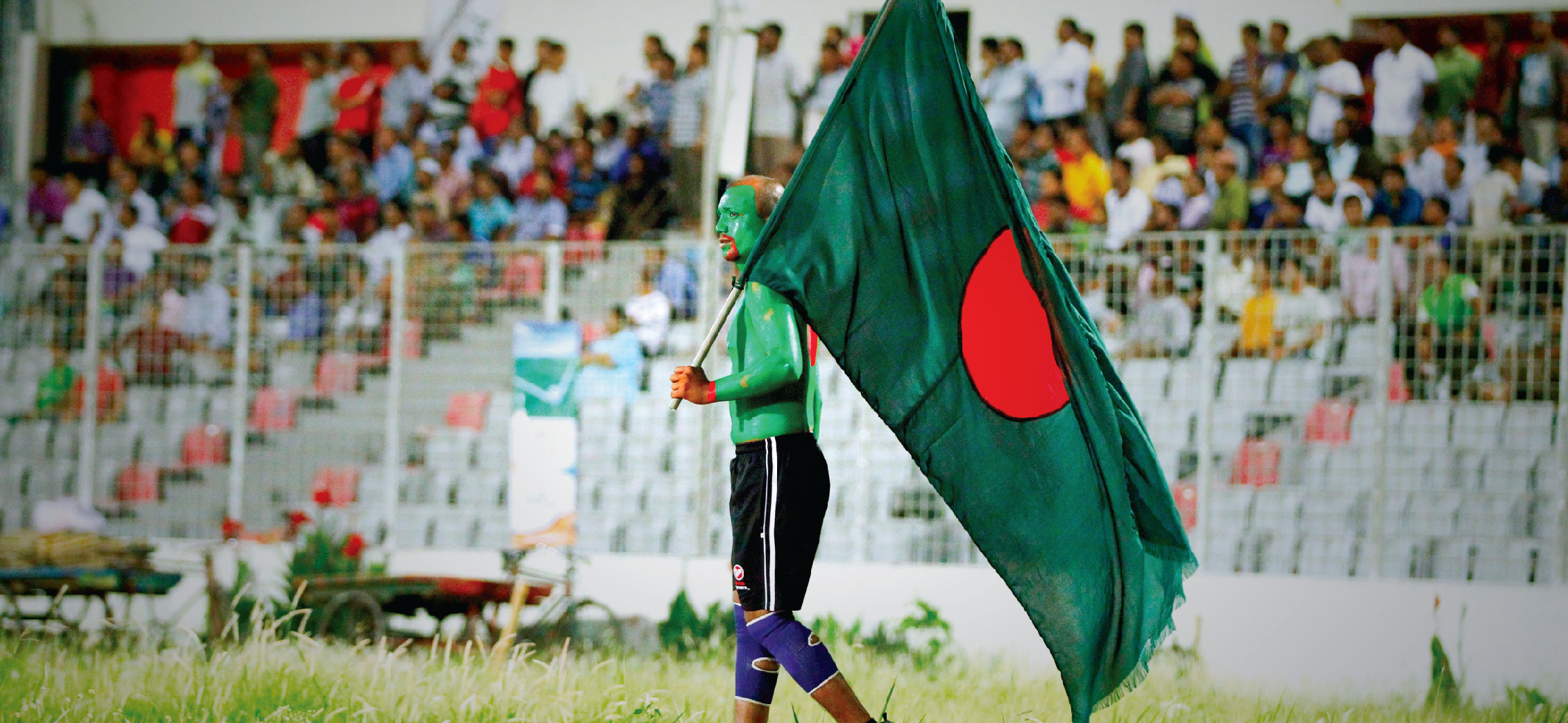
Football mania takes a backseat in this digital dystopia
During a local football league match at the press box of Bangabandhu National Stadium, one of my fellow journalists, Mahbub Sarkar, told me in a sardonic tone, “Alas! Your Brothers’ Union has lost the match.” I promptly replied, “Since when did Brothers become my club?” Laughing, Mahbub spoke of the Brother’s Union hailing from Gopibag – where I come from. I informed him of the difference between clubs in localities and neighbourhoods. My support is with my neighbourhood club, Bangladesh Boys’ Club. This revelation seems to have quieted Mahbub Sarkar.
I recalled Arambagh Krira Sangha, a small neighbourhood club clinching the Independent Cup trophy back in March. Unfortunately, there were no cheering spectators, no neighbourhood pride. It made me wonder: when did football fall out of fashion? What was driving the disinterest?
Local football is often charged with lacking quality. With the likes of Messi and Ronaldo dominating our television sets, the charm of local clubs is all but lost. But, resting the blame solely on the availability of quality football is not looking at the bigger picture. Before the internet was readily available – chat rooms like MIRC were the hangout hub for football lovers. It connected fans globally and allowed me to have insight into the global and local football scene. In countries like England and Germany, the stadiums burst to the rafters with roaring fans during local matches. Second and third tier matches are given the same respect and prove to be profitable. The same rousing passion for the sport exists in Russia and Africa.
Globalization and lack of quality players cannot be held accountable for the absence of support in local football. It can be said that cricket has encroached the popularity of Bangladesh football. However, the crowd for local cricket is even slimmer than that of local football. Five decades ago, the people used to take pride in their neighbourhood clubs.
The increased influence of social media on our lives has led to spectators disengaging from the collective spirit of watching a football match, cheering and jeering passionately. This city has become a hoarder of dispassionate livelihood seekers where there is no sense of neighbourhood pride. Instead, the zeal for football has been foregone by a diminishing audience as more and more people escape into their private handheld viewing spaces. It is now more than ever that spirited players need to reboot the culture of clubs. In a time when it feels the city’s spirit has fallen asleep, it is imperative to find a way to wake the sleeping masses and breathe some life and a much-needed love for football into them.