
By Sanat Babla
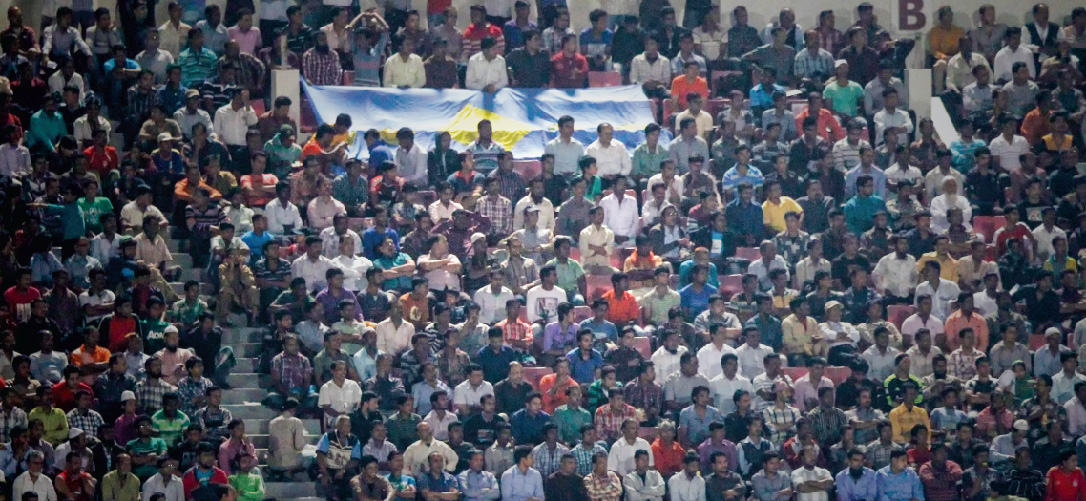
Not only Abahani and Mohammedan but also clubs like Wari, PWD, and BJMC had an enormous number of supporters. Even the smaller teams had some skillful players that scared the bigger teams. People were so obsessed with the local league that the performance of the national team did not bear much significance.
Bappy’s (name has been changed to protect privacy) story is a saddening one. During a football match in the 80s between two arch-rivals of the Dhaka League, Abahani and Mohammedan, he sat in the wrong gallery. The hapless Abahani supporter Bappy, who did not realize what a grave mistake he had made, jumped in joy when his favorite team struck a goal. Unfortunately, he does not have any memory of that moment or the 10 days that followed, as he was in a coma during that period and miraculously got back to his senses, albeit the doctors lost hope. It was later known that the furious Mohammedan supporters of the gallery could not endure such a blasphemous expression of joy and threw him from the second tier of the stand. Although he barely survived the fall, the traumatic experience still haunts him till date.
Once upon a time, football was the most adored national game. Now, it has become significantly less popular. The game that used to compel the whole nation does not have any attraction these days. Football has become a non-existent, forgotten chapter in the life of the masses. Yet the game still holds the esteem of the most cherished medium of nostalgia. Just ask any group of people over 60 years of age about it, surely almost every one of them has some fond memories related to football.
If asked, they may even take a walk down memory lane. In such discussions, they might admit to being a crazy fan of Kazi Salahuddin, one of the finest players Bangladesh has ever seen. They might also admit to following his hairstyle and posture, as they dreamt of playing alongside this legendary player. During the 70s, 80s and even the 90s, football players here used to enjoy the fame of a film star.
Bappy’s experience may have been a horrible one, but for most, waving flags of their favorite team and even the acrimonious debates among the friends of rival teams have become the most cherished memories.
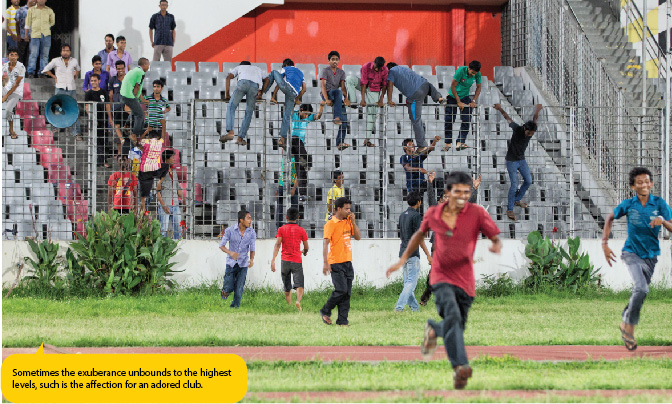
These days, the teenagers see are immersed in the battles of European clubs. They observe the greatness of Real Madrid, Barcelona, Manchester United, and Liverpool, but the craze of local clubs of similar magnanimity was ubiquitous in Bangladesh even a decade and a half ago.
Not only Abahani and Mohammedan but also clubs like Wari, PWD, and BJMC had an enormous number of fans. Even the smaller teams had some skilful players that scared the bigger teams. People were so obsessed with the local league that the performance of the national team did not bear much significance. These days, despite the lacklustre performance of English national teams, fans are more concerned about the performance of Man U or Liverpool. That was the case with Abahani, Mohammedan and other local clubs up till the late 90s.
Henceforth, these clubs were tantamount to the heart of country’s football. Not only is the cheer for the favorite club on the match days but the fandom of that era in Bangladesh had the similar components with those of European clubs in the current era.
For example, scouting was present in Bangladesh football. Officials of different clubs used to gather information about the district leagues. Apart from a very few districts, football was the main game in most places and leagues were regularly held at district level. Information about a good player in those leagues was like finding a treasure for the big clubs’ officials. They used to rush to the players and had disputes about who may book him first with signing money. Dhaka was like a sanctuary for footballers, and Dhaka League was the dream stage to showcase their talents for ultimate success, as football was the only way of acquiring money, fame and social status simultaneously.
Another significant thing was the presence of ‘own stars’ for every clubs. These days Ronaldo and Messi have become the symbol of Real Madrid and Barcelona; in the 80s, Badal Roy and Monem Munna were similar to MSC and Abahani with many other stars becoming the symbol of respective clubs.
Not only that, just like European football, Dhaka football of that era had everything. It had money, people, attraction, craze. However, one thing it lacked was the organizers with foresight – a vision of the future. The golden duck of football was taken for granted and with a lack of caring, it was exhausted and reached its demise. It was very important to keep the wheel of football at a district level. The organizers had to make sure that the club culture at district level tournaments survived as the bigger stage in Dhaka would thrive on that. Organizers had to be professional in terms of mindset and application.
Unfortunately, they were anything but professional. They indulged themselves with the flow of footballing popularity. They used to run the club with the donation of the elite. They had to depend on those donations, which sometimes took the form of extortion, as these funds were the only financial source of the clubs. The club which had more power could raise bulkier funds and consequently, could form a stronger team.
But that sort of arrangement always led to suffering. The mixed attitude of deceit and extortion cannot run forever. Therefore, even the biggest clubs suddenly found themselves with empty repositories. A prime example is Mohammedan – once mighty club now suffering devastatingly. They could not fetch a single title in the last decade and were struggling in the relegation zone regularly. As a matter of fact, the lack of funds for this popular club is so feeble that they eventually had to admit this reality.
Mohammedan’s arch-rival Abahani are not suffering the similar fate as they clinched a few titles throughout the last decade, but the true picture is not that rosy. The club, which claims that it understood the importance of professionalism, formed a limited company 27 years ago. They thought that the fans would buy the club’s share, collect its replica shirts, t-shirts and other merchandise. But in reality, that did not happen. Abahani is still running with that old formula of mendacity and extortion. Thankfully, some of its patrons are powerful and rich enough to drive the club, yet this very fact proves the inadequacy of Dhaka clubs and depicts a frustrating story. Rather than becoming the pioneer of steering club culture to professionalism and setting examples for other clubs, Abahani is standing out as a bad example.
Ironically, money is not the biggest problem for Dhaka Clubs, rather it is the lack of professionalism. These days the galleries of the stadiums during domestic league matches remain almost empty, yet the clubs spend a large sum for their football teams.
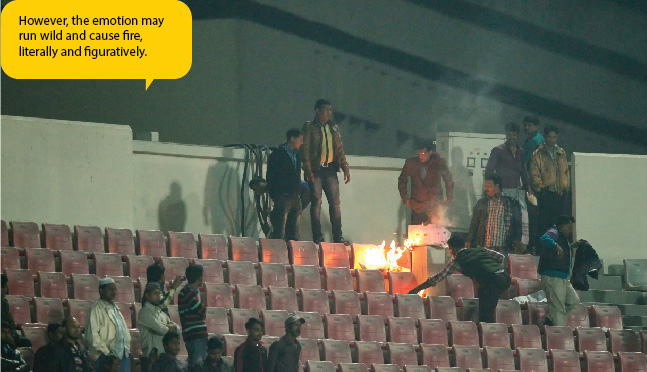
Last year, 12 teams of the Bangladesh Premier League spent around Tk. 55 crore. Every year, a similar amount of money is spent by the clubs towards building the team, employing coach and running the camps. But this spending seems to be worthless. As the pipeline of new footballers is almost empty, the mediocre footballers are getting good bucks and with the demand of clubs, the amount surmounts to a formidable height. However, this jackpot is only applicable to a handful of players in a few clubs as budding players have to survive from hand to mouth. In reality, despite big money for a few players, choosing the career of a footballer in Bangladesh has now become a high-risk venture. Hence, the supply of good players is scarce and the situation is getting worse.
Bangladesh Football Federation (BFF) cannot afford to evade their responsibility in this regard. Their professionalism is worse than that of the clubs. Till date, there is no fixed season for the football league. Most often, BFF cannot maintain their schedule and often allow the games to be played during unsuitable seasons on muddy grounds. Despite the popularity outside Dhaka, BFF has failed to hold the league in venues other than Bangabandhu National Stadium even once, as they made BNS the sole venue time and time again. Even the ‘well planned’ calendar and plans of BFF is comprised of numerous flaws.
Like the respective clubs, BFF also receives a good sum from AFC and FIFA, yet both parties are showing a lack of professionalism. Their bond is supposed to carry forward the country’s game but this affair has managed to sink it to a low point as Bangladesh currently holds the 197th position in the World Ranking among 200 countries. Both the clubs and BFF must realize that they are at the edge of a cliff. Money is still flowing, the public support for clubs is still present, albeit insignificant. They must be professional now; they must savour the club culture and make it strong. Somehow, there is still some hope of a resurrection.