Through my program I tried to impart the knowledge about thinking out of the box and trying their luck in ventures like poultry or cultivating fish and crop on the same land.
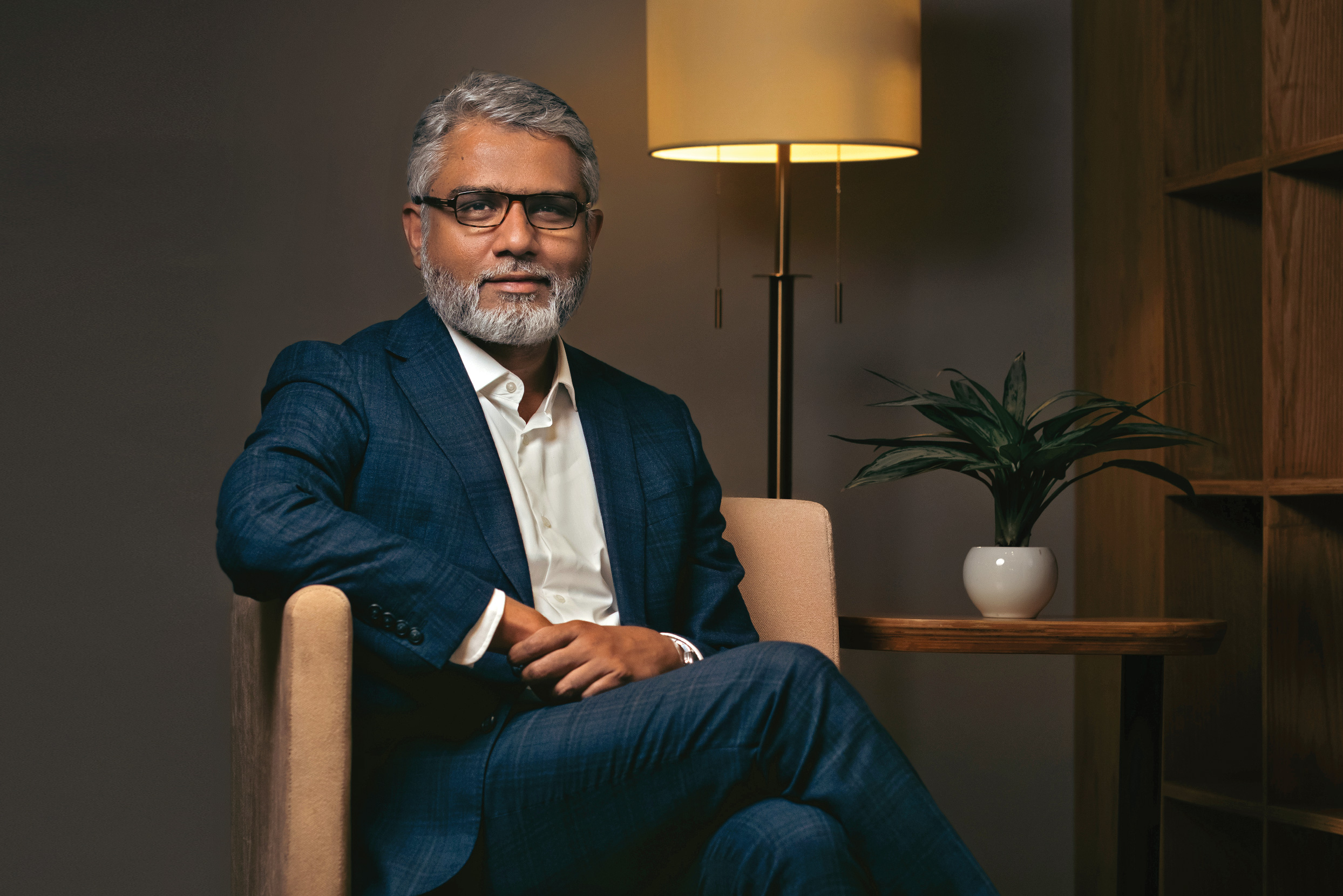
Shykh Seraj
Director & Head of News of Channel I and Impress Telefilm Ltd.
Shykh Seraj is a media personality who started his career as a development journalist during the 70s. He was also the presenter for Mati O Manush in Bangladesh Television from 1982 to 1996 and is now working with Hridoye Mati O Manush since 2004 for Channel i. His innovative media approaches have helped empower rural communities. He is renowned for boosting up women leadership (which resultantly contributes to the development of rural infrastructure), standing up for farmers’ fundamental rights, engaging youth in farming, organizing farmers’ dialogue session and raising awareness regarding these issues through TV, radio, print and social media. At present his prism of focus is to find new ways to tackle poverty, empower women socially and economically and broaden the essential message of food safety and soil health while keeping climate change in mind.
As a development journalist he has won the Gusi Peace Prize for his ‘exceptional’ media activism for the past three decades in reducing poverty in Bangladesh. He received the award on 25th of November, 2015 at Philippine International Convention Center, Manila, Philippines by Gusi Peace Prize Foundation. Chairman of the award committee, Barry S Gusi cited Shykh Seraj as a change maker in the field of the poverty alleviation for his untiring efforts in working for poor people’s amelioration and finding out peaceful solutions for people’s welfare through agricultural development activism and journalism. He also described Shykh as a simple, very hard working, innovative journalist who has dedicated his life to improving the lives of millions. Shykh Seraj is regarded as a living paradigm for others to emulate not only in Bangladesh but throughout Europe and the international community. Recently, he spoke with IBT regarding his accomplishments.
You have been awarded many times and GUSI award is only a new feather in your cap. A television programs that encompassing inside development of peoples with far-reaching space that resultantly change the livelihood of people. What is your take on?
There is a saying that is familiar in every newsroom of any country in the world: if it bleeds, it leads, which shows the inclination of mainstream media towards hard news that covers war, strife, socio-political tension, etc. Nevertheless, in the first world countries, development journalism has added new dimensions in news presentation and program designing to open the new era of edutainment for the audience. Starting from the BTV-era to today’s multi channel entertainment industry, I have always been intrigued to make a difference through development journalism. You see there was a time when television was the only medium of entertainment for the people of this country. Of course hardcore news is important for the society to be updated about anything and everything that is happening around. But I strongly believe that negative headlines demotivate people and ruin their trust on the system.
If you look back to where we were fifty years ago, it was the news media through telecasts that sensitized people about the gravity of food shortage issue, which then propelled the green revolution. However, we have paid dearly for the food security, which we have more or less ensured, through steep costs of damage inflicted on the environment. Such a food security program is not sustainable, if this environmental damage is not accounted for. What we need now, is for development journalists to step up once again and promote awareness about these relevant environmental issues that will have direct socio-economic impact on our lives.
In this era of connectivity, farmers also need to be globalized as their produces are becoming global products.
This situation is not unique to Bangladesh; one will notice similar trends across the globe. In the last few years, I have travelled across the world, starting from Europe, to America and then to Africa. I have observed the changes in the global agro scenario; I have noticed the trends of burning topics like climate change. We live in an era where people have amassed so much wealth that you cannot restrain them from consuming and in order to fulfill their ever increasing needs, industries will go on producing, resulting in more and more carbon emission. I think even high level conferences like COP cannot bring about much change.
For Bangladesh, the end results are even worse as we are a coastal country. Climate change has already hit us hard as the number of climate migrants is on a rapid rise.
Across the globe, famers are producing in their own country in their own way. I find the subsidy distribution in Europe faulty, where IMF is giving a number prescription for us. In Europe, 80% of farmers are sharecroppers and 20% of landowners own 80% of the land. So, from that viewpoint, many farmers are not getting the government’s subsidy. Here, or in any part of the world, the beneficiaries of the subsidy are the 20 %, those of whom are holding 100 or 1000 hectares of land and are involved in maize or wheat production. The status of the landless farmers is almost the same around the globe. Nevertheless, I must admit that we have made incredible progress in the agro sector in the last one decade. Yet, we have a long way to go when it comes to reducing poverty and improving the standard of living of common people.
The GUSI award is being given for poverty alleviation but here the tools is a television program which becomeinstrumental in this end that makes difference.
I can cite many occasions when it occurred to me that the root cause of poverty lies in the minds of the farmers. To me, eradicating that sort of mental poverty was the first priority. What motivated me to go out to the fields, to interact with the farmers and figure out what was holding them back was the fact that merely the lack of the right kind of education which would have otherwise broadened their mental horizon was the biggest hurdle that stalled any progress. Many farmers I knew were living under the poverty line just because they never even thought of using the small piece of land available on the yard to be used as a vegetable garden or the pond for culturing fish. Through my program I tried to impart the knowledge about thinking out of the box and trying their luck in ventures like poultry or cultivating fish and crop on the same land. Growing vegetables on the yard or rearing chickens in the backyard not only enabled many of them to earn more money but also ensured proper nutrition for them and their neighbors. There are about one lac fish farms across the country. I am sure most of these farmers have been regular audience of my show.
For many years, we have been seeing you wearing the same kind of attire in your program. Was it done intentionally? You wanted to create a style statement?
For me, becoming one of them for who I am making a program is important. I want to ensure that they feel I am approachable. During the 80s, when I started the program, our rural population was in a bad condition. Most of them lived from hand to mouth.
To engage them through a new kind of show, wearing a new dress in each episode would certainly be a bad idea. This is why I decided to choose colors, which are, dull yet very much relatable for our farmers. You probably have noticed that I always wore glasses and kept a pen in my pocket. This too was done intentionally. Breaking the stereotype, I wanted to educate them about other profitable agro ventures. For many of those farmers, the pen and glass seemed nothing but the accessories of an educator, who can impart some knowledge among them for a better tomorrow. Undoubtedly the gig paid off. Looking and behaving like one (of them), I have successfully motivated so many of them.
Programs like Mati o Manosh or Hridoye Mati o Manush has played an important role in developing human resources in agriculture sector. Considering that your contribution to our development scenario is immense.
I firmly believe that television is a very important medium to empower people. When we first started Mati O Manush for BTV, farmers used to run away seeing the microphone. The scenario has changed completely. In almost all places, the farmers I meet these days welcome us wholeheartedly and express their keen desires to speak up. They have learnt about the importance of raising their voices to establish their rights. They are much more aware these days. They are sending their children to schools. In last two decades, television has played a very significant role in the overall process of uplifting the rural people from their impoverished state. I am glad and proud to be a part of the whole journey. It was very rewarding that with each program, we got to learn something new and later on, it reflected on the new elements that we added in the upcoming episodes. Programs on farmers’ health or Budget have received much kudos from all stakeholders of the agro sector.
Human beings are as large as their dreams. What are your future dreams?
I would like to put the whole venture into an institutional frame. With further research and expansion, I would like to form a foundation, which will have affiliation with like-minded institutions. Together, we can do something bigger for a better tomorrow.