
By Mehrin Karim
Stabilizing the global climate is going to be one of the most urgent challenges in the coming decades. A warming world affects all people and ecosystems, particularly those in the less developed countries who already suffer disproportionately from climate change impacts. In order to tackle this problem, developing countries would require funds to mitigate, or adapt to the problems; this is where climate finance plays a crucial role.
Tackling the Temperature
In developing countries, climate change investment needs are significant, but direct government funding is scarce. Therefore, they need financial support for stabilizing the steep trajectory of greenhouse gas emissions. The World Economic Forum has projected that by 2020, about $5.7 trillion will need to be invested annually in green infrastructure, much of which will have to be in today’s developing world. A recent research carried out by the International Institute for Environment and Development (IIED) estimates that the cost for 48 Least Developed Countries (LDCs) to implement their post-2020 climate action plans would be around $93 billion per year.

Money Matter
Climate finance refers to financing channeled by national, regional and international entities for climate change mitigation and adaptation projects and programs. They include climate specific support mechanisms and financial aid for mitigation and adaptation. These activities are required to spur and enable the transition towards low carbon emission, climate-resilient growth, and development through capacity building, and research and development.
The necessary finance is sourced from public, private and public-private sectors. It is channeled through various intermediaries, notably Banks and Financial Institutions (BFIs), Microfinance Institutions (MFIs), development cooperation agencies, the United Nations Framework Convention on Climate Change (UNFCCC) and its various funds, including those managed by the Global Environment Facility, non-governmental organizations and the private sector. The finance can come from developed to developing countries (North-South), from developing to developing countries (South-South), from developed to developed countries (North-North) or it could just come from domestic climate finance sources in developed or developing countries.
However, meeting the scale of climate finance needed to support the LDCs in implementing their climate action plans was submitted to the Paris conference on climate change is a compelling priority. The IIED analysis suggests that this can be estimated at $93.7 billion per year between 2020 and 2030.
LDCs should be the focus for public climate finance. Middle-Income Countries will be far more able to attract private climate finance to support their mitigation programs and to raise tax revenues to support adaptation.
In developing countries, climate change investment needs are significant, but direct government funding is scarce.
Opportunities and Challenges for LDCS
The fact is that many of the LDCs have not been following policies that follow the going green initiative or the most equitable. We’re now seeing many countries beginning to challenge the business as usual scenario and explore new pathways that are fairer, less polluting, and more sustainable.
Nevertheless, government ministries typically work to very short time horizons. Finance and planning departments are often thinking about the immediate annual budget or working to, at most, a five-year plan. This short-term view makes it very hard to think outside of the box and not just extrapolate ways of addressing those problems faced during the present.
LDCs and other developing countries, with international financial support, can also reduce greenhouse gas emissions and sell the surplus carbon credits to other countries that need them (to reduce their own carbon footprints).
It is worth noting that the allocation of short-term, mid-term financial supports for the developing countries has not been specified in the Agreement. The absence of predictability and reliability of climate finance in terms of resource allocation would pose a serious challenge for the developing countries to implement the Paris Agreement.
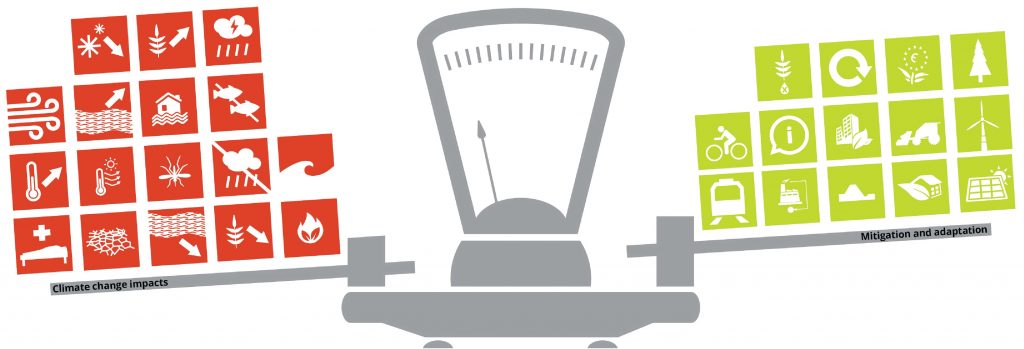
While continuing to invest in domestic climate action, the EU Climate Action Plan is scaling up climate finance to help the poorest and most vulnerable countries alleviate, and adapt to climate change.
The Status of the Surge
The European Union is the largest contributor of climate finance to developing countries and is the world’s biggest aid donor, collectively providing more than half of global Official Development Assistance (ODA) as stated by European Commission Climate Action Plan. Climate change is being increasingly integrated into the EU’s broader development strategy.
The EU’s Global Climate Change Alliance (GCCA) initiative provides technical and financial support to developing countries to integrate climate change into their development policies and budgets and to implement projects that address climate change. The GCCA is also a platform for dialogue and exchange of experience.
While continuing to invest in domestic climate action, the EU Climate Action Plan is scaling up climate finance to help the poorest and most vulnerable countries alleviate, and adapt to climate change. At least 20% of the EU budget will be spent on climate action by 2020. Additionally, at least €14 billion, an average of €2 billion per year, of public grants will support activities in developing countries between 2014 and 2020. Poor countries have specific financial needs and require specific types of financial instruments and inclusive intermediaries to manage the funds.
The director of the European Capacity Building Initiative, Benito Müller, wants to enhance direct access to the Green Climate Fund’s (GCF) resources through devolution of decision-making to the local level. He has said that countries should test their existing financial transfer mechanisms, such as development banks, to choose the most effective way to reach local communities. He notes that local people and small enterprises “go to local banks for funding, not to the headquarters of the GCF.”
The Green Climate Fund (GCF) is a new fund set up under the United Nations Framework Convention on Climate Change (UNFCCC) to channel $100 billion a year from the developed countries to the developing countries to help tackle climate change. Bangladesh will have to compete with other countries for the GCF resources. Bangladesh was among the first eight countries to be provided with allocated funding by the GCF. Obtaining more funding is not a matter of asserting vulnerability over others; it is accomplished by demonstrating good practice in transparency and accountability of climate funding.
Policymakers in Asia are also unlocking public-private flows for inclusive investment in low carbon resilience development.
Accountability, transparency, and integrity in climate finance are areas that are difficult for Nepal to maintain, but the country has made significant progress in establishing an institutional mechanism for climate finance delivery.
Cases from Nepal
Nepal has developed a policy framework to help integrate climate resilience into national and local development planning. The framework includes the National Climate Change Policy (2011), the National Framework on Local Adaptation Plans for Action (LAPAs) (2011) and the Low Carbon Climate Resilient Development Strategy; the latter of which is under development.
Nepal is also making progress in integrating climate resilience into economic, social and environmental objectives at a sector level. For example, in the energy sector, the National Rural and Renewable Energy Programme that was launched in 2011 is bringing together a number of existing initiatives and is providing a national platform for future work. Climate finance coming from the Scaling-Up Renewable Energy Programme (SREP) of the World Bank’s Climate Investment Funds is contributing to this.
Accountability, transparency, and integrity in climate finance are areas that are difficult for Nepal to maintain, but the country has made significant progress in establishing an institutional mechanism for climate finance delivery.
The Way Forward
Finance, more specifically knowledge of how to access available finance, is a crucial challenge for countries to tackle climate change. Governments and project developers should study the requirements of the various international and multilateral sources of finance. They must first explore domestic fund options before trying to access external funds. However, many LDCs are putting money into addressing climate change which could have been used for other development activities like education. This is due to lack of resources for climate change. Lessons should be learned from previous successes and failures of involving private finance for the global public good. The rights and the needs of the poor should guide any intervention. There are considerable challenges in instilling responsibility in private financial flows and reporting them in a transparent and accountable manner.