By M. Rokonuzzaman, PhD
The U.S presidential election is at our doorsteps. Like many other recent election campaigns, job losses due to offshoring is a strong agenda. With the opening of Adidas’ highly automated so-called “speed factory” in Bavaria, Germany and the plan to open another one in Atlanta, USA next year, such an agenda is losing its momentum. Enduring over last 30 years, the wave of moving factories from Western countries to China, Brazil, Indonesia, Bangladesh or other developing countries to take the advantage of low-cost labor is about to show a reverse trend. Instead of counting joblessness due to offshoring, a new indicator has popped up to track the progress, it is termed as “reshoring”. To take advantage of technologies from robotics and automation to deliver better products at lower prices, companies like Ford, Wal-Mart, GE or GM, once blamed for offshoring, have started to bring back jobs to the USA. It is cheaper to have highly automated plants, terming them as Industry 4.0, in the USA or Germany, as these countries have a high quotient of skilled labor to work in collaboration with robots. Moreover, the shipping cost reduces for having the plant near major retailers. The programmable robots also allow producers to manufacture products like shoes as per the need of each group of customers in less than 5 hours, as opposed to requiring weeks to produce and ship them from plants located in China or Indonesia.

It is no longer a debate; it has evolved into a reality that must be dealt with. It may take years to observe major change, but the sign of cusp of globalization U turn is very clear. The argument could be that the rate of growth of demand in developing countries of those products produced by foreign manufacturers will offset the loss of production caused by relocating plants near the western retailers. Another point could be what developing countries are going to produce in the order to earn foreign currency from advanced nations to buy those particular products; basic raw materials or petroleum will not suffice in this context. Due to the development of robotics and other automation technologies, advanced nations like the USA, or Canada are increasing the production from existing natural deposits at a lesser cost. The oil price plunge in recent history is primarily attributed to the application of advanced technologies to extract more oil at less cost from same oil reservoirs, which were once non-viable. As a result, the USA has emerged as an exporter of certain natural products like LPG, instead of being an importer. Similarly, Canada has been using robotics-mining machines to dig down further in their underground mining production facilities to extract more ore at lower costs than before. The emergence of drones and GPS guided farming machinery are opening the opportunities for many advanced nations to increase farm outputs and lower the costs.
At the cusp of the reverse of globalization, what are issues developing countries need to focus on? The development of robotics and automation have double the impact on the industrial strategies of developing nations. On one hand, the demand for low-skilled labor in manufacturing for export will keep falling. On the other hand, the strategy of producing import substitutes by taking the advantage of low-cost labor will also keep losing its edge. Instead of engaging low-cost unskilled labor, the delegation of such roles to advanced machines will produce better quality products, at lower costs. Under the given circumstance, developing countries should have a holistic change in developing their production competitiveness. There are recommendations to foresee the success of this dynamic.
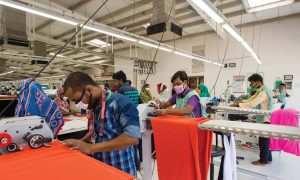
In this regard, the large-scale investment in power and infrastructure to scale up the recent success of low skill-based manufacturing for export should be reviewed. For example, Bangladesh’s success of creating more than 4 million jobs in the RMG sector will likely face barriers to scale up. Moreover, due to the decreasing role of labor in RMG manufacturing, wage rates will face added barriers. Advanced technology based innovations should be integrated into indigenous local production processes to produce higher quality products at lower costs. For example, smart feeding, or production environment control with the support of smartphone-centric innovations could open the opportunity for reducing the cost of farm outputs, and also reduce the cost. Instead of solely relying on imported capital machinery, a focus should be given on retrofitting innovative features to production processes to improve competitiveness.
The proliferation of broadband, Internet of Things (IoTs) and the aging population of advanced nations are also opening the service export opportunities. The same AI and robotics technology, which is about to bring back manufacturing jobs in the USA and make cars driverless, is also able to make human consciousness ambient anywhere in the world. Although robots are being perceived to be the solution to take the role of delivering services, primarily to a growing number of elderly people, those devices will still be needing human consciousness to be useful. Previously, in order to make human consciousness present in operating machines, the operator had to be physically present in the work environment. Such necessity encouraged the immigration of many taxi drivers to end up on US soil. But the possibility of tele-transporting human consciousness over the Internet in semi-autonomous machines, whether we call them as robots or IoTs, is opening the opportunity for making human consciousness ambient in global service delivery workspace. This means it can be applied in nursing homes of Tokyo or in the restaurants of New York.
It appears that the development of the next of wave of technology is opening the opportunity for both advanced as well as developing countries. There is no doubt that due to the growing automation there will be net job losses in existing industries, but many more jobs will be created in the service industries, particularly to look after the growing elderly population. In this round, developing countries will likely be net loser in manufacturing. Nevertheless, the opening of the opportunity of tele-transporting the consciousness in robotic care givers or service providers will create much more new jobs for developing countries in the global service space, than likely job losses in manufacturing. To take advantage from such emerging opportunities, policy makers of developing countries should be far smarter than ever before. Instead of just developing physical infrastructure and being lenient on regulations for hosting export oriented manufacturing plants, the smarter strategic option is to develop the local innovation capacity for continuously improving the capability of producing better products at lower costs. On the other hand, an educated service oriented work force needs to be developed to exploit the emerging service markets all over the world over via broadband.
The writer is an academic, researcher and activist. He currently serves as a technology, innovation, and policy professor at the Department of Electrical and Computer Engineering at North South University. He can be reached at [email protected].