
A look back at how YouTube came to be, the contributions of its former and current CEOs and how it is proceeding forward.
Since its humble beginnings in 2005 as a video-sharing website, YouTube has grown into a media behemoth. It has ingrained itself across many facets of modern life and has become indispensable. We routinely watch YouTube videos, yet we usually seldom see the workings behind the scenes that have contributed to the platform’s growth. From how YouTube came to be and its change of succession of CEO, massive changes await the video-sharing website.
YouTube & Susan Wojcicki
In 1999, Susan Wojcicki assumed the role of Google’s first Marketing Manager. She played a pivotal role in shaping the company’s advertising and analytics offerings during its expansion. As the leader of Google’s advertising and monetisation team, she faced the challenge of balancing the objectives of generating revenue from advertisements while ensuring a positive user experience.
In February 2005, Steve Chen, Chad Hurley, and Jawed Karim, then all employees of PayPal, launched what would become the world’s most widely used video-sharing website, YouTube. The creators’ inspiration behind launching the site was to find a simple way to upload, share, and watch videos online. YouTube was officially launched on April 23, 2005, with the release of Jawed Karim’s video titled “Me at the Zoo.” It was around this time that Google introduced its now-defunct video hosting service, Google Videos.
Google Videos’ early strategy was distinct from that of YouTube since it prioritised high-quality, licensed material like TV series, movies, and other professional productions. Eventually, Susan Wojcicki acknowledged YouTube’s meteoric rise to prominence because of features including a simple design, quick video sharing, and a wealth of user-created content. As a result of her foresight, Google acquired YouTube. She appreciated YouTube’s user-generated content and large user base and thought it would fit well with Google’s other offerings, such as its search and advertising platforms. So she took the initiative to lobby YouTube to Larry Page and Sergey Brin, the co-founders of Google, to purchase the website. In November 2006, the deal was finalised resulting in one of the most significant technological purchases in the media-sharing industry.
Wojcicki was named CEO of YouTube in 2014 to look over the company’s expansion. During her tenure, she introduced groundbreaking new features not just for YouTube but for online video and advertising platforms.
Wojcicki’s Era of YouTube
After Wojcicki became the CEO of YouTube, the number of active users on the platform rose to more than 2 billion per month. She structured a revenue stream strategy for creators known as the YouTube Partner Programme (YPP) which allowed content creators to earn revenues from advertising. Users were watching more than 1 billion hours of content per day. Through the YPP and high volume of interaction, YouTube had paid more than USD 30 billion to creators, artists and media companies.
Wojcicki is an advocate for countering gender discrimination at technology companies. She worked to make the platform a safe space via user security guidelines, content moderation and stringent regulations and methods to counteract harmful materials like hate speech, disinformation, and violence. Since she became CEO, YouTube’s percentage of female employees has risen from 24% to 30%.
But Wojcicki’s time as CEO had not been without its share of difficulties. Small content creators have criticised Wojcicki’s policies on free speech as not being consistent, or unbiased, and its three-strike policy as not being fair, always favouring studio creators more than independent producers. YouTube has also been the target of countless lawsuits and conflicts over alleged copyright violations, and allowing content that promotes extremism. This has caused advertisers to stop using YouTube as a marketing channel, which has hurt YouTube financially and negatively affected its reputation. As the platform continued to grow, YouTube automated a lot of its content reporting services which users have criticised for straying far away from YouTube’s core principle of having a simple, uncomplicated medium for sharing videos.
For nine years, Susan Wojcicki served as the CEO of YouTube, overseeing the world’s most significant video platform through its highs and lows. However, in 2023, she announced her decision to step down from the position of YouTube CEO.
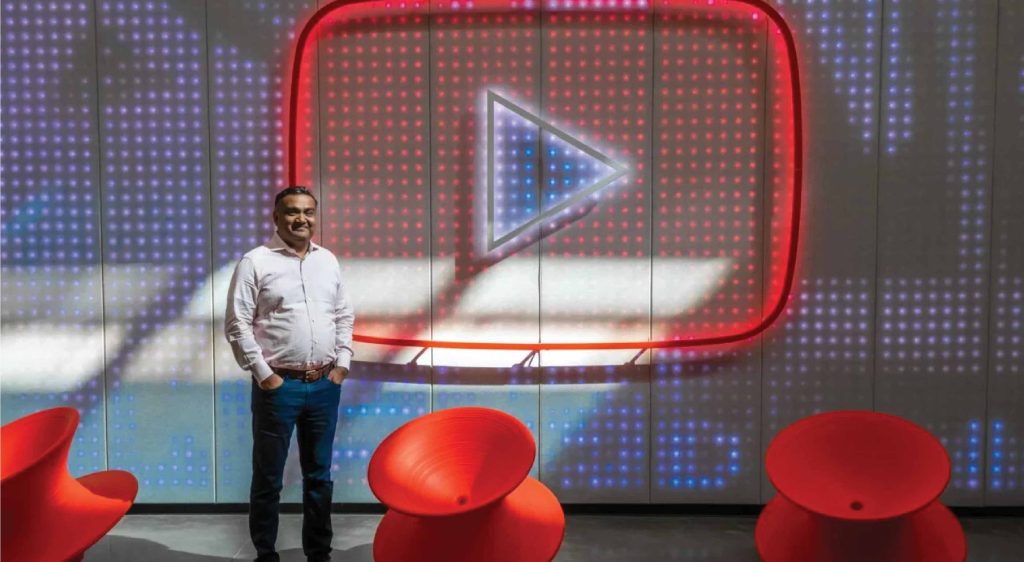
YouTube & Neal Mohan
Neal Mohan, originally from India, moved to the United States in pursuit of better educational and professional opportunities. In 2001, he joined DoubleClick, an online advertising startup, as a product manager. Over time, Mohan’s career flourished, and by 2005, he had ascended to the role of Senior Vice President, spearheading the development of advanced digital advertising solutions within the company. Following DoubleClick’s acquisition by Google in 2008, Mohan played a crucial role in facilitating the integration of DoubleClick’s technology into Google’s ad ecosystem, contributing to the seamless merger.
Later, as Google’s Chief Product Officer (CPO), he led the development of the company’s product strategy and inspired innovation across various teams. He collaborated closely with YouTube’s CEO, Susan Wojcicki, on multiple initiatives aimed at fostering innovation and expanding the platform’s services. Together, they successfully introduced new offerings like YouTube Shorts and YouTube Music, attracting a wider audience of viewers and content creators. In recognition of his notable contributions, Mohan was appointed as the CEO of YouTube on February 16, 2023.
A New Era of YouTube
Neal Mohan has been at the forefront of examining the possibilities of blockchain and cryptocurrencies throughout his time at Google because of his deep interest in these technologies. Under his direction, Google has launched initiatives like Project Zero and submitted a slew of blockchain-related patent applications to increase the security of digital currencies. Mohan has also shown interest in investigating Non-Fungible Tokens’ (NFT) connection with YouTube. His goal is to make it possible for YouTubers to provide their most devoted fans with special experiences through NFTs, such as virtual meet-and-greets and exclusive events. While this could have been a profitable effort in January 2022, NFTs are no longer sought-after prized possessions, and creators have lost interest.
Another focus Mohan has is to make YouTube podcast friendly. Podcasts tend to take on hour-long formats, meaning, with YouTube Shorts, regular content, and podcasts, there is likely to be audience segmentation. Mohan intends to provide features to YouTube Studio that streamline the publication process in order to facilitate podcast streaming. Additionally, audio and video-first podcasts will be available to YouTube Music subscribers in the US, with plans to expand to other areas.
Mohan also believes that in the future there is likely to be an intersection between generative AI and YouTube content. According to Mohan, the creative potential of AI would enable artists to broaden their appeal and raise the quality of their works. He intends to add features like virtual outfit changes, immersive cinematic surroundings, and enhanced audio processing and has already started the development of these features.
For viewers, YouTube is likely to remain unchanged, except for a few overhauls in search and ad experience. However, the changes are likely to affect creators as Mohan strongly hinted at more revenue-generating opportunities, progressive changes to YouTube TV, supporting gaming and podcasting, and making the community stronger by being more receptive to creators’ opinions. Like most tech industries, the future is likely to be AI, and given the scale of operations of YouTube and Mohan’s personal interest in the field of machine learning, backend operations are likely going to advance at an accelerated rate. In the closing paragraphs of Mohan’s first open letter as the new YouTube CEO, he said, “This is a pivotal moment for our industry. We face challenging economic headwinds and uncertain geopolitical conditions. AI presents incredible creative opportunities, but must be balanced by responsible stewardship.”