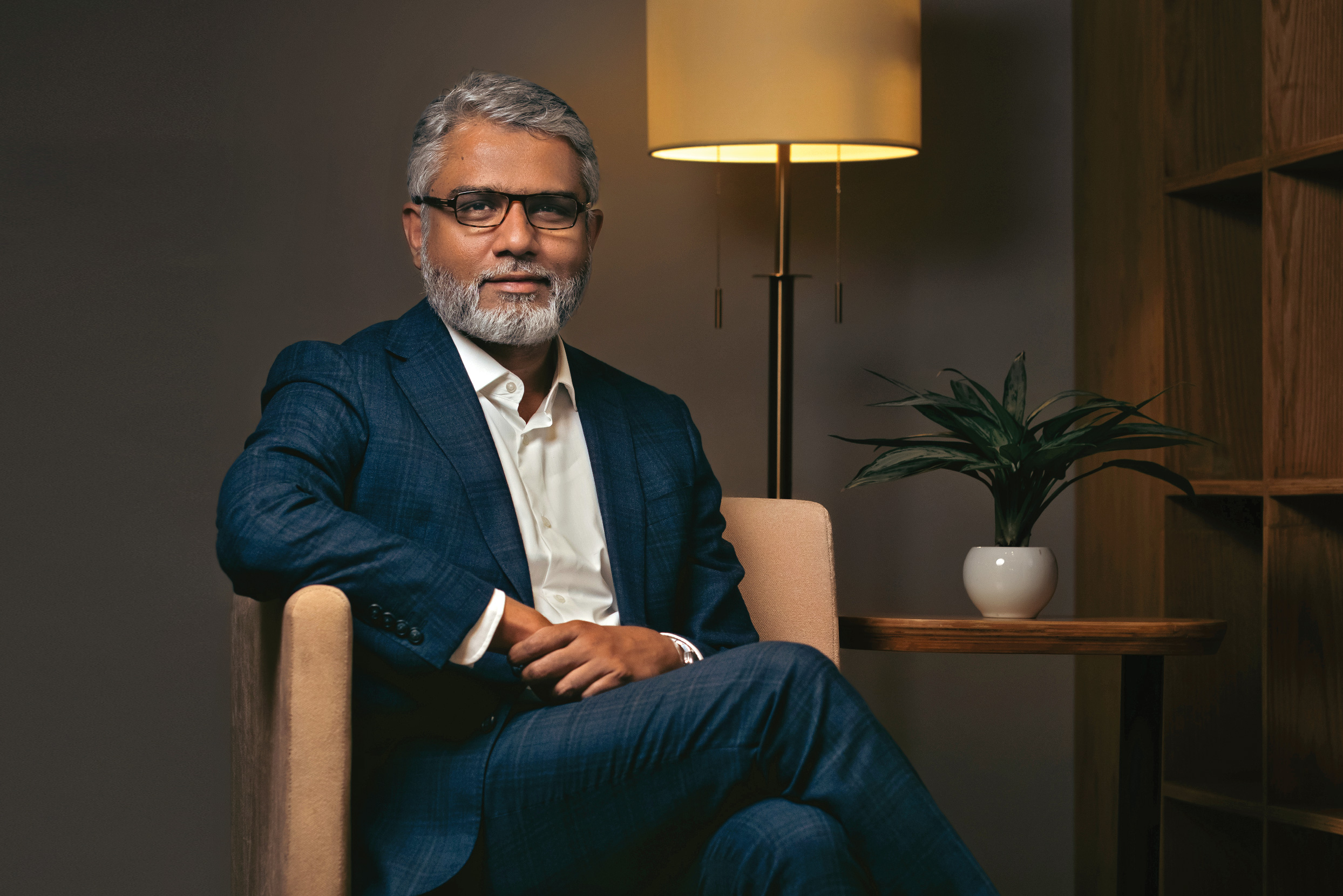
How the Indian premier is pursuing his economic goals
An IBT Desk Report
The Bharatiya Janata Party’s (BJP) success in recent Maharashtra and Haryana state elections capped several days of action on the economic front and has given Premier Narendra Modi more room to cut through a thicket of regulations and state controls that which he says holds back Asia’s third-largest economy. ‘Using an executive order, the cabinet agreed to allow private Indian companies to mine and sell coal at an unspecified future date,’ Finance Minister Arun Jaitley said in a recent press conference. That sets the stage for the biggest liberalisation of the industry in more than 40 years.
In the first year, when people expect lot of reforms and there is lot of popular support behind the reform process, it is more easily possible. Modi was elected in May on promises he would create jobs and rejuvenate the Indian economy, but investors and economists were disappointed by his first budget and a lack of early progress on fixing structural economic problems. In September, he had gone some way towards quelling those concerns, putting in a reform-minded team at the finance ministry that includes prominent economist Arvind Subramanian to help formulate the budget and policy.
The economy is showing some signs of revival and inflation has plummeted, aided largely by a drop in global oil prices. Modi also begun an overhaul of creaky labour rules, cutting the power of labour inspectors and slashing the red tape for small companies that makes India one of the toughest places in the world to do business.
Former Prime Minister Indira Gandhi nationalised the coal industry in 1972, creating one of the world’s largest mining companies, state-run Coal India. The system was intended to provide steady supplies of fuel and help industrialisation, but Coal India is now deeply dysfunctional. Most of India’s electricity is generated by coal, but long power cuts are the norm in much of the country, which has the world’s fifth-largest coal reserves but is the world’s third largest importer.
However, the government does plan to sell 10 percent of its majority holding in the inefficient behemoth, which is plagued by corruption. Unions oppose the sale. The Supreme Court scrapped the licences for 214 coal fields that supplied power, cement and other companies over allegations of graft. The executive order, known as an ordinance, takes immediate effect but must be approved by parliament within a few months. Modi’s government will have to win cross-party support for its plan, since it does not have a majority in Rajya Sabha.
Planning for Greater Things
‘For the success of ‘Make in India,’ ease of doing business should be given priority,’ said Modi, who was elected on a platform of development and job creation. He emphasised that labour issues needed to be seen from the perspective of workers and not industrialists. He announced a programme for skills development, in which the Labour Ministry will finance the first two years of training for apprentices in manufacturing units.
He also promised easier portability of payroll-financed pension savings when people change jobs and move between states by using a universal account number. Because of the difficulty of transferring money, about $4.4 billion in such funds lies in inoperative accounts, where workers cannot obtain access. ‘I want to return the money to those poor people,’ Modi said. The announcements were greeted positively by Indian business interests, which have been lobbying for a change in labour regulations. ‘This is something industry would welcome very strongly and has been awaiting for a long time,’ said Bidisha Ganguly, chief economist at the Confederation of Indian Industry.
Analysts said the moves would be particularly helpful to millions of small-scale manufacturers across India. More sweeping and contentious changes, however, are unlikely to be announced before the conclusion of state elections next year.
External Issues
In his short time as prime minister, Modi has traveled to Japan and the United States for meetings with Prime Minister Shinzo Abe and President Obama and has hosted China’s leader, Xi Jinping, in New Delhi. A central element in Modi’s summitry has been obtaining investment commitments; he’s thus far gotten a total of $100 billion, according to his own count. ‘Now it is the turn of the states to capitalise on the opportunity,’ he says. ‘The roads are wide open. The states that are ready can walk away with a major share.’ Whether India’s state governments take advantage of the opportunity depends on whether they ‘de-bottleneck,’ make available land, build infrastructure, and issue permits.
Rajeev Malik, an economist with the firm CLSA, thinks that, given the current trends, 2016 will be ‘a big kicker’ year. He predicts 7.2% growth then. He forecasts China’s will be at 7.1 percent. In a decade, India could have both the world’s biggest population and fastest-growing major economy. Yes, it’s premature, but we can see why Modi talks about their era as ‘India’s century.’
With reports coming out that Xi will unveil plans to invest a staggering $100 billion plus in India over five years—an average amount that is more than twenty times China’s investment into India in 2013, it does seem that his policies with bordering countries are on the right track. China’s investments would focus on industrial parks, infrastructure, and key sectors including power, manufacturing, food processing, and automobiles. Xi will commit Chinese investment of more than $7 billion for two industrial parks to be located in the Indian states of Maharashtra and Gujarat.
Xi and Modi have been central figures in this bilateral economic awakening. In these two new executives, India and China have politically confident leaders who share a commitment to improving bilateral ties with the other country, especially on economic issues. Modi’s economic engagement with China while he was Chief Minister of Gujarat raised hopes that he would look to bolster economic ties with China. And within months of Modi being sworn in as India’s Prime Minister, China and India announced a major collaboration – BRICS Bank.
These developments represent a critical and pragmatic shift in policy for both countries, with economic cooperation finally being given priority. Border disputes and security concerns have repeatedly stymied bilateral relations, and it remains unclear whether the two leaders will be able to make any progress on those issues. Xi and Modi are sending a strong signal that they are ready to move forward on mutually beneficial issues even as tensions persist on other fronts. Strengthening economic ties between the two countries is a prudent way to build trust and develop interdependencies that may well deter future conflict and competition. A bilateral economic agenda that matches the size and trajectory of these two neighboring economies has long been missing.
Strategic skills
Modi has also moved to eliminate state controls on diesel prices for the first time in over a decade, while also increasing prices for natural gas. The change ‘should offer fiscal savings over time that can be used for more productive uses, such as public investment,’ wrote HSBC economists Frederic Neumann and Prithviraj Srinivas in a report. While Modi’s predecessor, Manmohan Singh, can take credit for coming up with the policy, Singh was too weak by the end of his term to push through ambitious changes. Now Modi can be the reformer.
In a democracy, it’s no small thing to raise prices on consumers who are also voters, and Modi deserves credit for his willingness to push ahead with potentially unpopular reforms. However, he can also afford to take the risk now, safe in the knowledge that many Indians won’t feel much of a pinch, thanks to the global plunge in oil prices. The price for Brent crude oil has dropped 22 percent this year. After hitting a low of $83.78 in September, Brent crude has rebounded a bit to around $86, but this is still the cheapest that oil has been since 2010. ‘The beauty is that, with the current drop in crude prices, there will be no immediate sticker shock to consumers,’ wrote the HSBC economists. Indeed, diesel prices will fall around 5 percent, even with termination of the subsidies.