Venturing into New Fronts
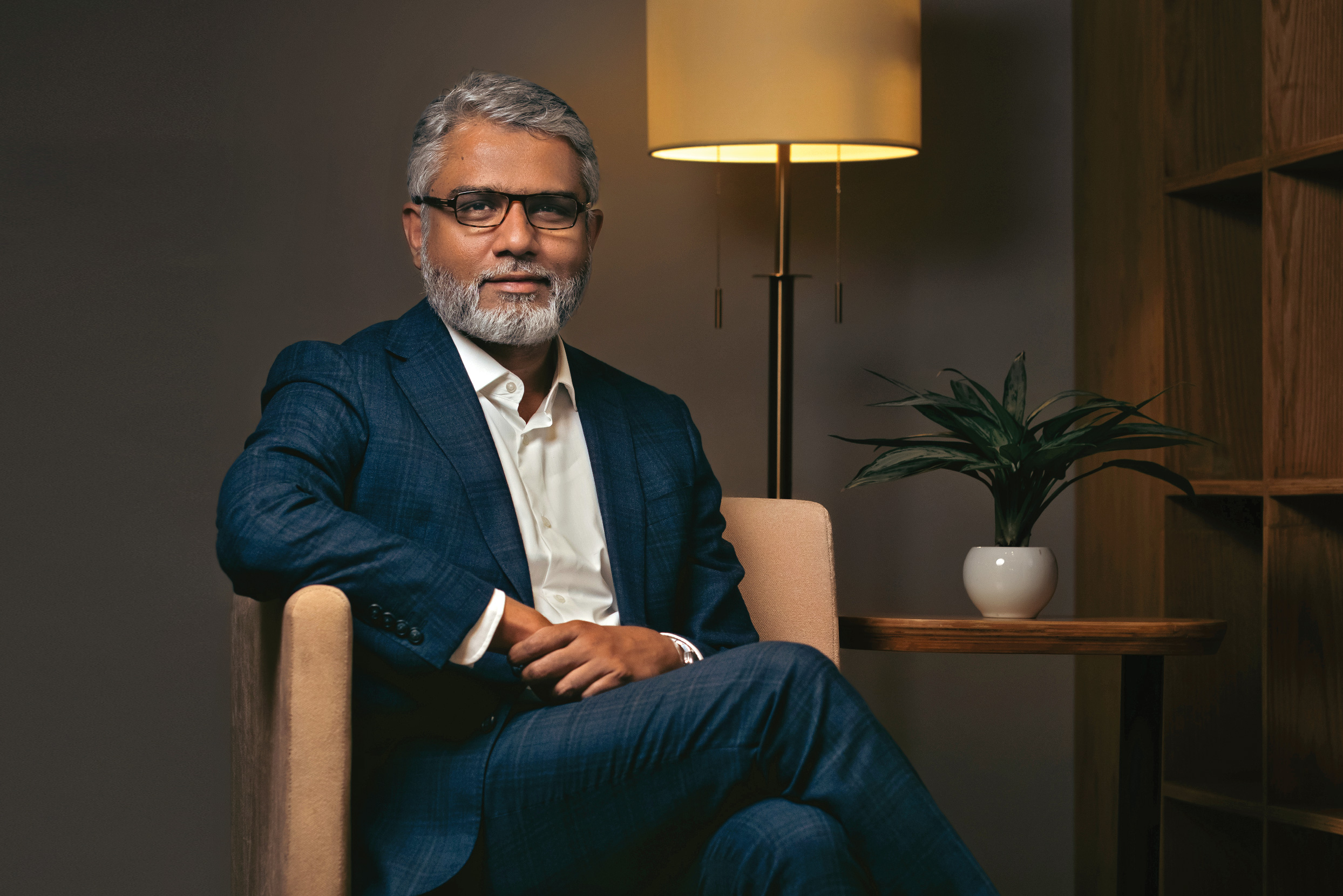
*Shawkat Hossain details the advent of venture capital in Bangladesh
How much has BD Venture evolved since its journey and how do you see this evolution along with the overall growth of Bangladesh?
BD Venture started its journey in September 2012. At that time rule for venture capital had not been promulgated. So, one of our objectives was to pursue regulatory authorities to frame the rule.
Meantime, we started investing out our capital. We made our first investment in February 2013, which gave us the opportunity to learn the process. Venture capital was a new thing in Bangladesh. There was a scarcity of skillset in the market. Most of the members of our board and myself have a background in banking, which is totally different from venture capital. Our shareholders are mostly corporate; Bank, Insurance companies and financial institutions. Our shareholders also come from the banking background.
Decision making process was emulated from the banking process. whereas venture capitalist should behave like entrepreneurs – less bureaucracy, higher flexibility. Venture capital is riskier than banking. Bankers are risk-averse. Our board has eagerness to learn, and gradually acquired skills to run the venture capital business. We, as a team, are going through the learning curve. We tried different models. Initially, we recruited from banks, then started recruiting fresh graduates whom we trained. We hired consultants from India and the Netherlands. They helped us build our team by sharing their experience and by providing hands-on training.
The Alternative Investment rule came into being in 2015. In 2016 we were registered with BSEC as Alternative Investment Fund Manager. The AI rule gave us the opportunity to raise the fund from investors. We have registered our 1st fund with BSEC in January 2019.
Would you like to tell us about the first project you invested in, how did it pan out, what kind of experience was it?
We first invested in an energy efficient technology company. They invented a ceiling fan which consumes lower energy. Since it was during the political unrest of 2014-2015, they could not market their product. It was not a good experience. Our second investment was Eon Food which is a chicken meat processing plant. Their main proposition is “safe food”. It was a good experience in a sense that after four years they established their two factories. One is for slaughtering the chicken, finished product of which is the whole chicken. The other factory is to make value-added products like chicken nuggets and sausages. The owner bought our share back with good return.
After that did you follow the footsteps and invest in any agro-processing units or you chose a different field?
We have seven sectors in our criteria - IT/ITES, agro and food processing, renewable energy, light engineering, health, education, and tourism. These seven sectors are decided by our board. We identify the potential projects within these sectors to invest in. We haven’t invested further in agro-processing as we have not found a scalable business. A scalable business is one where there is innovation or application of technology. Bangladesh spent a very small amount on research, both in government and the private sector. This has resulted in a lack of new products in the market. We adopt the inventions of the developed countries. In most cases, the adaptable ones are IT/ITES based. IT/ITES is the most vibrant sector, where new things are happening. So, we are focusing on IT-based ventures.
Would you like to mention any new project of yours that is IT/ITES based?
Doctorola is the new venture we have invested in. Access to health facilities is not easy in Bangladesh. In the rural places, the condition is worse. Sometimes it may take two-three days to get an appointment to see a doctor. There are many doctors who can provide the same standard of service, but people only go to the few known ones because of asymmetry of information. Doctorola has the database of 9,000 doctors in sixty districts, along with their specialization and their location information. Doctorola helps users find doctors in their vicinity and specialty.
Esho Shikhi is another start up, which works towards breaking the educational barriers. All the resources are based in Dhaka, be it a good teacher or a good school, but the demand for education is everywhere. People from the rural area are not getting the same standard of education as in Dhaka. Esho Shikhi is providing the lessons which can be availed online from anywhere. Till now we have invested in 7 ventures, we have three more in the pipeline. One is in IT security; one is an on-demand home-based service.
What do you think of the current picture of Bangladesh’s startup culture?
Since we started, there has been significant improvements. Many startups such as Bikash, Pathao, Chaldal are becoming successful. Bkash started as a startup 7 years back, now it has become a billion-dollar company. They attracted Ali Express. Pathao and Shohoz became hundred-million-dollar companies within 3 years. Go-Jeck and other foreign VCs invested in Pathao. Foreign investors are eyeing the startups of our country. However foreign investors ask local startups to register their company abroad. Our country has not created the environment to attract foreign VCs. We need more good entrepreneurs with good intellect, aspiration, connections, and commitment.
Do you think universities have a role to play in creating entrepreneurs?
Universities while educating their students focuses on job markets. They have career counselling, job fairs but there is no entrepreneur counselling or incubation program. Daffodil University has started an entrepreneurship course. Other universities such as UIU, ULAB is also thinking of incubation. University can provide a platform, mentorship, and guidance to aspirant entrepreneurs. They can link them with the venture capitalists.
What is the application process of BD Ventures? How can one apply for funding?
By this time, it is known in the market that we are one of the active players in the venture capital arena. When an entrepreneur thinks about venture capital, they think about BD Ventures. Our application process is clearly described on our website. Entrepreneurs can submit their business plan through email or in person. We can be contacted through our website or our Facebook page.
How long does the selection procedure take?
Our website specifies sectors of ventures we fund. Secondly, the website mentions which documents are necessary. After submission, we see if it fits with our purview. Our Analyst do basic analysis. Then investment committee decides whether the enterprise is worthy to invest in. If the proposal is approved, then legal, financial and business due diligence is done which takes one and a half months. The full process takes 3/4 months.
How do you understand one venture will be profitable?
There is no way to foresee whether a business will succeed or fail. It’s all about forecasting. In our selection process, we ask to submit their 5-year plan. We see whether they are pursuing a big market. We look into the team because a person or a team can make it or break it. We also see global experience.
Who are the funders?
We are approaching different institutions and corporate houses. We are also in discussion with foreign investors, called fund of fund. Foreign investors are looking at Bangladesh as an emerging market where opportunities lie. They think this is the right time to invest. They are looking for partners. Rather than investing directly they want to invest in the fund. Few corporates are also looking into a startup. Managing risk is a challenge for them. So they are thinking to invest in our fund.
Do you also provide training and skill development to the young entrepreneurs?
It is a part of our initiative to develop the ecosystem. Different universities or ministries invite BD Venture in different capacities. We recently started connecting entrepreneurs with the NRBs of Silicon Valley. For the young entrepreneurs, recent tech knowledge is not available. We connect experts from outside with our entrepreneurs. We hosted a program where we invited the professor of the State University of San Francisco, 15 entrepreneurs and enterprises. They discussed marketing problems. Last month we invited an expert of Hardware and Software from Silicon Valley. We even sometimes connect both group through Skype. Every month we do this program to develop the entrepreneurs of Bangladesh as a part of our CSR activity and anyone can participate in it.
What is your advice to the young entrepreneurs who would like to approach BD Venture?
Young entrepreneurs should maintain their record properly. They must have clear visibility, what they want to do with the money they are asking for. They must know what business they are doing, who are their competitor and what is their revenue model.