
The first roadblock is the access to proper finances. It will be difficult for the country to grow if we do not have easier access to local and international finances. We must strive for across the board prosperity and this shall be achieved through our small and medium enterprises (SMEs)
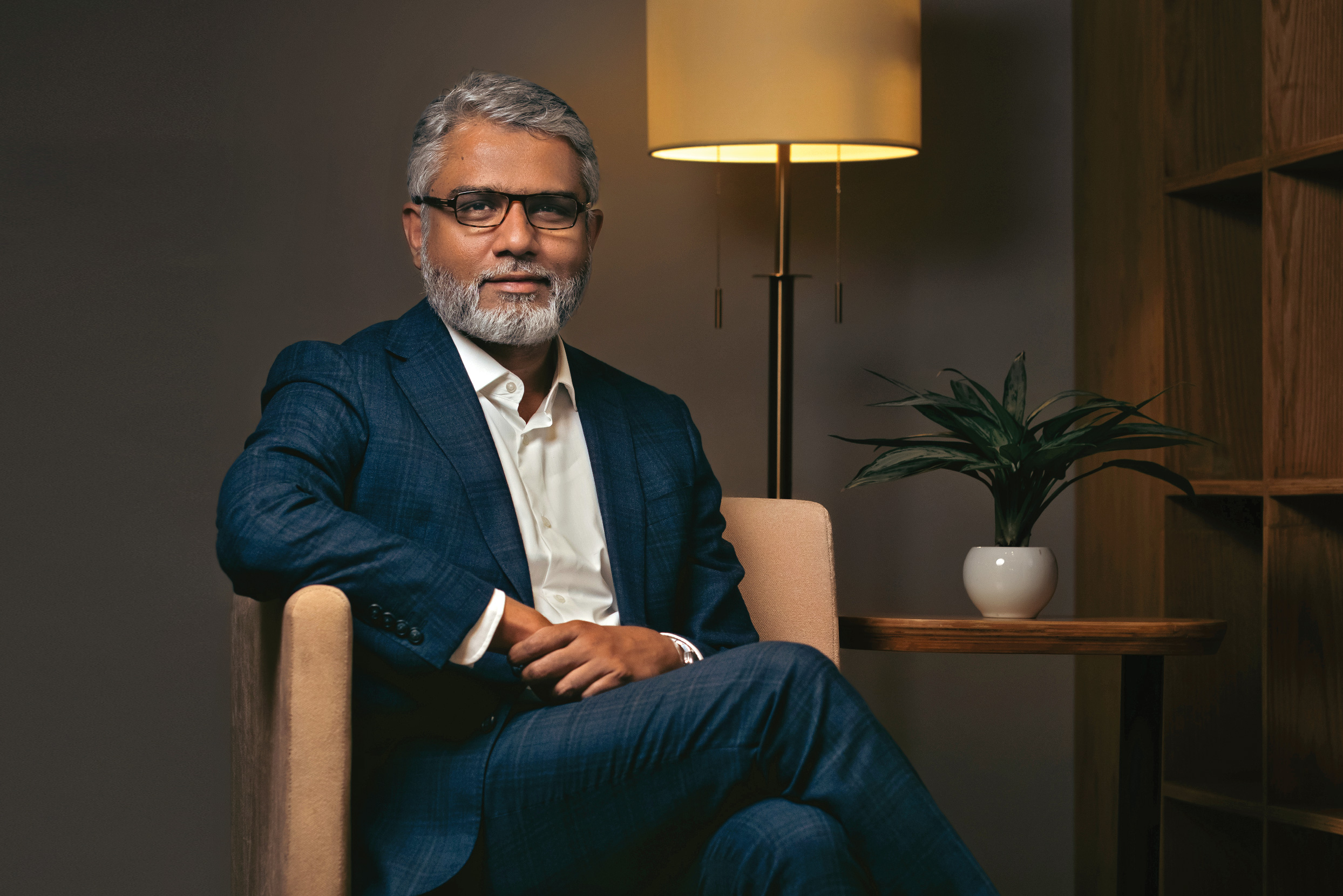
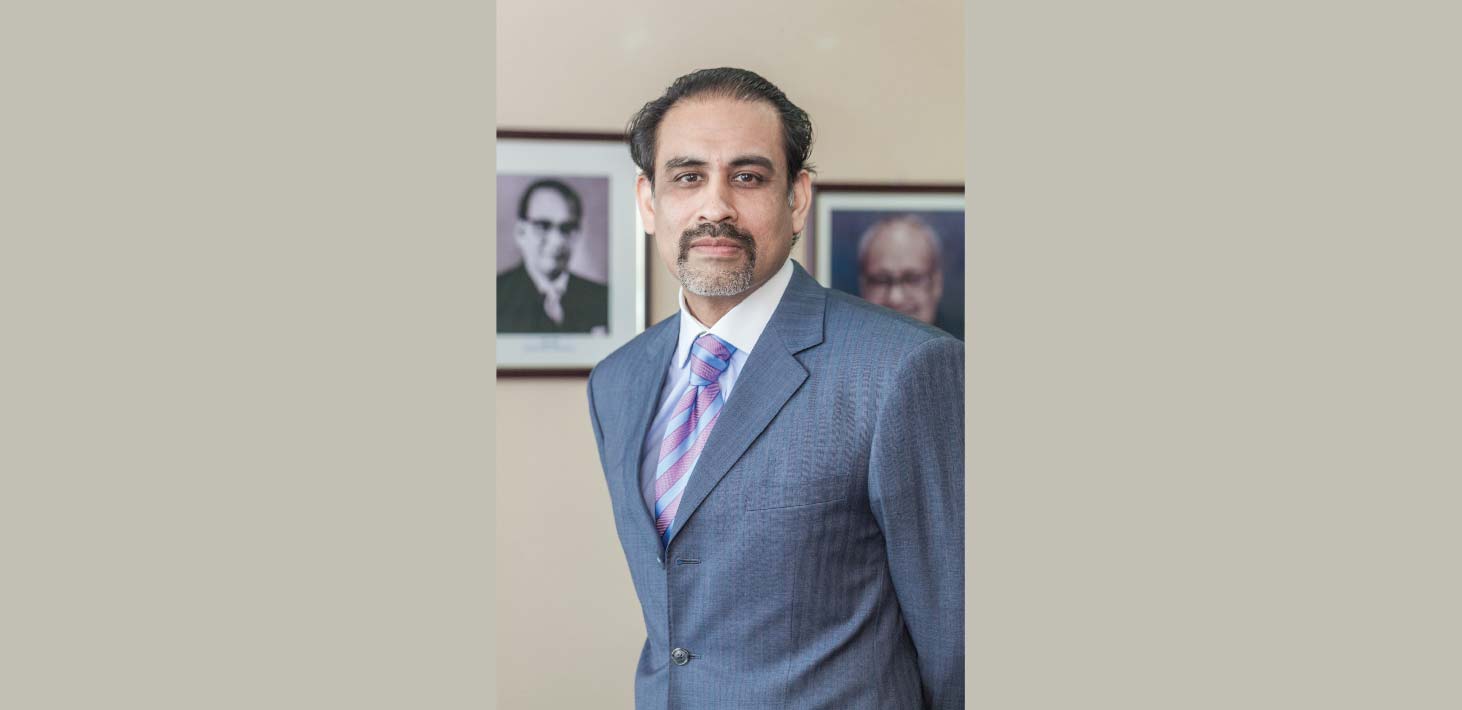
Abul Kasem Khan is a third generation entrepreneur and prides himself in being a Bangladeshi. He is the eldest grandson of late AK Khan, former Central Industries Minister of Pakistan and one of the founders of Bangladeshi gentry of entrepreneurs. Khan’s father late A M Zahiruddin Khan, a freedom fighter was the President of Chittagong Chamber of Commerce from 1974-76 and President of the Federation of Bangladesh Chambers of Commerce & Industry (FBCCI) in 1977 and later Planning and Industry Minister. AK Khan Group has completed 70 years of journey and has contributed immensely in the industrialization of Bangladesh.
Khan is the Director, Corporate Investment of AK Khan & Company Limited. He was the president of Dhaka Chamber Commerce & Industries (DCCI) and envisioned the famous 2030 vision for Bangladesh. Having completed Bachelor of Science in Business Administration from Xavier University, Ohio, USA in 1992 he entered the family business in 1996. At present he is also the Managing Director, AK Khan Telecom Limited; Director, Akceycom Limited; Infocom Limited, A.K. Khan Penfabric Company Ltd, a joint venture with Penfabric Malaysia and subsidiary of Toray, Japan. In an exclusive interview with IBT, the visionary businessman shares his insights about the paradigm shift that Bangladesh’s economy can enjoy in coming years. Here are the excerpts.
Five years back you outlined your vision of Bangladesh becoming the 30th largest economy of the world by 2030 and provided a guideline to the state on country’s growth strategy. What made you come up with such a long term vision?
We set a 20 year benchmark, which is not a very long time for any nation. We wanted to show the government, its policy makers, stakeholders and private sector players what can be achieved given the current changes that are reshaping the world. We also made a 7 minute video to show a glimpse into the future as to what kind of Bangladesh we want to see in the year 2030. As you know, the current government has set vision 2021 to make Bangladesh a middle income country, and Bangladesh 2030 – was based on what we want to see beyond 2021, and moreover, strategies and policies from a business perspective. The recent phenomenal economic development of China is creating new opportunities in other counties under the China Plus 1 strategy. With China slowly losing its competitiveness in low cost production bases, new opportunities for investments in other low cost production bases including Bangladesh are being created, this is what we wanted to highlight in the conference. We also highlighted that low-cost production base alone will not determine or guarantee Bangladesh’s competitiveness as an attractive investment destination; and therefore in the conference, we addressed the pre-conditions to double digit growth and to get the China plus 1 advantage, key challenges on core infrastructure issues need to be addressed by the nation and its policy planners immediately. The conference also emphasized on how Bangladesh needs to position itself in the potential list of countries with its competitive and comparative advantages given that this window of opportunity will not be open forever. In addition, we stressed on the new export markets that are being created by the Chinese and Indian growth which can be explored by Bangladesh businesses due to Bangladesh’s strategic location.
We at Dhaka Chamber of Commerce & Industry (DCCI) strongly believed that it was high time to address the strategic issues and the pre-conditions for growth, and therefore, the conference on Bangladesh 2030 was also designed to deliberate on the issues relating to strategies and policy issues. Questions wer asked such as: What are the possible growth trends? What are the ground realities as to where Bangladesh stands? Does it have the basic macro fundamentals? Is the current momentum of the country’s growth rate and policy mix sufficient to propel it into the desired trajectory for a double digit growth? Can Bangladesh by year 2030 take its place among the “top economic countries” of the world as an economic power house and graduate to MIC before 2021? What growth path and policy mix will lead Bangladesh towards this transformation and what is the road map for attaining such a growth scenario? The idea was also to discuss the potential risks, competitive areas and regional partners for which Bangladesh should be prepared with appropriate strategies. This lead to questions such as: What should be the priorities and pre-requisites for infrastructural development to match with the strategy 2030 needs? What are the areas to instill knowledge and technologies for agricultural development with an eventual goal to attain food security and maximize earning through commercialization of agriculture? How to establish a critical mass of human resources to integrate Bangladesh with the knowledge world of 21st century?
It is difficult when you look back over the last 5 years that certain priority areas of infrastructure still remain unfinished such as the long awaited Dhaka-Chittagong highway? This is a major setback considering the importance of this economic lifeline for the nation.
We should be thinking of an 8 lane expressway by now. 4 lane is too small given the importance and traffic load. Do you know in Thailand you can go from Bangkok to Pattaya (which is a popular tourist destination) through fully elevated expressway? Why am I mentioning or comparing this? It is just to highlight the importance Thailand has given to its resort town and yet we fail to give this same importance to Chittagong which is the life line of the Bangladesh economy. It’s just shameful.
Today Bangladesh’s infrastructure is one of the most underdeveloped in the world. In the World Economic Forum’s Global Competitiveness Report 2014-2015, the Bangladesh’s infrastructure competitiveness was ranked 127 out of 144 countries, the lowest ranking among its South Asian neighbors, India at 87th, Sri Lanka 75th and Pakistan at 119th. The importance of infrastructure for sustained economic development is a pre-condition for rapid growth. Bangladesh is failing to realize its full growth potential due to high transaction costs, mainly, arising from inadequate and inefficient infrastructures.
The main reason for infrastructure-related shortcomings is insufficient investment, which is currently recorded at 2% of GDP. In Bangladesh for last 25 years the Private sector growth outpaced public sector planning and development, our policy planners failed to provide the adequate infrastructure investments and also the right mix of infrastructure leading up to this shortage in infrastructure. Allocation to infrastructure only at 2% of GDP, whereas minimum requirement was 6% - 8% of GDP, which resulted in its unplanned development – and in turn, we got very poor quality, inadequate and currently outdated infrastructure. Today, our GDP Growth remains trapped at 5%-6% levels primarily due to lack of modern and efficient infrastructure. Slow pace of implementation, land issues and zoning laws are considered as bottlenecks as well. Vietnam today hold 81st position in overall “Infrastructure Competitiveness” country ranking compared to Bangladesh which is at 127th position as per the World Economic Forums Report on Competitiveness. Bangladesh despite having strong economic growth failed to improve its infrastructure.
Our policy makers are complacement and due to this maybe, we are lagging behind our neighboring countries like Myanmar, Vietnam, Laos and Cambodia. If we are going to catch up we are going to need a big push and time is of the essence. What are your thoughts regarding this?
To accomplish this we will need a combined effort in a number of different areas. The ingredients required for this to happen include political stability, boosting investor confidence, easy access to finances and global connectivity. We need to think differently, we need to move faster and we need to have inclusive growth. Let’s look at South Korea in 1960s and South Korea now – how did they turn their country around and become a international industrial power house? Let’s look at the Malaysian success story – what did they do right? So isn’t there something that we should be learning from them and doing right as well? We need to seriously think as to what needs to be done. I can identify infrastructural development as the big push required by the economy. Today, our infrastructure is not at all sufficient to keep pace with the growing economy. It is estimated by The World Bank in 2013 that Bangladesh needs to invest from $75 - $100 billion in infrastructure until 2020. From 2020 – 2030 another additional $175 – $200 billion investment will be needed for the sector. I believe, energy and telecom will draw a lot more from the private sector but the other infrastructure needs to get its due share. Just to add to the subject and to draw your attention here today as what is happening in Bangladesh, currently 88% Traffic for both passenger and cargo is moved on Road compared to Rail only contributing to 4% and Water at 8%. From 1985 to 2005, Rail dropped by 80% and Water by 50%. This one-side development and investment in the transport sector is a serious hindrance to transport efficiency as the other modes such as rail and water are cheaper to build and thus cost less to use. Such over emphasis on one-sector approach needs to be re-addressed for better balanced one and create a stable multimode transport infrastructure which is also cost effective.
Innovation and research is also the key. It is important that we need to make comparative analyses and pinpoint our opportunities, strengths and prospects. One of the key recommendations, we made in the Bangladesh 2030 conference was the creation of RnD Bangladesh, a research and development unit under a PPP model for increased role of research in the economy. Bangladesh must engage in research and development to accelerate its road to industrialization, we need to leap frog into industrial advancement and not take the long road. Therefore, I strongly feel that a research institution under the name “RnD Bangladesh” needs to be set up for our research and development (R&D) work where the best minds of the country will be involved. Policy reform is another area where we need to engage ourselves.
You took the initiative to create Entrepreneurs through DCCI. What challenges did you face then?
The first roadblock is the access to proper finances. It will be difficult for the country to grow if we do not have easier access to local and international finances. We must strive for across the board prosperity and this shall be achieved through our small and medium enterprises (SMEs). A few companies will not be able to shoulder the burden; instead we will need the help of thousands of entrepreneurs. Small and medium enterprises (SMEs) play a vital role in the economy, and are considered to be the backbone of industrial development in a country. SMEs across economies from Asia to the Americas contribute substantially to their economic development, it is highly important for any economy to create entrepreneurs as they expand and decentralize wealth generation and distribution and most importantly, help in poverty alleviation. Wealth creation expands from limited players into many, and as such real prosperity is created in the country in place of pockets of prosperity.
Bangladesh is now in the take off stage and we need a big push to ensure a proper take off. As a third-generation entrepreneur, what is your opinion on this?
Bangladesh today is truly positioned in a transition point in its history, just as many countries including the Asian Tigers did in recent past. The rapid economic rise of China and India are windows of opportunities for Bangladesh. Our geographic location between these economic giants provides us with ample opportunities for faster economic development. But the window will not remain open forever, therefore, we cannot miss this opportunity.
The East Asian economies have been successful in achieving rapid economic growth by making substantial capital investment in infrastructures during their development. Taiwan and South Korea heavily invested in infrastructure during their period of rapid industrialization 9.5% of GDP for Taiwan from 1970 – 1990. For South Korea it was 8.7% from 1960-1990. China on average invested 8% of GDP. All the three countries were able to build modern systems of essential infrastructure facilities. Infrastructure has also been an important component of Vietnam’s development strategy. Over the last 12 years, Vietnam was able to sustain infrastructure investment at 10% of GDP. In our case it is less than 3%. It is very clear that to reach 8% growth, GDP-investment ratio should be at 35-40% which is now hovering around 26%. As mentioned earlier, we will require an investment of $100 billion by 2020 and a further $200 billion by 2030, if we are to be create a prosperous Bangladesh. Therefore, in next 15 years we will require an investment of about $300 billion in infrastructure alone – this kind of injection would certainly propel Bangladesh’s economy to the next trajectory and obviously provide the much required jump start. As the president of DCCI, I repeatedly voiced my concerns and tried to convince policymakers that Bangladesh today, is an infrastructure hungry country and therefore, timely investments in the right infrastructure is very critical for our growth; and to identify priorities within the “priority-list” for infrastructure so that short-term, mid-term and long-term strategies can be taken and implemented.
A K Khan is a diversified Group. Your Grandfather started business in Rangoon in 1945 and was the Central Minister of Industry in Pakistan. A K Khan is the company which initiated long term joint venture. Your father was also the Minister of Industry and the President of FBCCI. Would you please give us a short note on the journey of the group?
The journey started in 1945 when my grandfather late AK Khan established the company. Within a decade 8 new companies were created under his visionary entrepreneurship from jute, textiles, insurance to shipping. By 1960s AK Khan & Company became one of largest companies in the country. In late 70s, the company adopted the strategy to expand operation through joint ventures with foreign companies, and since then 6-7 new joint ventures were created with world renowned global companies from deep sea fishing to telecommunications. Today, we still continue to expand our business through joint ventures. We went into Joint ventures (JV) with renowned companies primarily to remain competitive in the global arena as our foreign partners brought in the technology and management expertise; and we brought in the local expertise and the local knowledge – it’s like our partners brought the know-how and the we brought the know-who. Joint ventures give global exposure to local companies. Our success behind building good companies, I believe is mainly due to ethical business practices, we are operating for last 70 years which shows our stability and commitment as to what we do. My grandfather was truly committed in creating businesses based on ethical practices, which my father also carried forward and which we still carry forward in our business as a core principle. I believe in building sustainable businesses for the next generation is the most important thing for our company, which my grandfather and father did before us.
What do you think will happen in Bangladesh in the next 5 years?
Difficult question, can I rephrase the question like this, “What needs to happen in the next 5 years in Bangladesh?”
GDP needs to grow to 8%, investment to GDP need to be near 40%, 4 lane Dhaka Chittagong road needs to start operating, 8 lane highway must be planned out, SEZs need to be in operations, 100billion needs to be injected into Infrastructure. Rail infrastructures specially Dhaka Chittagong needs to be modernized, Dhaka city traffic needs to be contained and controlled, satellite towns such as Feni, Comilla needs to be upgraded to accommodate the growing population of Dhaka and Chittagong, Dhaka Chittagong Economic Corridor (DCEC) needs to be developed with top priority, Deep sea port work needs to start, Coal exploration and finally, local coal based power plants needs to be on-stream.