
The transaction is expected to be closed within 2016 and is subject to approval by LinkedIn’s shareholders and specific regulatory bodies.
By Antony Rahman
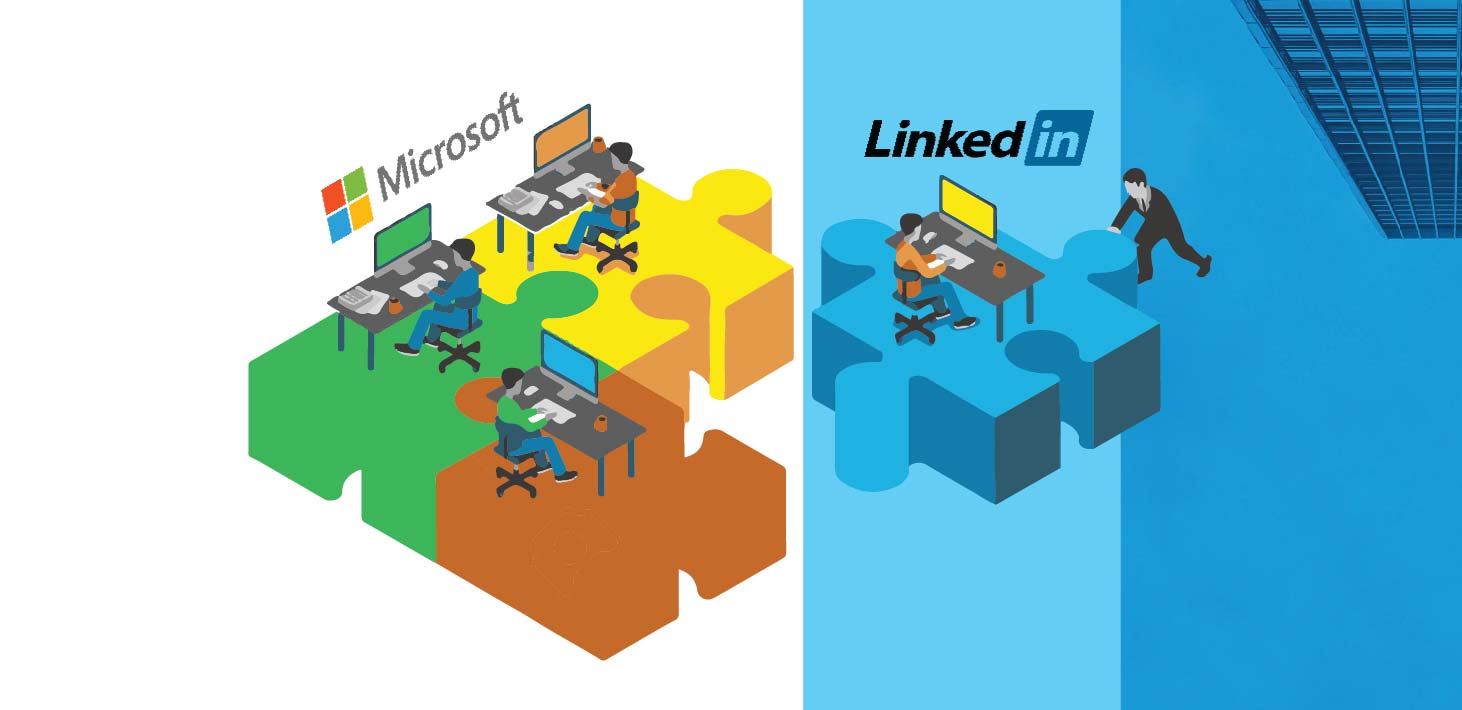
Microsoft Corp. recently expanded its already significant online presence by acquiring LinkedIn, a business-oriented social networking service. The acquisition was announced on June 13th and cost Microsoft a whopping $26.2 billion which they will be getting in debt form, as they are an AAA borrower with a low debt to equity ratio. Microsoft bought LinkedIn for a 50% premium on the share price as an all-cash transaction, with LinkedIn shares being valued at $196 each.
While this acquisition has many important implications for LinkedIn, Microsoft insiders including Bill Gates himself have commented that LinkedIn will keep its brand and initiatives, and existing CEO Jeff Weiner will remain in place and report directly to Satya Nadella, CEO of Microsoft. For Nadella, this is his first big acquisition since becoming CEO two years ago. Nadella is quoted as saying “The LinkedIn team has grown a fantastic business centered on connecting the world’s professionals, together we can accelerate the growth of LinkedIn, as well as Microsoft Office 365 and Dynamics as we seek to empower every person and organization on the planet.”
Microsoft has been making efforts to position itself as the “world’s leading professional cloud”, which sheds more light on this large scale acquisition. Though Microsoft has not been entirely forthright with the exact details of their intentions regarding the purchase, their recent shift towards branding themselves as “The world’s leading cloud system” implies that it is meant to bolster their online and social networking presence. This is undoubtedly a wise business decision, as social platforms are becoming increasingly important with each passing day. For instance, Facebook had three incredibly successful messaging services and still spent $22 billion to acquire WhatsApp.
This is certainly a significant acquisition for Microsoft, both regarding the financial value and what LinkedIn can offer to the company. Over 433 million people worldwide are LinkedIn users, many of whom pay for premium services from the site.
However, the price of the transaction, one of the biggest technology industry deals on record, had an adverse impact on Microsoft’s shares earlier this week. Bill Gates, who is still a board member at Microsoft, was not concerned by the 2% drop in the stock since the deal was announced. “I certainly think that the value of the two companies combined is greater than the two by themselves, but I love the idea that the market wants us to show that,” he said.
LinkedIn CEO, Jeff Weiner also had a lot to say in regards to the transaction, and in an email to all LinkedIn employees explained his reasons for this course of action. In it, he commented that the current Microsoft CEO, Satya Nadella played an integral part in the decision-making process.
He went on to say that he had publicly applauded Satya’s impressive efforts as CEO long before they had ever begun negotiations for this deal, and that it was incredibly rare to see an industry titan make such quick and decisive moves to make fundamental changes in the company.
Weiner insisted in the communiqué that he and Satya were in alignment on the purpose and structure of this deal and that they have almost the same mission statements. For LinkedIn, the mission is to connect the world’s professionals and to make them more successful and productive, and for Microsoft, it was to empower all individuals and organizations across the world to be able to achieve more.
The deal has been greeted with unanimous approval by the Board of Directors of both Microsoft and LinkedIn. The transaction is expected to be closed within 2016 and is subject to approval by LinkedIn’s shareholders and specific regulatory bodies.
Though the initial investment is tremendous, this acquisition is a tentative step in the right direction for Microsoft to increase its online presence. Both Microsoft board member, Bill Gates and Microsoft CEO, Satya Nadella several times alluded to Facebook, and their desire to replicate some of its success. If it were possible for Microsoft to make the LinkedIn feed as valuable and relevant to the professional world as the Facebook feed is to the social world, then that by itself would already make the investment more than worth it.
Currently, while LinkedIn is undoubtedly a widely used networking site, its user base does not have the same level of proliferation as other networking giants. However, Microsoft has both the means and the required knowledge to push LinkedIn to the top, not just among professional networking sites, but in the social media arena in general. Whether they can achieve this or not, it’s safe to say that under Microsofts banner, LinkedIn will enjoy greater popularity than before.
However, this is not to say that there are no possible negative repercussions from this deal. In a presentation given by the CEO’s of both companies to the investors, it was shown that the Microsoft Office tools, such as Powerpoint, Excel, and Word, will all be connected to LinkedIn. Nadella said in the presentation that this was so that Office could suggest a connection to an expert via LinkedIn to help with whatever task is being done. Though interconnectivity between software applications can be useful, this can have the negative consequence of interrupting people’s workflow while they are using Microsoft Office products.
Overall, Microsoft stands to gain quite a bit from this transaction, and LinkedIn is now poised to become a juggernaut in the professional networking sphere. Where this goes from here depends on how well they can understand and adapt to the evolving world of online networking.