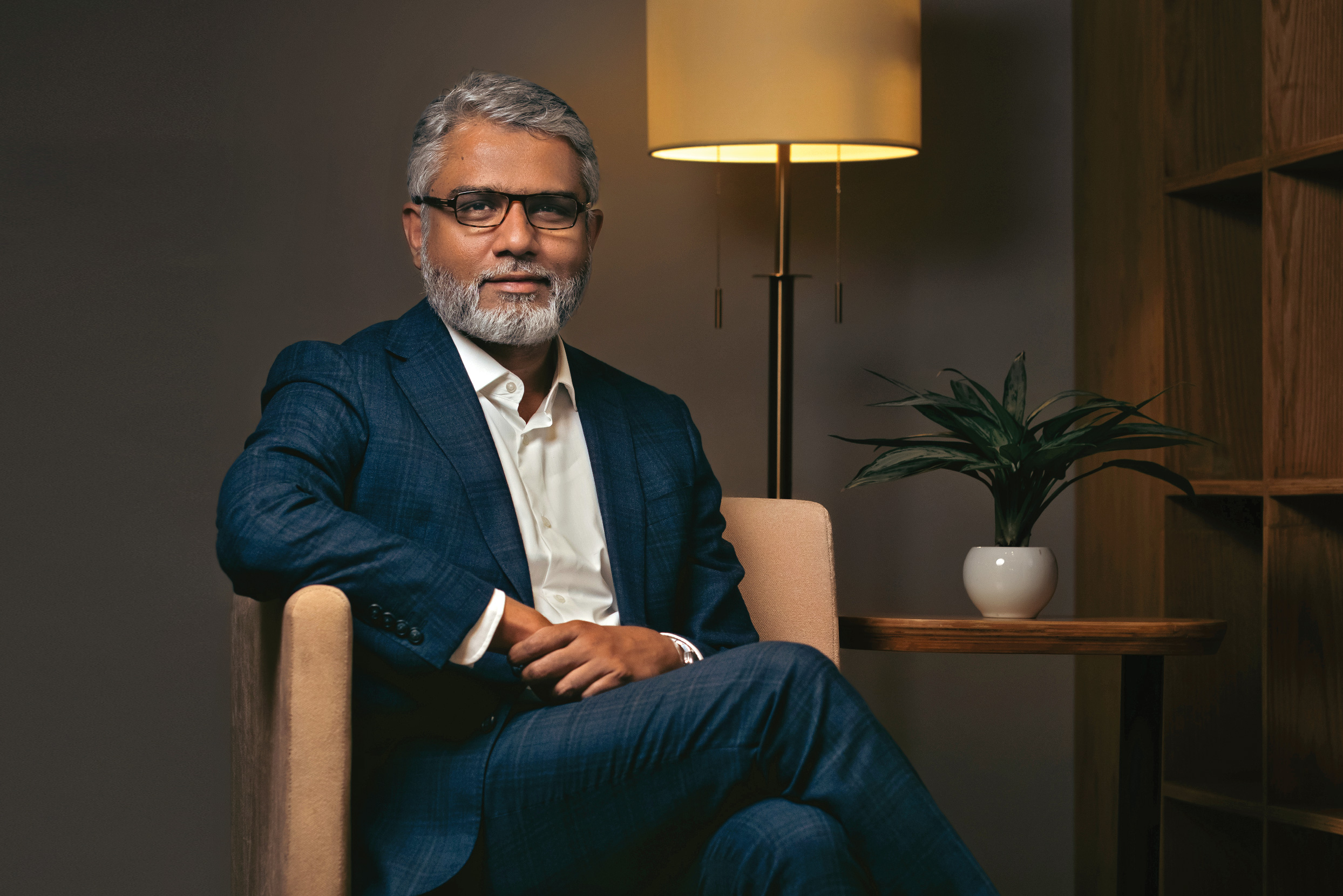
Dr. A.K. Abdul Momen
Chairman
Chittagong Stock Exchange
Dr. A. K. Abdul Momen has had his fair share of struggles throughout his illustrious career. He made contributions during our Liberation War as an assistant to Dewan Farid Gazi, the Regional Civilian Administrator in 1971 and was arrested and tortured by Pak army. During his various stints at different workplaces, he took Bangladesh’s image to newer heights with his personality. The New York media called him a “People’s Ambassador”, while UN Secretary General Ban Ki-moon called him the “Ambassador of Consensus”. He is the former Bangladesh Ambassador and Permanent Representative to the UN in New York (2009-15) with concurrent accreditation to the Republic of Chile and Peru. While at the UN, he was elected as the (1) President of UN High-level Committee of the South-South Cooperation, (2) Vice-President of the UN General Assembly, (3) Acting President of the UN General Assembly, (4) Chair of the Second Committee of the UN, (5) Chair and also Vice-Chair of the Peace Building Commission (PBC), (6) President of the UNICEF Executive Board, (7) Coordinator for NAM Peace Building Caucus, (8) Facilitator for the UN Counter-Terrorism Strategy, (9) Chair of Asia-Pacific Group, and (10) Vice President of ECOSOC. He successfully served as the UN Secretary General’s Member of Senior Advisory Group. As LDC Chair and as a Bureau member, he played a critical role at the LDCs Summit in Istanbul. He helped with the inclusion of Bangladesh as a Champion country for “Secretary General’s Education First Initiative”, “SG’s Health and Nutrition Champion”, “SG’s Public-Private Partnership” and “UN-Women’s He For She” programs.
Prior to joining the UN, he was the Chairman of the Business Administration and Economics Department at the Framingham State University, Massachusetts. Until Riyadh was rocked by successive bomb blasts in 2003, he was working there as an expert (Economic Adviser) under the Saudi Ministry of Finance and National Economy for five years.
He served as a faculty at the Harvard University, Northeastern University, MIT, University of Massachusetts, Merrimack College, Salem State College, Cambridge College and as Junior economist/researcher at the World Bank, HIID, UNDP, etc. for many years (1981-97).
Bangladesh’s phenomenal growth is a paradox for many people around the world but that should not concern us. The question is if we are going to continue the progress and truth be told, with the current pace of technological upheaval and massive twists and turns in geopolitics, the future holds more challenges than promises
While in Saudi Arabia (1998-2003), Dr. Momen received death threats as he spearheaded a movement against the abuse of Bangladeshi expatriates in the Middle East. In the early 1990s, he started a drumbeat to end trafficking of women and children into slave-like servitude and due to his campaigning, the abuse of young boys as ‘camel jockeys’ in the Gulf countries virtually stopped. He even helped with the rehabilitation of some of the victims. His issue received bipartisan support in the US Congress and nearly 132 US lawmakers sent letters to the Gulf governments to end abuse of young boys and also to SAARC leaders. At his request, Bangladesh Prime Minister Sheikh Hasina raised this issue at the 10th SAARC Heads of Government Summit in Male and favorable resolutions were adopted with consensus.
Dr. Momen has a Ph.D. in Economics and an MBA in Business Administration from the Northeastern University (Boston), and an MPA in Public Administration and Public Policy from the Harvard University, an LLB in Law along with an MA and a BA (Honors) in Economics from the Dhaka University. For our Leadership issue, he stated the following advices that the government and all its associated bodies must listen to.
Let’s not be complacent about the achievements we have made so far
Bangladesh’s phenomenal growth is a paradox for many people around the world but that should not concern us. The question is, if we are going to continue the progress and truth be told, with the current pace of technological upheaval and massive twists and turns in geopolitics, the future holds more challenges than promises. Our target is to become a middle-income country by 2021, reach all the targets of the SDGs by 2030, and to become a developed country by 2041. None of these feats would be easy to attain. We are lucky enough that for the last few years, we have not witnessed any serious flooding or droughts. So we are well advanced in comparison with our neighboring countries in different criteria. We are still at the helm of the LDC (Least Developed Country) list and it’s a point to ponder that graduating from LDC to a developed country usually takes many years. In the case of Malaysia, it took 31 years. To make those quantum leaps to our goals, we have to make foolproof strategies and develop a workforce and system which is quick to evolve and adapt to changes.
Focus on developing the intangible infrastructure
Undoubtedly we need to build infrastructures for the propagation of our industrial journey; that’s one side of the coin. On the other side, we have intangible infrastructures like rules, regulations, law, bylaws and procedures, which are very cumbersome and are in dilapidated conditions. We must not forget that these intangible infrastructures are formidable barriers, in ensuring the progress of other tangible infrastructures to be in place at this stage of development. If we fail to remove these kinds of bureaucratic hassles, we will not get the desired results. Physical development can be achieved through spending money but mindset development is not that easy to achieve. A lot of our initiatives never come to fruition, thanks to the mindset of the decision makers who are unaware of the power of technology and still rely upon their old-fashioned insights on certain issues.
Impetus should be given for ensuring skill-based education
There is no alternative to quality education that offers hands-on training on various skills needed for fueling innovation and project completion. However, developing the skills of a vast youth populace that our country has will be a time-consuming process. This is why we need to plan accordingly to accommodate more and more young students who are in dire need of this. It is also time-consuming and everybody concerned with it shall be more sincere. To make the workforce engaged in various government and corporate scenarios, I think that every office at least should organize one need-based training session every month, which employees will attend by rotation. Workplaces should develop reward and punishment systems, which will make employees, show more diligence to their work.
Systems should be pro-people and tech-savvy
Our administrative system is very archaic and anti-people in character. In our bet to become a developed country, that has to change. Having elected bodies to run various systems from the grassroots level to the high-up will help not only in empowering people but also to ensure smooth completions of projects since everyone associated will understand the goals and objectives of the project. Regarding the mindsets, in our country, there is a VIP mentality. If you are a VIP you will get every service and if not you are neglected in every stage and devoid of everything. This mentality has to be abolished.
Turn challenges into opportunities
I have had my fair share of ups and downs in life. I wrote a piece on Military Hegemony in Bangladesh during my Ford Foundation fellowship which landed me in troubled water. The military government didn’t take it lightly and issued an inquiry against me. I was terminated from my government job under PO Order 9. However, instead of losing heart, I decided to stay back in the US and continue my studies. The Bangladeshi Embassy in the US asked for my passport but my university administration suggested that I not hand it in. That audacious move paid off later and I am glad that I didn’t give up hope.