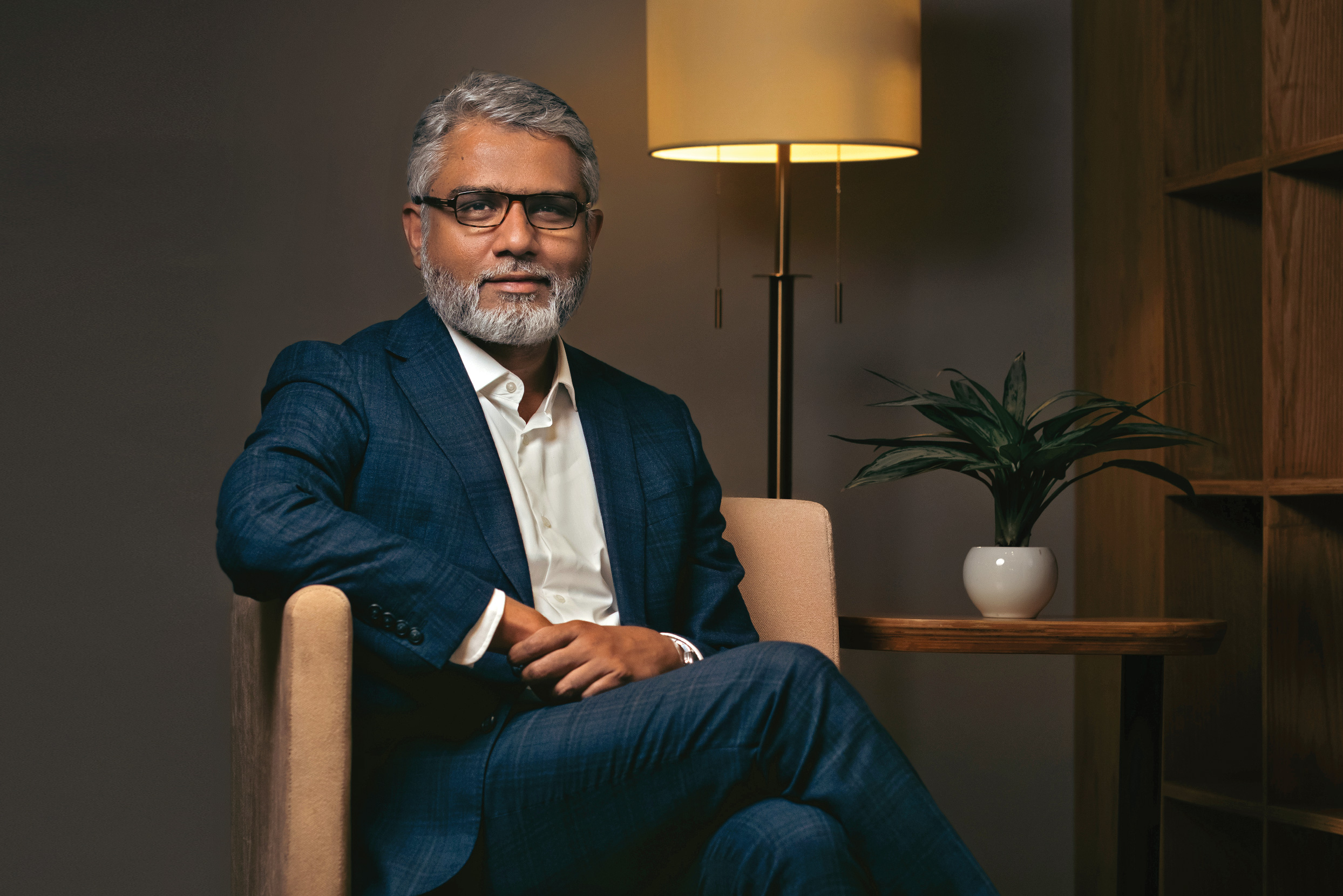
Anis A Khan has had 34-years of experience and training in banking, management, and leadership practices. Anis currently serves as the Vice Chairman of the Industrial & Infrastructure Development Finance Company Limited (IIDFC), Director of BD Ventures Limited, Independent Director and Chairman of the Board Audit Committee of Berger Paints Bangladesh Limited (BPBL) and Vice President of Bangladesh Association of Publicly Listed Companies (BAPLC). He is the recipient of numerous accolades including the ‘Business & Entrepreneur Excellence Award 2016’ where he was recognized as the ‘Inspirational Business Leader of the Year’, at a ceremony held in London, United Kingdom and which was organized by the UK Bangladesh Catalysts of Commerce & Industry (UKBCCI) on 20th November 2016.
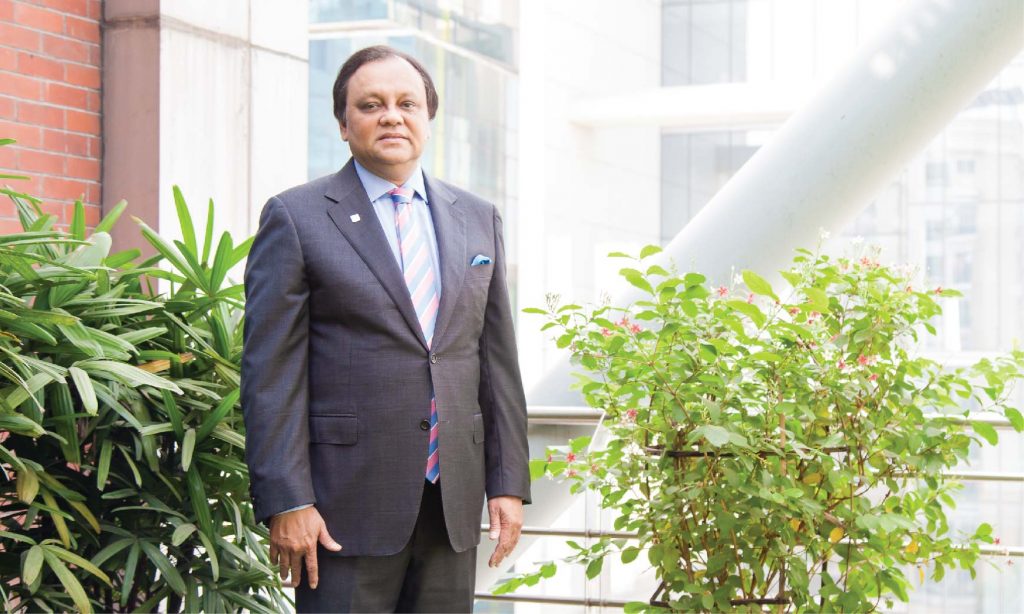
Managing Director & CEO Mutual Trust Bank Limited
Chairman Association of Bankers Bangladesh Limited
Our economy is growing and there are possibilities and, at the same time, challenges. As you are long associated with the banking industry, which is part of the Macroeconomy. What is your comment regarding prospects of this economy?Actually, Bangladesh is on the cusp of exciting economic development. Frankly speaking, it is now the twenty-fifth economy of the world. It will be one of fifteen countries of the world within the next ten to fifteen years. In parts of Europe and Japan, the population decrease is resulting in insufficient manpower in their workforce. Due to this trend, demand and consumption have decreased. However, more money will be necessary to care for the elder population. This segment of the population will require healthcare but will not be able to contribute to the workforce. On the other hand, more than 60% of our population is part of the vibrant working force.
How do you believe that change will come about in the nation’s future?
This generation, unlike the previous generations have greater exposure to international education and the internet. Furthermore, the public universities are expanding and there are many quality private universities. More families can afford to send their children abroad for a quality education and these children are coming back to work in Bangladesh. The first generation entrepreneurs are passing their businesses own to their successors with a modern outlook and a drive for hard work; however many companies are still run by family management. Many companies that have started small have now ventured into numerous sectors. Their growth is commendable and is increasing the investment in the nation. By creating a supply chain within the nation, they are not only driving our economy forward, they are also facilitating many new jobs.
What are the challenges that hamper the progress of Bangladesh?
All we need is political stability, and strong leadership; and the reforms will follow. Additionally, our nation, as a whole, requires a greater degree of discipline. I can cite the example of our road conditions, which is a major source of daily functionality within the city. Pedestrians cross the road without any regard to vehicles that are passing by and this can result in traumatic accidents. There is no separate lane for public buses, which can be found in many densely populated cities such as London. The public transport vehicles stop in the middle of the road, completely disregarding the ones around them. Whenever I see a fire truck or an ambulance passing by on the road, I always wonder if they will be able to reach their destinations on time.
The banking industry is at a critical phase. What are the needs of the banking industry?
Under the guidance of Bangladesh Bank, we were able to open Tk 10 accounts for our farmers. Given that they constitute a majority of the population, this has profoundly advanced financial inclusion. Moreover, the central bank has obliged us to have a 1 is to 1 ratio for banks in the city and rural areas. The mobile banking financial services (MBFS) in Bangladesh have attracted attention around the globe. Mobile Financial Services (MFS) is also a role model. During a conference I attended in Boston, USA, Bill Gates spoke about how Bangladesh is using mobile phones as a tool for advancement. In a population of 160 million, over 100 million people have mobile SIM connections. This device allows the rickshaw- pullers and other blue-collar workers to send money instantly to their families in the rural area.
Your company has launched a number of agent banks. How are these banks furthering the growth of your company?
I am truly excited with the progress of agent banking services. This is an integral medium through which we can reach banking products and services to the unbanked population. Setting up a bank branch means significant costs; there is a matter of security, permission and acquiring a workforce, a matter that is not feasible throughout the nation. In this regard, there are various parts of the country, predominantly rural regions, where there are no banks. Agent Banking Centres allow us to embrace these unbanked people in the banking service net. Furthermore, we have school banking that is educating our children as to the importance of having an account and facilitating savings. We have numerous types of accounts catering to the needs of students, women, the underprivileged and senior citizens.
The matrix of distribution of loan is very important. What is the real matrix of distribution of loan or services in your bank?
Retail banking is controlled because it creates inflation. Some have to be extended based on income stream and ability to repay. Additionally, increased spending on consumer products will lead to inflation. There are double income families who can afford more. Because of a growing middle class, we can now offer loans. They now have to pay less interest. SME banking is growing very nicely under the instruction of Bangladesh Bank. The SME products are visibly helping farmers and women. Our bank is the first to have won the SME Award as Best Bank from Bangladesh Bank for the work we have done with women. As a mid-size bank, we are going beyond our expected capacity to help the SME and female entrepreneurs.
You are always very vocal about cyber security at the same time using more IT in banking operation. How are you meeting the both ends? What is your cyber planning and preparedness in this regard?
I was recently at a seminar organized by the International Finance Corporation (IFC) and there were analysts and international figures. The discussion focused on the importance and various facets of cyber security. At end September, I was in Switzerland at a conference – SWIFT International Banking Operations Seminar (Sibos) that stressed on cyber security. This reinforced my standpoint that we must do much more in order to secure our systems, as it is open to hackers. We have to reinforce double to triple firewalls in our banks. We have appointed a Group Chief IT Security Officer for the first time; he is currently setting up his department. We have also engaged consultants who are discussing the setup of the most impenetrable security system. We find it imperative to work with technology to ensure the safety of all transactions of our bank.
There is a situation coming that we will not carry money with us not need to carry a wallet?
The trend of a digital wallet is growing rapidly. There is, however, our local population who are mostly comfortable with cash. In order to keep all of this in check, we must simplify the tax regime. In terms of taxation, the authorities continually ask for five to ten years of account information. This deters the population from going through the banking system. A digital wallet through banking services will push this phenomenon and ease the matter of collecting taxes.