Successful in achieving significant progress in the MDGs, it is expected to make an early start for the SDGs as well.
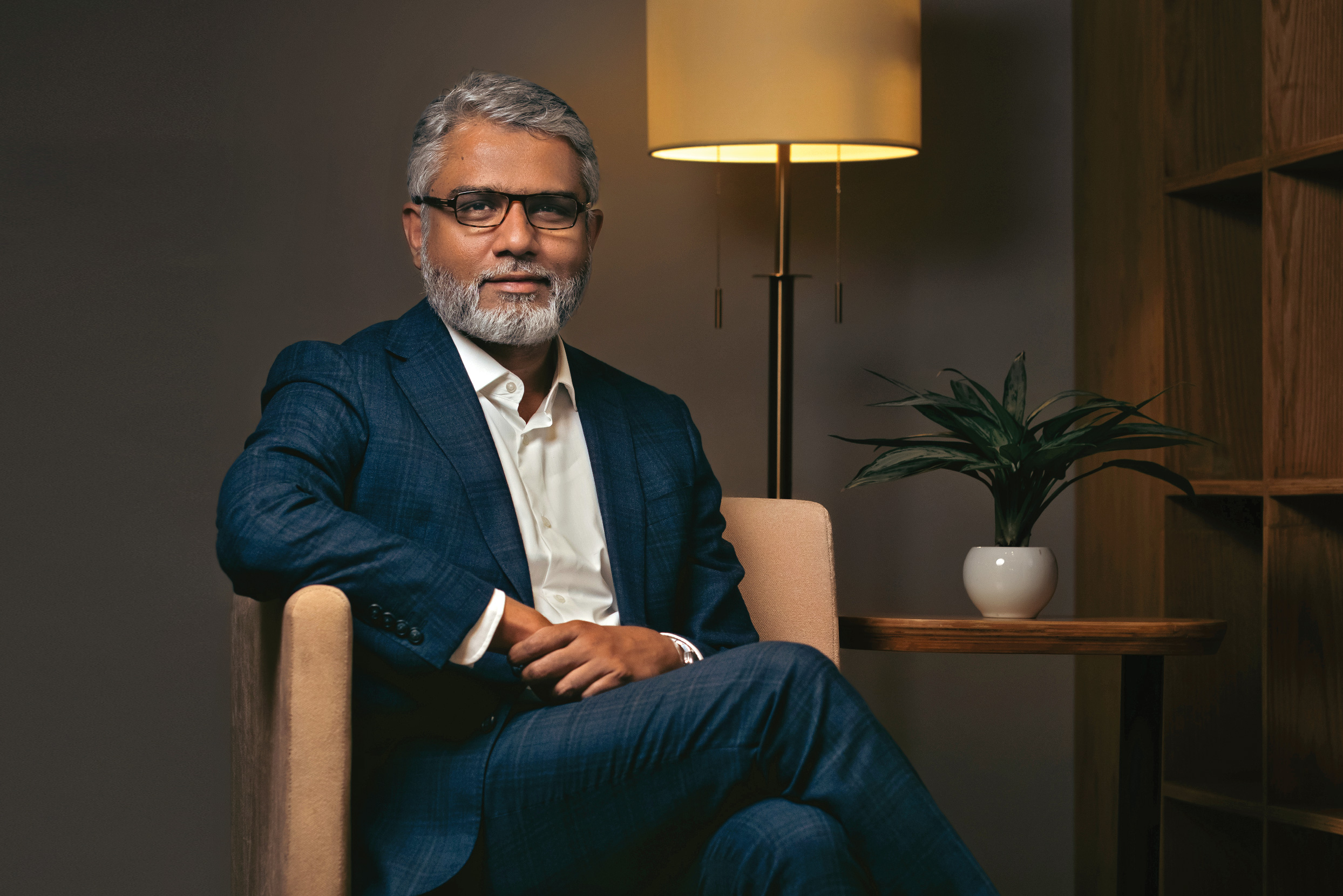
Born in Dhaka in 1965, Asif Ibrahim is the Vice Chairman of Newage Group of Industries, a business house which specializes in the manufacture and export of ready-made garments, textiles and plastic products. He received his formal education from the University of Delhi (India) and the University of North Texas (USA). The Ministry of Commerce in Bangladesh awarded him the Commercially Important Person (CIP) status in the year 2007 & 2012 for his contribution to national exports.
Asif Ibrahim is a former President of the Dhaka Chamber of Commerce and Industry (DCCI), the largest trade body of Bangladesh, from 2011 to 2012. He is currently the Chairman of Business Initiative Leading Development (BUILD), a public-private dialogue platform to expedite the policy reforms to enable private sector led economic growth of Bangladesh. He is in the board of Federation of Bangladesh Chamber of Commerce and Industry (FBCCI) and is the Chairman of the Privatization Standing Committee of FBCCI. Ibrahim is a member of the Executive Committee of Bangladesh Employers Federation (BEF) and also the Director (Operations) of Bangladesh Philippines Chamber of Commerce and Industry (BPCCI). He is also the former Chairman of the research cell of Bangladesh Garments Manufacturers and Exporters Association (BGMEA).
What are your thoughts on our Sustainable Development Goals?
Bangladesh’s performance in terms of the Millennium Development Goals (MDG) was remarkable. The Sustainable Development Goals (SDG) are slightly different and were designed after several sessions of consultation with various stakeholders including Governments, CSOs and representatives from the private sectors, worker groups and labor unions. It has been developed on a bottoms-up approach and it is a commitment that has been signed by all the governments of the world. Since Bangladesh was so successful in achieving significant progress in the MDGs, it is expected to make an early start for the SDGs as well. A national committee will be formed very soon to follow up on the implementation of the goals.
The private sector’s involvement will also be encouraged so that the implementation process along with the follow-up and monitoring processes are done smoothly.The sector will play a key role in ensuring we reach our targets, particularly from the components of financing and investing.
How can governance, transparency, innovation and inclusiveness help us with the SDGs?
The four key pillars will be governance, transparency, innovation and inclusiveness. As I had mentioned earlier it has to be a combined effort from the Government and the private sector stakeholders. Everybody has to be engaged to make sure that the goals are met. Due to this proper governance will be a key factor from the Government’s side. Transparency must also be ensured in terms of the rule of law and in terms of establishing proper check and balance in the overall structure of procedures. If this can be maintained then the proper monitoring and implementation of the goals can be achieved.
Every country’s private sector will have to make massive investments and Bangladesh is no exception in that regard. In the 7th Five Year Plan it has been projected that around 77% of the investment must come from the private sector and the balance will come from the public sector. This is where innovation and inclusiveness will play an integral role. Over the last fifteen-twenty years we have gone through major changes in terms of industrialization and have consistently achieved 6-6.5% growth. However, for us to move forward, we have to reduce income inequality. Over the next fifteen-twenty years, if we are to see even more prosperity for the country, the marginalized people or the people below the poverty line must be lifted out of that state. This will only be achieved by creating meaningful employment opportunities through innovations in the Small and Medium Enterprises (SMEs). The SMEs will play an important role in coming up with small scale innovative technology based projects such as infrastructural projects or projects through social media campaigns which will greatly help the country and its people.
Is the idea of the SDGs clear to our business community? What is required for them to get associated with the development sector?
The private sector must realize that in order for the SDGs to be met, we must have a change of mindset. I feel that the private sector can indeed be the champion in terms of this changed mindset by coming forward and settinga few examples. Something that can be used as an example, although it was mandatorily applied, is the post Rana Plaza remediation measures that have taken place in the Ready Made Garments sector. This example can be replicated in other industries, especially in the textile industry, which is a big polluter. I feel that the industry leaders must come forward on their own set up the effluent treatment plants and water treatment plants to ensure that the environment is not damaged while they are setting up their factories. We have to set up these industries and create employment as every year there are three million people coming into the workforce in Bangladesh but we must make sure they are green and environment friendly.
Also, in order for this to happen there has to be adequate sources of financing made available, at low rates of interest, to the private sector. Here the donors can come forward and encourage people to make the right investments. We talk about the Green Climate Fund (GCF) but we need to ensure the proper matchmaking between the people with the fund and the field level entrepreneurs. The GCF is available but the people who can properly utilize it do not know how to access it or aren’t aware of it. Since most of these funds come through bureaucratic systems and the government offices, proper governance and transparency will play a major role. Public-private dialogues must take place for us to solve these problems.
How does BUILD set itself apart from its contemporaries?
BUILD is the first public-private dialogue platform in Bangladesh. It is a joint initiative of the Dhaka Chamber of Commerce and Industry (DCCI), Metropolitan Chamber of Commerce and Industry (MCCI) and Chittagong Chamber of Commerce and Industry (CCCI). BUILD has been set up to use the public-private dialogue platform to make policy reforms to create a better investment climate in Bangladesh. BUILD has four thematic working groups. First is the Trade and Investment working group, then we have the Financial Sector working group. Next we have the Taxation working group and finally, we have the SME Development working group.
Businesses, associations and chambers bring forward their agendas of policy reforms into the working group meetings. These issues are discussed in details after which BUILD takes up the responsibility of conducting research along withmapping and reverse engineering the processes in the bureaucratic offices. It then creates reform proposals, which try to identify cost-saving and timesaving avenues for the entrepreneurs so they can move forward and create that better investment climate. Once these reform proposals are prepared, they are then presented to the Private Sector Development Policy Coordination Committee (PSDPCC). The PSDPCC is a high level committee set up in the Prime Minister’s office and chaired by the Principal Secretary of the Prime Minister. All the secretaries and agencies who are relevant for private sector development are members of that committee along with private sector representation from FBCCI, DCCI, CCCI, etc.
We have had eight meetings with the PSDPCC since 2013 and we have been able to submit a significant amount of reform proposals some of which have been accepted by the government which has helped with compliance and cost-saving issues for the private sector. This initiative is different from the traditional advocacy of chambers and associations as the public body is also involved in the overall structure, which makes the process a lot more inclusive.
What has organizations like SAFE being doing to improve the conditions of migrant workers?
The South Asian Federation of Employment (SAFE) is an employer’s organization, which is represented by members from Bangladesh, India, Pakistan, Sri Lanka and Afghanistan. The organization and its representatives have been meeting over the past three-four years to find a common ground whereby we can address the issues of migration, labor conditions and employment. It also looks to address the issue of the development of a common platform for labor law reforms. The existing labor laws in many countries are very poor. However, Bangladesh has reformed its labor laws so it is trying to serve as an example for other nations. In the future we want to shape this into a SAARC chamber so that migration and labor law issues can be properly assessed on a regional level and not just on the national level.
What sort of policy level actions would you suggest to improve the level of skill development of our workforce?
There is the National Skill Development Council (NSDC) in the Prime Minister’s office. The NSDC’s plans and programs need to be followed up in a much more planned and efficient manner. The committee needs to meet on a regular basis and their efforts need to be strengthened in terms of addressing technical and vocational training. There is a tremendous need for it and I think it can be done sectorally. The government and the private sector can work on this in a much closer manner, as well. We from the Bangladesh Employers Federation will be organizing an international summit for skill development at the end of this year where we will be addressing issues such as upgrading the skills of our migrant workers. Their technical skills need to be developed so it would give them the ability to remit greater amounts.