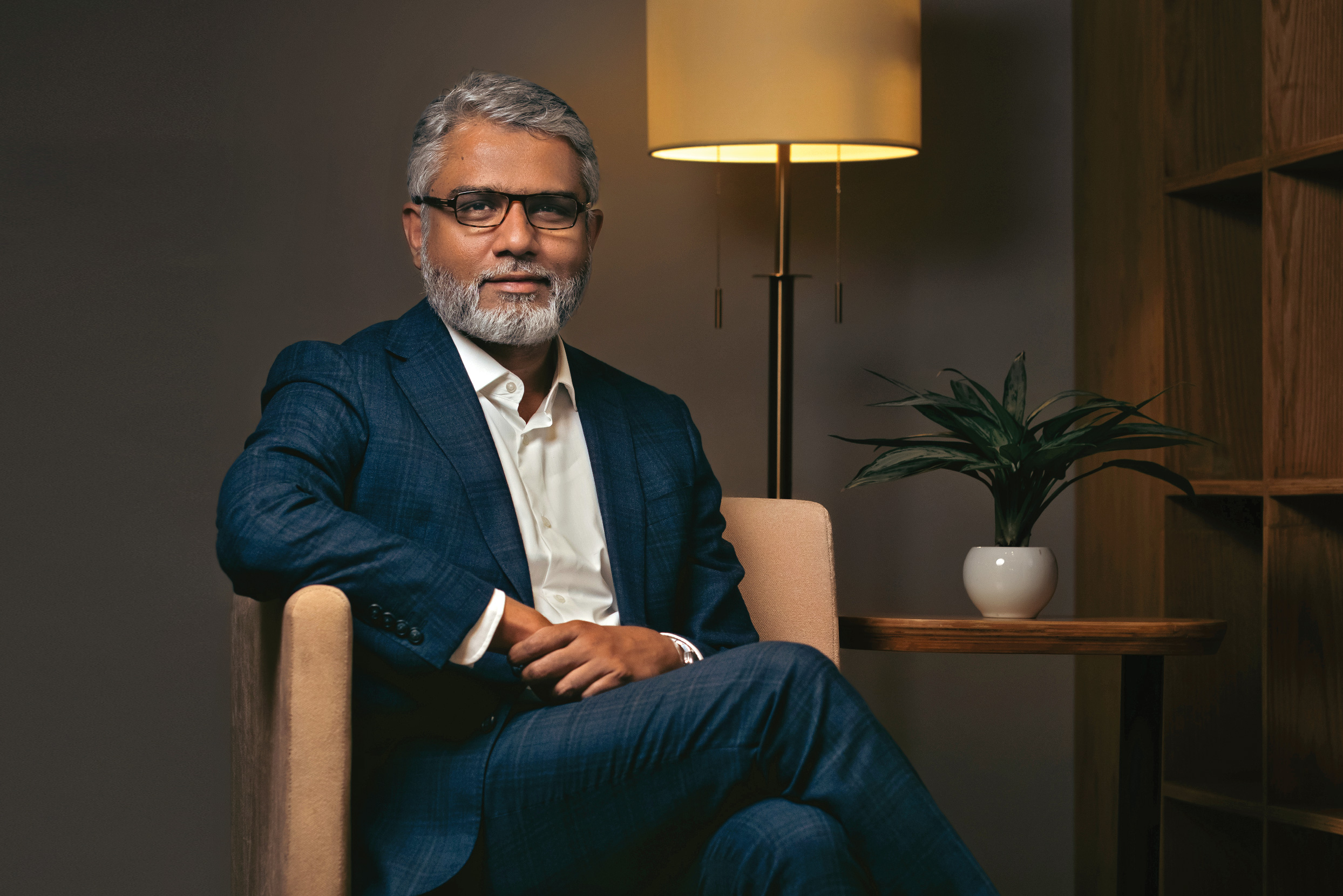
Priti Chakraborty
Chairman Universal Medical College & Hospital Ltd.
“We can also adopt these aspects of assessment, problem finding, planning, implementation, evaluation and consistency in our respective sectors to make the necessary improvements.”
Priti Chakraborty is the Chairman of Universal Medical College & Hospital Ltd. (UMCH) She received her M.Sc. Degree with Honors in Chemistry from the University of Chittagong. She served at Square Group of companies for about 8 years at the beginning of her professional life. She obtained her diploma in cosmetology from U.K. and also received training on perfumery in Switzerland. She also received training on total quality management (TQM) at Japan. She participated in a Govt. workshop on responsibility Community at Malaysia. She accompanied the Prime Minister of the Country as a business delegate in different countries.
You have had extensive training in Europe and East Asia. What educational elements can Bangladesh adopt from these regions?
The training from the developed countries basically focused on your weaknesses and skill gaps to give you a wider perception. These counties have a clear understanding about their trainees’ needs, strengths and weaknesses and try to focus on the same. These trainings are so consistent on stressing on the skills, frequency and delivery of these sessions (group or one-to-one). They are always updated regarding the things going around and always provide the incentive to learn with the best possible methods. Since they focus more on the practical, they do proper evaluations with proper follow-ups and assess the areas of improvement for the next session. It is so promising to see that these extensive trainings run consistently. We can also adopt these aspects of assessment, problem finding, planning, implementation, evaluation and consistency in our respective sectors to make the necessary improvements.
As the female Chairman of the University Medical College & Hospital Ltd, have you received any criticism or faced any preconceived notions regarding your capabilities?
Leadership does not depend on the gender. It is a skill which should be limited by such boundaries. Even though I am from typical Bangladeshi society, I am lucky to say that I have never faced any criticism for being a female entrepreneur and I must thank the world around me for believing in my capabilities.
Could you detail the journey of your success?
Someone once said that “success is a journey, not the destination”. We feel successful when we do something that is worthwhile for the country or society, but I feel that I have not done anything like that yet. However, due to my dedication I never give up my responsibilities. I have not reached that point of success but I find extreme happiness when I see a formerly sick patient recovering fully then going home with a smile on his/her face.
As for the story of my journey, we started out as a small hospital named Aysha Memorial Hospital in 2004 with the objective to provide the best quality health care services in Bangladesh. Afterwards, we materialized ourselves to be a multidisciplinary healthcare institution, providing tertiary level of care with the core value to develop a healthier health sector. UMCH has realigned itself as an innovative medical service provider through a completely revolutionary strategy with a history of excellent care and innovation.
Operating in the health sector is different compared to any other business. Regardless, my team and I have worked hard, overcome many challenges and went through ups and downs with our shared knowledge, skills and experience. With their continuous hardship, after one decade of serving people, UMCH has turned out to be one of the most rapidly growing multi-disciplinary super-specialty tertiary care hospitals in Bangladesh. With 250 beds, it is a specialized hospital which has been working with a single motto - to bring a smile to everyone’s face.
Recently, we celebrate a year of success of our cardiac center. We are also shaping the future health care leaders in our own arena via our medical college and nursing institute. We have expanded our horizon from being just a specialized hospital to a Medical College and Hospital in 2013. We have also started Universal Medical Services in Barisal.
“Leadership does not depend on the gender. It is a skill which should be limited by such boundaries.”
There is a large disparity of doctors in Bangladesh, along with a lack of trained human resources and health facilities. How do you believe the nation can combat this dynamic?
If we look at the present situation, both the government and the private sector are contributing to this industry in terms of manpower and health services in every way possible. Every year, a number of private and government healthcare facilities are being established to add a brick to the continuing development of the health sector. Right now, more than a 100 medical colleges, many nursing institutes and technical centers are producing future healthcare professionals. Even though medical manpower is being produced, their perspective and skills are to be expanded with skill development programs. In order to develop their status, we need to do something more like technical collaborations, easing medical travel requirements, mutual recognition of clinical training and qualifications of training providers. And last but not the least; the government should invest more in the health sector (both in private and public segments). In doing so, we can combat the health care challenges that may rise in the future.
Technology is redefining the mannerism, methodology and diagnosis time for patients. Why must doctors be encouraged to utilize technology? How are you implementing these practices in your hospital?
Technology comes out from continuous research, dedication and work. It is the people’s efforts which make the actual work efficient and effective. Therefore, it is wise to stay at the forefront of technological developments. We have always encouraged our doctors to use the appropriate technologies in every means. That is why we are so concerned about the latest technology and try to bring them to our institution. If needed, we also send our health care professionals for national and international training/seminars.
Are there any educational or residency programs geared towards encouraging women to join the health field?
We don’t have any special programs encouraging women to join this field but nowadays we can still see a significant number of women specialist are coming out from our Medical Institution helped by government and non-government institutes.