
Oil price plunge, growth on divergent path– uncertainties loom in 2015, projecting mega trends, and short-term cautionary notes also galore
An IBT Desk Report
The drastic fall in oil price at the later part of 2014 has jerked the entire global business landscape given the varying impacts of petroleum products on trade and economic activities on different countries.The price of a barrel of Brent crude has almost halved from $115 in the summer to around $60till writing of this report.The International Energy Agency (IEA) has predicted that the demand for oil next year would be lower than expected in view of global social instability and potential for financial defaults in producers such as Russia.
However, the falling oil price may be a boon for the emerging Asian economies and result in tax cut which is likely to boost global consumption and profits for the export-oriented manufacturers. The decrease in oil price transfers to consumer pockets: The International Monetary Fund (IMF) estimates that every 10% drop in the price of oil potentially results in a 0.2% boost to global GDP. Another way of looking at it: A $40 fall in oil prices represents a shift of approximately $1.3 trillion, 2% of world gross output, from oil producers to global consumers.China, India, South Korea and Taiwan account for more than 55% of the MSCI Emerging Markets Index.
In the coming year, writes Mohammed El-Erian, ‘divergence’ will be a major global economic theme, applying to economic trends, policies, and performance. As the year progresses, these divergences will become increasingly difficult to reconcile, leaving policymakers with a choice: overcome the obstacles that have so far impeded effective action, or risk allowing their economies to be destabilised.
The multi-speed global economy is expected to be dominated by four groups of countries. The first, led by the United States, will experience continued improvement in economic performance. The second one, led by China, will stabilise at lower growth rates than recent historical averages, while continuing to mature structurally. The third group, led by Europe, will struggle, as continued economic stagnation fuels social and political disenchantment in some countries and complicates regional policy decisions. The final group comprises the “wild card” countries, whose size and connectivity have important systemic implications. The most notable example is Russia. Brazil is the other notable wild card.
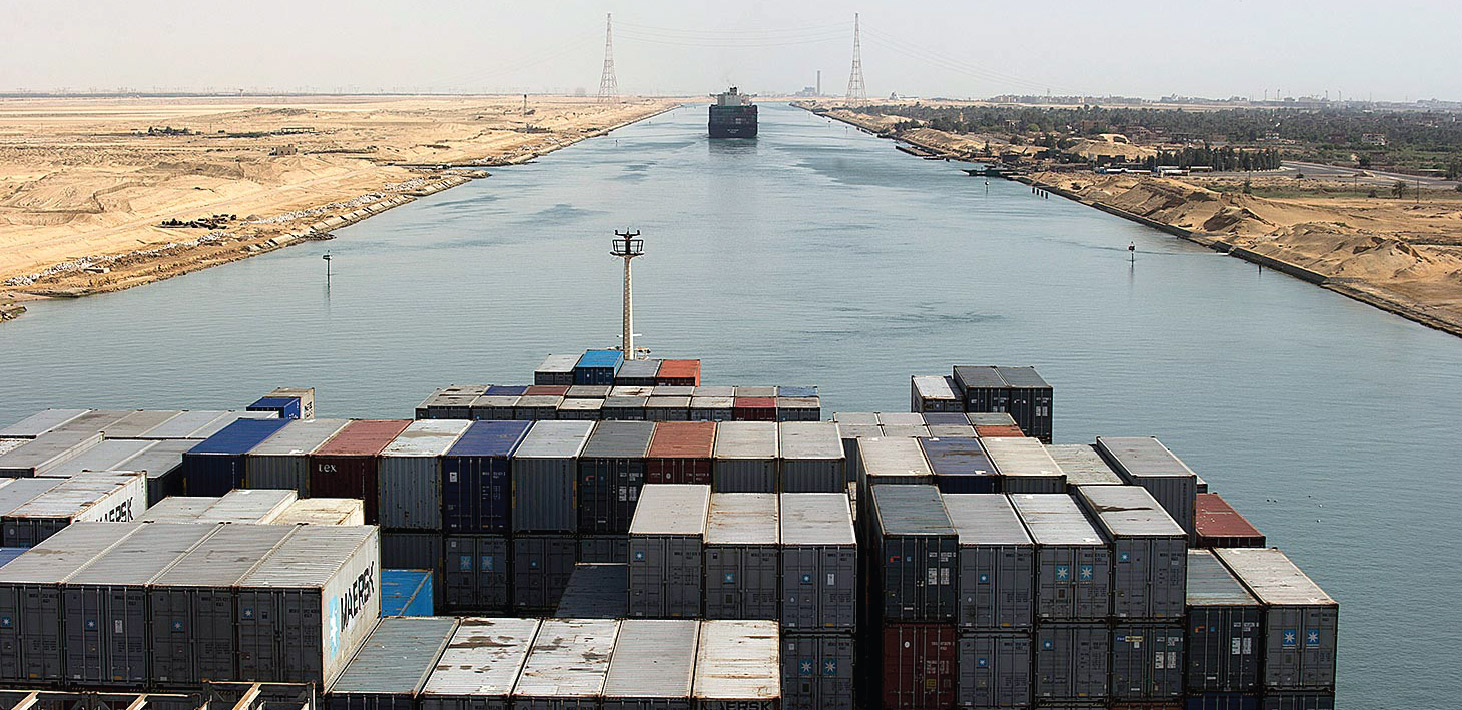
Meanwhile, the current global supply chain provides one possible explanation to a puzzle that is troubling policymakers: why international trade has been growing no faster than global GDP in the past few years. Having soared from 40% of the world’s GDP in 1990 to a peak of 61% in 2011, trade has fallen back slightly to 60%, the same level as in 2008. Cristina Constantinescu and Michele Ruta of the IMF and Aaditya Mattoo of the World Bank argue that the slowdown in trade relative to GDP reflects the end of a rapid evolution of supply chains that yielded big gains in productivity.
This was made possible by the removal of trade barriers that followed the completion of the Uruguay Round in 1994 and the creation of the World Trade Organisation (WTO), plus the integration into the world economy of China and the former Soviet bloc. In the absence of further trade deals or more big countries opening up, the evolution has slowed, causing a lasting slowdown in trade.
Global mega trends
Price Water House has come up with projections of a few mega-trends following survey among stakeholders.
On current trends, the aggregate purchasing power of the ‘E7’ emerging economies – Brazil, China, India, Indonesia, Mexico, Russia and Turkey – will overtake that of the G7 by 2030. By 2015, Asia Pacific will have a larger middle class than Europe and North America combined. And the global emerging middle class will represent an annual market of some US$6 trillion by 2021. Such trends and tipping-points mean the traditional way of classifying economies is becoming increasingly irrelevant.
PricewaterhouseCoopers believes four features will become more prominent in the global economy. They are:
Emerging markets will challenge developed economies in the production of high-end consumer durables.
Today’s ‘F7’ frontier markets – Bangladesh, Colombia, Morocco, Nigeria, Peru, Philippines and Vietnam – will become tomorrow’s growth markets.
An expanding pool of highly skilled talent will fuel this emergence, with people from emerging markets increasingly leading global multinationals.
Developed countries will benefit from ‘re-shoring’ as wage differentials close.
By 2025, the global population will increase another billion to reach about 8 billion, with the over-65s the fastest-growing group. But there will be sharp regional variations: Africa’s population is projected to double by 2050, while Europe’s is expected to shrink.While these demographic changes bring risks for businesses that fail to respond adequately, they also bring big opportunities for forward-looking organisations. And with women in the G7 countries already controlling two thirds of the household budget, the wage gap with men narrowing, and an estimated 865 million women set to enter the economic mainstream in the coming decade, women’s purchasing power will continue to rise.
Technology is one of the biggest disrupting forces in their organisations. One aspect is that the time it takes to go from breakthrough technology to mass-market application is collapsing. In the US, it took the telephone 76 years to reach half the population. The smartphone did it in under10 years.The price of new technologies is falling equally rapidly: since 2001, the cost of DNA sequencing per genome has plunged from US$96m to less than US$6,000.
The global rise of cities has been unprecedented. In 1800, 2% of the world’s population lived in cities. Now it’s 50%. Every week, some 1.5 million people join the urban population, through a combination of migration and childbirth.Inevitably, this rapid expansion is putting cities’ infrastructure, environment and social fabric under pressure. Cities occupy 0.5% of the world’s surface, but consume 75% of its resources. Rapid urbanisation brings major implications for businesses as they refocus their offerings, marketing and distribution towards an increasingly urban customer base with distinct needs and consumption habits. And they must be alert to new opportunities arising from lifestyles shaped by rising population density and readier access to resources.
The worst-case scenarios in 2015
There are risks and concerns around the world. Based on reactions from foreign policy analysts, military experts, economists and investors,Bloomberg has prepared a list of the worst-case scenarios, which it called ‘A Pessimist’s Guide to the World in 2015’ as can be summed up in the following paragraphs:
* Violence from Syria spills over into Lebanon, Jordan, Turkey and beyond after Islamic State and the Assad regime defeat the last vestiges of the moderate opposition.
* A third Palestinian uprising against Israel breaks out after the March elections. It turns into a violent struggle involving increasingly fundamentalist Palestinian and Israeli fringes. Militants from neighboring countries flock to the fray.
* Iran, failing to reach agreement with world powers on limiting its nuclear program, pushes through with development of a nuclear weapon. Israel moves to stop Iran’s efforts, setting off a regional war.
* Putin-backed rebels, supported by Russian forces, drive further west in Ukraine to create a land corridor to join up with Crimea. That triggers deeper economic sanctions from the U.S. and the European Union and forces them to accelerate military support to the government.
* Confrontations break out between Chinese navy vessels and fishermen in South China Sea; Chinese and Japanese fighter jets engage in a dogfight over the disputed Senkaku/Daioyu Islands. The escalation brings in allies, inflaming nationalistic tensions.
* Taliban militants in the mountainous Pashtun-dominated regions of Afghanistan and Pakistan link up with Islamic State. They make progress in their quest to take power in Kabul and Islamabad as the U.S. reduces its troop presence.
* A terrorist attack occurs on the scale of Mumbai in 2008, when luxury hotels and a train station were attacked by a Pakistan-based militant group. Prime Minister Narendra Modi’s Hindu nationalist BJP (Bharatiya Janata Party) is pressured into a harsh response, triggering a crisis between the nuclear-armed neighbors.
* Islamic State militants ignite a full-blown sectarian war, pitting the Shiite Muslim majority against the Sunni minority. This disrupts the country’s oil production and draws U.S. and regional powers into the conflict.