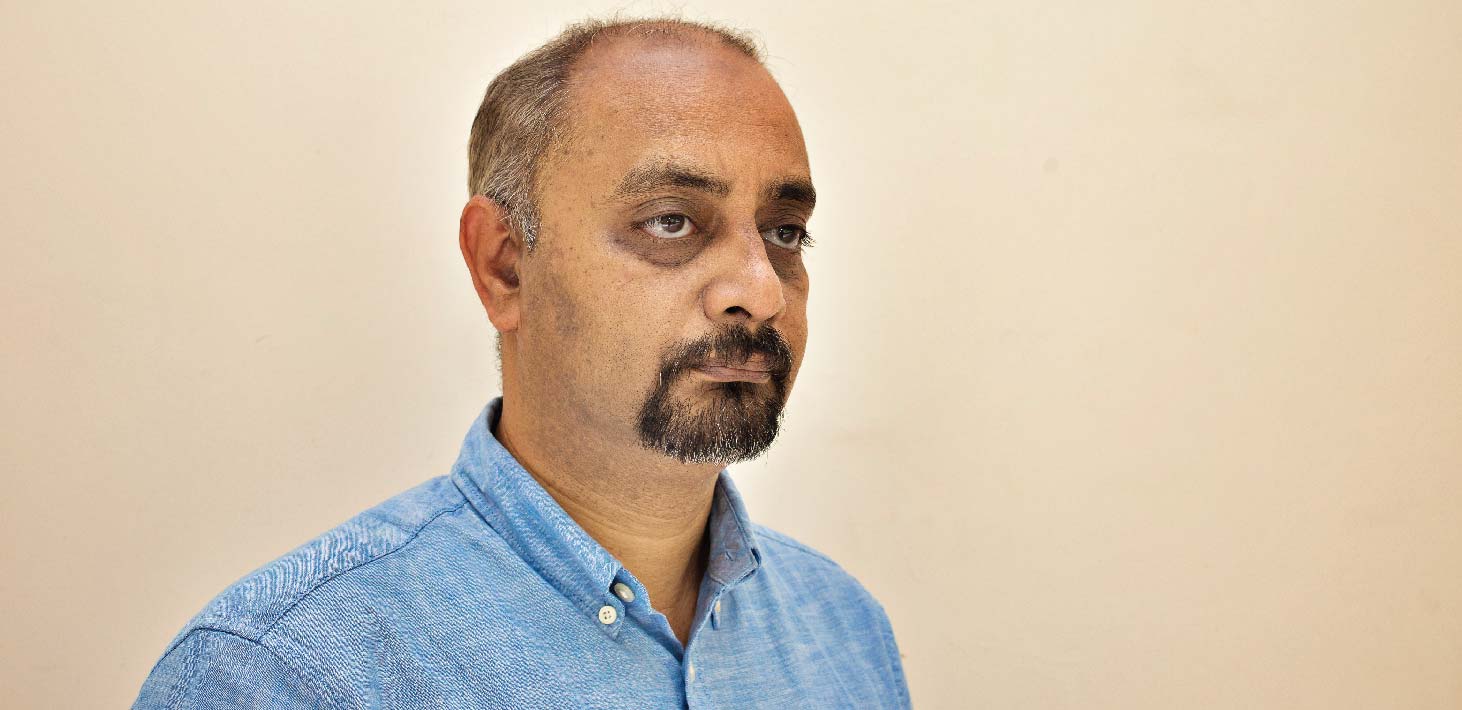

“Food safety is a shared responsibility between the Government, the industry and consumers. The civil society plays a key role and FAO works with the Bangladesh Food Safety Network – made up of 5 NGOs – to spread awareness through campaigns in schools in many districts and upazilas.”
Sridhar Dharmapuri is the team leader of the FAO Food Safety Programme in Bangladesh. A biochemist and MBA with wide international experience in the public and private sectors, he and his team work in partnership with the Government, civil society and the private sector to strengthen key building blocks of food safety in Bangladesh. These include supporting the National Food Safety Laboratory, sister laboratories and the national agencies involved in food inspection, standards and surveillance; promoting consumer awareness; and piloting safe and sustainable food production systems.
Could you briefly outline the food safety issues in Bangladesh?
In Bangladesh, inadequate food hygiene and sanitation in both urban and rural areas are key food safety issues. This leads to food contamination by accident or negligence. This is in addition to sub-optimal production and post harvest practices. It is well known that at least one-third of fresh fruits and vegetables are lost after harvest because of inadequate transport and storage facilities. Much of these can be overcome by spreading awareness and education about the importance of optimal use of fertilizers and chemicals, post-harvest practices, GAP, GHP and GMP. While food adulteration attracts the most press coverage, the importance of hygiene and good practices along the food chain from production to consumption should not be underestimated. The Government of Bangladesh has already shown its strong commitment to food safety by enacting the Bangladesh Food Safety Act, 2013 and constituting the Bangladesh Food Safety Authority in early 2015. The FAO is providing support to the Government in all core technical areas.
Are you working to assist companies/ farmers to produce quality farm products? If so, in what areas?
FAO works closely with concerned line Ministries/Agencies of the Government – Health and Family Welfare, Agriculture, Fisheries and Livestock, Food, Industries – to modernize practices from production to consumption and enhance food safety and quality. In agriculture, we are supporting the mango, tomato, potato and brinjal value chains. In fisheries, we are focusing on fin fish or whitefish as they are generally called. In livestock, our focus is on the poultry sector. Through these programmes, we also enhance the capacity of the Government to pass on these best practices to the private sector, train farmers and value chain actors and also prepare communication materials to disseminate these messages widely. Our team, with expertise from Bangladesh and abroad, has developed a unique 10 keys approach to train experts, key officials of Agriculture, Fisheries and Livestock as well as farmers and value chain actors in deploying produce safety measures from farm to retail. Through this programme we have delivered certified training in food safety measures to more than 300 officials, 1,500 farmers and 300 value chain actors (transporters, arat personnel, sellers) across the 3 sectors. With mobile technology becoming commonplace, we are using an open source IT platform on tablets to collect data on how well these recommended practices are being followed.
What has been the impact of this work?
The work in the value chains has demonstrated both business and safety benefits. Let’s take the example of eggplant cultivated in Jessore. Through our training and monitoring programme, we have encouraged the use of eco-friendly and less expensive inputs such as vermicompost instead of fertilizers and pheromone traps instead of pesticides. This reduced the input cost for the farmer by half. By following many of the prescribed good practices which efficiently control pests and diseases, brinjal has a much better appearance and quality and gets a higher price from the buyer. Not only that, the produce is also safer as agrochemical use is reduced.
Similarly our team worked with poultry farmers in Gazipur to improve fencing. This may sound unrelated to food safety but here’s how it works. By better fencing, the entry of outside animals or chickens or people into the farm is restricted. There is a lower risk of disease coming in from these agents and as a result the farmer spends much less on medicines for his birds. This reduces costs and the poultry meat is also free of chemicals.
Tell us about the street food programme that FAO is supporting.
Street food is a very important sector for Bangladesh as it provides the basic food and nutrition needs of a huge number of consumers including school going children. Therefore, a positive intervention in this sector will have a good effect on the future citizens of Bangladesh. We piloted the program in Khulna with strong support from the Khulna City Corporation. The KCC enlisted 500 vendors and trained them in Good Hygiene Practices (GHP). FAO provided street food carts with utensils and clean water jars to each vendor. The KCC team was then trained by FAO to visit and encourage vendors to maintain their level of good practices. The KCC then took a unique innovative step. They trained school children to monitor vendors near their school. This has become what we call a ‘win-win-win’. The vendors are attracting more customers because of the clean and hygienic appearance of the carts. They are also willing to pay more and that has increased the vendors’ incomes. The customers are happy because they are eating safe street food. Importantly, children are showing the way to vendors and to their parents on improving food safety. We have just initiated the safe street food vending initiative in Dhaka – a much bigger city than Khulna, a bigger challenge but with a lot of support from the two City Corporations.
What is being done to increase the awareness of food safety among the people?
Food safety is a shared responsibility between the Government, the industry and consumers. The civil society plays a key role and FAO works with the Bangladesh Food Safety Network – made up of 5 NGOs – to spread awareness through campaigns in schools in many districts and upazilas. They use traditional media like folk music and drama to do this and it has proven to very popular and effective. There are even songs on food safety now!
We have also reached millions of Bangladeshis through campaigns on television (BTV). Our focus is on spreading good practices as the key to food safety. Many of them are simple actions in the household, at school and at work that assure hygiene and cleanliness which lead to a healthy environment for cooking and consumption of food. This in turn reduces food-borne illness (especially diarrhea) and increases productivity. Such practices do not need detailed instructions and manuals. They are straightforward and easy to implement at home, school and the workplace and have enormous health benefits.
What is your view of the potential of the fruit and vegetable exports by Bangladesh?
Bangladesh has the advantages of having very fertile land, a wide selection of fruits and vegetables and low production costs. Therefore, the potential is huge. The shrimp sector made a good beginning a few years ago and now fruits and vegetables are beginning follow suit. It is important to realize, however, that success in international trade depends on sustaining consistency in quality and safety and ensuring timely supply in the face of internal challenges and global competition.
From the food safety point of view, what should be kept in mind by exporters?
All importing countries demand adherence to internationally accepted rules, standards and codes of post harvest and food safety. If practices along the food chain are not adequately controlled, then quality and safety is adversely affected and produce can be turned back from the border. For instance, there are general requirements. Poor hygiene practices by fruit handlers can cause microbes to multiply in the fruit. Similarly, a phytosanitary certificate is essential to ensure that produce is free of insects. Then there are specific requirements depending on the commodity. For instance, countries may have different standards for pesticide residues in the same commodity. Therefore, it becomes important for every exporter to carefully consider the general and specific requirements of the importing country and prepare the produce accordingly with relevant certificates. In Bangladesh, the Department of Fisheries has already set an excellent example by closely monitoring the shrimp supply chain and ensuring that exports adhere to strict EU and US standards. Other sectors can learn from their experience. We also work closely with the BSTI to adopt FAO-WHO Codex Alimentarius food standards as they are universally accepted and are recognized by the WTO.