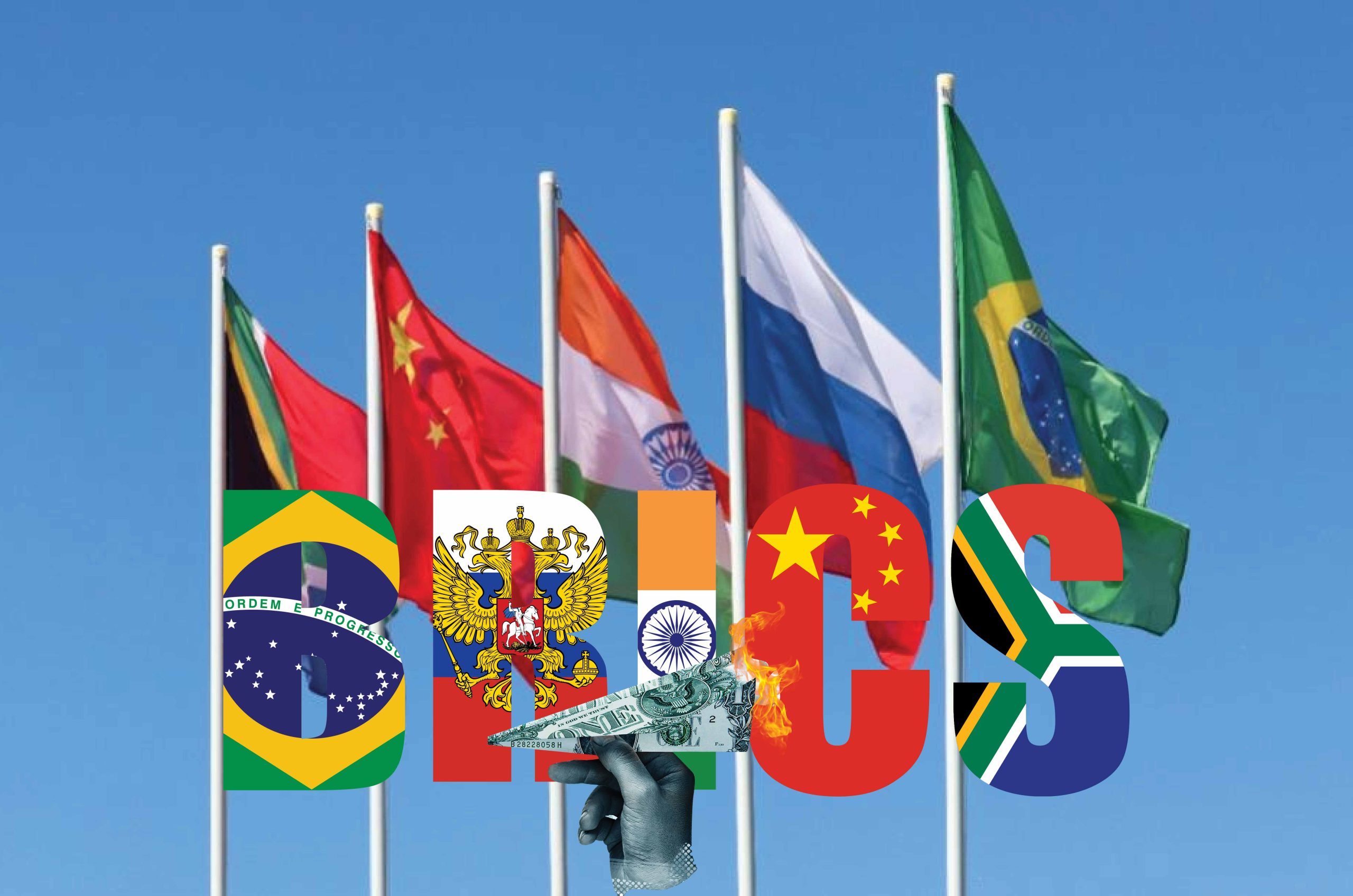

Could the proposed BRICS currency put an end to the dominance of the dollar?
The BRICS countries, Brazil, Russia, India, China, and South Africa, want to create a new reserve currency that is backed by a basket of each of their national currencies. The new currency, which is still being considered and developed, would enable these countries to assert their economic independence while competing with the US dollar, which currently controls about 90% of all currency trading and nearly 100% of all oil trading in the international financial system. The US trade war with China, and US sanctions against Russia and China are at the heart of this ongoing predicament. The US dollar could be greatly impacted if the BRICS countries created a new reserve currency, perhaps decreasing demand. This would have consequences for both the US economy and the world economy.
THE MOTIVATION BEHIND BRICS
The BRICS nations essentially want to lessen global reliance on the US currency and the euro while better serving their own economic interests. They intend to launch a “new global reserve currency,” according to Russian President Vladimir Putin, who made the announcement at the 14th BRICS Summit in mid-2022. He also stated that the BRICS nations are prepared to cooperate freely with all honest partners. Luiz Inacio Lula da Silva, the President of Brazil, recently voiced his support for a BRICS currency, asking, “Why can’t an institution like the BRICS bank have a currency to finance economic links between Brazil and China? Between Brazil and all the other BRICS countries? Who made the decision that the dollar will replace gold as the dominant (trade) currency?”
Responses have been mixed. Several countries including Turkey, Egypt, and Saudi Arabia, are thinking about joining the BRICS. However, some experts have viewed BRICS as a poor concept because it would bring together nations with very dissimilar economies. There are also worries that non-Chinese members would become more dependent on the yuan issued by Beijing.
Experts disagree on whether a new BRICS currency will have any effect on the US dollar and whether it will challenge the dollar’s hegemony. A new BRICS currency stabilising versus the dollar, however, may lessen the impact of US sanctions, causing the dollar’s value to drop.
POTENTIAL BENEFITS OF BRICS
The BRICS nations might gain from a new currency in a number of ways, including more effective cross-border trade and more financial inclusion. The currency has the potential to transform the world’s financial system by utilising blockchain technology, digital currencies, and smart contracts. The BRICS countries and other countries could benefit from increased trade and economic integration as a result of frictionless cross-border payments.
This has the potential to further strengthen economic cooperation among the BRICS nations and lessen the US’s influence on world affairs. Its successful implementation can also work as a seed of encouragement for the formation of partnerships between other nations to create regional currencies. Effectively, the BRICS could reduce the US dollar’s influence as a reserve currency worldwide and help reduce the danger of global volatility as a result of unilateral actions and a decline in reliance on the US dollar.
POTENTIAL IMPACT ON THE US DOLLAR
The US dollar has possessed unrivalled dominance as the main reserve currency for many years. Currently, the dollar is utilised in approximately 100% of oil trades, over 80% of all international trade, 90% of currency exchanges, and just under 60% of all central bank foreign exchange reserves. Additionally, practically all central banks throughout the world keep their reserves in dollars due to the currency’s reputation as the most extensively used for conversions, and its use as a benchmark in the foreign exchange market. The BRICS nations are considering the prospect of introducing a new currency as a result of recent global financial difficulties and aggressive US diplomatic policy.
Experts disagree on whether a new BRICS currency will have any effect on the US dollar and whether it will challenge the dollar’s hegemony. A new BRICS currency stabilising versus the dollar, however, may lessen the impact of US sanctions, causing the dollar’s value to drop. Additionally, it can result in a financial catastrophe that affects American families. The global search for alternatives to the US dollar may be accelerated by the introduction of this new currency. Examples include China and Russia using their own currencies for trade, as well as Malaysia, Kenya, and India, pushing for the de-dollarisation of their economies or entering into arrangements with other countries to conduct commerce using their own currencies or alternative benchmarks.
Although it’s uncertain whether a new BRICS currency will encourage the development of additional US dollar substitutes, there’s still a chance to challenge the dollar’s dominance as a reserve currency. Additionally, as nations continue to diversify their reserve holdings, developing currencies may compete more fiercely with the US dollar, potentially shifting the balance of power in international markets. In the end, how a new BRICS currency affects the US dollar will depend on how widely it is adopted, how stable it is considered to be, and how well it can challenge the dollar’s long-standing hegemony.
Several countries including Turkey, Egypt, and Saudi Arabia, are thinking about joining the BRICS. However, some experts have viewed BRICS as a poor concept because it would bring together nations with very dissimilar economies.
RUSSIA’S TAKE ON THE FORMATION OF THE BRICS
Russia has long tried to use BRICS to further the idea of de-dollarisation due to its geopolitical objectives. The idea of an alternative financial system free from Western dominance has been further bolstered by the near-elimination of Russia from the West-led, dollar-dominated financial system following the Russia-Ukraine war in early 2022. In late 2018, the Putin administration backed a de-dollarisation strategy to lessen Russia’s reliance on the US dollar by restricting international settlements and conducting business using alternative currencies. President Putin has emphasised the need to further de-dollarise and defend Russia’s economic independence numerous times.
Former Russian Deputy Foreign Minister Sergei Ryabkov also emphasised the country’s concerns over the use of the dollar for banking and international settlements, highlighting the necessity of reducing dependence on it. He also stated that the BRICS members were prepared to work together to advance changes in international financial policy and end the overpowering dominance of a select few reserve currencies.
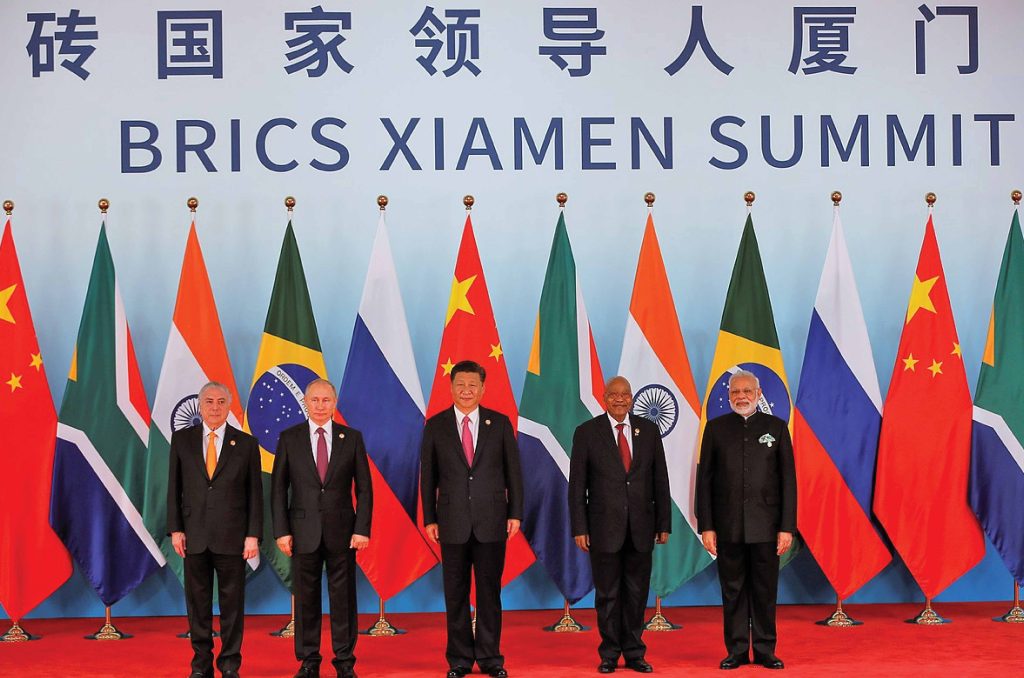
IMPACT ON THE REST OF THE WORLD
The North American economy and the investors that operate within it might be significantly impacted by a hypothetical transition toward a new BRICS currency. Sectors and industries that could be most affected are gas and oil, finance and banking, the commodities market, and technology for trade and tourism.
The BRICS countries have shown greater collaboration and want to overhaul the dollar-based financial system. To protect their interests resulting from their geopolitical rivalry with the US and in light of the possibility of future sanctions against them, Russia and China are driving the de-dollarisation movement within the BRICS. India, Brazil, and South Africa have backed BRICS remarks that the global financial system should be changed and that there should be greater chances to encourage the use of national currencies in international trade. To reduce their reliance on the dollar and increase their financial independence, all of the BRICS nations have taken action.
EXPERT OPINIONS
Former White House economist Joseph Sullivan has cautioned that the dominance of the U.S. dollar would be threatened by a BRICS currency. He explained that if member countries only used the BRICS shared currency for international trade, “they would remove an obstacle that now thwarts their efforts to escape dollar hegemony.” Sullivan served as a special counsellor and staff economist at the White House Council of Economic Advisers during the Trump Administration. At the Lindsey Group, a business consultancy firm, he is currently a senior advisor. According to Sullivan, it is “realistic to imagine the BRICS using only the BRICS for trade.” He continued, “A BRICS currency union would likely be able to produce a wider range of goods than any existing monetary union, because - unlike any currency union before it - its members would not be united by shared territorial borders.”
The main goal of creating a basket currency for the BRICS countries is to challenge US dollar hegemony and expand their zone of influence and currency inside that region. The desire of all BRICS nations to transfer foreign reserves in order to expand this new area of influence is still unknown. All of the BRICS countries have a common interest in de-dollarisation as a method to diversify their economies and lower the risk of external shocks and currency shocks brought on by the US dollar. Although the BRICS member states seek to protect their financial interests globally by creating a reserve currency, their excessive reliance on the US dollar presents difficulties that could delay the realization of this goal.