Smart Bangladesh’s integration of technology, inclusive policies, and social protection initiatives has the potential to make remarkable progress towards poverty eradication and creating a prosperous future for all.
Since their announcement in 2015, the United Nations’ Goals for Sustainable Development (SDGs) have emerged as a dominant force shaping the global development narrative. Bangladesh has garnered acclaim for its remarkable achievements towards these goals, as evidenced by our Honourable Prime Minister Sheikh Hasina receiving the prestigious UN SDG Progress Award in 2021. In late 2022, building upon Bangladesh’s remarkable economic journey, the government unveiled a vision for the next phase of our nation’s development, Smart Bangladesh. The vision for Smart Bangladesh can serve as a catalyst for achieving the SDGs, particularly in the realisation of SDG 1. It underscores the interconnectedness between Smart Bangladesh and the ambitious pursuit of poverty eradication.
Integrating Smart Technologies and Smart Government
Smart Bangladesh, with its foundation built upon four pillars - Smart Citizens, Government, Technology, and Society - holds great potential to drive progress towards Sustainable Development Goal 1 (SDG 1) of eradicating poverty. As we explore the multifaceted approach of Smart Bangladesh, it becomes evident that integrating smart technologies and smart government can play a pivotal role in achieving this critical goal, particularly by leveraging the government’s comprehensive social protection programs. Social protection encompasses a range of support measures that the government has diligently put in place to ensure economic security for its citizens. These initiatives include direct assistance programs like the Widow’s Allowance, capacity-building initiatives such as the Skills for Employment Investment Program (SEIP), food and nutritional security programs like Open Market Sales, disaster relief efforts, and programs focused on building resilience to future shocks.
The government can enhance their effectiveness and reach by infusing smart technologies into these social protection programs. Smart technologies can leverage digital platforms, data analytics, and automation to streamline the delivery of these initiatives, ensuring more efficient targeting and greater inclusivity. For instance, advanced data analytics can help identify and prioritise the most vulnerable populations needing assistance, enabling more targeted and timely interventions. Moreover, integrating technology can facilitate the transparent and efficient disbursement of benefits, reducing leakages and ensuring that support reaches those requiring it.
Additionally, Smart Government initiatives can play a complementary role in realising SDG 1. By digitising administrative processes and enabling citizen-centric services, the government can enhance the efficiency and accessibility of social protection programs. This digital transformation can minimise bureaucratic hurdles, reduce corruption, and empower citizens to access support easily, fostering greater transparency and accountability. The synergy between smart technologies and smart government within the context of social protection programs holds immense potential to accelerate progress towards SDG 1 in Smart Bangladesh. By harnessing the transformative power of technology and implementing forward-thinking administrative reforms, the government can optimise resource allocation, improve service delivery, and create an enabling environment for poverty eradication. Through a collaborative effort between the government, citizens, and various stakeholders, the vision of a prosperous and inclusive Bangladesh can be realised, ensuring that no one is left behind on the journey towards sustainable development.
Leveraging AI to Accelerate Poverty Reduction
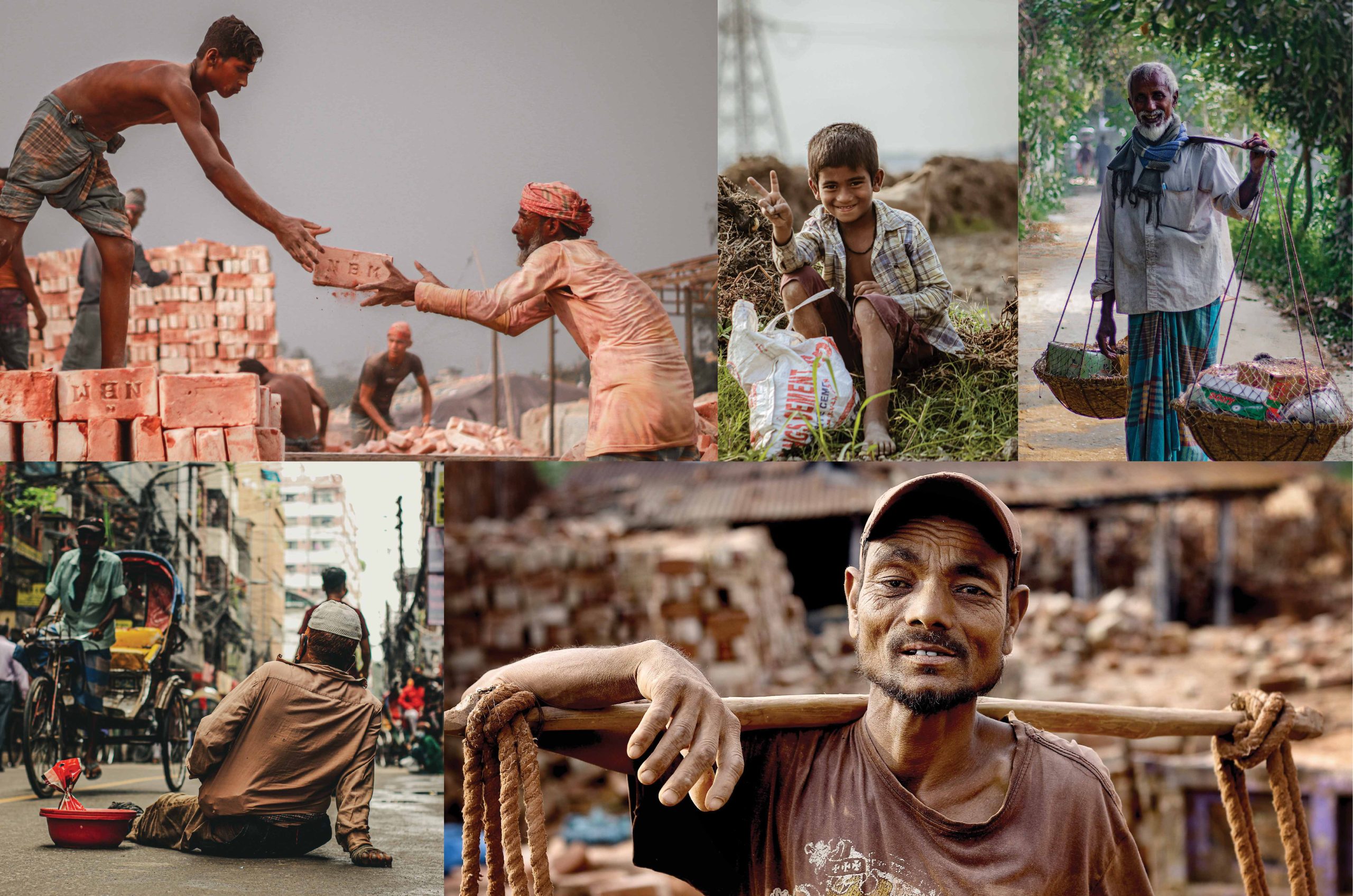
Reducing poverty and extreme poverty rates has remained a critical national priority for Bangladesh. Encouragingly, between 2016 and 2022, the country witnessed a decline in poverty rates from 24.3% to 18.7% and extreme poverty rates from 12.9% to 5.6%. However, the transformative potential of Smart Bangladesh holds the key to progress further. Beyond the noticeable efficiency gains, this visionary program can be further enhanced by harnessing the power of artificial intelligence (AI) to augment assistance efforts. Policymakers can use AI and large datasets to create predictive models that reveal human behaviour and economic shocks. This ability is crucial when designing programs for specific situations or vulnerable groups. AI algorithms can simulate the response to different forms of assistance or harsh living conditions, helping policymakers create more nuanced and effective programs. AI can help policymakers improve social protection by predicting the impact of an economic event or risk on specific assistance programs for individuals with particular traits.
AI in social protection boosts human ingenuity and offers a chance to help people experiencing poverty. Technology and policymakers’ expertise can empower the most vulnerable, promoting inclusive development and reducing inequality. Smart Bangladesh’s use of AI to reduce poverty could transform social protection in the country. Technology and human-centric policies help the program allocate resources and reach the most needy. As we begin this transformative journey, we must acknowledge the role of every stakeholder in building a prosperous and equitable Bangladesh. AI and collaboration between policymakers, experts, and the public can create innovative solutions and sustainable change. Together, we can end poverty and enable all citizens to thrive and advance the nation. AI-powered Smart Bangladesh could change poverty reduction. Recognising technology’s transformative power and supporting AI for social good can help Bangladesh and the world achieve a brighter, more inclusive future.
By digitising administrative processes and enabling citizen-centric services, the government can enhance the efficiency and accessibility of social protection programs.
Making Social Protection Systems More Efficient
Economists have noted that the current social protection programmes could be more efficient and effective with better targeting and implementation mechanisms. The National Social Security Strategy acknowledged that an integrated Management Information System would be a crucial lynchpin for implementing this vision. Cues can be taken from Indonesia’s Unified DataBase (UDB) and India’s Aadhar programmes. The UDB has onboarded 350 local governments to retrieve information on potential beneficiaries. However, it uses National ID cards to register potential recipients of programmes. It is challenging to administer for countries with larger rural populations, as some target groups may need access to the requisite documentation. India’s Aadhar programme finds an eloquent solution to the problem by pairing biometric identification, such as fingerprints and iris scans, with a unique identifier. This is where Smart Government and smart technology can play a critical role. Leveraging AI and smart technologies would massively retrieve and manage large swathes of data on rural populations.
Catalysing Mass Adoption of Technology
However, equally crucial to eradicating poverty is the demand side. Smart Citizens, in particular, should be identified as the critical hinge for eradicating poverty going forward. Acclimatising citizens towards the effective use of technology will allow the government to provide better services and serve as a crucial mechanism for empowering and uplifting the impoverished population. This has already been seen through fintech services in rural Bangladesh, yet, that is merely scratching the surface. A smarter labour force, equipped with the capacity to leverage technologies successfully, will eventually be able to lift themselves out of poverty rather than relying on government protections. At the same time, they will also be empowered to become job creators rather than job seekers. It is also pertinent to note that smart citizens should be built in every sector; for example, primary sector workers can be upskilled to leverage frontier technologies for precision agriculture. As Smart Bangladesh paves the way for an inclusive and prosperous nation, the synergy between technology and social protection becomes paramount. By harnessing AI’s potential and fostering collaborative efforts, we can empower the most vulnerable, reduce poverty, and shape a future where every citizen thrives. Together, we can build a Smart Bangladesh that leaves no one behind.
The author is a research associate at the Research and Policy Integration for Development (RAPID) and Joint Convenor at the Colonel Shawkat Ali Foundation. He can be reached at [email protected]