You see, entrepreneurs like Bill Gates or Professor Yunus did not establish themselves in one day. By the dint of their hard work and perseverance, they have built their individual empires.
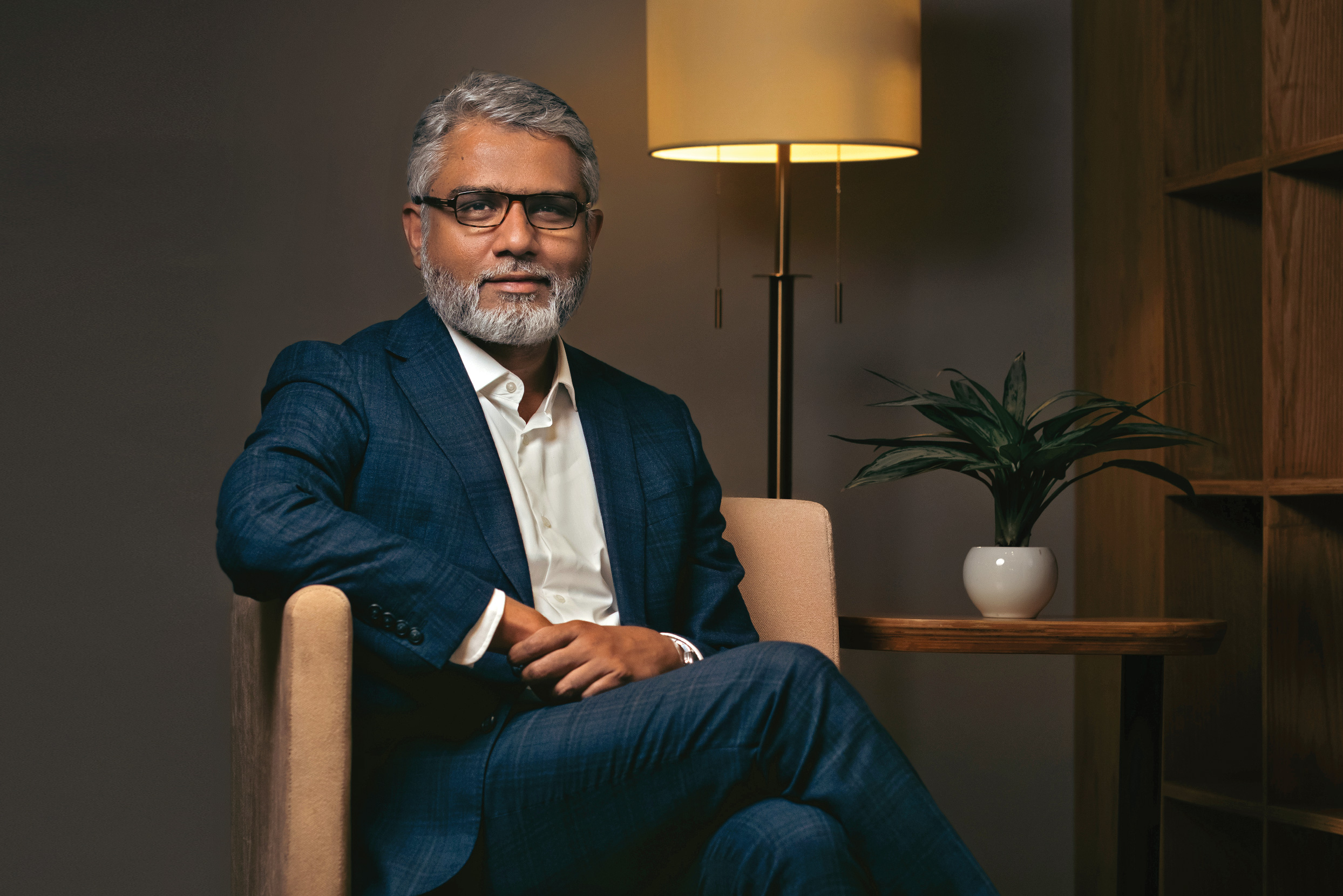
Md. Asadul Islam is at the helm as the Managing Director of ASROTEX Group. ASROTEX is a vertically integrated knitwear solution provider and has manufacturing units in Gazipur and Narayanganj. The group started its journey in 1995 and now has 7 units, 175 productions lines and a workforce with 14000 people. Its exports amount to around $140 million worth of knit apparels across the world with a product basket encompassing all premium quality products for all market segments. It is an ISO certified company where the entire value chain is compatible. ASROTEX Group aspires to become a $500 million company by 2021. In line with the vision, garments will contribute $400 million, and $100 million will be from other components such as Agro and FMCG.
Tell us about how you began your business.
Being born in an extended family I enjoyed a great childhood. However, growing up in the 70s introduced me to the ugly face of poverty among the people in my surroundings. During that time, Bangladesh was a new nation mostly dependent on aid. This gave me an early impetus to do something for my fellow countrymen. So after completion of my Masters in Economics from Dhaka University, I engaged myself in building my business. It was the early 90s and the apparel industry was in its teething stage. I have had my ups and downs but I didn’t allow my mistakes to pull me back. Today I can proudly say that around 15000 families are dependent on the earning from our business, and that gives me a great sense of pride.
You are a successful businessman, driven by ethical business practices. Where did you get it?
Like many other fellow businessmen, I had a humble beginning. Starting as a petty supplier, I have brought my group to this position over a span of two decades. As it grew, we ventured into the real estate, FMCG and energy sectors. No matter what our business was, we always paid full attention to the compliance issues. We learned the business practices from a practical point of view and implemented the standard operating procedures on our own. For example, we came up with our consumption procurement ordering process, which is less time consuming. I am grateful to our IT department for that. The zeal to innovate and be compliant has to be embedded in the DNA of one’s company from the very beginning. That’s what pushes us forward.
What are your suggestions to encourage other people to engage in entrepreneurship?
You see, entrepreneurs like Bill Gates or Professor Yunus did not establish themselves in one day. By the dint of their hard work and perseverance, they have built their individual empires. I am hopeful about the youth of our country who are innovative and industrious. Some, however, lack proper funding and guidance. From the government’s side, creating a favorable ecosystem for startups is very much needed.
On the other hand, businesses should also understand what the government expects from them. If we do business, a lot more taxes will be deposited in the national exchequer. It is also found that in the time of crisis, in Malaysia and Thailand, governments came to help businesses. Even during the recession, the Australian government began to support people by providing funds to raise their purchasing power. For the economy to move forward, a concerted effort will be needed.
What are the challenges in garments sectors? Recently, Transparency International Bangladesh (TIB) has raised some issues of corruption by the private sector.
You must understand that the apparel industry here is a part of a massive global supply chain. There are multiple scopes for anomalies. If there is a system, there is also a provision for a counter system. Every company has their scope and profit target. Definitely there are some loopholes but isn’t that prevalent in every other sector?
The apparel industry is fast changing, and heavily dependent on fashion trends. Productions depend on what kind of buyers we are catering to: there are basic attires for brands like Wal-Mart as well as high-end products for Zara or H&M. Another trend is becoming popular: online sales. One thing requires reminding that July-September is a lean period for Bangladesh in doing business with the USA and European market where we have taken a different strategy to penetrate in South Africa and Australian market and this period there is summer. As RMG is a labor-intensive industry and Bangladesh has a vast working force, we expect to employ more people in days to come.
In addition, to rev up the production processes, adoption of the latest technology will help us remain on par with the changing horizon of the RMG sector. We are facing price pressures, which is critical to note here. Besides, there are also environmental challenges and the Bangladesh bank is also leveraging funds for green industries in single digit arrangements.
There is still a massive shortfall in case of skilled manpower in the apparel industry. What’s your take on that?
Skill development is one area where we still have a long way to go. As the Bangladesh apparel industry goes up the value chain, we are receiving work orders to produce more and more world-class products. Gone are the days when we were just making t-shirts or vests. Now we make dress shirts or designer lingerie. To perform better and in a sustainable way, we need to understand the importance of skill development of our designers, managers and workers. We need to have marketing people who understand the international trends better since market dynamics vary around the world. What works for Chinese buyers may not work for their Western counterparts. Even our local fashion market is going through changes to cope with which, we have to have market analysts and trend pundits. All of these will require a workforce that is trained in proper schools in respective fields and have experiences. The industry is therefore looking forward to employing more of such people who have honed their skills and can add new value. Business, as usual, will not do anymore.
What is the rewarding side of being an entrepreneur and what is your next business plan?
I firmly believe that an entrepreneur is a maker of his own fate. This is the most rewarding factor. Throughout my life, I have learned it the hard way from practical experiences. Nevertheless, the hardship of being an entrepreneur has consistently pushed me to try harder.
My success in the apparel industry has encouraged me to venture into a new project, where I am trying to create accommodation for our employees and staff, which is a big problem for many of them. At the same time, I would like to expand my business in the future to ensure better brand visibility of my company.