
Deviations from the stable point have always been a matter of keen interest for economic connoisseurs. Of the plethora of economic models constructed, equipped with its own arsenal of assumptions and restrictions – almost all inevitably experience a point of time (considering a dynamic model) where the deviation occurs from the home point. Deviations such as these, generally occur at randomized periods of time, owing to various underlying factors. However, in the case of seasonal poverty, deviation occurs in specific periods of time and only for a set time period. Seasonal poverty – known as the ‘hungry seasons’ manifesting also as seasonal famine still manifests in Bangladesh and is infamously known as ‘Monga’.
According to (OECD, 2012), “Absolute poverty is a condition characterized by severe deprivation of basic human needs”. Provisions of basic services such as safe drinking water, healthcare services, basic sanitation means, education etc. being inaccessible by the population in the lower middle income group. Perspectives on poverty can be expressed in various other methods resulting in it being measurable; the following are such examples:
– Income Poverty: income lower than the average level, 50%-60% below the median. According to The World Bank “absolute” poverty level, 2$/day
– Basic Needs Approach: coined by the International Labour Organization (ILO), the presence of scarcity in terms of resources and opportunities to satisfy basic human needs can be termed as poverty
– Capabilities Approach: Poverty and deprivation of basic needs is the missing link resulting in a lifestyle which is unsatisfactory. The lack of skills to live one’s life to the fullest. Coined by Amartya Sen
As per the World Bank report (1), the incidence of poverty is approximately 31.5% (Upper Poverty Line) and 17.6% (Lower Poverty Line). The UPL corresponds to the moderate poor households whose food expenditure equates food poverty levels and LPL represents the extreme poor whose total expenditure equates food poverty levels (2); as per the Cost of Basic Needs method.
The view towards poverty with time has grown to show a regularity or a more seasonal tendency i.e. seasonal poverty. This problem is seen in the division of Rangpur which roughly hosts 42.3% of its population facing poverty (3). Moreover, the seasonal famine (Monga) is experienced where households have to undertake the brutality of extreme poverty for that period of time. It is the particular period between planting and harvest in the agrarian areas. Opportunities for work fall significantly along with a rise in the price levels of rice.
Numerous studies conducted by the World Bank and that of the Chronic Poverty Centre, have shown how and why people fall into this abyss due to some simple life events that for this income group turn horrific in nature, owing to the inherent weaknesses in their income and socio-economic stability. The most minor shocks become difficult for them to weather and another factor contributing to this is the lack of access to social security measures. The report by the Chronic Poverty Centre (4) on Bangladesh, sheds some light on this issue. As per the report, the presence of unstable income levels of a household can lead to various shocks. Such effects last decades, if not the entire lifetime. More so, it is often seen to be passed on to the subsequent generation of the household. “Selling productive assets (cattle, tools, land), borrowing money at exorbitant interest rates, taking children out of school etc”( OECD, 2012). More so because of non-existent safety nets and risk management schemes. Hence, the future of the children come into question.
Reducing and eradicating poverty levels are important development goals globally and nationally. However, anomalistic events such as seasonal poverty require a move away from generic perspectives and lead to re-thinking the aspects of poverty, mitigation schemes and policies. The reduction or elimination of this phenomenon is only possible through some dynamic policies or movements. One such strive to mitigate the effects of monga in Bangladesh has been undertaken by Ahmed Mushfiq Mobarak, Professor of Development Economics at Yale University. He also leads the Bangladesh Research Program for the International Growth Centre (IGC) at London School of Economics (LSE).
He initiated a Randomized Control Trial (5) (RCT) approach to understand and address this poverty issue plaguing the country. The experiments were initially conducted in 100 villages in two districts (Kurigram and Lalmonirhat) of ‘Monga’ prone Rangpur region of north-western Bangladesh. The Rangpur region is home to 2.88 million (6) people of which 40% of the region’s population lives below the poverty line. In addition to the higher level of poverty compared to the rest of Bangladesh, the Rangpur region experiences more pronounced seasonality in income and consumption, with incomes decreasing by 50-60% and total household expenditures dropping by 10-25% during the post-planting and pre-harvest season (September-November) for the main Aman rice crop (Khandker & Mahmud, 2012). According to their data, the price of rice spikes causing consumption to fall drastically by 22%. The lack of jobs and the prices hike combined, create a situation of recurring famine. In addition to housing the lowest agricultural wages in the country, Rangpur inadvertently forces its people to lower consumption below sustenance.
In response to this crisis, the concept of incentivized seasonal migration sprouted temporary movement to urban areas for better job perspectives. A cash or credit incentive ($8.50) was implemented which usually covered the round trip during the 2008 ‘Monga’ season. This induced migration had substantial impact in the overall livelihood of the households with various spill-over effects too. The induced migration resulted in a significant increase of 30-35% (7) in food and non-food expenditures. Moreover, overall calorie intake which was significantly low, rose by 500-700 calories per person per day. Interestingly, households in the affected areas continued to migrate in the following seasons even after the removal of the incentive system. “The migration rate is 10 percentage points higher in treatment areas a year later” (Mobarak, Chowdhury, & Bryan, 2013). In addition, the price levels in the villages increased as a result of shortage of workers which subsequently did increase the costs of production for the employers.
The structure of the overall project and its key findings are supported by the data collected through the RCT. According to (Mobarak, Chowdhury, & Bryan, 2013), “households that are close to subsistence, start with lower migration rates, but are the most responsive to our intervention”. On the other hand, the migrants have been seen to develop good relations with their temporary employer, thus resulting in many migrating the subsequent period as a result of the job availability. Many migrants also have been seen to have pre-existing network connections at the migrating destinations which result in a more sound and safe choice of destination.
These movements by the abovementioned migrants are commendable as they have extensively improved lives of affected households in acute regions. There is a collective need for numerous similar studies and interventions to eradicate and alleviate people from such states. This population, if provided with timely and necessary aid and income options can be transformed into potential assets in the coming years and hence need to be utilized. In the legislative side, policies deterring poverty alleviation through deliberate policy choices that focus on indirect, if not direct increases in inequality needs to lessen. A certain neoliberal approach, ‘Economic Growth First’, adopting the trickle down approach of growth and development is a basic example of the costly ramifications of our decisions and how negatively it can effect children and other members of the community. As the famous saying goes, ‘Poverty is not a choice of poor people, but their poverty can be a choice of the rich in power’.
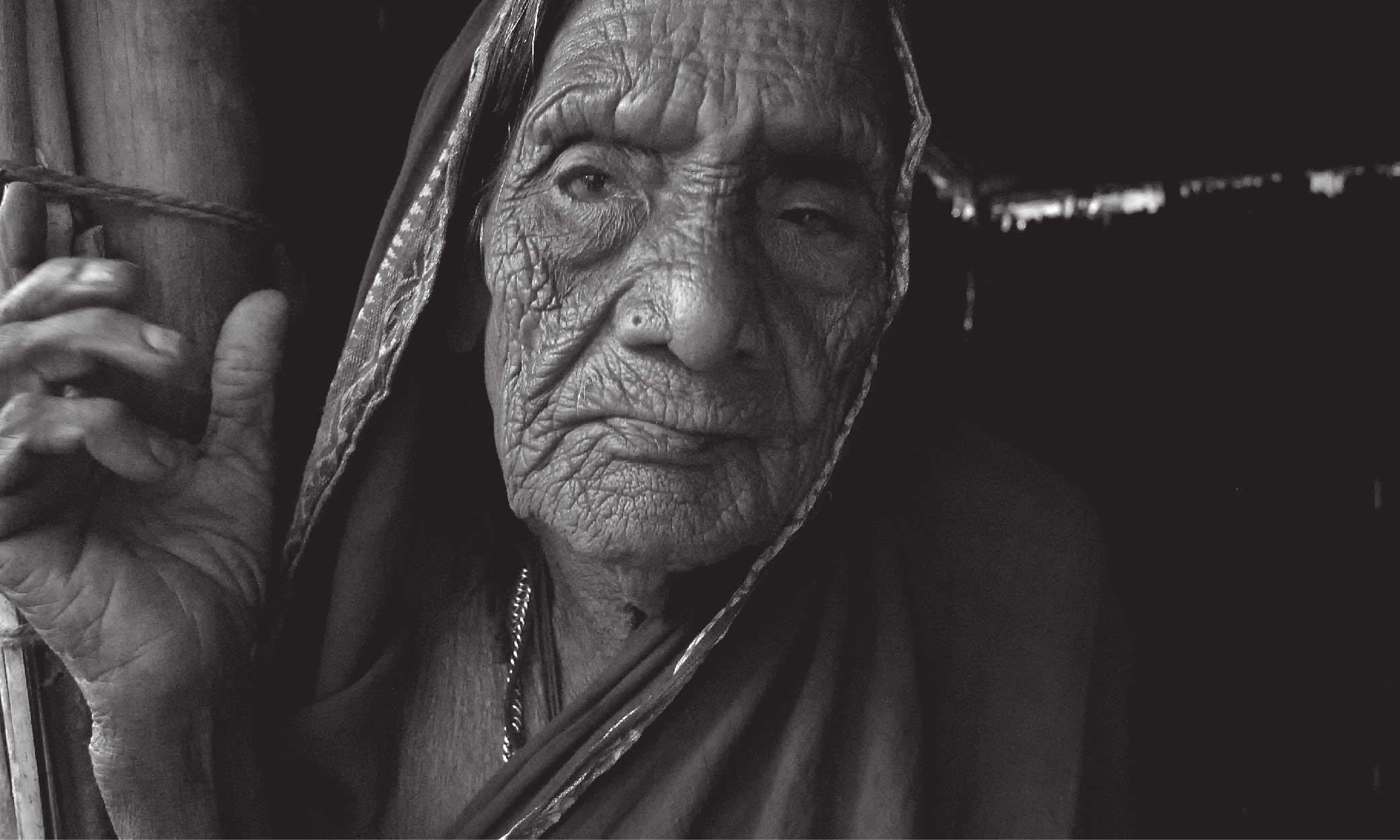
Photograph by Din M Shibly
1. Poverty Maps of Bangladesh 2010: Key Findings
2. Report of the Household Income & Expenditure Survey/HIES 2010. BBS GoB.
3. Poverty Maps of Bangladesh 2010: Key Findings
4. Chronic Poverty Report 2014-2015: The Road to Zero Extreme Poverty. Chronic Poverty Advisory Network. CPRC. ODI
5. A study design that randomly assigns participants into an experimental group or a control group and then compare the effects on the respective groups.
6. Population distribution with ranks, 1991, 2001 and 2011. Population Distribution and Internal Migration in Bangladesh. November 2015. BBS GoB.
7. Econometrica, Vol. 82, No. 5 (September, 2014), 1671–1748
References:
OECD. (2012, January 10). OECD, 2010 A Family Affair: Intergenerational Social Mobility across OECD Countries. Retrieved from https://www.thl.fi/documents/ 189940/263914/WHAT+POVERTY+IS.pdf/41b2ce48-7309-4d9d-9327-21fb9c 571517 Mobarak, A. M., Chowdhury, S., & Bryan, G. (2013). Escaping Famine through Seasonal Migration. Yale School of Management .