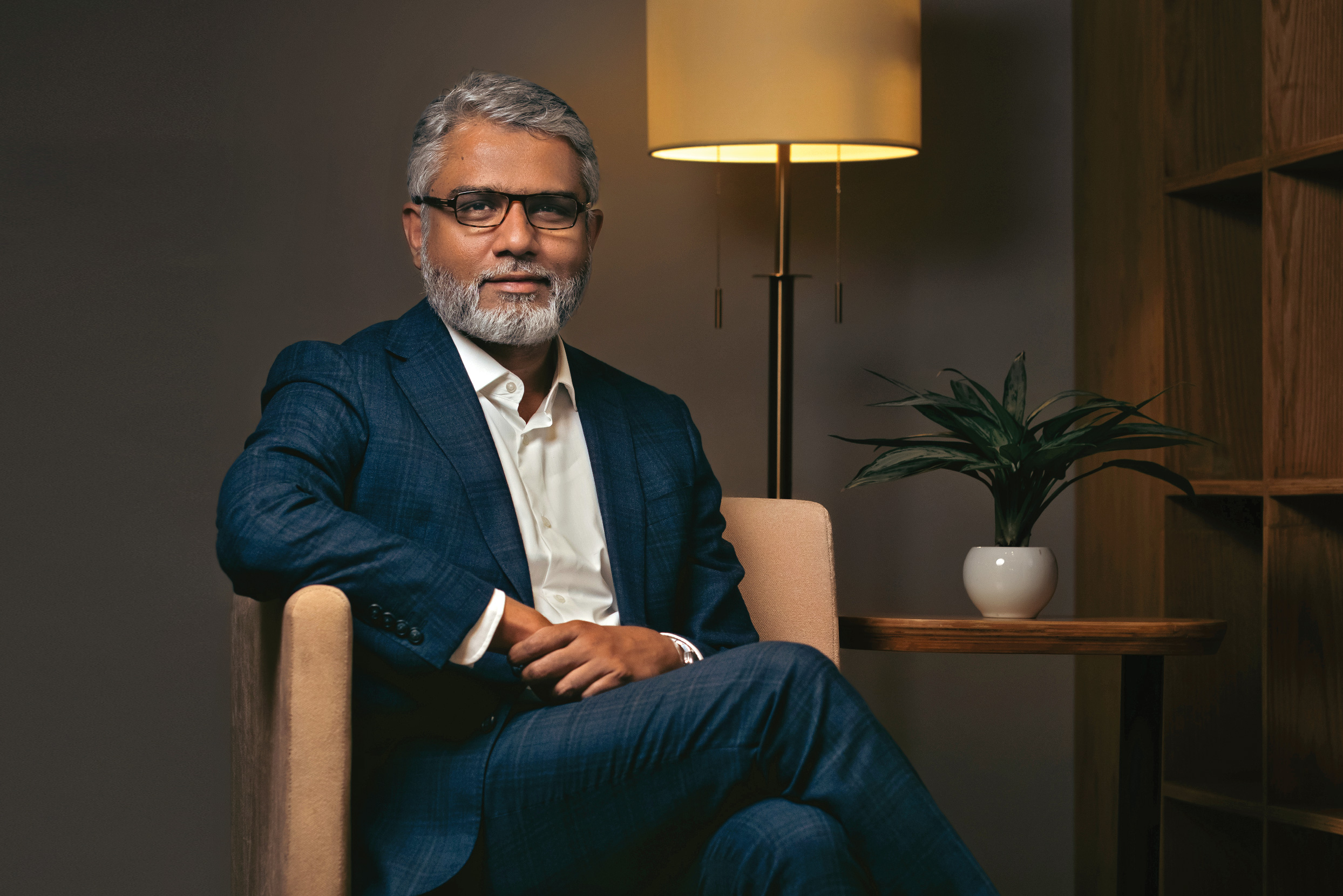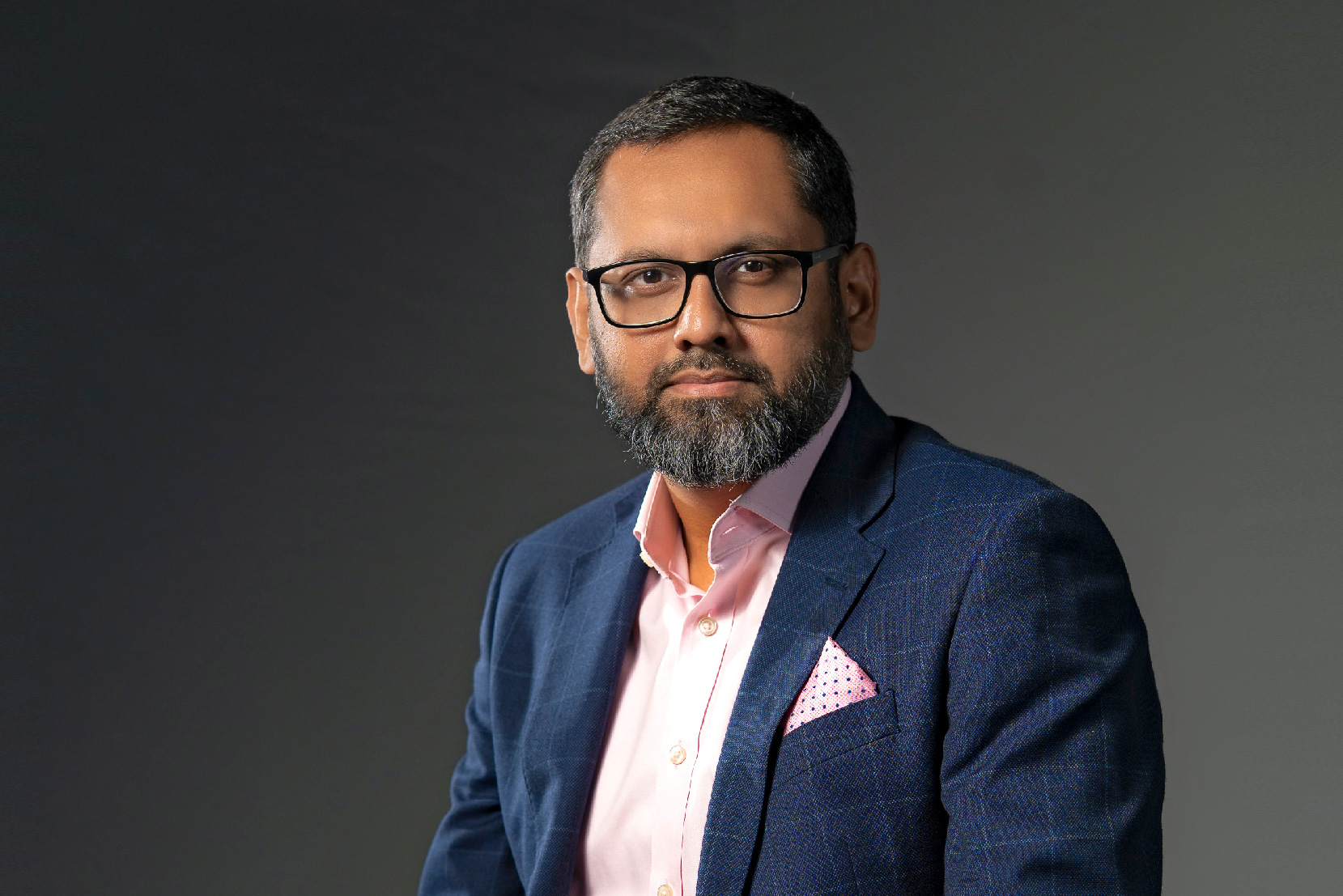
Mominul Islam
Managing Director and CEO
IPDC Finance Limited
Mominul Islam is the Managing Director & CEO of IPDC Finance Limited. Prior to that, he was the Deputy Managing Director of the Company from 2008 to 2011. He had joined IPDC in 2006 as Head of Operations. During his tenure at IPDC, he has played pivotal role in reshaping the organization through strategic planning, organizational restructuring and automation, process re-engineering, control and compliance, and service quality, and so on.
You’ve spent a portion of your career in commercial banks. What changes did you have to deal with when you moved from a Bank to an NBFI?
In spite of certain similarities, the Nonbank Financial Institutes (NBFIs) fundamentally differ from commercial banks in several aspects. The NBFIs in Bangladesh are largely comprised of development financial institutions, leasing enterprises, investment companies, merchant banks, etc. The financing methods of the NBFIs are long term in nature. The inefficiency of banks in the case of long-term loan management has already led to an enormous volume of outstanding loans in our country. At this instance, in order to ensure the flow of term loans and to meet the credit gap, NBFIs have enormous importance in the economy of our country. From my experience in the context of Bangladesh, I have noticed that commercial banking is yet to reach certain corners in our country to help people with their banking needs. Being the first NBFI of Bangladesh, IPDC Finance Limited had the opportunity to reach consumers in remote parts of the country with its financial solutions. NBFIs offer a wide range of loan products at highly competitive rates. We simplify the whole process of taking a loan, making it easier for customers to approach us rather than approaching a bank. It is also difficult for the commercial banks to conduct its operations in an innovative business model and expertise on maintaining the relationship with its customers. Over the years IPDC has developed a variety of specialized tools for assisting and counseling our customers. We are highly approachable and also offer personal attention to every customer regarding their financial needs.
What style of leadership do you incorporate in your work throughout IPDC Finance Limited?
I have obtained the Six Sigma Black Belt training and worked on several Six Sigma projects. From my time there, I realized that organizations need to determine an appropriate sigma level for each of their most important processes and strive to achieve them. As a result of this goal, it is obligatory for the management of the organization to prioritize areas of improvement. The term “Six Sigma” comes from statistics and is used in statistical quality control, which evaluates process capability. As the MD and CEO of IPDC Finance Limited, I have always tried to incorporate Six Sigma levels in my style of work. This approach helped us reach some extraordinary feats in our organizational development in the recent times. IPDC has emerged as the fastest growing financial institution of the country in 2016. In the last one year, the company’s asset and deposit portfolios have both grown by more than threefold. The loan portfolio grew from Tk 6,415 million in 2015 to Tk 19,480 million in 2016 and the deposit portfolio grew from Tk 4,745 million to Tk 17,179 million in 2016. The company’s bottom line has witnessed a positive growth of 26% during the year 2016 which has nearly tripled in the last 5 years. Our collective dauntless and decisive effort towards our work has brought about such exceptional growth in the country. The impact of our effort will spur velvet in the years to come.
“NBFIs offer a wide range of loan products at highly competitive rates. We simplify the whole process of taking a loan, making it easier for customers to approach us rather than approaching a bank.”
What are the challenges of operating in the financial industry in our country?
NBFIs represent one of the most important parts of a financial system but not without a few challenges of operating in the financial industry in our country. Asset-liability mismatches, investment in high-risk portfolios, competition from the likes of other NBFIs and banks are some of the challenges. The asset-liability mismatch is a major cause for concern for NBFIs. The demand for funds to meet the growing lending requirements has increased. NBFIs now have to explore alternative ways of raising funds. Also, the cost of funds for NBFIs are higher than that of banks. Moreover, fierce competition among competitors may also force many NBFIs to reduce the margin of profitability in the business. Unless sufficient risk management competencies are established, the development forecasts of NBFIs would not only be stalled but it might also be misinterpreted.
What is the competitive scenario you’re facing in this industry? How are you steering IPDC through this?
With the launch of new NBFIs, the market share is spread over the competitors. Active participation of regular banks has further elevated the level of competition in the financial industry. Leasing was well-thought-out as a non-bank financing activity until recently as a lot of banks have shown interest in the leasing business and have started to penetrate the market.
IPDC Finance Limited has filled the void by supplying financial services to its customers which are not generally provided by the banking sector. In a background of changes in the financial industry, it is important to sustain our resolution and what we stand for. As the most passionate financial brand in the country we have always focused on diversified financial services for the youth, women and underserved areas of our country. Our company is planning to work on youth unemployment which is one of the major challenges at the moment in Bangladesh. By steering our focus on private sectors it will eventually create more sustainable prospects in the society. All these activities will help IPDC stay ahead of its competitors. In 2017 we have plans to open nine more branch offices across the country to bring 70% of the total population under our financial services. Apart from our own offices, we have started giving out home loan solutions from ten BRAC offices. To accelerate exponential growth and competitiveness, we are taking onboard key stakeholders and business entities to help provide added facilities to our wide range of clientele. Diversifying the product range is a strategic challenge for IPDC Finance Limited in order to become competitive in the rapidly growing market.
What is IPDC doing in terms of financial innovations for the people of our country?
Keeping in mind the socio-economic challenges and opportunities of Bangladesh in the next ten years, IPDC Finance Limited has revamped its operations and introduced the most innovative financial services for the people of this country. Affordable housing for all families, women empowerment, and employment creation has been the key strategic pillars for the company alongside the existing industrial finance. Innovative ideas have been put into places by forming partnerships with top steel and cement makers along with the leading NGOs in the country to provide affordable home loans to the lower middle-income families in the small cities and suburban areas where home loans were completely absent. IPDC’s team designed and initiated some of the most innovative financial product line-ups in the industry which features women empowerment as the true essence of financial freedom for any lady. Hence, apart from lucrative augmented features like free driving sessions and so, much-privileged loan and deposit interest rates are accommodated especially for women. Factoring finance for the SMEs has been introduced especially in the agricultural and agro-processing sector. There are also plans for new entrepreneurship development programs for the returned immigrant workers in collaboration with BRAC.
How are innovations such as Fintech changing the financial landscape in our economy?
Financial technology or Fintech in the financial industry is composed of techniques that practice new technology and innovations with obtainable resources in order to offer differentiated products and services in the financial marketplace. Financial technologically sound companies consist of both startups and established financial and technology companies trying to replace or enhance the usage of financial services of incumbent companies. According to reports, Bangladesh presently consists of about 800 IT and ITeS (Information Technology Enabled Service) companies with an estimated turnover of around $200 million. Amongst this, Mobile Finance Services (MFS) like bKash, SureCash and others remain the most successful ones. Reports suggest that about 32.2 million registered mobile banking accounts are at large, as of June 2016. Proper education, awareness, and trust in technology can induce more consumers to use Fintech solutions. With the help of solutions like these, cash transactions will be reduced in another five years and mobile money will grow as more and more people will start paying money for private and government services through MFS.
What was the best leadership advice you ever received?
My mentor and coworker, Rayhan Ul Ameen, COO, American Express in 2002 once told me “Do not wait for others to appreciate and acknowledge your good work. It is your sense of self accomplishment which should drive you to perform even better for your next generation.” His words till date, remains the best leadership advice for me.