“Denmark has increased their organic export by 200% since 2007. Even smaller nations, such as Bhutan have pledged to go organic by 2020. We must first take the initiative to increase our standards with the set benchmarks from the government.”
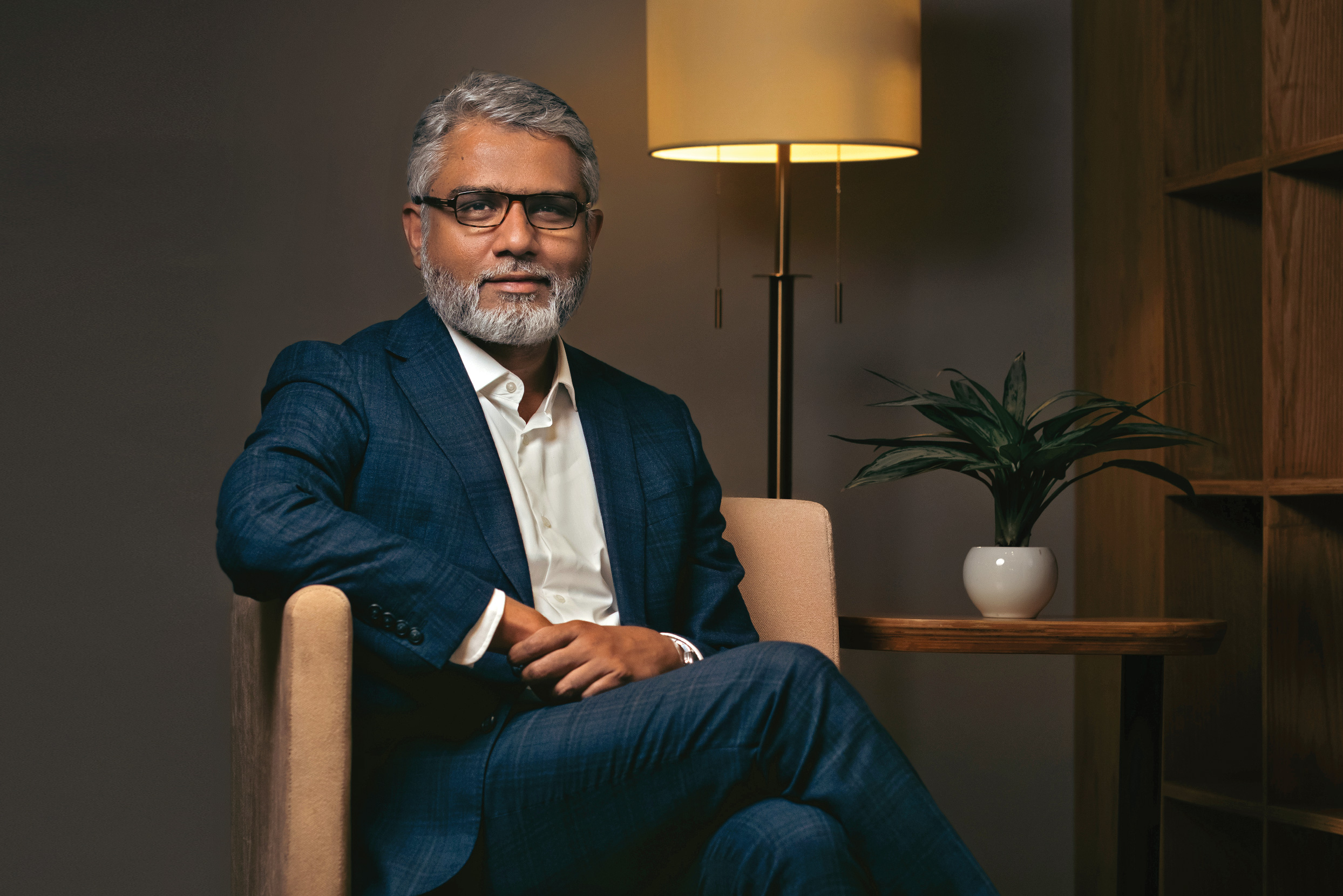
Mayeen Chowdhury is an Economist by profession and currently is the Managing Director of Khan Bahadur Group, one of the fastest growing modern conglomerates in the country. With an education from Primary to Masters Degree in the US and a professional background from JP Morgan and Bank of America he is quickly becoming the face of the agricultural industry in Bangladesh.
From the pristine sidewalks and immaculate building of JP Morgan Chase & Co. on Park Avenue to the rice fields of rural Bangladesh, Mayeen Uddin Chowdhury illustrates a scenario that would leave one more awestruck than one of the most prosperous neighbourhoods of the world. “We use a moisture gun to test read the rice patties. A farmer with no lines on his palms simply put his hands on the patty, stating the moisture content was 13. Upon putting my gun to the patty, it read the exact same figure.” ICE Business Times sits with Managing Director of Khan Bahadur Group to talk about their ventures in agriculture, the food industry and food safety and security.
With his extensive work and research of the agricultural field, Mayeen has come to conclude that the population must learn to first be aware of the idea of food safety and security. “Food safety and security are synergistic ideas. Food security is the idea that there is adequate food supply for the people of a given nation. This entails having sufficient food and storage in case of a natural disaster. The respective governing bodies that are procuring these supplies must make sure they do not compromise health which encompasses food safety.”
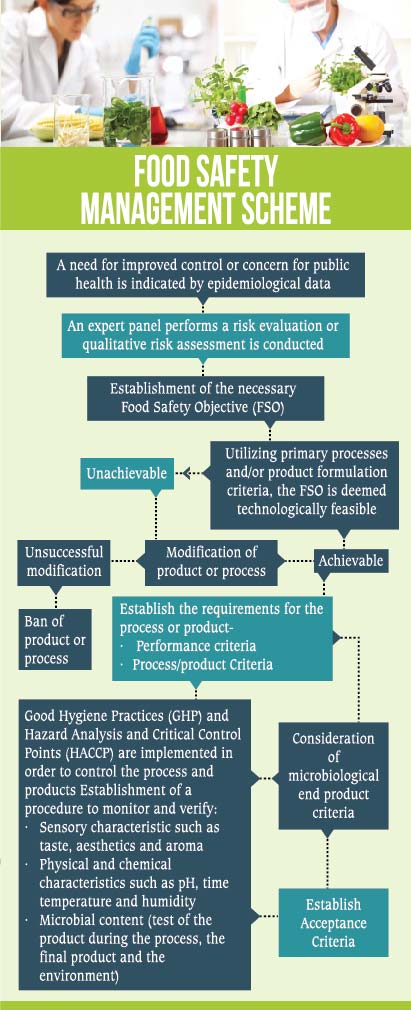
He further emphasized that Bangladesh need to improve eating quality and standards as we strive to become a middle income country by 2020. Mayeen explains, “We take very low standards from the FAO and other United Nation organization as a third world nation. However we can afford to implement greater standards of food.” He cites numerous examples of nations that have gone organic, “Denmark has increased their organic export by 200% since 2007. Even smaller nations, such as Bhutan have pledged to go organic by 2020. We must first take the initiative to increase our standards with the set benchmarks from the government. We are an agricultural economy (60-70% of our workforce) and development of this sector improves our country from its roots.”
Mayeen chuckles as he tells ICE Business Times that his wife has stopped eating eggs because reports have stated that they contain plastics. “Food adulteration is the greatest problem in Bangladesh. The farmers are creating a quality product but in the efforts for faster profits these products are being chemically altered by those that want to sell them for optimal profit. Furthermore they are being patronized by the consumer.”
He commends the government for actively providing solutions which include storage facilities in order to prevent climate related effects. “The government has taken funding from World Bank to install silos to prevent climate damage. They are currently constructing 5-lakh metric ton worth of galvanized steel silos along with accompanying warehouses” Given that rice is the staple food in the country, assuring its quality is the first step towards creating greater safety regulations for our food. Mayeen postulates, “Of the 15,000 rice mills in Bangladesh, 100 are fully automatic. We must bring all of these mills into the most modern process to ensure hygienic operation, a clean product and uniformity.”
Their rice mill, Shah Makhdum Modern Rice Mills Ltd, ensures the provisions of international standards. Mayeen states that this can be achieved in our country through various provisions. “We are a Quality Control team in our rice mills, who ensure that every product passes a quality test as it should be in any food processing facility.” Additionally, his company works directly with the farmers having direct interaction. “We have an entire fort from which we process our patties and we directly interact with our farmers to ensure that they get the best price. When you motivate your farmers, establishing a personal relationship and giving them optimal profit, you will get base and the best product. There is no shortage of material in our mill because of this relationship.” As a student, he recalls learning these practices from case study that he conducted on Dole as a graduate student. “They involve their farmers in the production, business and marketing of their product which allows the farmer to see exactly what is happening to the products that they have arduously produced.”
There are two types of rice produced in Bangladesh, aromatic rice and parboiled rice, with the latter consisting of 90% of the production. Mayeen states, “We exported rice to Sri Lanka for the first time but considering the percentage of white rice produced, that quantity is negligible.” Furthermore Khan Bahadur is the official facilitator of the bilateral trade between Bangladesh and Russian government and an MOU was signed in December by both the nations for that. “Our role is to make sure that the Russian side of the interests are being taken care of. If we can continue to fulfil the demand of these international tenders, the hardships will prove beneficial in the long run. This can only be ensured by improving the standards of what we consider as food safety.”
Not only do the conditions of our country need to improve, there are many preconceived notions that need to be eliminated. “During the 1970s, there was a massive famine in the country and we developed a phobia that the country would run out of food and rice. Allowing rice farmers to export would not only prove to be profitable, it would be therapeutic to eliminate this phobia. More over it will increase the amount of revenue and allow for the flow of foreign currency.” With increased trade with international tenders, the standards or production and processing will be motivated towards global standards.
Mayeen states that leaving the marble halls of JP Morgan Chase was undoubtedly the boldest decision that he have ever made. “For the first few months, I regretted my decision. Progressively I remembered that I had made the decision to come back because I knew that our nation has extreme potential.” He emphasizes the need to improve the quality of food safety regulations in order to prosper in a national level and bring out the potential of our agricultural nation.