
Russia: Facing economic fallouts of political actions
An IBT Desk Report
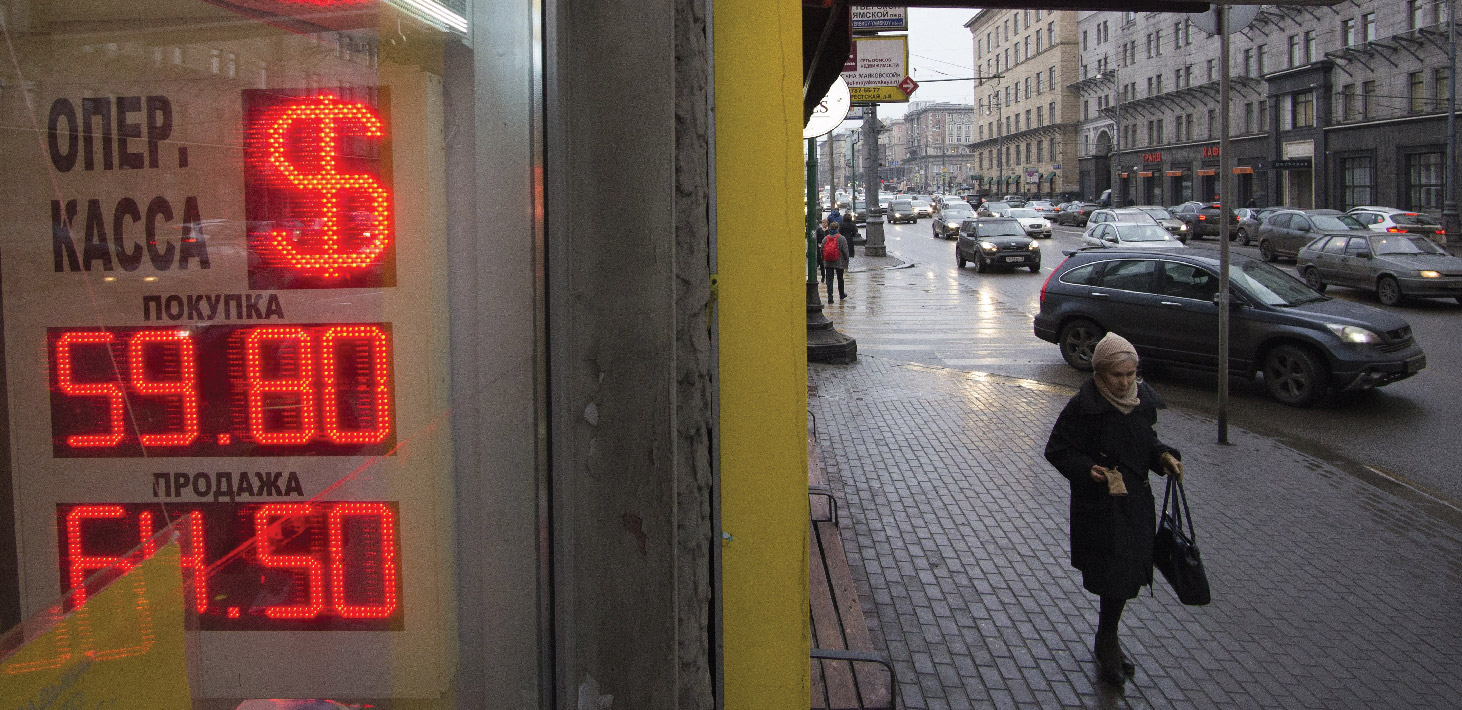
Freefall is the word that the international media have widely used to report the latest Russian currency crisis which saw Rouble plunging more than a quarter to a new low of 80 per US dollar, a new all-time low against the greenback. The crisis has been attributed to the Western sanctions against Russia over the Ukraine issue and drastic fall in the price of oil, major source of revenue earning of Moscow.
The country’s central bank reportedly increased interest rates sharply, but instead of calming the market the hike was seen as a sign of desperation. It reckons that GDP could fall by 5% in 2015. Inflation is currently at 10% but is expected to accelerate rapidly. Russians are panic-buying; banks are running out of dollars.
The meltdown of the ruble is said to be endangering the mantra of stability around which President Vladimir Putin has based his rule. While his approval rating is near an all-time high on the back of his stance over Ukraine, the currency crisis risks eroding it and undermining his authority.
The head of Russia’s central bank has warned Russians that they should get used to a new way of life, as the country’s embattled currency continued to plummet. ‘We have to learn to live in a different zone, to orient ourselves more towards our own sources of financing, and to give a chance to import substitution,’ said Elvira Nabiullina, the chair of the central bank. She said the interest rate decision had been taken to stem the negative effects of the falling Rouble.
However, the higher interest rate will crush lending to households and businesses and deepen Russia’s looming recession, according to Neil Shearing, chief emerging-markets economist at London-based Capital Economics Ltd.
London-based The Economist has tried to explain the reasons of the Russian currency crisis. ‘The problems were long in the making. Russia is highly dependent on oil revenues (hydrocarbons contribute over half the federal budget and two-thirds of exports) and over the past decade it has failed to diversify its economy. It is horribly corrupt, has weak institutions and no real property rights. The Kremlin distributes oil money via state banks to firms and projects which it selects on the basis of their political importance and their pro-Putin stance, rather than trusting the market to allocate capital to the most efficient firms.’
Putin took over Russian presidency from an ailing Boris Yeltsin in 1999 with pledges to banish the chaos that characterised his nation’s post-communist transition, including the government’s 1998 devaluation and default. While he oversaw economic growth and wage increases in all but one of his years as leader, the collapse in oil prices coupled with US and European sanctions present him with the biggest challenge of his presidency.
An opinionated piece, carried by Reuters, said the year ahead could see the outbreak of the third Chechen war, which, in turn, could be the death knell of the Russian Federation in its current borders.By proclaiming ethnicity and religion as the basis for Russian statehood and aggression against its neighbors, Putin is inadvertently stoking the forces of secessionism in those parts of Russia that are historically and culturally Islamic.