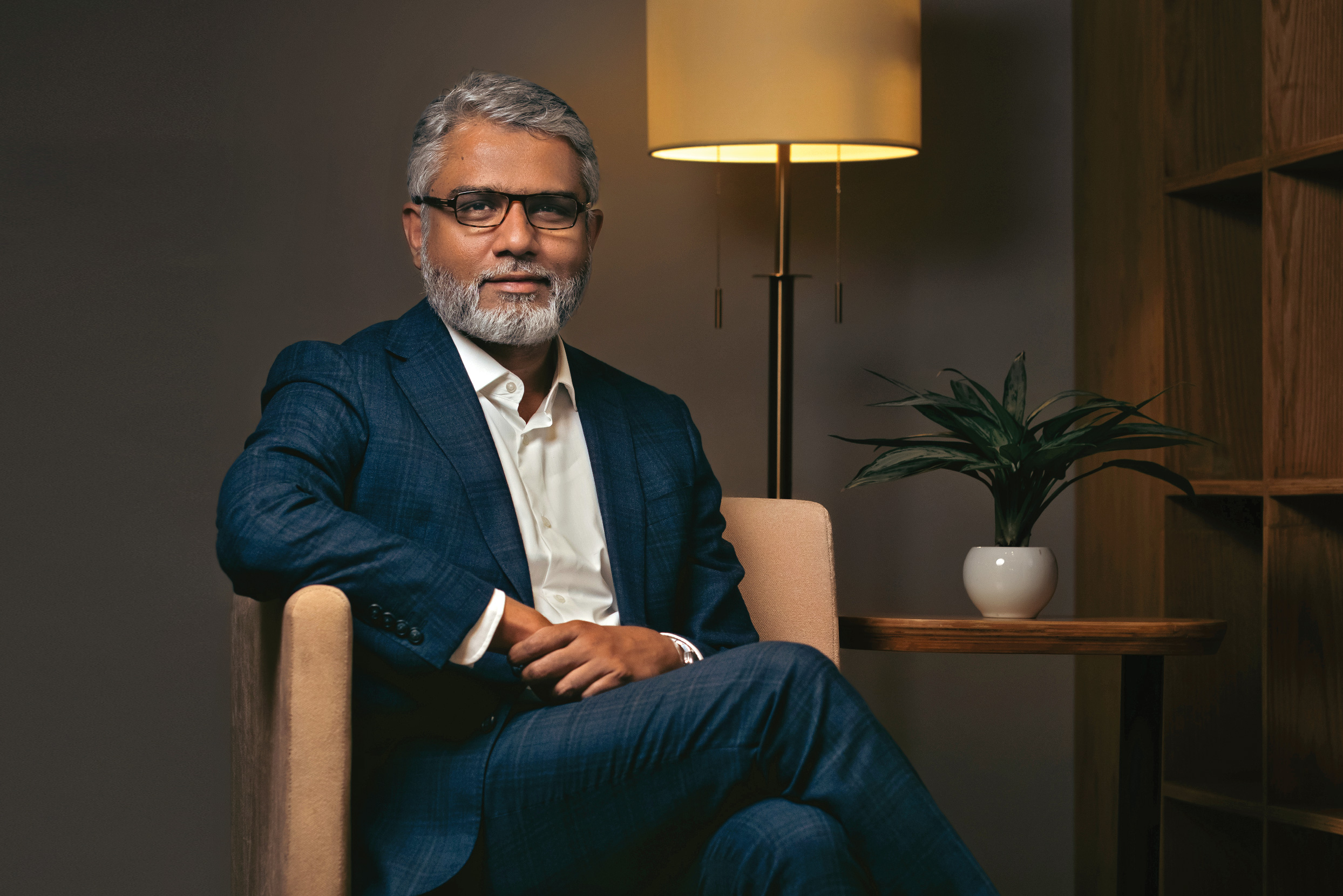
Enam Ahmed Chaudhury insists on peace and stability for promoting industrialisation
By Khawaza Main Uddin and Wafiur Rahman
Confidence among investors must be restored through resolution to the political impasse for the sake of business growth and industrialisation in the country, says Enam Ahmed Chaudhury, a former chairman (state minister) of the Privatisation Commission. Chaudhury, who was once secretary at Economic Relations Division and is now adviser to the BNP Chairperson, underlines the need for a bipartisan consensus to ensure better access to international development assistance.

In an exclusive interview with ICE Business Times on March 19, he underlined the importance of accelerating the process of privatisation and utilising the public-private partnership (PPP) window for promotion of business and industrialisation.
As one who served the government for many years, how do you see its changing role in protecting, promoting and regulating business in Bangladesh today?
The role of government in the conduct of business and industries has changed globally. Countries which got weak business traditions do not always receive opportunities and scope for development, particularly while competing with industrially-oriented countries. It is true that the protectionist theory does not hold good now and that government structures are there which are not suitable for protecting and promoting business and industries. However, all said and done, in Bangladesh it is imperative that the government play a constructive role in creating conducive business environment. Unfortunately, the industrialisation policy, which is currently being followed, is not very helpful in promoting industries. New industries are not being set up lately, perhaps that is fine. Industrial projects were commissioned earlier with state patronisation, to be handed over to competent private sector entrepreneurs. So in the absence of this, there has not been of much industrial growth. The exception is the garment sector, where private initiatives have been successful almost without government backing. The current government is not clear regarding privatisation and Public Private Partnership (PPP) pursuits. A lot has been said about it, but in the real field, its achievement has been minimal. Also, archaic regulations govern industrial endeavours and commercial pursuits. There is corruption in regulatory affairs and governance. This needs to be addressed if we want to get going in the globally competitive world of trade and industry.
Given the circumstances following a prolonged political impasse last year and early this year, what is the level of confidence among businessmen, especially investors from home and abroad in taking investment decisions?
- Well, both domestic and international investors have reasons to be apprehensive. There have been lots of political unrests and breach of law/order. Unfortunately, the reasons for these uncertainties have not gone, rather they are, over time, assuming greater proportions. Superficially there seems to be a lull now. But this is bound to be short-lived, unless a permanent solution is found to come out of this impasse. An important point is to evolve bipartisan policies in industrialisation, so that both local and foreign investors feel secured about their investments or for their efforts in this area under different governments. In a democracy, it is likely that governments will change, but this should not change our national/state policies regarding investments. There should be a sense of security, sense of lasting industrial peace and commonality in the policies of successive governments to protect and support investments and industrialisation processes. Well thought-out plans should be laid in government-approved five year plans, drawn up in collection with experts/leaders in civil society, and with experts from government where clear-cut investments should be pointed which would last through changing governments.
- What is your evaluation of the current state of corporate governance in the country at present?
Unfortunately corporate governance has not developed the way it should have. Several factors are responsible for this. One, the absence of consistent government policies and secondly, rampant corruption which hampers the growth of corporate governance. Industrial and commercial initiatives continue to remain family-centric, which is a reflection of what happens in our political arena. Adherence to corrupt practices would make it difficult to develop corporate governance in this country. On top of it, there has to be a vision and a sense of commitment, which unfortunately, is missing.
Do you think privatisation that formally began in the 1990s is on the right track now? Could you please name some of the public entities that need to be disinvested soon and why?
- I don’t think privatisation, which began formally in the 1990s, is on the right track. Hardly any new privatisation has taken place over the last six years. There is also a Privatisation Commission, which I understand, in spite of its efforts, could not do anything because of opposition from the ministry of industries and other ministries, like Jute and Textiles. There is no denying the fact that so many state-owned enterprises are having hemorrhages at the cost of the national exchequer, but policies for reversing such trends are not in place. The patronising of the growth of private sector and privatisation should not mean closing down of industries, but it should be the opposite. Disinvestments of public sector entities should be meant to rejuvenate the industrial units and ensure that the government does not have to continue supporting industries which make no profits, and are burdens. In this regard, PPP could have played an appropriate role, but it seems to me that the government has not quite understood or utilised the productive role that PPP could have played. Loss-making public entities should be disinvested and it the government should critically examine the health of other projects. They should not keep on running them for the sake of running. Rather private initiatives with proper support could perhaps play a more productive role in this area and continue towards industrial growth in Bangladesh.
- How do you look at the issue of viability of PPP (public-private partnership) projects? What can be done in selecting and implementing the most necessary projects, particularly big infrastructure projects, under the PPP?
- I’m of the view that PPP projects should be taken up in right earnest in our country. The inherent spirit of PPP is to ensure government initiatives in areas where private entrepreneurship could be slow and shy. Given the government support, the private sector is likely to be enthusiastic. There have been countries where PPP has done well, namely Canada, Republic of Korea, Thailand, Malaysia and many European countries. Participating in infrastructural projects, PPP can play a vital role in areas such as transportation sector. There should be a sense of confidence among private partners in public initiatives. If there is rampant corruption, definitely private initiatives would not be forthcoming. Unfortunately there have been instances of corruption in government initiatives, such as Padma Bridge, four-lane highways and flyovers. If there are transparent initiatives, I am sure the private sector would be enthusiastic. If there is corruption, there will be no successful PPP implementation. Here, the Anti-Corruption Commission (ACC) can act as a watch-dog so that the investors and people in general can develop confidence.
As a civil servant you dealt with foreign aid and other developmental issues. What do you think of the country’s economic diplomacy in pursuing the national goals?
- I have had the unique opportunity being on both sides of the table – at the giving as well as the receiving end. As secretary of the Economic Relations Division, Planning Division and member of the Planning Commission, I have experienced the difference in obtaining the right sort of foreign aid. There are no two opinions about foreign aid and cooperation in our developmental pursuits, both from bilateral and international agency sources. There are also questions of obtaining technical assistance and transfer of technologies. As a vice president of Islamic Development Bank, and as someone connected to the World Bank and the Asian Development Bank in different capacities, and also as the president of International Maritime Organisation, I am aware of the concerns that these multilateral agencies have for recipient countries. Of course the giver will have its own axe to grind, but the recipient has to ensure that whatever cooperation and assistance obtained will be helpful for the country’s growth. Selection of projects and commodities where foreign aid is needed should be carefully done. Development partners will not like to see that their efforts or assistance go in vain, as the maximum benefits will be accrued to the recipient country. There is hard competition now in obtaining assistance from bilateral and multilateral sources as there is rising aid fatigue. Our economic diplomacy will have to be stronger and more goal-oriented. Evidence of corruption in Padma Bridge case and the share market scam will drive away likely foreign assistance and investment. There was a time during the Cold War when big powers were keen on extracting economic cooperation to countries for their own selfish purposes. Now under changed circumstances, donors naturally do not feel obliged to come up for aid unless they are satisfied that their objective of extending assistance will be met in a corruption-free atmosphere, with the maximum benefits being accrued to the citizens of the receiving country. In our economic diplomacy, it would have to be proven that we deserve cooperation and that whatever we get would be well-spent and which would directly and indirectly help the donors as well. Our recent performance in economic diplomacy has been discouraging and what we see now is a sort of reluctance from the part of major development partners. Our aid portfolio is definitely shrinking and international competition for receiving aids have greatly increased. I would insist on bipartisan consensus, which would encourage our development partners.
- As one of the senior citizens, what kind of future do you foresee for Bangladesh and younger generation of entrepreneurs? What are the areas where they need to focus on or excel in?
- As an optimist, I would like to be hopeful about our future, the prospect of young generation entrepreneurs. However, realities do not always make it possible to retain such hopes and expectations. We have to establish political stability, possibly by arriving at certain decisions regarding the type of government vis-à-vis transfer of power through democratic practice. Unless there is democratic practice, there will always be a threat of violence and disorder, which would be disastrous. However, given some political stability and policies, there are different areas where the youths could excel in, namely information technology and computer science. There could also be areas where our youths can become better equipped to replace the dominance of development societies. In the technical field, youths have shown that they can excel, provided they receive proper guidance and helpful environment. In many foreign countries where our youths get adequate opportunities to develop themselves, they can attain wonders. There spirit is indomitable with latent talent.
What is the vision of your party, Bangladesh Nationalist Party, to promote business and bring Bangladesh to the next stage of development?
- The party would like to ensure that both the public and private sector would contain definite policies to promote and support the growth of business and industries. During the BNP regimes we had definitely focussed on and succeeded in privatisation and multiplicity of private initiatives. As a matter of fact, privatisation process during our time had been corruption-free and had generated confidence among private investors. However in future, if BNP comes to power, we will frame comprehensive period-based development plans (both on national and sector scales,) so that the process of industrialisation and trade development can be on a well-conceived track. I do foresee that this would produce fruitful cooperation between public and private sectors and effective implementation of PPP policies.