THE AUDACITY OF HOPE
Can you tell us about your tenure as CEO of UY Systems Ltd.? What has the journey been like so far?
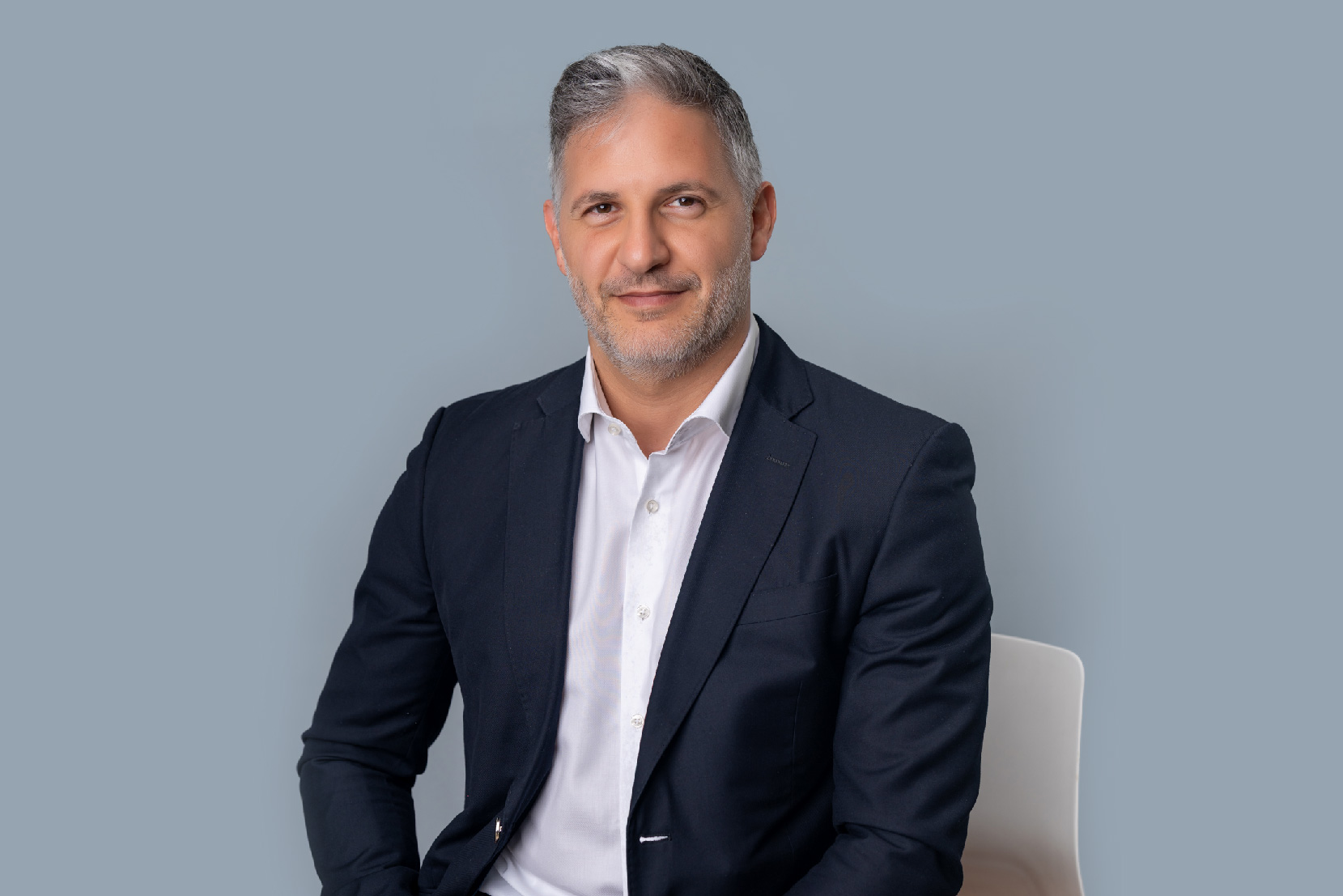
UY Systems Ltd. started unofficially in 2003 and registered as a limited company by 2005. To say that the market was unprepared for a female CEO leading an IT company, would be an understatement. We were passed over by several banks and investors who we approached for funding. Often even when the work order was issued, the attitude of the clients were that ours was not a serious venture as it lacked a male leadership. I would often come across remarks that the company was a pet project of sorts for me and would be given up by me when I had tired of it. Thus the early days were a real struggle for me to have to establish a name for myself.
With such constraints in the local market I looked outside of Bangladesh for better opportunities. We slowly started to see a good flow of work orders for customised websites from European markets while the local markets were still waking up to an idea of a website for a company. Some of the earlier works for local firms were ‘text-to-sms’ which was the biggest gimmick of that time and which we marketed to some local banks and even then it wasn’t very successful.
The company was severely struggling till 2007. My efforts to connect with a foreign market was thwarted by the unavailability of skilled manpower and my own lack of experience in the industry regarding simple things such as pitching an idea. I had several trainings which helped win customers in Denmark. I was elected to the position of Director of BASIS to which I dedicated two years in that role and by 2010 we could see a perceptible change as more companies started to believe in my abilities to deliver as a leader.
Fortunately things have improved massively at present, as UY Systems has more than proven themselves as a serious player in the market. Gone are the days where we have to chase companies for work;nowadays we are flooded with requests for work. Moreover, the industries perceptions regarding my abilities were solidified and improved as our performance improved in the market. I am an active participant in several associations and forums which has helped me develop my network.
Digital Bangladesh initiative, coupled with women empowerment, really turned things around for UY Systems. By 2012, we were already working in foreign countries and were slowly gaining traction in local markets with increased work orders. I wouldn’t say the market is still friendly towards women but at least they now have a role model that they can emulate. The knowledge base that was once limited to only male leaders of the business community has slowly started to be shared amongst women too now. It fills me with pride to say that I have an identity of my own now which is not limited to being the daughter and wife of someone. I truly believe that UY Systems has helped establish this identity for me as I have helped establish the identity for the company.
UY Systems Ltd. has made a considerable impact in the European market. What has it been like catering to the local market, and how do the two markets differ?
We already had a client base in the european market where we have been operational for almost a decade now. Delivering upon our european client’s specification has never been a problem as we have always been able to manage the staff required to get the job done. And once we deliver upon the order payment is never an issue.
Unfortunately I can never say the same for the clients in our local market. In our experience, it has been the case that payments on our completed job has been held for nearly two years. The reasons behind the local client’s unwillingness to release payments are numerous. Software implementation is a step-by-step process;meaning we try to encapsulate the idea that is put forward by the customer who, upon receiving the completed software, needs to educate themselves on how to run the software. Hence until they find that they are completely able to master the software that we delivered, they feel they are justified in withholding their payments to us.
There is a clear knowledge gap regarding softwares, websites and so on in the business diaspora of Bangladesh. Let me explain this further to give you an idea of what we face. When a customer initially places an order for a website they have very little, to no knowledge of how they want it to be designed. Thus they will start to research on how to better it but in the meantime a work order with certain specifications have already been placed with us. However now the clients will demand additions to it which can’t simply be accomodated in the budget discussed. This is why I feel that Digital Bangladesh is such an important initiative. We need to educate the customers to better understand the product they are ordering from us. Softwares are developed keeping in mind the company culture and needs and will require tweaking to make sure it is a perfect fit. The same is true for softwares that you can order from a foreign IT firm but supporting services to improve upon the foreign websites will be hard to come by. In short, customers must understand that no software is a simple plug and play.
Having said all that I would still reiterate that the local market is still very vibrant and UY Systems Ltd. has been catering to it for a while now. There are plenty of government projects to go around as well as private projects and we as a company have been blessed with a dedicated client base.
As the current Senior Vice-President of BASIS, what are some of the challenges you had to overcome?
It was only this year that I was elected to be the senior vice-president of BASIS. Before that I was appointed Vice president in 2016, and I served in that role for about 2 years. I had originally joined the board of BASIS as a treasurer.
If I had to pick one of the greatest challenge that I had to face, it would be the unwillingness of some of my peers and industry partners to work with a female CEO. While the IT industry is still very friendly towards women then most industries in the world are, I had to work doubly hard in order to be taken seriously. I would be at the constant end of mansplaining. For those who are unaware, it is commenting or explaining something to a woman in a condescending, overconfident and oversimplified manner. Thus it would be the case that in a meeting, even though I had made some important inputs to the conversation, my comments would be much better received when a male colleague would reiterate it for me.
Hence while they might not be vocal about it, men in Bangladesh are not yet mentally prepared to see women leading companies. However, that is not to say I have not received any support or respect because without those I would not be here at the moment.
To develop these skills is not an option but a necessity for women in Bangladesh. We often encourage girls to study, but helping them develop soft skills will help them better negotiate through the corporate culture of Bangladesh. One must remember that book smart can only further you in your life to a certain limit after which you need to sharpen your personality in order to further yourself in life.
We have a flourishing start-up culture in Bangladesh right now. Where do you see this progressing and how will it impact the software and IT industry of the country?
The startup culture is a popular trend worldwide and the youth of our nation are keen to enter the industry. The global startup culture is associated with quick success and innovation and this inspires the young entrepreneurs to try their luck in the IT industry. One of the biggest advantage of this industry is that it is for the youth, by the youth and comprises of the youth; hence age is never a barrier. And in short I believe this is a positive trend.
At the same time I would like to see newer products and apps in the market which are not just copies of existing apps. Innovation is not only the introduction of newer products as it is so often confused. Marketing an old product in a newer and better way can also be termed as innovation. This is simply the lack of knowledge with the product they work with in the local market.
My word of advice will be directed towards women of Bangladesh. We need to get the word out that IT sector is comparatively women friendly industry not only for women with a science background but from all educational backgrounds. And for the general startups operating in the market, my advice would be to develop a product or app which should have a business model and a social impact.
We are living through a digital revolution right now. Do you think Bangladesh has the skill set to ride the waves of the revolution? Also where is the scope for improvement?
One of the greatest asset of Bangladesh is its young population. Countries like Japan have an aging population which comprises of 27% of the population above the age of 65. To cater to these countries is where our biggest advantage will lie. However we lack the skill set to avail these opportunities. We have many public and private universities with thousands of graduates each years but there is a marked absence of standardised skilled workers from these universities. For instance, we cannot guarantee that the graduates from BUET this year will be of the same standard.
So while most universities offer ICT focused courses they are highly theoretical and causing the gap between academia and industry to widen even further. When they join any IT firm, we need to invest in training them first which takes both time and money. However, people who are freelancing are making their own effort to learn these skills which has quickly become a very lucrative source of income. But there isn’t simply enough people to go around the IT industry of Bangladesh. And even if they are skilled chances are they will choose to migrate to foreign countries who will definitely higher them for higher salaries.
Our GDP growth is predicted to go up to 7.65% this year from 7.28% of last year. How do you anticipate Bangladesh will sustain its steady climb into the future?
It is without a doubt that the RMG sector has a huge role to play in this high GDP rate. But no industry is safe from becoming automated and the RMG sector is no exception. But this industry holds huge sway for us and will leave a wide employment gap which needs to be filled by some other industry and I believe that the IT industry is a perfect candidate. This is one of the reason for the big initiative such as Digital Bangladesh.
What has been the greatest challenge of operating an IT firm in Bangladesh? What specific action would you request from the government of Bangladesh to further the IT industry in our country?
There are 4 major concern for the IT firms of Bangladesh, they are: Access to market, access to finance, existing skill set and finally infrastructure. I would request that the government of Bangladesh to work on these four areas to further our industry.
Let’s start with infrastructure. Currently UY Systems Ltd. has 3 offices located around the city which I must visit numerous times during a week. Couple this with having to travel to BASIS headquarters every week and you could easily say that a large portion of my time is spent in the gridlock traffic of Dhaka city. A high-tech park would be a great help for IT firms such as ours.
When I am talking about access to market, a major problem is the wrong perception foreigners might have about Bangladesh. We need to update our brand image as the next investment opportunity and not the land of cheap labor and mass flooding. This rebranding extends to IT industry of Bangladesh too.
We need to create the same channel through which we can get a reliable standard of skilled workforce. Standardized exam would be a good way to ensure the quality of the manforce. For example, in Japan there is an exam called ITEE which is highly valued. BASIS is planning to introduce exams such as these.
Finally, encouraging investment in the local IT sector is a big challenge. Often times if we have been able to secure a big project, we cannot find funding for it and must pay for it from our own pockets.