
During our recent stay in the USA to participate in a high-level business meeting, we were overwhelmed by the keen interest shown by American companies. The delegation was organized by a US think tank where Prime Minister Sheikh Hasina was the chief guest. Many of them have already invested in Bangladesh and some of them are in the process of investing. After 1st July, the concerns over security issues in Bangladesh have been alarmingly high. The delegation gave us an opportunity to inform stakeholders that the situation was under control from our end. We informed them that the problem had been contained and hopefully we won’t have to face this problem in the future. The praise must go to the Bangladesh government who were very serious about preventing terrorism extensions in our country. Police and other law enforcement forces are continuously working against terrorism. This is making Bangladesh a much safer country than it was before the July 1st incident. The discussion also shed light on the topic of GSP; Bangladesh has fulfilled most of the conditions required for it yet failed to receive it. In our pledge, we have made it clear why Bangladesh deserves to get the GSP facility back. This is a country which used to make headlines as a cyclone-prone nation but now it has shown noteworthy improvements in not only maintaining a 6% GDP growth but also in human development indices. Under the dynamic leadership of our current premier, the image has become better than ever before and now many other countries are interested in knowing how we’ve achieved this. In her recent visit to the UN, our Honorable Prime Minister told the world through the UN about the possibilities and potentials of Bangladesh. She also invited potential investors to make the best use of the opportunities available here.
The recent tour was successful in many other ways. We found investors from Asia and Europe who were keen to know more about us as an investment destination. With the help of various seminars and roadshows, both government and private sector (business chambers and trade bodies) have been working relentlessly to portray a business-friendly image for the foreign investors. There is no denying the fact that our shortage of electricity and gas are main hindrances for business prospects. We have power production but lack the appropriate transmission lines. Furthermore, the wait for LNG continues. The BEZA projects are on but not yet inaugurated. Hopefully, within one and a half years we will be moving at a much faster pace. The small gap we are seeing now will get filled slowly. The government is investing heavily in mega infrastructural projects, which will surely lead us to the growth trajectory of 8%.
One may see that the interest rate is coming down but the spread is not yet minimized. The lower FDR rates also have a role to play in this kind of high spread rate. The spread is required to come down to 2%, which only can be done by reducing non-performing loans (NPLs). The surge of NPLs means banks are investing in the wrong projects. We must act fast so that NPLs don’t become gangrenous for our financial system. I have had a discussion with the Bangladesh Bank Governor who was very receptive of the suggestions we made. The Central Bank, too, has shown their willingness to solve such issues which are marring the image of our banking system.
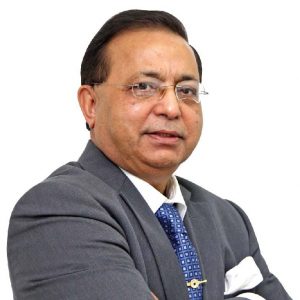
“Hopefully, within one and a half years we will be moving at a much faster pace. The small gap we are seeing now will get filled slowly.”
Skill development and talent management are two big jobs yet to be done by our government. We are employing expats and spending around $5-6 billion every year to ensure proper functioning of our businesses but this fund could be better utilized in other areas if produce homegrown CEOs. We need to produce more professionals who can offer world-class leadership and take our companies towards a new profit-making path. However, the good thing is the government has already realized the demand and has allotted a handsome amount of money to make some visible progress in this area. A skill development institution is already inaugurated in Chittagong. We must understand that setting up new institutions is not enough; what we need is to change the curriculum of education. Class seven onwards, we must include vocational education as a part of the curriculum. We have already raised this issue with the Honorable Prime Minister and the Minister of Education. They are considering the proposal seriously. This is one way we can increase the potential of our huge youth population which will yield greater demographic dividends.