
A forecast of US-China relations as the two global powers resume communications at the highest level.
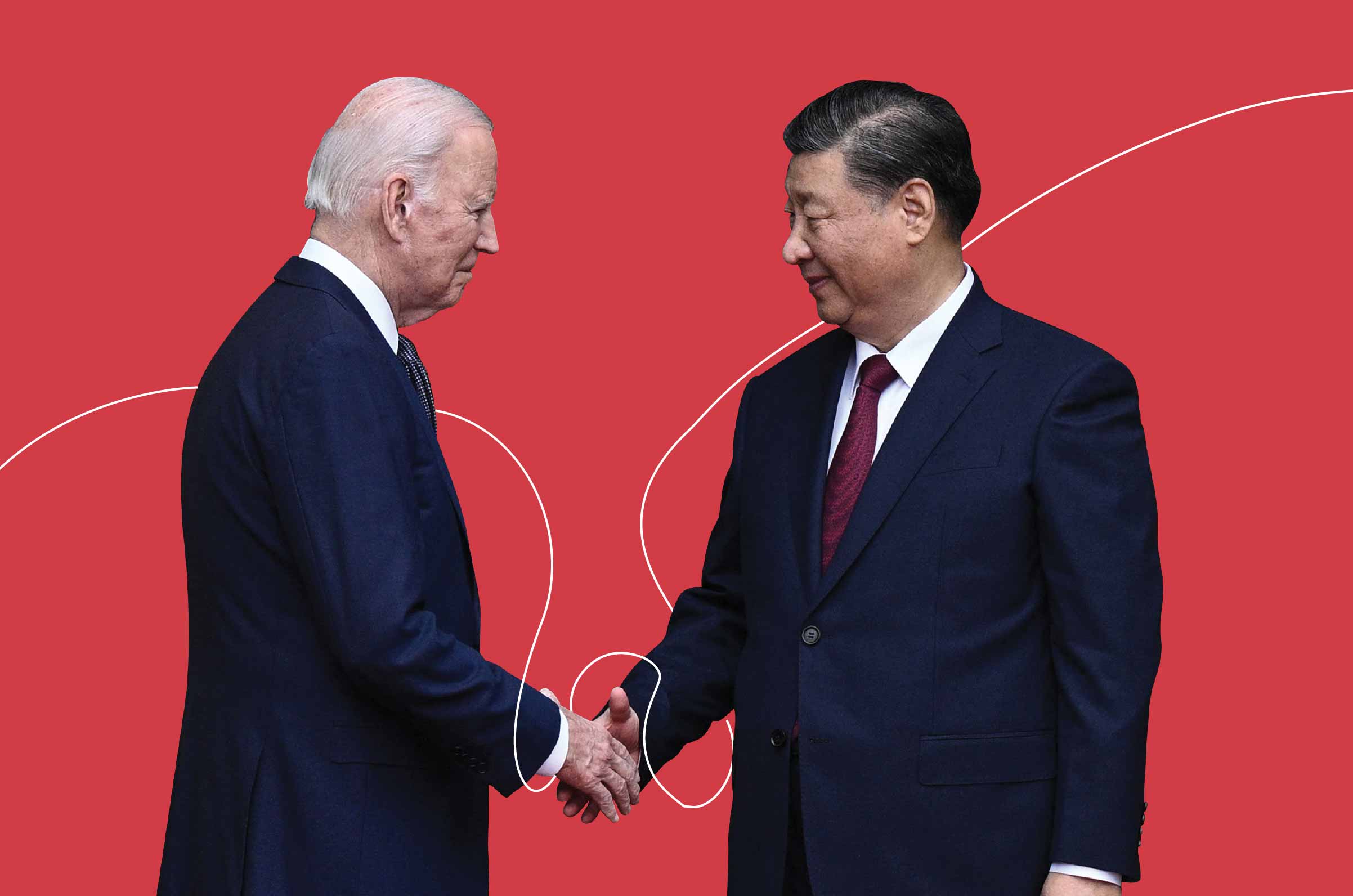
Chinese President Xi Jinping visited the San Fransisco Bay Area to meet with US President Joe Biden on 15 November 2023. This is the second time during Biden’s presidency that he met face-to-face with Jinping, and a crucial one given the state of the current instability of global affairs.
The leaders held a candid and open conversation, and both parties acknowledged that the two countries have historically not seen eye-to-eye, but they owe it to the rest of the world that their relationship develops to one of healthy competition without veering into conflict.
Over four hours and three sessions, Biden and Jinping discussed bilateral relations, geopolitics, climate and artificial intelligence. Based on reports of their conversation, political scientists have shared their thoughts on what the future of US-China relations might look like.
Geopolitics
The geopolitical situation between China and the US is likely to remain stagnant, with both countries supporting conflicting parties in various global crises, particularly Russia-Ukraine and Israel-Gaza. China and Russia will maintain their alliance, China is unlikely to condemn Hamas, while the US will continue to support Israel. While neither leader explicitly mentioned the names of these countries, they acknowledged that global conflicts are escalating which would work against the progress of both nations.
Despite being perceived as adversaries, both nations share an interest in global stability. Jinping called it a ‘win-win’ scenario. Their unity on matters of geopolitics, or their ability to realise that there lies strategic justifications behind their geopolitical stances will dictate how well global crises can be managed. For instance, the US and China are now in talks about conveying messages to Iran to prevent direct involvement in wars and limiting support to proxies.
In the Middle East, China has relationships that the US lacks, engaging in talks with Muslim nations and advocating for a ceasefire, while the US supports a ‘humanitarian pause’. After the October 7 attack by Hamas on Israel, both the US and China expanded their military presence near the region, not to engage in battle, but to position themselves in a manner that ensured that war would not ensue.
Bilateral Relations
MIT Economist Yashen Huang once stated, “The two countries, the US and China, got married without knowing one another’s religion.” American Political Scientist Ian Bremmer sees it more as “a couple where the love has left the relationship, but they have children together and they love the children very much.” This is what has caused the tension between the two countries. They may not necessarily trust each other but they know they need to work together for the sake of the global economy. To a certain extent, Biden and Jinping’s meeting addressed this tension, and their discussions indicate that there may be some easing in the days to come.
Recently, cabinet meetings between the US and China were tense but essential in maintaining checks and balances between the two global powers. Despite strained relations, both countries are compelled to remain amicable partners due to external threats. This rules out the possibility of unmitigable conflicts, or, in an extreme scenario, a Cold War.
President Biden invested significant efforts in preparing for the meeting with Jinping to ensure a positive outcome and mitigate distrust and tensions. At the same time, China has been on a charm offensive on the global stage to strengthen diplomatic relations with other major economies such as Australia, South Korea, Japan, and Europe as a whole. The Chinese government has also invited US entrepreneurs, business owners and private entities, signalling a potential improvement in the US-China relationship.
This charm offensive comes at a time when China is in need of help. Against the backdrop of structural challenges, including a demographic imbalance, non-performing debt, increased competition, and the aftermath of its underwhelming zero-COVID strategy, China’s economy is underperforming. China cannot afford a major conflict in its current economic state, implying that it is not so much the meeting between Biden and Jinping that will ease tensions, but that China relies on it in order to navigate its economic challenges diplomatically.
Artificial Intelligence
The US and China have initiated a Track 1.5 Working Group on artificial intelligence which will involve both government-to-government plus private sector corporations. In the US, the private sector captures the regulatory process through big-money lobbying; in China, the state captures the private sector. This has been in the making for some time now, with both the US and China sending senior officials to Bletchley Park in the UK to agree to a set of principles for safekeeping frontier AI models.
Both countries agree, to a certain extent, that they need to share information and work together to avoid the worst potentials of disruptive AI. They are now trying to come to a position where they both benefit from the extraordinary, world-changing new productivity, invention and efficiency of AI.
The current state of AI has raised an important question: “What will be the impact of powerful AI tools, particularly large language models, on political and economic models?” The deployment of AI in democracies may either enhance or polarise political sentiment, white authoritarian governments might veer towards controlling citizen’s behaviour. It has therefore become important for not only the US and China but the rest of the world to seek a prominent role in understanding and regulating AI development.
The absence of global consensus on AI capabilities, measurement criteria, and regulatory frameworks has led nations to pursue diverse approaches. Calls for an International Regulatory Agency (IRA) have emerged, reflecting the critical role of AI in global priorities such as conflict resolution, elections, and data privacy. China emphasises the responsible use of AI by restricting access to certain information, while the U.S. focuses on collaboration between companies and government to establish regulations. Europe prioritises privacy and data protection in its approach to AI regulation. With a UN report on AI regulation expected in eight months, the international community awaits to determine the path toward global governance of AI.
Infrastructure
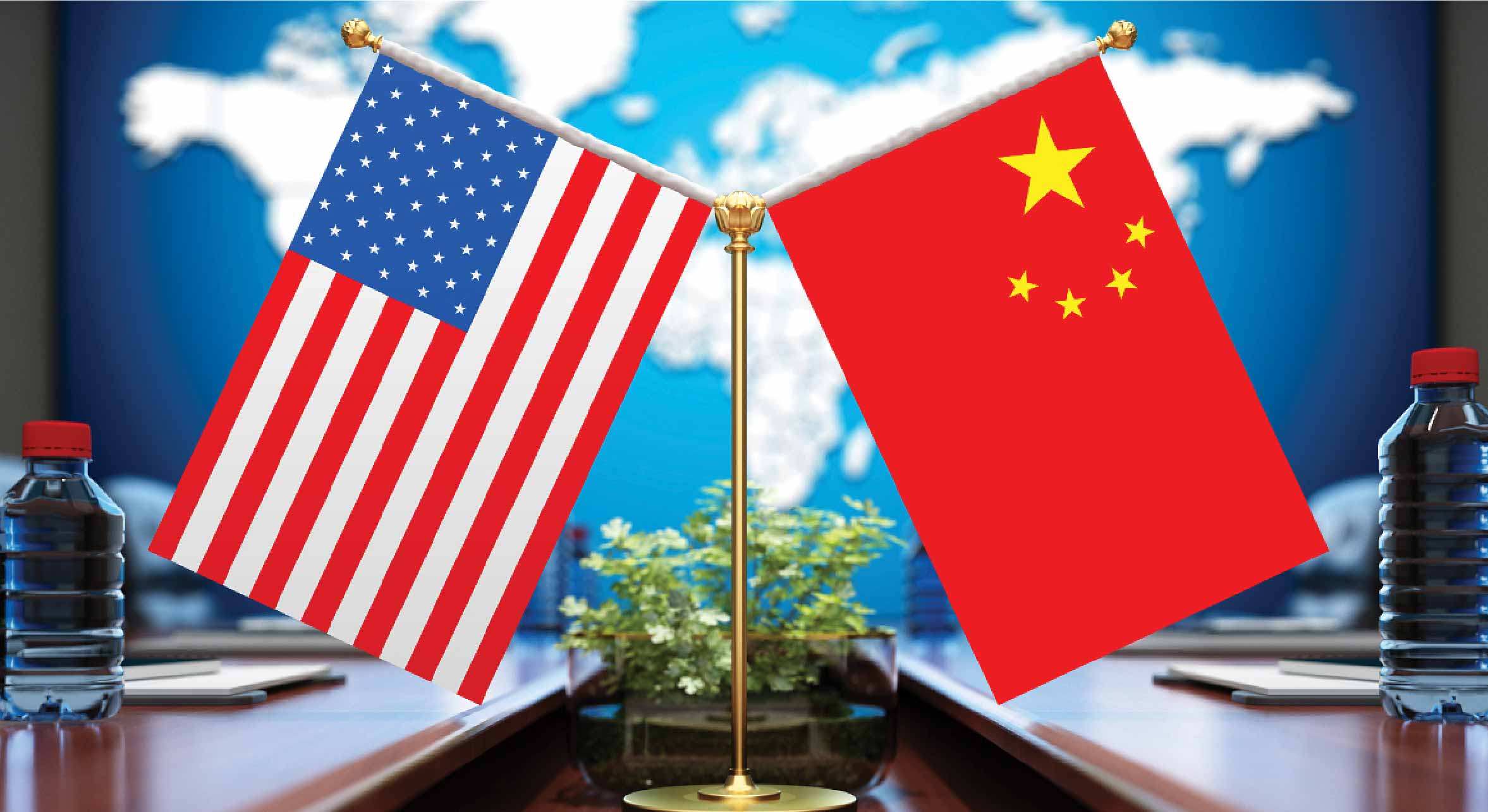
Both countries have built infrastructure on foreign land to leverage some level of power in the global economy. China’s Belt and Road Initiative (BRI), an ambitious physical infrastructure project, launched in 2013, was originally devised to link East Asia and Europe and has since expanded to the Global South and to Latin America. However, Americans believe that the advantage that China claims this has given them, or will give them in the future, has been overstated.
China’s influence in terms of commercial and trade relations with the Global South is significant, driven largely by government coordination, while the U.S. primarily projects power through political, cultural, and military institutions, with limited state-directed trade investments.
China’s lead in BRI investments has been substantial, but it has diminished, and the country is no longer spending as much on the initiative as before. Many BRI investments did not perform well, resulting in considerable bad debt, particularly in countries like Pakistan, Zambia, Sri Lanka, and Venezuela.
Meanwhile, The U.S. has become a leader in AI, while China excels in transition energy technology, including electric vehicles and batteries. Both nations are imposing export controls in response to each other’s technological advancements, creating a potential for a significant conflict that could move the world away from globalization toward a more tense structural relationship between the U.S. and China. The outcome of these developments over the next six months will determine the level of stability both nations seek to achieve.
Climate
Concerning climate change, the US and China are engaged in more competitive rather than cooperative efforts. China is heavily investing hundreds of billions in new post-carbon technologies, leading to significant competition between the two nations. Observations indicate that the US is not necessarily seeing this as global progress, but rather, as an American shortcoming that China is potentially progressing faster than they are. As a result, achieving alignment proves challenging due to differences in current and historical carbon emissions.
China presently emits the most carbon globally, while the US has historically been the largest emitter. Per capita, the US still emits at a higher rate than China. Both economies are reluctant to bear substantial costs or acknowledge primary responsibility for financing loss and damages or assisting poorer countries in transitioning to greener technologies. This stance contrasts with the aspirations of many countries, especially in the global south, including India, which seek a different outcome.
Future of US-China Relations
The recent meeting signifies an increase in the frequency of communication between the U.S. and China, reflecting a willingness on both sides to engage substantively across various government sectors. While the meeting may not have resulted in major breakthroughs on specific issues such as climate, defence, or technology, it is noteworthy that President Biden and President Xi Jinping privately acknowledged the importance of spending more personal time together. Despite any lack of trust, there exists a mutual respect, stemming from their previous interactions during their time as vice presidents. Biden values their person-to-person relationship, and the four-hour discussion is seen as significant for both bilateral and global relations. Expectations are set for continued communication, even if virtual, in the coming months, as maintaining a dialogue is considered essential.