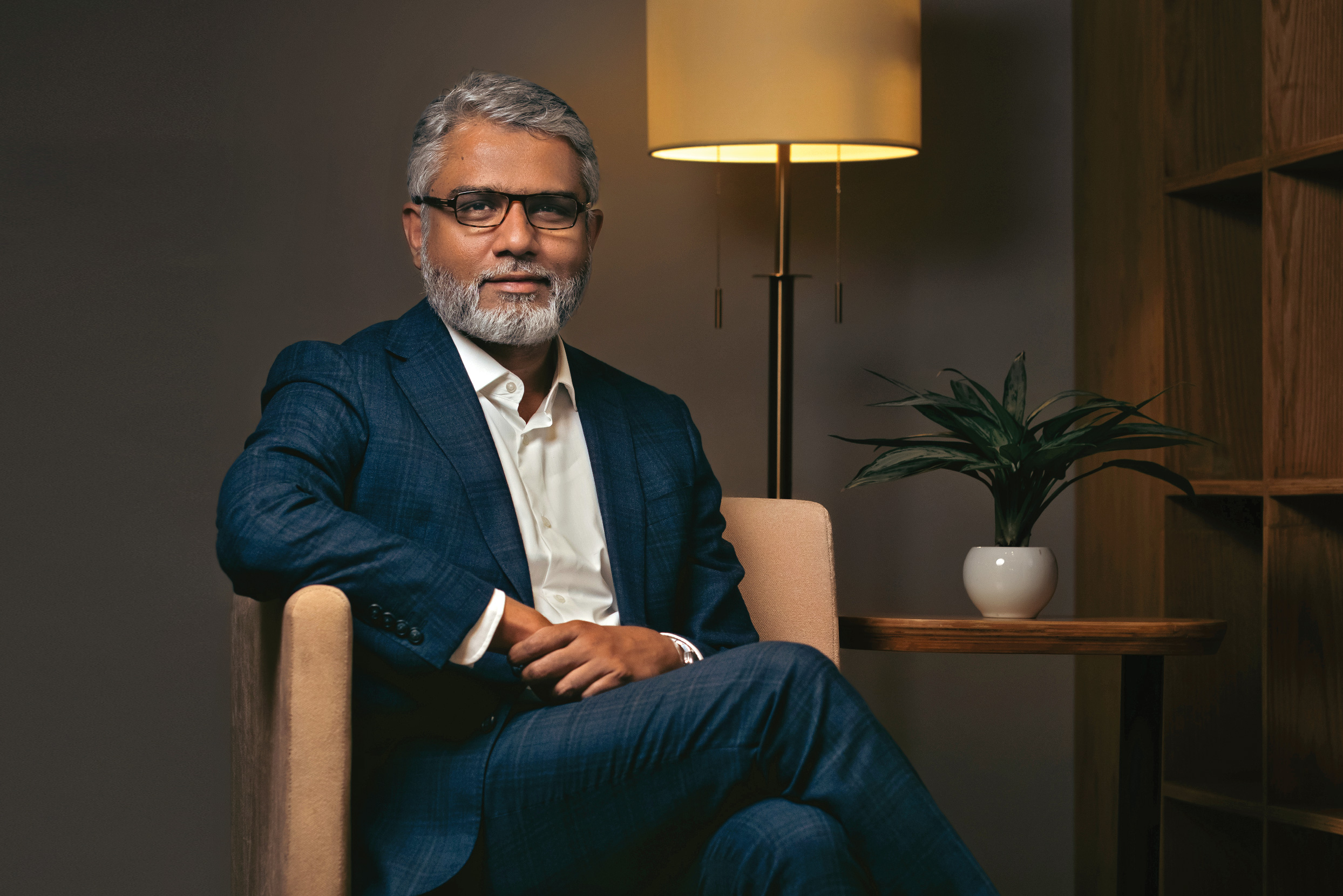

As Head of Talent, Culture & Inclusion at BAT Bangladesh, Rabih Masrouha is helping shape the company’s approach to inclusive leadership.
Few leaders have had the opportunity to observe workplace cultures across as many markets as Rabih Masrouha. Over the course of 14 years with the BAT Group, he has taken on roles across Lebanon, Iraq, Sudan, the UAE and Saudi Arabia, experiences that have shaped his perspective on talent, leadership, and inclusion. Today, as Head of Talent, Culture & Inclusion at BAT Bangladesh, Masrouha is helping steer the company’s efforts to create a more inclusive environment for women. Speaking with Ice Business Times, he shares insights into the initiatives, policies, and cultural shifts that build a workplace where women can lead and thrive.

How has BAT Bangladesh’s approach to inclusion evolved in recent years, and what has driven that shift?
Over the years, inclusion at BAT Bangladesh has progressed from a policy-led framework to a lived culture, and that shift is visible in the outcomes we see today. In our latest inclusion survey, 82% of employees felt senior leadership supports diversity and inclusion. This cultural shift is matched by progress in representation; for example, the female management population rose from 23% to 30% since 2024, signaling stronger leadership pathways.
A large part of this progress has come from rethinking how inclusion shows up in everyday leadership. We’ve introduced structured development pathways for women, strengthened mentorship and sponsorship access, and ensured that leaders are held accountable not only for business delivery but also for creating inclusive, high-trust team environments. Our Internal Value Proposition (IVP), ABetterYou, reinforces this philosophy: the belief that a better tomorrow starts with each individual feeling supported, empowered, and able to grow.
Women’s workforce participation in Bangladesh is rising, but progression into leadership still requires intentional support. We have strengthened early career pipelines with, 38% of management hires since 2024 being female, created platforms like our LeanIn Circle to amplify women’s voices, broadened access to leadership-ready experiences, with 15+ women expatriated over the last few years, and ensured that parental and flexibility policies remove barriers that traditionally stall career momentum.
Today, inclusion is embedded within a cohesive integrated system anchored in how we set expectations for leaders, how we design talent processes, and how we measure organisational health. Alongside business metrics, we track people-centric indicators such as inclusive leadership behaviours, employee voice and team experience. These signals shape how we define high performance, because for us, a high-performing culture is one where every person feels they can grow, contribute, and succeed.
What specific policies or frameworks have BAT Bangladesh put in place to accelerate the advancement of women into leadership roles?
Our focus has been on building a strong and sustainable pipeline. We have invested in complementary frameworks embedded across the entire talent lifecycle — from hiring and early career development to first-time manager transition and advancement to senior leadership roles.
This begins at the point of hiring, where we are intentional about ensuring fair representation of women across each assessment stage. All assessors undergo extensive training on recognizing and mitigating bias to ensure objective hiring. One of our flagship initiatives is Supernova, an award-winning recognising and capability-building programme created to support and inspire female students pursuing STEM careers.
In parallel, our LeanIn Circle has grown from a discussion forum into a community that shapes policy and leadership behaviours. It serves as a safe space for women to articulate challenges, engage with leaders, and influence systemic change. It also plays a critical role in giving women a structured platform to engage with leaders, co-create solutions, and amplify voices.
Just as important as capability development is the infrastructure and policy support that enables women to advance without compromising personal or family priorities. Our parental policies go well beyond national requirements — we offer 180 days of fully paid maternity and adoption leave and 15 working days of fully paid paternity leave. We offer an additional three months of optional leave for those in physically demanding roles, such as trade marketing, leaf operations or manufacturing.
Beyond leave, we provide flexible working options for both mothers and fathers, ranging from work-from-home arrangements during and after pregnancy to scheduled flexibility during reintegration. New parents also receive access to online parental coaching, helping both employees and managers navigate the transition effectively.

Our talent management system is also intentionally designed to minimise bias and ensure fairness at every stage of the employee lifecycle. From how we assess performance and potential to how succession decisions are calibrated, we use structured criteria, diverse review panels, and rigorous governance to ensure decisions are objective and inclusive.
How does BAT Bangladesh ensure meaningful participation of women across the value chain, beyond corporate and head office functions?
Inclusion at BAT Bangladesh is designed to extend across the full value chain. Women contribute and lead across our corporate offices, manufacturing operations, and agricultural footprint, including in geographically dispersed and rural settings. Our initiatives and development opportunities are designed to be accessible at every level, ensuring meaningful participation and real pathways for women to build skills, careers, and leadership.
At the grassroots level, we empower our female retailers with money-management training and security-awareness programs. Women have also been an integral part of our shopfloor since 2003. Their growing presence in machine operation, quality-lab testing, and technical and leadership roles continues to break traditional barriers, driving operational excellence and inspiring more women to thrive in our manufacturing ecosystem.
Wellbeing is integral to an inclusive culture. What initiatives has BAT Bangladesh introduced to support the well-being of women?
We view wellbeing as foundational to inclusion, especially for women who navigate multiple roles and responsibilities across work, home and society. At the heart of this is LiveWell, our holistic wellbeing platform that brings together physical, mental, emotional, and financial wellbeing under a unified framework. LiveWell is built on a simple belief that people thrive when they feel connected, supported and seen as whole individuals, not just employees.
What makes LiveWell particularly meaningful is the community it fosters. The platform is brought to life by employee ambassadors who lead activities, events, and awareness sessions that resonate with our people. From mindfulness circles and financial wellbeing sessions to activities that strengthen social connection, such as tennis, padel, and arts sessions — LiveWell creates touchpoints that nurture both resilience and belonging. And while it is built for everyone, the platform intentionally includes initiatives that speak directly to women’s needs, such as women’s health awareness sessions, preventive care dialogues, and even self-defence Muay Thai classes that build confidence and empowerment.
Flexible work options give women greater autonomy in balancing life and career, and access to wellbeing resources ensures they have the tools to prioritise their physical and emotional health when it matters most.
One of our flagship initiatives is Supernova, an award-winning mentoring and capability-building programme created to support and inspire female students pursuing STEM careers.
How does BAT Bangladesh assess progress in strengthening inclusion and advancing women into leadership roles, and what does that progress look like today?
Progress is tracked through a combination of representation targets, employee engagement measures, and external benchmarks. We have publicly stated ambitions around increasing the proportion of women in management roles, and these targets provide a clear, time-bound focus for leadership teams.
Beyond representation, we monitor inclusion through employee listening frameworks that capture engagement, belonging, and voice. External certifications and recognitions also provide an independent lens on the effectiveness of our people practices. Together, these measures allow us to move beyond anecdotes and ensure that inclusion progress is visible, measurable, and accountable.
What these metrics reflect today is a story of strong progress, steady improvements in representation, higher engagement scores among women, and growing visibility of women across critical roles. One area we have been particularly deliberate about is addressing what is referred to as the “broken rung” – the critical first step into management where women are often most underrepresented. Since 2024, 36% of all promotions within our middle-management grades have been women, signaling a healthier and more balanced movement through the leadership pipeline. When looking specifically at transitions from non-management to management roles, women accounted for 38% of all promotions.
An important enabler of this progress has been our approach to global mobility. While these opportunities are available to all employees, we recognize that international exposure can be especially transformative for women’s career trajectories. To ensure mobility is generally inclusive, we provide holistic support that considers not only the employee but also their families. By removing practical barriers, we make it easier for women to say “yes” to opportunities that expand their capabilities.
At the same time, we are clear that there is still room to grow. Sustaining progress requires continuous focus on leadership behaviour, pipeline quality, and consistent reinforcement of inclusive culture across all levels and functions. Our metrics reaffirm that we are on the right trajectory, but they also keep us accountable to the work still ahead.
What is BAT Bangladesh’s long-term vision for women’s representation, and what will success look like?
Our long-term vision is for women’s leadership at BAT Bangladesh to be natural, visible, and sustainable. Success is a system where women progress across functions, supported by strong pipelines and inclusive leadership.
Ultimately, success will mean that women see BAT Bangladesh as a place where ambition is encouraged, life stages are supported, and leadership is accessible. When future generations of women view leadership as an expectation, not an exception, we will have built something that lasts.