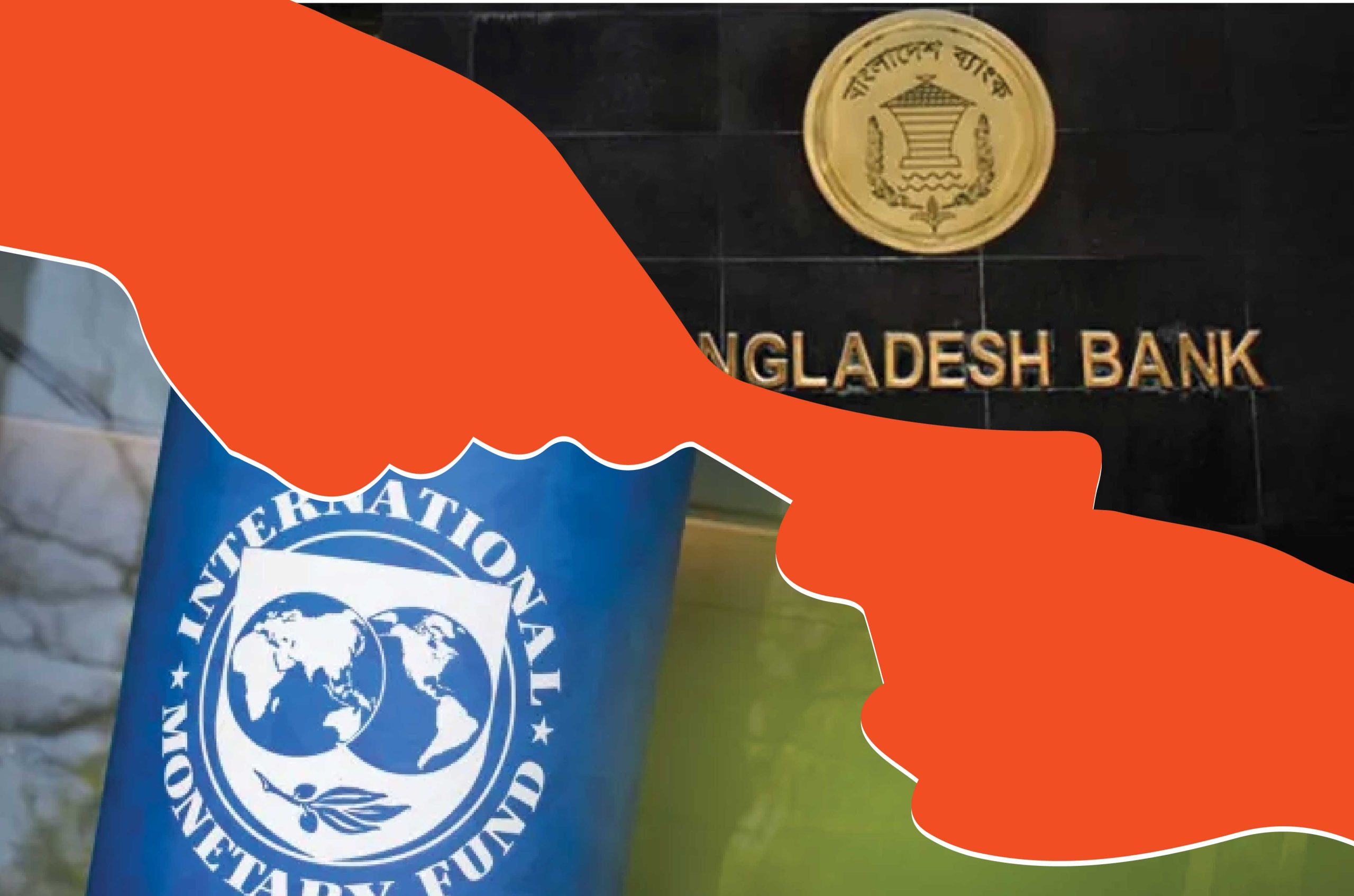

A breakdown of the GoB’s plan to execute 50 reforms over the next 3 years with funds from the IMF.
Since gaining its independence, Bangladesh has made significant progress in reducing poverty, raising living standards, advancing education, advancing public health and agriculture, developing infrastructure, consuming more electricity, advancing industry, and advancing trade and business through economic growth. Bangladesh has fared well both during the pandemic and in the post-pandemic economic recovery, according to the International Monetary Fund (IMF). However, since February 2022, the global recession, oil crisis, and Russia-Ukraine war have all put strains on Bangladesh’s economy.
On 30 January 2023, the IMF Board of Directors approved a USD 4.7 billion loan for Bangladesh. It is to be delivered over a 42-month period in seven instalments. This loan has an average interest rate of 2.2%. Of that amount, USD 1.4 billion will be made available under the Resilience and Sustainability Facility, and USD 3.3 billion will come from the Enhanced Credit Facility or Extended Fund (ECF/EMF). As per the IMF, the loan will contribute to safeguarding the stability of Bangladesh’s economy as a whole, bringing about the required reforms to increase the capacity for social and development spending, fortifying the financial sector, updating the policy framework, and enhancing the resilience of the populace against the effects of climate change.

The International Monetary Fund (IMF) has long studied the patterns, issues, and vulnerabilities of the Bangladeshi economy and held talks with government representatives prior to loan release. The IMF’s decision is therefore unquestionably a vote of confidence in Bangladesh’s economic management. However, Bangladesh must carry out reform initiatives in a number of sectors in accordance with IMF requirements. To enhance the amount of money allocated to the social sector, infrastructure development, public financing and investment, and climate change mitigation, for instance, the revenue sector should be reformed. The Government of Bangladesh has already started to take conscious steps to stabilise the economy.
Under the terms of the loan agreement from the International Monetary Fund, the government has committed to implementing over 50 reforms in 3 years with the aim of reinstating foreign currency reserves and managing inflation.
The government intends to raise the gross international reserves (GIR) to around four months’ worth of potential imports by FY26. The GIR decreased to USD 24.3 billion in the most recent fiscal year from USD 36 billion in 2019–20 due to rising import expenditures against mild remittance and export receipts. This meant that import costs could be covered for only 3.4 months in FY23 as opposed to 6.1 months in FY20.
The government also intends to reduce inflation to a range of 5% to 6% for the remaining program period, which spans the current fiscal year of 2023–2024 to 2025–2026. Inflation has continued to be higher than 9% due to rising commodity prices on the global market, adjustments made to those prices in local markets, and insufficient policy measures. In November, there was a 9.42% increase in the Consumer Price Index. In FY23, it was 9.02%. With the support of persistent tightening of monetary policy and a neutral fiscal posture, inflation in Bangladesh is expected to decline to 7.25% annually in FY24.
The plan states that the government will examine current value-added taxes, corporation taxes, and personal income taxes (collectively, tax expenditures) and publish the results as part of the FY25 budget. It is anticipated that stakeholder discussions will conclude in early 2024, and by June of that same year, the strategy will be finalised. In order to protect priority spending, the government stated that it is dedicated to keeping subsidies in check. It intends to switch to a periodic formula-based price adjustment process and remove all structural subsidies for petroleum products.
By implementing ‘Sector Strategy Papers’ and ‘Multi-Year Public Investment Program’ tools in five sectors by 2024, and an additional five sectors by 2025, the government will further enhance project selection. In each sector, a maximum of five capital projects will be chosen and pursued. In order to reduce borrowing costs, the government intends to decrease its reliance on National Savings Certificates (NSCs) and instead focus on concessional sources of external funding while Bangladesh is still eligible for them. This change will take place over the medium term.
To enhance the amount of money allocated to the social sector, infrastructure development, public financing and investment, and climate change mitigation, for instance, the revenue sector should be reformed.
A comprehensive plan outlining how the government intends to maintain net NSC issuance below one-fourth of net domestic financing by FY26 has already been developed. The government created bank-specific roadmaps to lower the average Non-Performing Loans (NPL) ratio to below 10% for State-run Commercial Banks (SCBs) in an effort to lessen the weaknesses in bank balance sheets, notably those of the SCBs. It is now creating plans for Private Commercial Banks (PCB) to cut their NPLs to less than 5% by 2026. According to these roadmaps, by 2026, SCBs’ and PCBs’ capital adequacy ratios and provisioning coverage will be increased to 10% and 100% of the required provision, respectively.
Analysts point out that an initial injection of USD 476 million for Bangladesh is insignificant compared to the USD 1.5 billion in foreign exchange that is lost every month on import bills, thus depleting the country’s reserves. Deputy Managing Director of the IMF Antoinette Sayeh mentioned in the statement that the authorities need to accelerate their ambitious reform agenda to achieve resilient, inclusive, and sustainable growth.

While there have been some encouraging signs in Bangladesh’s economic statistics, for instance, in November and December, export revenue increased for the nation, the main foreign exchange earners, exporters of ready-made clothing, have expressed concern that shipments may decrease in January. Remittances, another important source of foreign exchange, declined from the July–August average of almost USD 2 billion per month but somewhat recovered towards the end of the previous year. From USD 1.54 billion in September to USD 1.7 billion in December, they increased, and predictions for January indicate that they will either remain unchanged or increase slightly.
For now, we can simply hope that the loans from the IMF will act as a growth catalyst in all parameters. Bangladesh has a lot of potential and promise and has made great strides in recent years despite many challenges. Bangladesh’s strong economic growth, effective poverty alleviation, and human development put it in a strong position to continue progressing and reach its full potential in the years to come. Thus, Bangladesh will benefit from the most recent IMF assistance, which will shorten the path of the country’s economic development. Bangladesh can effectively manage discussions for its national objectives in line with its Vision 2041 given its existing strong economic position.