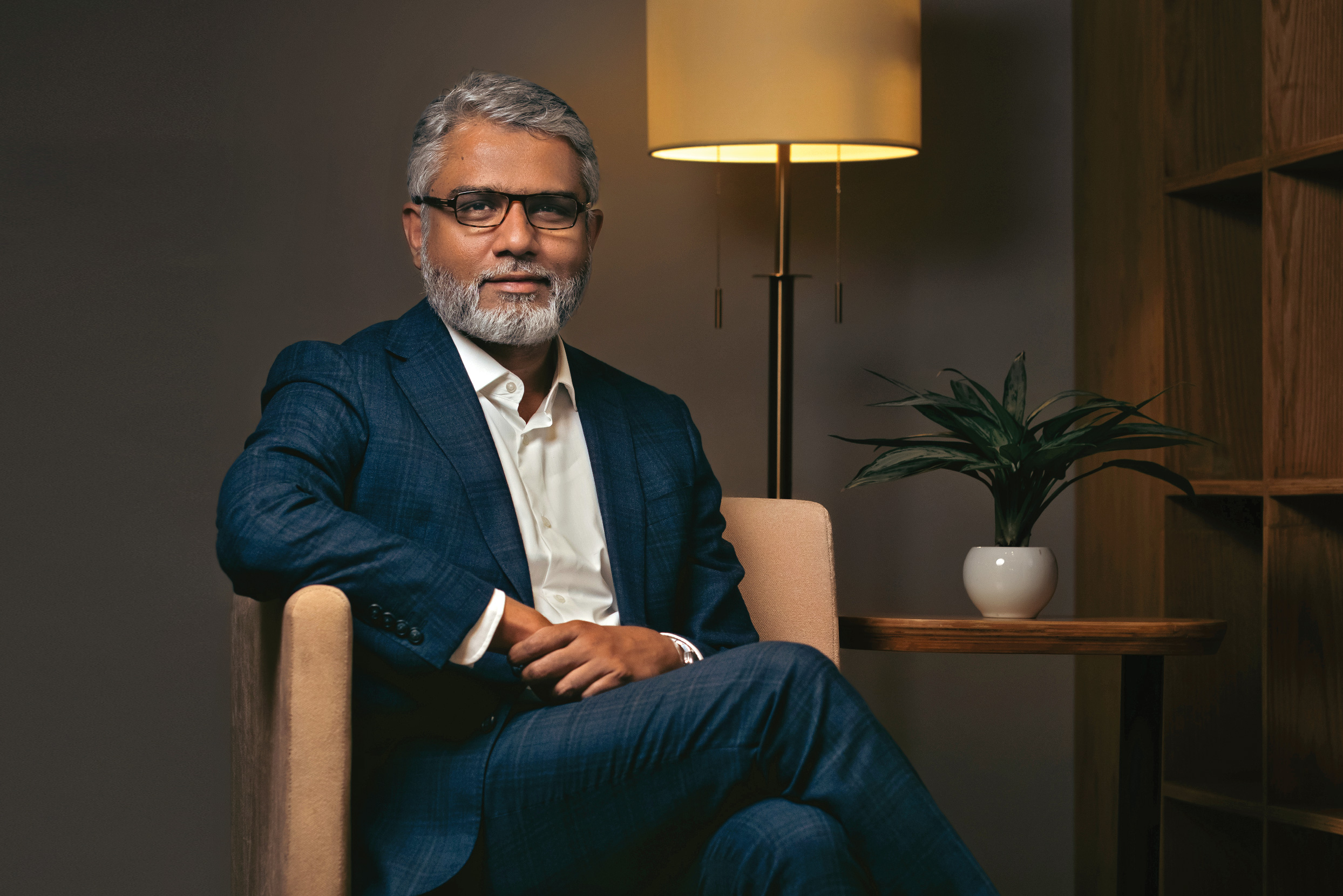
Dr. Jamaluddin Ahmed FCA is one of the Directors on the Board of the Bangladesh Bank. He is also one of the sponsor directors of Emerging Credit Rating Ltd. (ECRL) and the Chairman of the company. He is the current General Secretary of Bangladesh Economic Association and was the President of the Institute of CA Bangladesh (2010). He was the Executive Secretary of South Asian Federation of Accountants. In the political career, Dr Jamal was nominated by the Bangladesh Awami League in 2001 and contested in the Parliamentary Election in 2008 from the same party from Noakhali-2. Professionally, a Chartered Accountant and the fellow member of the Institute of Chartered Accountants of Bangladesh (ICAB) since 1990; he has been awarded PhD on “Adverse Effect Currency Devaluation on Foreign Currency Loan User Companies of Bangladesh” from the Cardiff Business School, University of Wales, under Commonwealth Scholarship in 1996. Earlier, he secured First Class in Master’s Degree and Bachelors with Honors from Accounting Department of Dhaka University. He has many years of experience in the financial sector of Bangladesh and has used his expertise and experience to carryout 50+ research work and publications. He is the Audit Engagement Partner of 10 banks and leasing companies, 4 energy companies, 10 listed non-bank companies and tax advisor for many local and multinational companies. He is a Member of the Board of Directors and Chairman of Audit Committee of GrameenPhone Limited, Advisor to the Board and Audit Committee of Bangladesh Bank. Previously, he had been the representation of ICAB to the Board of Dhaka WASA, Dhaka Stock Exchange Ltd, Consultative Committee at the Security and Exchange Commission, Bangladesh Telecommunication Company Limited. From 2000 to 2013 he was a partner at Deloitte Touche Tohmatsu Bangladesh.
What are your views towards the transition of the Bangladesh economy since its inception? What according to you is the real condition of the Non-Performing Loans (NPL)?
The status of NPL (Non-Performing Loan) at this stage of economic development is nothing new. Our economy is a developing, and it is one with a history of transitioning from being a command to a market economy. Despite, being a part of both India and Pakistan during the British rule, we could not secure any colonial benefits except for some infrastructure regarding railway and port. We started as a command economy and since the 1980s we’ve been reforming into a mixed economy with a target towards the market. Bangladesh began its journey transformation towards a more market oriented economy. Banking reforms took place after the implementation of the revised Industrial Policy in 1986. The current economic philosophy of both the political parties seem to be following a market economy although there are some differences in perceptions and ideologies. So, the disagreements over economic issues have been minimized. This was confirmed by the formation of different regulatory bodies such as the Security and Exchange Commission, Energy Regulatory Commission, Telecom Regulatory Commission, Insurance Regulatory and Development Commission, Competition Commission and much more. These are considered as the pillars of a market economy. The formation of these kinds of commissions reflected the government’s desire towards economic development. The election manifesto of Awami League and BNP in 2008 was very competitive in terms of economic development with little differences except for their implementation procedures. During that time, research done by Harvard University on the economy of Bangladesh talked about its negative growth even after seventeen years of independence. The GDP growth was lower than the population growth. Currently, Bangladesh targets to become a middle-income country by the year 2021. Our per capita income in the year 2001 was less than $500 which has soared to $1600 now. This was a result of the change in the economic development policy. Things like the development of infrastructures like roads and flyovers, generation and transmission of electricity are at the top of the priority list at the moment. The development of energy is an integrated process with the energy regulatory commission being a part of the energy sector.
“CONSIDERING THE SIZE THE ECONOMY, THE NUMBER OF COMMERCIAL BANKS IS TOO HIGH ESPECIALLY WHEN WE COMPARE IT TO OUR COMPETING NATIONS. WE SHOULD REDUCE THIS NUMBER THROUGH MERGERS, PREVENT THE OPENING OF NEW ONES AND CLOSE DOWN THE POOR PERFORMING ONES.”
We’ve seen drastic changes in the banking industry across the globe. Bangladesh has witnessed some of those changes but what more needs to be done?
The banking industry has seen a lot of growth across the globe. This shift was possible due to automation and the work of the ICT sector. Many people have also moved to mobile banking. Nowadays, with the help of agent banking, residents in the rural areas also have access to banking facilities. Moreover, we are yet to implement automation in handling receipts. In an ideal market, cheques are cleared within a day. However, in our country, it takes around three days to clear one. Real Bank Gross settlement is yet to be focused on. Furthermore, automation in the national payment system will result in fewer branches. Considering the size the economy, the number of commercial banks is too high especially when we compare it to our competing nations. We should reduce this number through mergers, prevent the opening of new ones and close down the poor performing ones.
What are your views about the cybercrime that took place in the Bangladesh Bank?
The systemic weakness of the SWIFT system along with the Federal Reserve System must be held liable for this incident including the Sri Lankan and the Philippines central bank and commercials, the beneficiaries of those countries involved in the hacked transaction. The official transfer of money from Bangladesh Bank follows certain protocol under the approved Standard Operating System where there is no scope to do so. Initially, a request has to be generated which is first sent for administrative approval and then to the treasury. A loop hole in the SWIFT system and lack of right due diligence from the Federal Reserve System is what made the theft possible. This also depicts our failure to detect on time and take necessary action report and disclose to the competent authority. However, a technology based fraud can only be prevented by deputing people into the system 24/7 and upgrading the SWIFT and Federal Bank System on a regular basis. We surely need to establish such measures into our system.
What is the future of banking in Bangladesh?
Banking failures have an adverse impact on the economic development of a country. In the 1930s, there was a banking failure in the USA. Due to this, alternative sources of finance like issuing bonds and share market exchange was introduced. A country cannot just be developed only through bank financing. The refinancing of the ailing banks needs to be reduced. If automation can be implemented correctly, the entire banking system would generate a different result in a positive way. The Real Time Gross Settlement (RTGS) will ensure faster, transparent, secured and reliable financial transactions. Moreover, adapting to the RTGS system will reduce the number of frauds which is more common in the manual system. Integrating Stock Exchange transactions within RTGS and automated banking system will result in the larger volume of transactions compared current one. One of the other reasons behind our slow development is the lack of skilled human resources. Thus, it is essential for us to invest more on education for creating a skilled workforce. Our current education system fails to meet the industry needs. Establishing good governance in the banking sector is a must. Bank Boards and management must ensure the compliance to Regulatory Institutions gatekeeping compliances in terms of legal, financial, marketing and sanctioning of loans and classification there of following central bank guidelines.
What new things are yet to be developed in our financial market?
Our financial market still needs development in the areas of the bond market and alternative financing. Derivative markets and other such innovations need to be introduced. On the other hand, we also need to have more public-private partnerships. Although it is a gradual and integrated process, the entire system needs to be changed as a whole. The financial system of command economy does not fit with a market economy. In Bangladesh, currently, we are trying to implement a market economic system under command system regulatory institutions and bureaucratic regime. The work culture and mindset of current public managers are mostly dominated by command economic systems, but the political leadership at the top is apparently trying to manage following the principles of the market economic, financial management system. There is a gap between policy makers and with those who are at the implementation stage of such policies. Bangladesh cannot afford the continuation of such gap for a long time. The doable mechanism must be worked out immediately.
“IT IS NECESSARY TO CREATE MORE JOBS IN THE ECONOMY AND TAKE IN MORE EXPERTS. A CIVIL SERVICE REFORM ALONG WITH THE RESTRUCTURING OF OUR EDUCATION SYSTEM IS ALSO MUCH NEEDED.”
What needs to done to develop the IT sector in our country?
It is necessary to create more jobs in the economy and take in more experts. A civil service reform along with the restructuring of our education system is also much needed. As a nation, we are good at mathematics, in parallel; we also need to promote science education in our country. For instance, Pundit Nehru as the first Prime Minister of India had established countrywide technical institutes and improved science education that laid the foundation modern India’s ICT education. For such visionary initiative in the post-independence period, India today is an IT-dominated country. Bangladesh also needs to take a similar strategy. Under the leadership of Honorable Prime Minister Sheikh Hasina, since 2009, the current Digital Bangladesh wave is paving the ways towards the automation of banking and financial systems through mobile financial services and digitization of stock market transactions. We should remember that we were the supplier of raw materials to the colonial rulers with no benefits in turn during the British India and Pakistan without any infrastructure. Whatever we see now are the result of our independence after 1971, headed by our Father of Nation, Bangabandhu Sheikh Mujibur Rahman. We have a long way to go and develop our motherland Bangladesh from LDC to a middle Income and then upper middle income and then a developed country.