By Fuad Hussain
Investors from a few years back would probably be able to recall when savings at banks paid handsomely. The interest rates on such savings were more than 10% and savers were happy. But what should be the investing strategy today when interest rates on bank deposits are low and are likely to stay there?
Low Rate Fixed Deposits
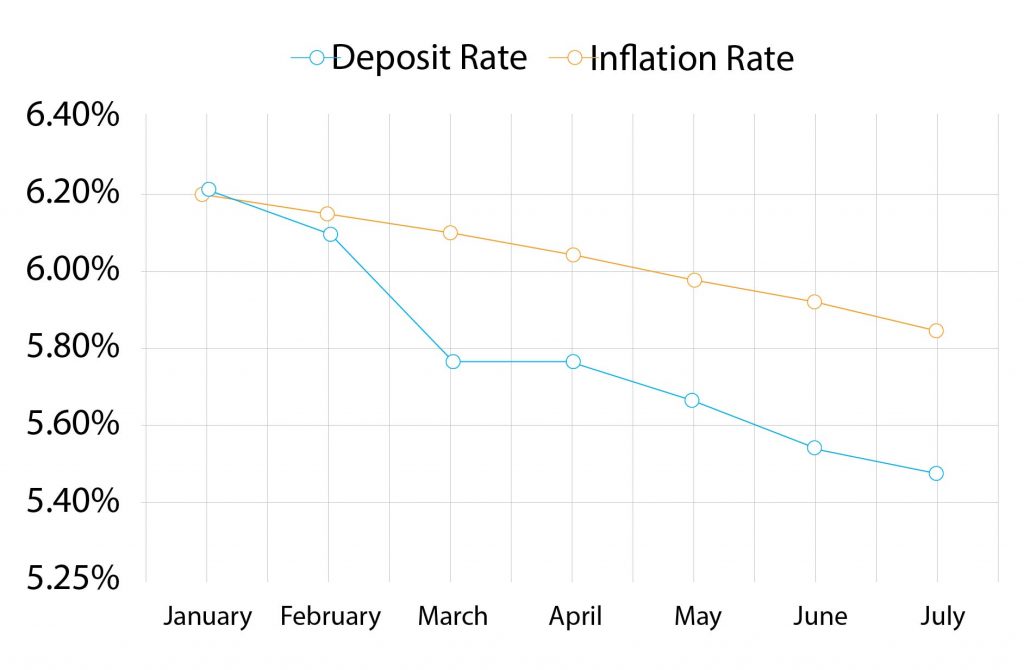
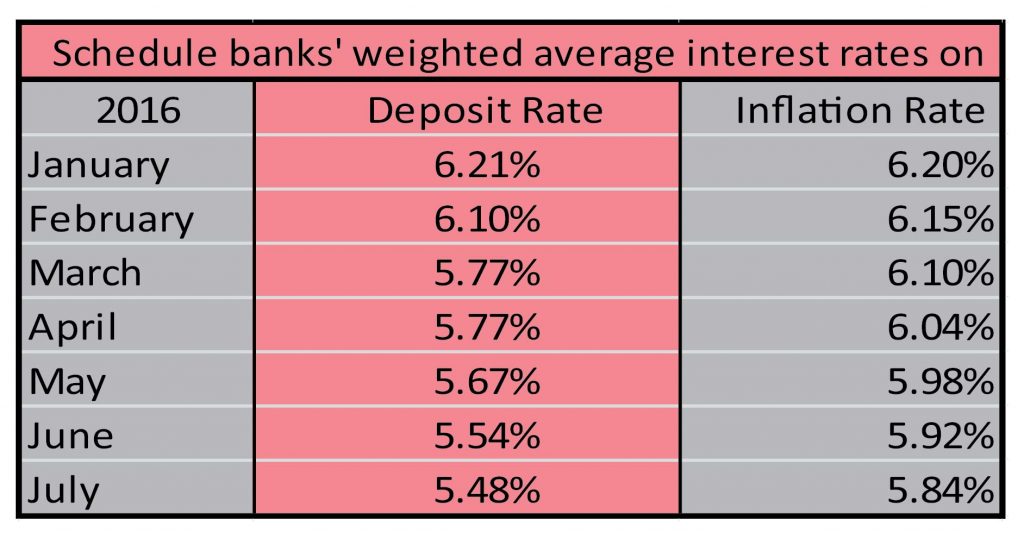
Nowadays, banks pay around 5.5% on FDRs. Given that the inflation rate is hovering around 6%, your hard-earned savings is actually losing its value. When you adjust a given interest rate for the effect of inflation you get what is a called “real” rate of return. In this instance, you are having a real rate of return of negative 0.5%.
Sanchaypatra Salvation
In a low-interest environment, what other options do you have to get a better return on your money? An alternative could be the Government Savings Certificates or Sanchaypatras (SP), instruments which are paying well above 11% interest, yielding returns which are beating the inflation rate. However, the tenures of such instruments are 5 years and 3 years and early encashments can be penalized. There are also restrictions on how much money you can include in each scheme. On the other hand, FDRs have flexible tenures but returns are much lower compared to SP. Hence, whether to put all of your money in SP or have a combination of both FDRs and SP depends on your return and liquidity requirements. Putting more weight on high interest bearing instruments would generate a higher real return.
Stocking Up
Another option could be investing in shares of quality companies. Though stocks are considered to be the riskiest asset class of all, their return prospects are also much higher than the aforementioned two options. Time and again, studies have proven that shares are one of the best long-term investments in the financial marketplace. The backbone of portfolio construction is about finding excellent companies that are selling at attractive prices. Patience is the key as you have to give time to your investment decision-making process and must be able to assess and analyze the financial and non-financial aspects of companies and sectors.
If you are investing for dividend incomes then look for companies whose businesses are viable and sustainable so that they can continue in paying cash dividends. Companies whose cash flows are not sufficient are most likely to cut dividend payments and those stocks are better to avoid. Seek companies whose operating earnings and cash flows are strong and have the ability to sustain adverse situations without compromising dividend payments. Also, it is worth looking at their dividend paying trends to have an idea of the future. The dividend yield is the key figure for you. It is the ratio of the annual dividend payment to the current share price (annual dividends per share divided by current price per share). Therefore, given a constant rate of payment, the yield and stock price always move in opposite directions.
In the Bangladesh market too, there are a lot of stocks across sectors which offer handsome dividend income opportunities. For instance, some banks offer dividend yields above 7% and trading below their NAVs. In the Mutual Fund sector, there has been impressive development on the regulatory side protecting investors’ interest. Many of the mutual funds are trading at discounts and also pay cash dividends annually, yielding a higher return than other financial asset classes. Dividends may help cushion the impact of market declines.
On the other hand, growth investing is the interesting part of the stock market. It involves finding companies with strong future growth potential. You may see a capital gain from investing in such companies. Growth investing can involve more risk if you focus too heavily on small-cap stocks that have the potential for rapid growth, but also face tremendous odds for long-term success. There are large-cap stocks that are in strong growth positions. Your job is to find those that match your strategy, goals, and risk tolerance.
Value investing may be the most difficult, but may also offer the best return over the long term. Value investors find companies that are trading at prices significantly below their true value.
The companies may be out of favor with the stock market because they are not in the current hot stock sector or they are in a business that investors find unattractive. However, the payoff can be significant when the stock market discovers the stocks and bid up its price from the low point when you purchased to a much truer level. This may require you to hold the stock for a long period and require you to update your assessment on a regular basis.
Blended investing, also known as balanced investing – is a combination of growth and value investing strategies. By combining the two and practicing good asset allocation, you can hit the best of both. You can adjust the mix to increase or decrease potential return and risk to fit your particular goals and timeframe.
However, stock market investing is not easy. There are a lot of risk factors that can affect your wealth. It is a time consuming process to select stocks then monitor and review the factors involved. You must look at the financials, ratios, management and potential of the companies among other factors. You should also remember that investment in stocks may eat up your wealth as well! Always bear in mind that how you want to distribute your wealth in different asset classes depend on your return requirement and risk tolerance.