Of Lions & Tigers

Share on facebook
Facebook
Share on twitter
Twitter
Share on pinterest
Pinterest
Share on linkedin
LinkedIn

Bangladesh is a good place to live and work. Expat Sri Lankans get candid with IBT.

By Asaduzzaman
Photographs by Ashrafuddin Apu

According to Aruna Ruvanwella, President of Sri Lankan Association in Bangladesh, Sri Lankans started coming to Bangladesh from 1988 and onwards but their numbers increased after the year 2000 when the country lost their quota in readymade garments. Most of the factories started shifting and they started coming up with garments business and buying houses which were headed by Sri Lankans.  Still there are factories headed by Sri Lankans, and in Chittagong there are even Sri Lankan owned power plants.
He cited the main reason behind this being the numerous opportunities in garments trades. Many of the job seekers migrating to Bangladesh knew their skills in merchandising would be appreciated by the nation, which was slowly and steadily going to become the 2nd largest exporter of apparels worldwide. Due to their educational qualification as well as professional prowess, demand for Sri Lankan manpower in positions like GM (General Manger) and CEO (Chief Executive Officer), COO (Chief Operating Officer) and other positions in technical levels were highly sought after.
Behind Sri Lanka’s towering success in education sector was the vision of their government. They realized that due to fewer resources, the country would not be able to provide employment to everyone. Turning them into global citizens with world-class education would enable them to go abroad and build careers on an international platform. “Our standard of education is the highest in South Asia, almost all male and female who where in government schools receive English medium education along with the Singhalese and Tamil language being taught,” Aruna states.
There’s a good community of Sri Lankans comprising of almost 2000 Sri Lankan families and near about 6000 thousand working people in Bangladesh. Many Sri Lankans are living in Uttarain Dhaka as EPZ, DEZ and factories are in close proximity. In Chittagong, Khulshi is their area of choice and in Comilla, most of them dwell around the Comilla EPZ. The children are going to English medium schools available in the cities and most of the Sri Lankans understands Bengali well.
Aruna went on to say that when he came here in Bangladesh in 2005, he found a severe dearth of skilled workers. “The scenario has changed. Now the younger generation is highly educated and there are people with a foreign degrees coming back to the county who are better equipped to think out of the box”.
Although used to the nightlife in Colombo he found that aspect missing in Dhaka. Nevertheless, he praised the international clubs and their services available in Dhaka. I M Shumiz, the secretary of Sri Lankan Association in Bangladesh seconds Aruna about enjoying their stay in Bangladesh. “The people are very kind, cooperative and hospitable to foreigners. They are always ready to help.” He went on to comment that the traffic is bad in Bangladesh whereas in Sri Lanka, commuting is not that much of a challenge thanks to the availability of a good public transport system, “Even most of CEOs are travelling through train but in Bangladesh train services are not very good.”

An Affair to Remember
We had the pleasure of speaking to a Bangladeshi named Karishma and her Sri Lankan husband Milan. Living in perfect harmony with each other, they are enjoying the global corporate life here in Bangladesh.
Turan Milan Samath, Country Manager of Cross Freight Lines Ltd.says he came to Bangladesh in 2007 and settled down very quickly. He met Karishma in 2012 and later they got married. According to Milan, in the Sri Lankan community people meet each other during social gatherings. It is more like a corporate circle where everyone speaks the same language and has almost the same mindset. For Karishma, Milan’s pro-activeness and supportive nature have always been significant attributes. “He remains the same friend even after marriage which is really great for me”.
Karishma, a graduate from London School of Commerce, Dhaka Campus currently works as a popular ramp and television model. She says she is getting more offers from international agencies in Sri Lanka nowadays after her ramp walk in the 2010 Dhaka Fashion Week. She sounds content praising her in-laws who have been supportive of her choice of career, while in her own locality, modeling in the earlier days was frowned upon.

Lessons for Bangladesh
Bangladesh has many lessons to learn from Sri Lanka in the field of developing human resources. Bangladesh’s success in achieving MDG goals in maternal and child health has turned heads. The country now wishes to become a middle-income economy. However, without a skilled workforce that goal will be impossible to achieve. Education, which is regarded as the great equalizer, can play a vital role in this regard. Just like a way the Sri Lanka government helped its citizens become globalized with world class education, Bangladesh too can take a page from their book and build a nation of global citizens who will contribute to the national as well as international economy in the future.

Country Profile: Sri Lanka

Srilanka-01

Sri Lanka is an island in the Indian Ocean also called Ceylon and many other names. It is only 65,525 sq km and a coast line of 1,340 km and about 28 kilometers (18 mi.) off the south-eastern coast of India.
According to the 2012 census the population of Sri Lanka was 20,359,439, giving a population density of 325/sq km while density is highest in the south west where Colombo, the country’s main port and industrial center and diverse ethnically, linguistically, and religiously.
Annual population growth rate is 1.1%.where18.2% lived in urban area. Demographically 25.2% of the population were aged 14 or under while 12.4% were aged 60 or over. The sex ratio was 94 males per 100 females. The fertility rate for married females aged 15 or over was 2.65 live births. There were 75.7% households were headed by males and 24.3% were headed by females. Of the aged 15 or over, 67.8% were married, 25.8% were never married, 5.2% were widowed and 1.2% were divorced or separated. Of those aged 15 or over51.6% were economically active, 27.6% did housework, 9.4% were students, 6.0% were unable to work and 2.3% were pensioners.
The overall literacy rate for those aged 10 and over was 95.7% but amongst those living in the estate sector it was only 86.1%. Of the aged 5 or over, 2.7% had received a higher education qualification, 12.3% had passed G.C.E. A/L, 17.0% had passed G.C.E. O/L and 3.8% had no formal schooling.
The Sinhalese make up 74.9% of the population (according to 2012 census) and are concentrated in the densely populated south-west and central parts of the island. The Sri Lanka Tamils, who live predominantly in thenorth and east of the island, form the largest minority group at 11.1% (according to the 2012 census) of the population.
The Moors, descendants of Arab traders that settled in Sri Lanka and married local women, form the third largest ethnic group at 9.3% of the population. They are mostly concentrated in urban areas in the southern parts of the island with substantial populations in the Central andEastern provinces. During times of Portuguese colonization, Moors were persecuted, and many forced to retreat to the central highlands and the eastern coast.There are also Indian Tamils who form a distinct ethnic group comprising 4.1% of the population.
According to the 2012 census Buddhists make up 70.1% of the population, Hindus 12.6%, Muslims 9.7% and Christians 7.6%. Most Sinhalese are Buddhist; most Tamils are Hindu; and the Moors and Malays are mostly Muslim. Sizeable minorities of both Sinhalese and Tamils are Christians, most of whom are Roman Catholic. The Burgher population is mostly Roman Catholic or Presbyterian. The Veddah carry out Animist and Buddhist practices. The 1978 constitution is assuring freedom of religion but gives “the foremost place” Buddhism.
Sinhala, an Indo-European language, is the first language of the Sinhalese. Tamil, a Dravidian language, is the first language of the Tamils. Tamil is also the first language the majority of Moors – according to the 2012 census 98% of Moors could speak Tamil but only 59% could speak Sinhala. Malays speak Sri Lanka Malay, a Creole language mixing Sinhala, Tamil and Malay. Many of the Burghers speak Sri Lankan Indo-Portuguese although its use has declined and the majority now speaks Sinhala .According to the 2012 census, 24% of the population could speak English. According to the constitution, Sinhala and Tamil are official languages while English is the link language.
Sri Lanka government has been focusing on skilled and professional categories, which will have a higher earning capacity and less employment related problems. Sri Lankan Government entered into a Bilateral Agreement on Labor migration with Italy, which created 3,500 employment opportunities. Another, initiative taken is a tripartite collaboration between the University of Hertfordshire of UK, Open University of Sri Lanka and Sri Lanka Bureau of Foreign Employment on Nursing Education with special emphasis on foreign employment.
Sri Lankan Government had already signed, MOUs with Jordan, UAE, Bahrain, Libya and South Korea and Bilateral Agreement with Qatar and job-ensured export-oriented workers training institute as a joint collaboration with Sri Lanka Bureau of Foreign Employment and two Malaysian organizations, which will meet the growing demand for especially skilled workers in Malaysia.

Share:

Share on facebook
Facebook
Share on twitter
Twitter
Share on pinterest
Pinterest
Share on linkedin
LinkedIn
On Key

Related Posts

THE LONG GAME

As Head of Talent, Culture & Inclusion at BAT Bangladesh, Rabih Masrouha is helping shape the company’s approach to inclusive leadership. Few leaders have had
TAPPING INTO A CASHLESS FUTURE

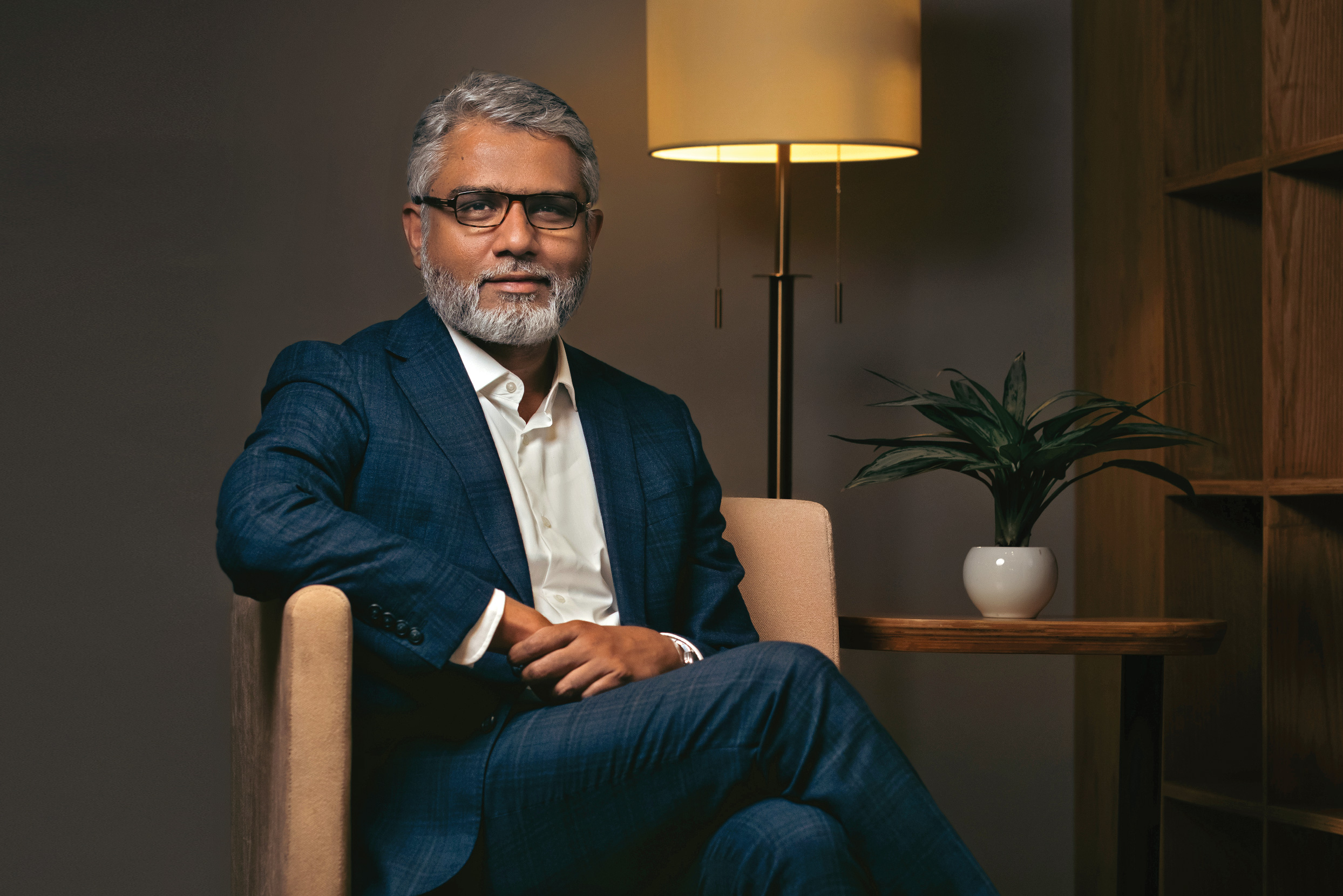
Sabbir Ahmed, Country Manager of Visa Bangladesh, Nepal, and Bhutan, offers insights into Bangladesh’s digital payments journey, highlighting emerging trends, structural challenges, and the gradual

Leave a Reply

Your email address will not be published.