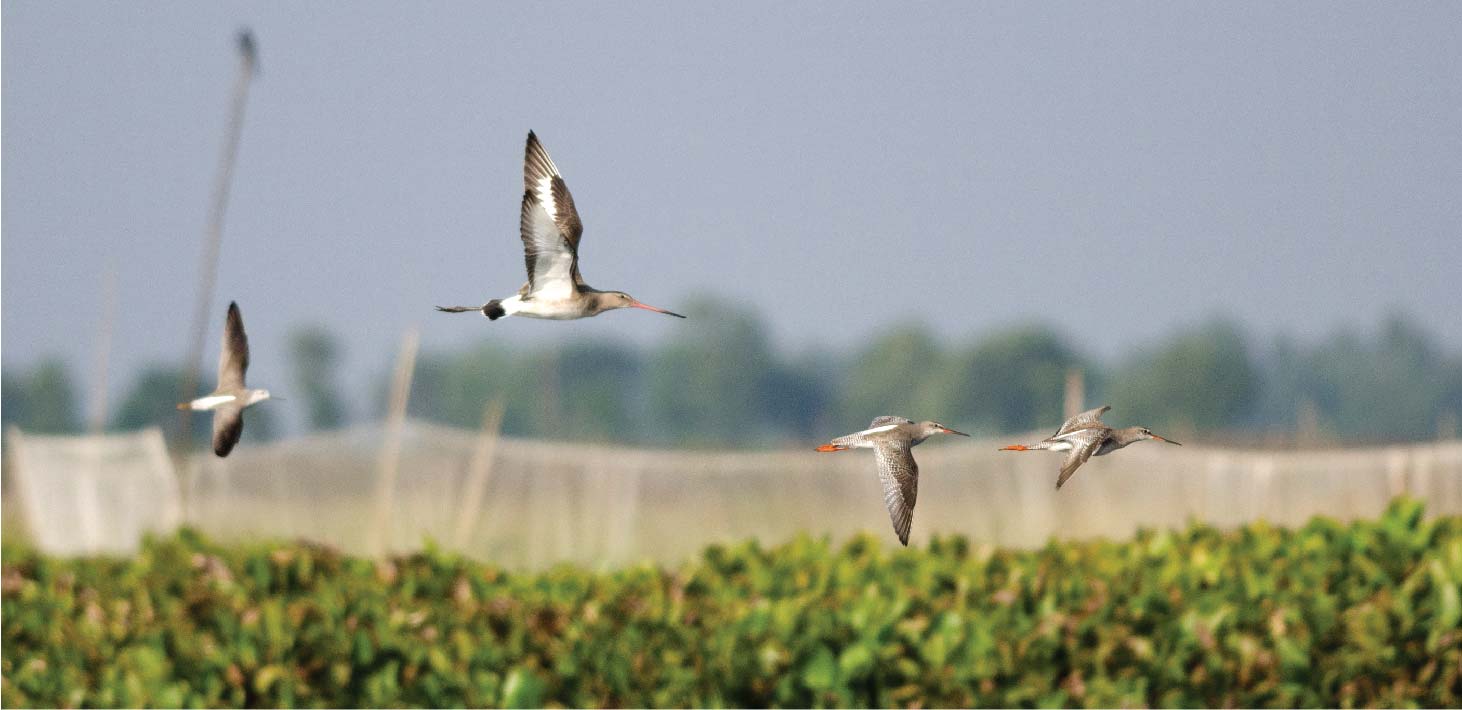

Bird watching in Bangladesh exists in a big manner
By Saad Mahmud
Bird watching in Bangladesh is more than you could ever imagine. Abundance of resident, migratory and seasonal birds makes our land a paradise for ornithologists all around the world. Bulbul, magpie, robin, common game birds, cuckoos, hawks, ducks, owls etc. are the major resident birds in Bangladesh. Bangladesh is situated on the cross path of two major migratory flyways. Our wetlands, many of which are situated in Sylhet, are the home for migratory birds. Even in Dhaka, Jahangirnagar University is a famous sanctuary for migratory birds. The coastal areas, including Sundarban forest are important breeding, resting and feeding ground for a large variety of resident and migratory bird.
While Trekking through the Jungle of the Sundarbans, you can have the opportunity to observe both animals and birds. Meantime the footprint of tiger will be an additional benefit.
During winter in Sylhet, the vast wetlands like Hail Haor, Hakaluki Haor, Tanguar Haor is crowded with a diverse range of migratory birds. Among these wetlands, Tanguar Haor is located in Sunamganj District (northeast of Bangladesh) covering an area of about 100 square kilometers of which 2,802.36 square hectares is wetland. With a unique ecosystem, it includes more than hundred resident birds and many more seasonal species of bird.
Lawachara National Park, located at Kamalganj Upazila, Maulvi Bazar District in the northeastern region of the country, is a major national park and nature reserve in Bangladesh. Biological diversity is a strong aspect of Lawachara National Park. The wildlife in Lawachara includes nearly 460 species of which nearly 250 are bird species.
A little far from the maddening crowd of Dhaka, Jahangirnagar University is a bird sanctuary for seasonal migratory birds. Each year thousands of bird watchers gather in this university. It takes only an hour from the Dhaka city to Jahangirnagar University by car or bus.
Now you already know why Bangladesh is a heaven for birdwatchers from all around the world. All you need is just a pair of binoculars, a sturdy pair of hiking shoes, and a lot of patience.
There are 12 bird sanctuaries in Bangladesh, but the Bharatpur Bird Sanctuary is the most famous and the largest bird sanctuary in Asia – being home to over 300 of resident bird species. The sanctuary is also a renowned refuge for migratory birds like barons, ibis, pelicans and painted storks that make Bharatpur their temporary home during the winter months.
Although covering a total area of only 29 square kilometers (11 of which are marshes and grassland) Bharatpur is a birdlover’s paradise and shouldn’t be missed. The Sanctuary is open throughout the year, but the ideal months for visiting Bangladesh are from August-November for resident breeding birds and October- February for migrant birds.
While visitors can walk at their leisure on well-defined forest trails, bird lovers can also take a ride on a rickshaw or take a boat. Bird watching excursions are offered throughout the day, but sightseeing ventures in early morning or late evening may prove to be the most interesting.
Fair at Jahangirnagar University
Bird watchers say despite the adverse impact of ongoing climate change, migratory birds come to Bangladesh wetlands every year to escape the extreme cold in the regions where they come from. ‘Migratory birds are our natural resources. We should make efforts to protect them,’ said amateur bird-photographer Zakia Roushan Runi, who visits JU every year. Runi, however, said that he fears that the number of birds visiting Bangladesh is declining during the last few years because neighboring countries are also providing sanctuaries for them.
But Emam Ul Haque, president of Bangladesh Bird Club, said that Bangladesh is still a safe heaven for thousands of migratory birds. Haque said that migratory birds not only enrich Bangladesh’s bio-diversity by creating a balance in the ecosystem, but also enhance the beauty of the surrounding through their colorful presence.
Availability of food and sustainable environment in Bangladesh attract migratory birds to stay for a certain time in the country’s water-bodies, said Haque, who takes regular bird watching trips to various forests in the country. Like Runi, he also expressed his concern that rapid growth of industries in Bangladesh like many other Asian countries may threaten bird habitats, resulting in the decline of the influx of birds from other countries.
Besides these, Sonadia Island