SCRIPTING THE FUTURE

Share on facebook
Facebook
Share on twitter
Twitter
Share on pinterest
Pinterest
Share on linkedin
LinkedIn

Inside the Dhaka Engine Powering US Healthcare Revolution

Augmedix, a Commure company and leader in healthcare technology, focuses on simplifying data collection, streamlining clinical workflows, and restoring meaningful clinician-patient interactions. By leveraging ambient AI technology to reduce the administrative burden, Augmedix is transforming healthcare clinical documentation and empowering clinicians to focus on patient care.

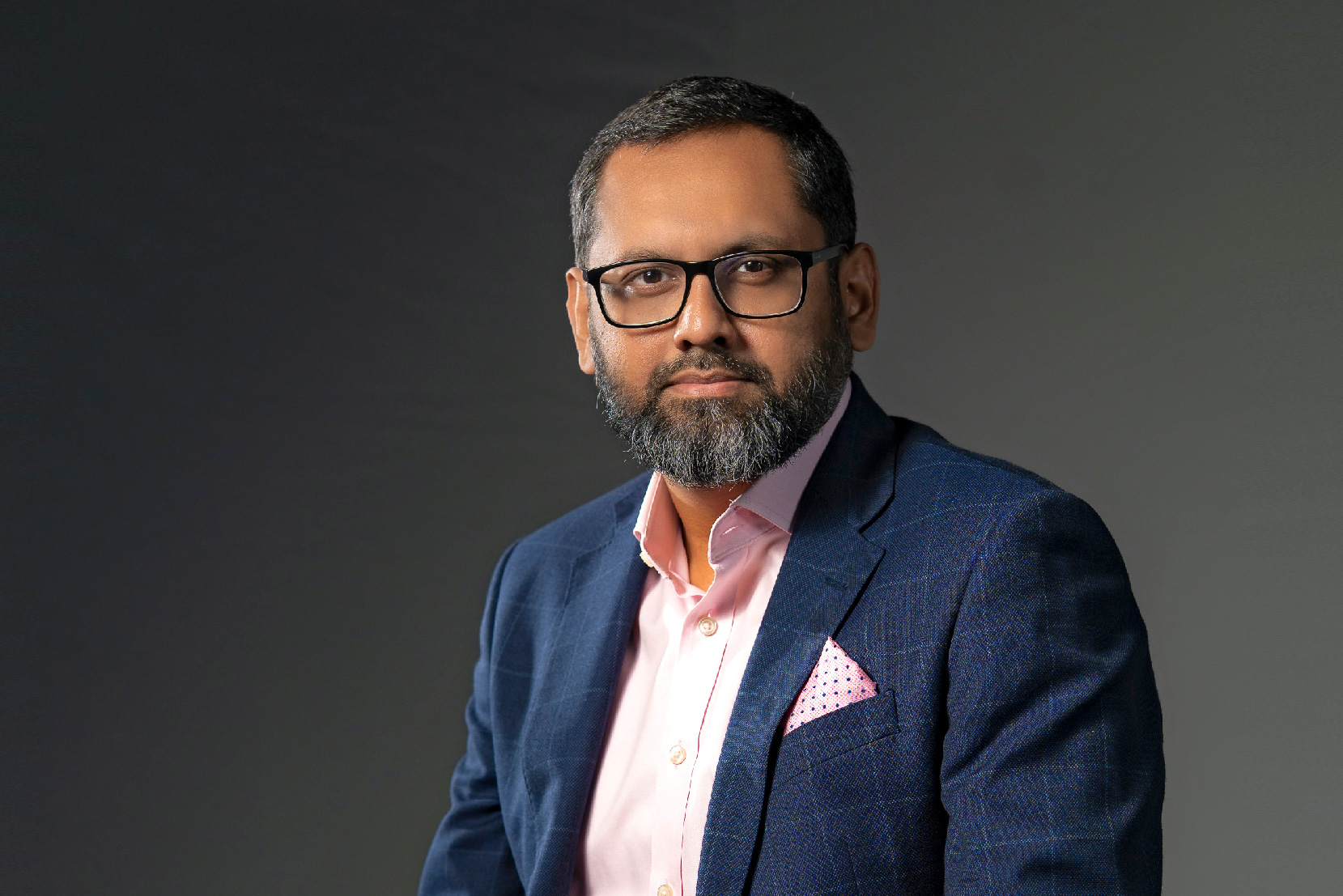
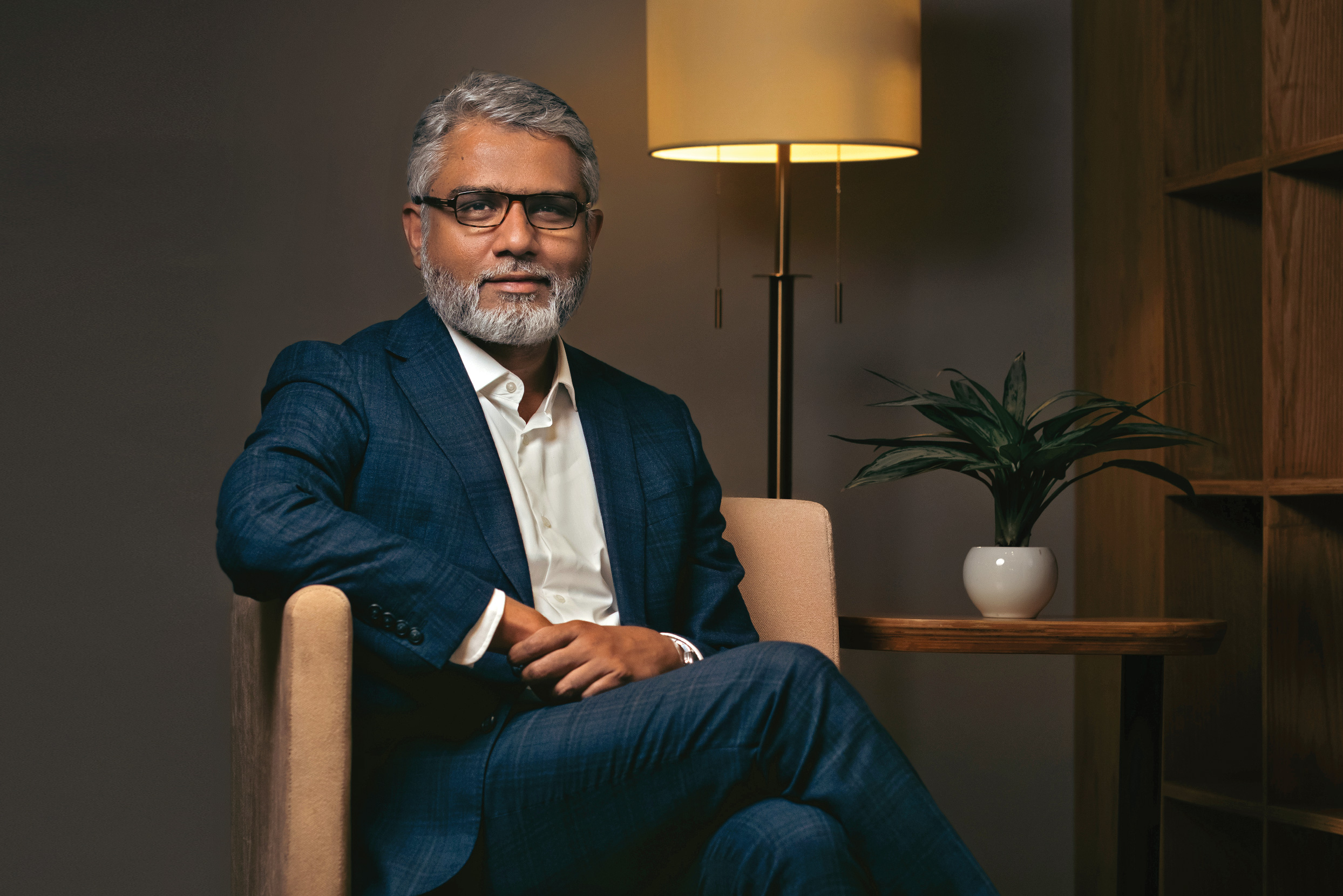
In an interview with IBT, Mohammed Abdul Hannan Russell, Director of MDS Operations, and Zahid Hasan, Senior Manager, RCM Operation of Augmedix Bangladesh offers insights into the company’s operational structure in Bangladesh and how it has expanded after the recent merger with Commure.

When Augmedix chose Bangladesh as its primary operations hub, what specific qualities in the workforce made it the right bet over other markets? 

Mohammed Abdul Hannan Russell: Bangladesh offered something that is genuinely rare — an untapped, large, and young workforce that was not just skilled and hungry, but deeply adaptive. In an industry like healthcare technology where protocols evolve constantly and the margin for error is near zero, adaptability is not a soft skill; it is a core operational requirement. What we found here was a generation of professionals who were not only capable but eager to grow, willing to learn, and able to pivot quickly as the technology and the market demanded. That combination of scale, skill, and adaptability made Bangladesh the right bet — and that bet has continued to pay off.

What does it take to maintain clinical-grade accuracy in documentation for US healthcare from Dhaka? What operational disciplines are non-negotiable? 

Zahid Hasan: There are several things we consider non-negotiable. First is strong English proficiency — not just functional English, but the ability to understand clinical nuances and communicate with precision. Second is adaptability; healthcare documentation is not static, and our teams must be able to absorb process changes and apply them with consistency. Third is a genuine understanding of time sensitivity — a clinician’s note that is incomplete or delayed has real consequences for patient care, and our teams understand that weight. Lastly, Precision. In healthcare, the difference between adding or omitting a single word can change a clinical outcome. These disciplines are instilled from day one in training and reinforced continuously. They are not optional.

How has the team’s role shifted from live scribing to actively training and improving LLM-based ambient AI models — and what did that demand from people operationally? 

Mohammed Abdul Hannan Russell: Augmedix has believed in AI-assisted human operations as the ideal model for healthcare from the very beginning. We started investing in that vision as early as 2018 — long before it became an industry conversation. Our people were central to that journey. The

data they collected and documented through thousands of real patient visits every day became the training foundation for our AI models. What that demanded operationally was a workforce willing to evolve its own role — to shift from executing a task to actively shaping a system. When the broader market made its full pivot to AI-driven documentation in early 2023, Augmedix was already ahead of the curve. That was not luck. That was the result of years of deliberate investment by our people and our leadership.


Photograph: Shihab Mohammad

In what concrete ways does the daily work of Clinical AI Specialists in Bangladesh improve the AI — what does that feedback loop actually look like? 

Zahid Hasan: Every patient visit that our team processes is a data point. When a Clinical AI Specialist reviews, corrects, or validates an AI-generated note, that action feeds directly back into the model’s learning. Over time, the model becomes sharper, more contextually aware, and better calibrated to the realities of clinical language. Our teams are not just users of the AI — they are its ongoing editors, teachers, and quality assurance layer. The feedback loop is daily, it is continuous, and it is built into the core workflow. This is what separates Augmedix from a simple outsourcing model. The people in Dhaka are actively building the intelligence behind the product.

Can you share an example of a team member who joined as a Scribe/Clinical AI Specialist and grew into a Management role — what did that journey look like? 

Mohammed Abdul Hannan Russell: There are many such stories, and they are among the most compelling proof points of what we have built here. This organisation has already taken pride in retaining not just the knowledge we have accumulated over the years but also the people behind that. With the exception of one individual the entire Operations Management team started at Augmedix as Scribes. These individuals — including Zahid and myself – then rose through the ranks while being deployed across a myriad of roles. If I had to give an example — one of our Senior Managers, Mohammed Shahidul Mostafa Symum was a part of the very first cohort of scribes who were sent to India for training nearly a decade ago. After a rigorous 9 month training, he then started his journey as a scribe. Following exceptional service, he was promoted to our Training team and was again a trailblazer — part of our first group of in-house trainers. He excelled in that position and went from a Trainer, Lead Trainer, to managing the entire Training team. After years of producing excellence as part of the training team, he was promoted to the position of a Senior Manager and pivoted to a role that was more clinician service centric. This path was not linear, nor was it simple. It required continuous learning, adaptation, and resilience. As mentioned, the transitions were not always linear, but the common thread was ownership; Someone who saw their role not as a job to perform but as a problem to solve. His career grew in parallel with the company’s evolution, and that is exactly the kind of pipeline we continue to build.

Augmedix Bangladesh runs 24/7 to serve US healthcare. How has the ops team built a culture of reliability and precision at that scale — and what does leadership look like at 3am? 

Zahid Hasan: Running a 24/7 operation in support of live US healthcare means that downtime is simply not an option. The culture we have built here is one where every shift, regardless of the hour, is treated with the same standard of accountability as any other. Leadership at 3 AM looks exactly like leadership at 3 PM: decisions are made, escalations are handled, and the team is supported. What has made this possible is investing in leadership at every level of the organisation, not just at the top. Our supervisors, team leads, and managers carry genuine ownership. They do not wait for permission to solve a problem. That mindset — built over years and reinforced constantly — is what keeps the operation running with the precision US healthcare demands.

Photograph: Shihab Mohammad


What are the key operational disciplines that have scaled from 60 to 1,300+ people without losing quality — what broke along the way and how did you fix it? 

Mohammed Abdul Hannan Russell: Scaling from 60 to over 1,300 people while maintaining clinical-grade quality is not a linear journey — things break, and that is part of the process. What we learned is that the disciplines that matter most at scale are clarity of standards, speed of feedback, and the ability to train not just skills but judgment. You can document a process, but you cannot document instinct. So we invested heavily in building layers of quality review, calibration sessions, and real-time performance systems that allowed us to catch drift early and correct it before it became a pattern. Every time something broke, we treated it as a design problem, not a people problem. That distinction made all the difference.

Building a team of ~300 RCM professionals in under a year is an extraordinary pace. What made that possible in Bangladesh — and what were the biggest hiring and onboarding challenges?

Zahid Hasan: Since Augmedix became part of Commure in late 2024, the leadership made a decisive call to launch RCM operations in Bangladesh. What followed was remarkable and we have grown to approximately 300 people since. Two things made that pace possible: the quality of talent available in the market and the level of ownership our people demonstrated from day one. The challenges were real but what we constantly saw was people taking initiative to close that gap. But what we consistently saw was people taking initiative to close that gap, upskilling on their own time. Night shift was initially identified as a potential blocker, but to our genuine surprise, this generation proved far more comfortable with non-traditional hours than expected. That flexibility has been a quiet but significant competitive advantage.

RCM covers operations analysts, data analysts, and support functions. How do these three functions interconnect — and how does the Bangladesh team’s work directly affect claims accuracy and revenue recovery for US health systems? 

Zahid Hasan: The three functions are deeply interdependent. Operations analysts manage the workflow integrity of the claims process — they are the first line of defence against errors and delays. Data analysts sit behind that layer, identifying patterns, surfacing anomalies, and feeding insights back into process design through workflows and workarounds. Customer support ensures that the clients always find a solution to the problem they face without any delay. When these three functions operate in sync, the result is a claims pipeline that is faster, more accurate, and more reliable. For US health systems, that translates directly to revenue that does not leak and reimbursement timelines that are met. The Bangladesh team is not peripheral to that outcome, it is central to it.

What does the ideal RCM hire in Bangladesh look like today — background, skills, mindset? And how is the training pipeline being built to keep up with the growth? 

Zahid Hasan: The ideal candidate brings a combination of technical capability and the right mindset. On the technical side, proficiency in SQL and Python is increasingly important, as is strong English communication. But above all, what we look for is a “can-do” attitude — someone who is willing to adapt to any scenario, because the market is moving fast and change is constant. The RCM space in particular is evolving at a pace where rigid thinking is a liability. Our training pipeline is being built to reflect that reality: structured onboarding combined with ongoing upskilling, with a deliberate focus on preparing people not just for the role they are hired into, but for the roles the industry will need in two years’ time.

Commure’s platform processes over $25 billion in annual claims. What does it mean for the Augmedix Bangladesh team, and for Bangladesh’s broader professional identity, to be at the operational centre of that pipeline? 

Zahid Hasan: It means something that we do not take lightly. Augmedix Bangladesh does not operate like a BPO. We are not a vendor at the edge of the organisation — we are a direct extension of the US office, embedded in the core operations of one of the most consequential platforms in American healthcare. While Commure does have operations across other geographies, Bangladesh has been in the trenches with our US team, handling customers and managing critical workflows from the very beginning. The fact that a meaningful share of a $25 billion claims infrastructure now runs through Dhaka is not just a commercial milestone. It is a statement about the calibre of this workforce and the trust that has been built over a decade of showing up, every single day, at the standard the market demands.

Does the RCM expansion signal a deliberate strategy to deepen Bangladesh’s role in Commure’s global operations — or did it emerge organically from the merger? What comes next? 

Zahid Hasan: It is both and that combination is actually what makes it meaningful. The foundation was built organically, through years of the Bangladesh team proving its capability and earning trust. The merger with Commure then created the strategic context to accelerate. The goal from here is to continue expanding our footprint. Commure is fully behind taking that bet on Bangladesh’s young workforce and ensuring that our teams here have a front seat to the shifts reshaping US healthcare, driven from Silicon Valley. This is not a story that has reached its peak. It is one that is still being written.

India has decades of IT services heritage. What is Bangladesh’s genuine differentiator in health tech — operational discipline, cost, talent pool, or something else entirely? 

Mohammed Abdul Hannan Russell: It is the talent pool, and more specifically, the character of that talent. What sets Bangladesh apart is not just availability or cost, it is the extraordinary level of ownership and the willingness to go above and beyond that we see consistently in our teams. This is a workforce that does not simply clock in and clock out. They take problems personally and invest in outcomes. In a domain as high-stakes as healthcare, that quality of engagement is genuinely rare and genuinely valuable. India built its technology services heritage over decades. Bangladesh is building something different from the ground up, a generation shaped by ambition and a deep need to prove itself on the global stage.

If a global health tech company is reading this article and considering Bangladesh, what is the single most important thing you want them to know? 

Mohammed Abdul Hannan Russell: The talent is here, it is ready, and it meets international standards. Much of the ecosystem that supports this; the training infrastructure, the operational frameworks, the professional culture, has been built over the last decade, and Augmedix has been a significant driver of that. You will find a workforce that is young, highly driven, and capable of operating at the level your global business demands. What they need in return is a genuine partnership — not an outsourcing arrangement, but a real investment in their growth. When that equation is right, the results speak for themselves.

Photograph: Shihab Mohammad

What needs to happen at the education, infrastructure, or policy level for Bangladesh to sustain and scale this model beyond Augmedix/Commure? 

Mohammed Abdul Hannan Russell: The most urgent need is a curriculum built around real-world application. Academic programmes need to move beyond theory and prepare graduates for the realities of working in fast-moving, technology-driven environments. With AI reshaping every industry, the next generation must be trained to be highly adaptive — not just technically proficient in today’s tools, but capable of learning the tools that do not exist yet. On the policy side, the government needs to focus on ease of business; remove red tape and provide fast, responsive support to foreign companies/investors looking to start and scale operations here. Every month of delay in licensing or regulatory processes is a month a company considers another market. If Bangladesh wants to compete for global investment, the environment must match the ambition of the workforce. Incentive frameworks for health tech and AI companies would also signal that this country is serious about this opportunity.

As an operations leader, how do you balance relentless efficiency pressure with the need to genuinely invest in your team’s long-term growth? 

Mohammed Abdul Hannan Russell: My belief is simple: the future is built on what you do today. Efficiency and growth are not in tension — they are the same investment. When I skill up my team, I am simultaneously increasing operational efficiency, reducing dependency on any single process or individual, and building a workforce that is future-proof. The leaders who treat people development and performance as competing priorities are making a false choice. The teams that are the most efficient are almost always the teams whose people feel the most invested in. That has been true at every stage of our growth here, and it shapes every decision I make as a leader.

Ten years from now, what does success look like for this workforce and for Bangladesh’s role in global health tech? 

Zahid Hasan: Success, ten years from now, is Commure becoming one of the most transformative forces in US healthcare — and a significant part of that transformation being powered from Bangladesh. It means putting a full stop to clinician burnout, which has spread like a disease through the healthcare system, by giving clinicians back the time and mental space to focus on patient care. But it also means that what we have built here does not stop at Commure/Augmedix. Success looks like other global organisations following this path, creating opportunities for Bangladesh’s workforce at scale, and this country becoming recognised not as a destination for cheap labour but as a destination for exceptional talent. That is the story worth writing.

What would you say directly to a 22-year-old in Dhaka reading this — wondering whether a career in AI-backed health tech or healthcare operations is for them? 

Zahid Hasan: Gear up. A massive shift is ongoing and the question is whether you want to be watching it happen, simply go along for the ride, or be part of driving it. Build your skills in tools that will give you the ability to read and act on real-world problems. Invest in your communication, because the global market does not just reward technical ability it rewards people who can think clearly, articulate that thinking across cultures/time zones and put that into action. Also, take a moment to understand what health tech is actually doing in the world. It is not just an industry, it is an effort to improve patient care and protect the people who dedicate their lives to providing it. If that purpose resonates with you, then this career is not just an opportunity. It is a calling.

Share:

Share on facebook
Facebook
Share on twitter
Twitter
Share on pinterest
Pinterest
Share on linkedin
LinkedIn
On Key

Related Posts

SCRIPTING THE FUTURE

Inside the Dhaka Engine Powering US Healthcare Revolution Augmedix, a Commure company and leader in healthcare technology, focuses on simplifying data collection, streamlining clinical workflows,

THE LONG GAME

As Head of Talent, Culture & Inclusion at BAT Bangladesh, Rabih Masrouha is helping shape the company’s approach to inclusive leadership. Few leaders have had
TAPPING INTO A CASHLESS FUTURE

Sabbir Ahmed, Country Manager of Visa Bangladesh, Nepal, and Bhutan, offers insights into Bangladesh’s digital payments journey, highlighting emerging trends, structural challenges, and the gradual

Leave a Reply

Your email address will not be published.