For decades, Sri Lanka has been praised for its considerable development in education, health and Human Development Index (HDI). The island country of South Asia has been historically known for its strategic position, an abundance of spices and natural resources. However, the once very stable country is now facing an unprecedented economic crisis in her 7-decade long modern history
The Sri Lankan Debt Crisis
In 2019, the Sri Lankan GDP stood at USD 80 Billion, whereas its foreign debt was USD 64.5 Billion. In 2021, this foreign debt rose to USD 86 billion but the economy, on the other hand, contracted. As a result, Sri Lanka’s foreign debt surpassed its GDP by 2021. The country has been borrowing extensively since 2010. In simple economic terms, Sri Lanka isn’t earning enough to pay back her debts and The Sri Lankan government doesn’t have enough dollars to buy necessary goods. The economy has been hitting lows since 2019 and currently, the crisis in Sri Lanka is threatening the daily lives of general people.
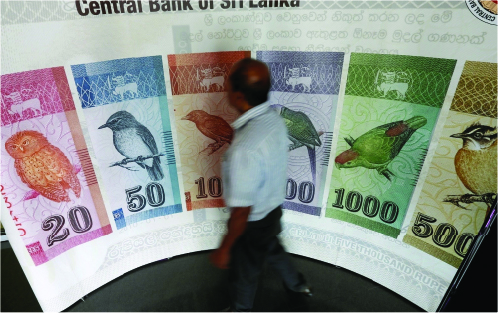
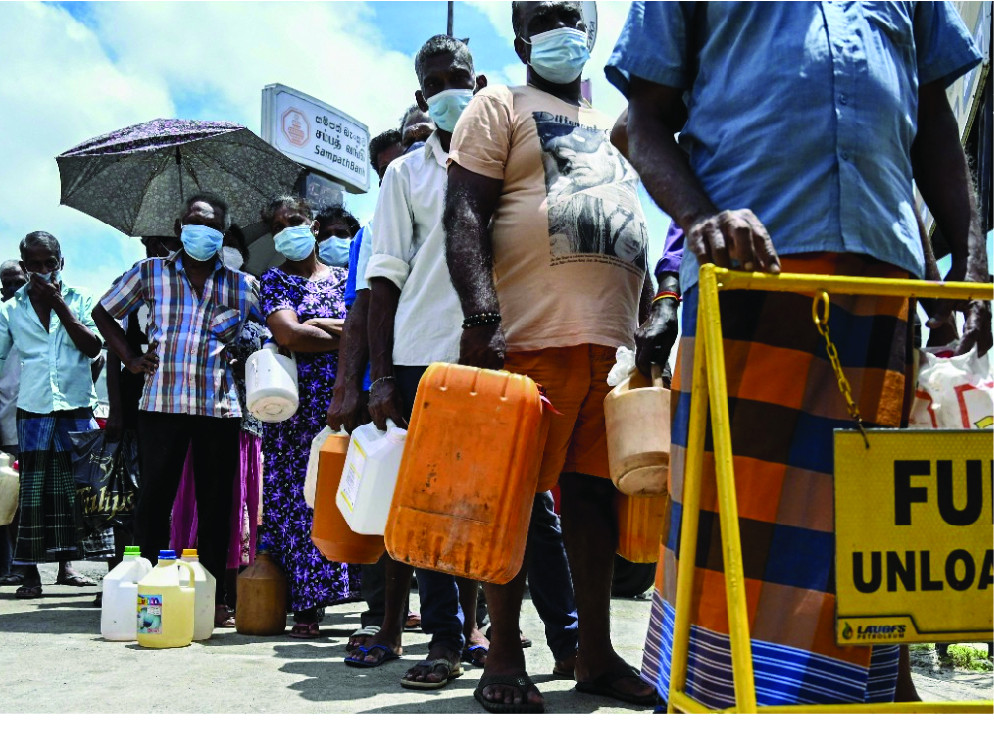
Sri Lankan foreign reserve stands at only USD 2.3 billion as of March 2022. This year the country is to pay USD 7 billion to creditors. Record-high inflation of 17.5% has crippled the economy. The price of the Lankan rupee has been falling against the USD and the country falls far too short to complete its USD 7 billion loan payment due in 2022. The government has tried to devalue and fix the price of the rupee against the USD at 200, but the crash continues. As a result, shortages and high prices are now a daily menace for general Lankans. Fuel is extremely hard to come by. There have been violent incidents regarding fuel and the military has been deployed to tackle the situation. The government has introduced electricity cuts, rationed food and fuel, and converted people’s dollars in banks to Sri Lankan rupees, but the measures are still not enough. The government is, by all means, on the verge of declaring a default.
Sri Lankan foreign reserve stands at only USD 2.3 billion as of March 2022. This year the country is to pay USD 7 billion to creditors. Record-high inflation of 17.5% has crippled the economy. The price of the Lankan rupee has been falling against the USD and the country falls far too short to complete its USD 7 billion loan payment due in 2022
However, Sri Lanka is receiving some foreign assistance. China is sending millions of tons of food grains and a USD 2.5 billion credit line. India is providing USD 1.5 billion in assistance. Iran is sending oil in exchange for tea, and Bangladesh has loaned it USD 200 million. Even then, the economy seems to be far from recovering. The crisis is so substantial that the country has stopped taking exams or publishing newspapers due to a shortage of paper.
Uncertainty and Unrest
Today’s Lankan crisis is the result of complexities in the country’s politics. The island has fought one of the bloodiest internal civil wars in South Asian history. The Liberation Tigers of Tamil Eelam (LTTE) have killed one Indian and two Lankan Prime Ministers, and numerous civilian-military personnel in their 27-year long insurgency. LTTE’s suicide bombers (Black Tigers) were indeed a fear-inducing unit. However, a brutal civil war led by the Mahinda Rajapaksa government ended the threat of LTTE and its leader, Velupillai Prabhakaran, in 2009 for good.
Since then, Sri Lanka saw tremendous economic growth till 2019. Its leaders tried to pose Sri Lanka as a travellers’ paradise. This, and the export of highly valued tea, garments and spices made up the lion’s share of foreign income for the country. Sri Lanka took up ambitious and costly projects one after the other on Chinese loans during this period. A turbulent 5-year rule of the Sirisena government slowed down borrowing but the reelected Rajapaksa brothers have all but decimated the country’s economic gains in their second term ruling. The short term loans are being spent in unproductive sectors, burdening the economy further and further.
Why is the new upper-middle-income economy facing this sudden crash? Here are some underlying factors:
Easter bombing, COVID and War
In 2019, at least 279 people were killed by several extremist suicide bombings by National Towheet Jama’ath, a terrorist organisation. As a result, the tourism sector was hit hard. The country gained just USD 1.5 billion instead of the expected USD 5 billion in that year. Next year came COVID-19, wiping out 80% of tourism revenue. As a result, Sri Lanka began to lose its foreign reserve at an alarming rate, since the country has to import most of its consumer goods and machinery. This year, it is the Russo-Ukrainian war. Russia and Ukraine are prime destinations for the export of Lankan tea. A substantial portion of foreign tourists visiting Sri Lanka is also from these two nations. Therefore, it is very likely that this conflict and the resulting high prices in fuel have finally brought the Sri Lankan lion to its knees.
High Debt, Large Spending and Low Revenues
The Rajapaksa government has spent billions on highways, ports, tourism projects, etc. The projects haven’t seen any expected revenue in the last couple of years. At least USD 4 Billion was borrowed from China alone. The biggest of these, the White Elephant project, by the Rajapaksa government in the Hambantota port started in 2010. Hambantota was expected to change the face of the Lankan economy, which it did, but in a largely unexpected way. By 2016, the Lankan government owed LKR 7 billion to China. As it failed to repay, a Chinese company (China Merchant Ports) acquired 85% of the port for a 99-year lease, in exchange for USD 1.12 Billion. These lush projects, however, brought meagre foreign reserves. The country owes massive amounts of cash to Japan, the Asian Development Bank (ADB) and the World Bank (WB).
Populist Politics
The Rajapaksa families are a dominant factor in Lankan politics. President Gotabaya Rajapaksa and Prime Minister Mahinda Rajapaksa are siblings. Another sibling is in charge of the economy. The government has 8 members from the Rajapaksa clan. Thus, the Lankan government is highly controlled by the family. For years, the Rajapaksas have used populist agendas to attract votes and fuel communalism. The 2019 bombing was widely circulated and blamed on general Muslims. Similarly, the Christian and Tamil communities are also being harassed, on accusations of disloyalty to the state. Sri Lanka’s image of a peaceful island nation has been largely tarnished. The economic impact of this loss of reputation is increasingly evident in the tourism sector.
Several policies like tax cuts and social spending have overstretched the economy. The Lankan government has also brought poorly planned, mass changes in agriculture. For instance, the sudden ban on artificial fertilisers has reduced rice production drastically as farmers did not have adequate amounts of organic fertilisers or enough training at their farms. This measure increased the prices of commodities like sugar, rice, oil, onions, etc. The haphazard decisions may also have affected tea and spice productions.
Lessons from History for the Future
The crisis of Sri Lanka is a familiar case witnessed by mainly Latin American nations in the 1980s. In the 1960s and 1970s, the soaring economies of Argentina, Brazil and Mexico enabled their governments to borrow massive sums for infrastructural projects. However poor planning and mismanagement meant the projects didn’t yield the expected results. Many private banks lent colossal amounts of loans as well. Mexico, for example, borrowed money by promising repayment by oil revenue. When oil prices, (and prices of other commodities) hit rock bottom, Mexico had no other option but to accept bankruptcy. The Latin economies continue to be stuck in their middle income phase ever since.
Many South Asian and African countries have borrowed large sums, mostly from Chinese banks for massive infrastructural projects. The Sri Lankan case could be a warning for them. Meanwhile, the Lankans don’t seem to see a very bright future. The government is planning to introduce economic austerity measures prescribed by the International Monetary Fund (IMF), signalling a long struggle for the masses.